Addressing Biodiversity Loss and Climate Change Together: A Great Opportunity for Museums with Natural History Collections

Written by Henry McGhie, Curating Tomorrow, henrymcghie@curatingtomorrow.co.uk

This year has seen not one but two ‘COPs’ (Conference of the Parties), the big meetings where governments monitor their progress towards international agreements. In early November, COP16 for biodiversity was held in Cali, Colombia. In the second half of November, COP29 was held in Baku, Azerbaijan. These big meetings get a lot of press attention, but they are rather poorly understood and are not always reported that well. If you think the COPs are where the leaders of the world get together to hammer out the world’s future, the reality is much more humdrum. By the time countries gather together, they have usually made up their minds on their negotiating positions and not much will change from there on. COP has also become too big and has many ‘layers’ to it. For the climate COPs, there is the Blue Zone, which you need to get a special accreditation to enter (referred to as a ‘badge’), and within that there will be really big plenary events and smaller side events that everyone with a badge can attend. There are also lots of negotiations taking place, inside rooms, that you often can’t access as well as a mass of pavilions, mostly from countries and in some years, businesses. Outside the Blue Zone, there is a public-facing Green Zone that the public can access (sometimes it is in a museum, as it was in 2021 when it was in Glasgow Science Centre). When the climate COP is on there is also a lot of activity going on outside of COP itself, mostly organized by civil society groups, and also by businesses. So, when people say they’ve ‘been to COP’ it can mean a few different things.

Continue reading

Thoughts on Working with Natural Sciences Collections (and hoping to continue) in the United Kingdom as an Emerging Conservator.

Written by Anais Ellis, Project Conservator, Nature + Love at the Horniman Museum and Gardens.

Around a year ago I concluded three years of formal training to become a conservator. At the Institute of Archaeology, University College London (UCL) the training is taught in two sequential parts.  First, the MA, Principles of Conservation, grounds an understanding of conservation practice within ethical frameworks and principles. Following this, the MSc, Conservation of Archaeology and Museums, includes a year of developing remedial conservation skills in a lab and a 9-month placement in a museum or adjacent environment. The formative moment during this placement was my first experience working with natural sciences collections. There were fossils to clean, fluid specimens to top-up, and a taxidermy ringed seal with several claws missing that the curator asked to be reconstructed. Now, a year later, having finished studying and having worked consistently with natural sciences collections in the United Kingdom (UK) it feels like a good moment to reflect on these experiences. As hoped, they have been wonderful.

Continue reading

NatSCA Digital Digest – November 2024

Compiled by Ellie Clark, Collections Moves Team Leader at the Natural History Museum, London.

Welcome to the November Edition of NatSCA Digital Digest.

A monthly blog series featuring the latest on where to go, what to see and do in the natural history sector including jobs, exhibitions, conferences, and training opportunities. We are keen to hear from you if you have any top tips and recommendations for our next Digest, please drop an email to blog@natsca.org.

Sector News


The Unnatural History Museum Seminar Series is Back!

The Unnatural History Museum brings together museum professionals and academics across disciplines to platform vital conversations about the museum mediation of the natural world during the sixth mass extinction.

The first session, on Avian Life, is at 5pm Irish Standard Time on Wednesday 13th November and will feature papers from and discussion with Megan Kuster, University of Manchester; Clara Dawson, University of Manchester; and Elle Kaye, Ethical Taxidermist. Get free tickets here.

Collections Sage Journals 20th Anniversary – Calling all Museum Enthusiasts and Cultural Thinkers

In honour of the 20th anniversary of Collections (Collections: Sage Journals), they have announced an open call for contributions to a special “Re-Collections” series! This edition will explore personal perspectives on museum experiences and bold visions for the future of museum collections. They invite reflections, thoughts, and forward-looking ideas on the impact of museum collections. This is your chance to contribute to a series celebrating both the history and future of museums.

The deadline for submissions is the 1st of February 2025. Find submission details here.

Continue reading

Digitisation of the National Herbarium of Ireland: Moving on from Manual to Semi-Automatic Imaging.

Written by Wuu Kuang Soh, botanist at the National Botanic Gardens of Ireland (OPW).

The National Herbarium (DBN) at the National Botanic Gardens of Ireland is home to an ever-expanding collection of approximately 600,000 plant and fungal specimens from across Ireland and around the globe. This rich collection spans mainly from the early 1800s to the present day, including specimens gathered from voyages of exploration, ranging from the Americas to Asia. Some of the oldest specimens, dating back to 1661, are over 350 years old. Apart from our herbarium, the other important plant collections on the island of Ireland are held by the Ulster Museum and Trinity College Dublin. This makes the DBN collection invaluable not only as a source of natural heritage but also as a part of Ireland’s cultural legacy. 

Herbarium collections are crucial to enhancing our understanding of the natural world. Beyond documenting plant species, these specimens reveal the intricate relationships between plants and their environments and tell the story of botanical discovery over time. The wealth of data gathered from this collection allows us to track historical and geographical changes in flora and helps predict future environmental impacts. Digitising this vast collection is a key step toward preserving these resources for future generations. Digital records not only provide greater access for researchers and the public but also safeguards the physical specimens by minimising handling and potential damage.

Continue reading

Conservation Matters in Wales – Christmas Conference 2023

Written by Sebastien Lherondel-Davies, 2nd year BSc student, Swansea University, whilst on placement at National Museum Cardiff and Swansea Museum.

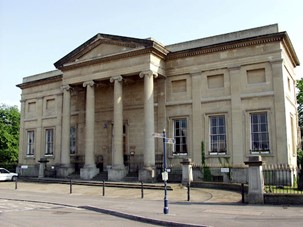
On Wednesday 13th December 2023, conservators and curators from all over Wales gathered in Swansea for the first in-person Conservation Matters Wales Christmas Conference since the pandemic. Conservation Matters Wales is a collaboration between Amgueddfa Cymru – National Museum Wales, the Federation of Museums and Art Galleries in Wales, and Cardiff University. The event, hosted by the delightful Swansea Museum, was an opportunity for professionals in the museum collections conservation sector to come together and share the wide range of projects they have been working on. The conference provided us with the chance to present our research project on a historic Lepidoptera collection. 

Swansea Museum
Continue reading