
Written by Julie Griffith, Property Experience Curator, Calke Abbey – National Trust & Sarah Burhouse, Taxidermist, Birdhouse Taxidermy.
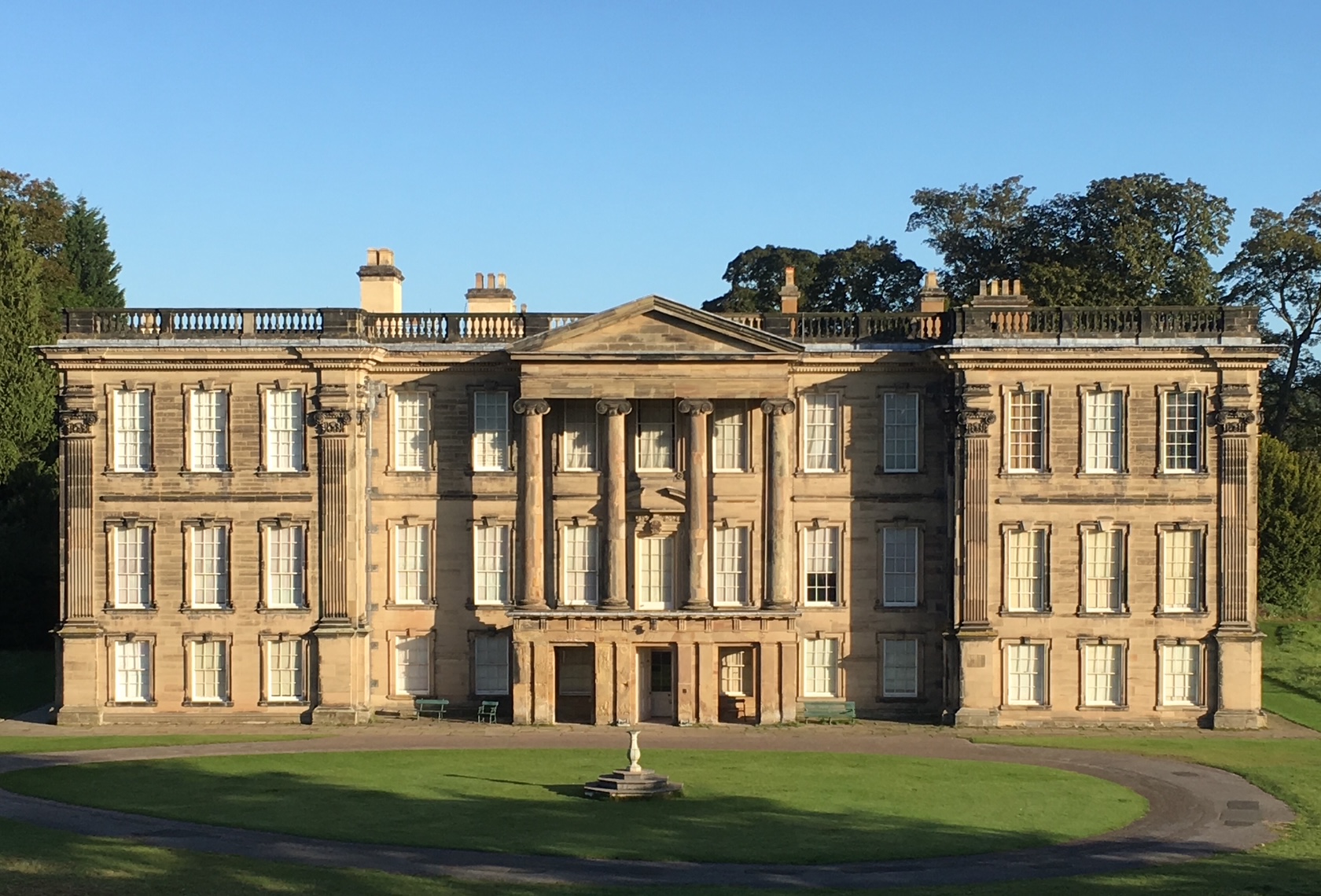
How to challenge negative pre-conceptions of taxidermy and facilitate deeper, positive engagement with the objects – this was the challenge faced at Calke Abbey, a National Trust property in Derbyshire.
Credit – National Trust/Julie Griffith
Julie – Calke Abbey
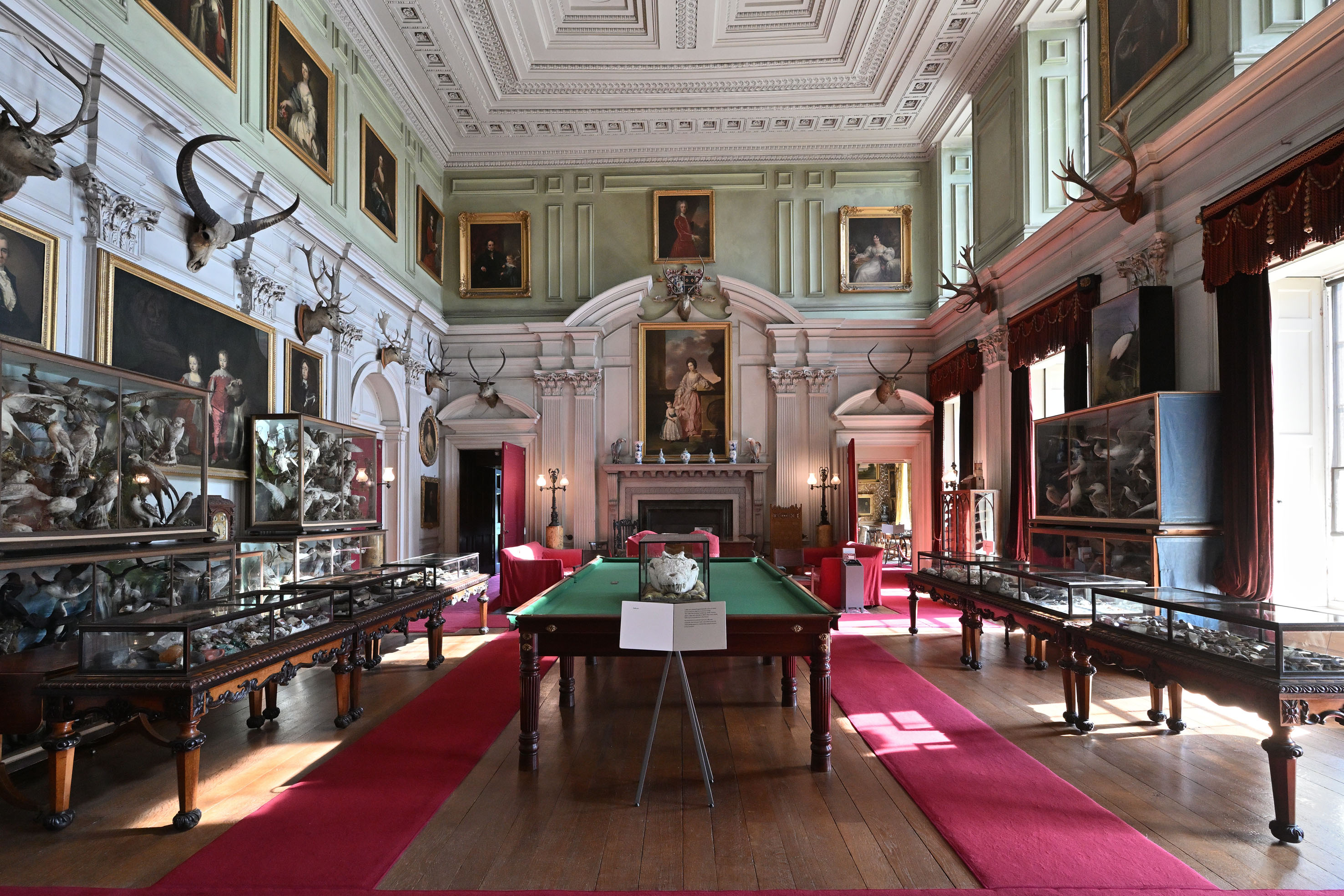
Integral to Calke Abbey’s identity, the natural history collection demonstrates the interests and collecting of several generations of the Harpur Crewe family. Most visible is the taxidermy, present in over 10 rooms of the house and ranging from high quality finished dioramas to unfinished mounts hanging upside down in overcrowded cases. In the Saloon, large cases of birds even obscure a painting of Harpur Crewe children, demonstrating the importance placed on these objects by their historical owners.
We were keen to understand how visitors engaged with Calke’s taxidermy and where there were future opportunities. Analysis of the property visitor survey, Trip Advisor comments and volunteer experiences showed many visitors view taxidermy as something grotesque, uncomfortable or macabre. One review even described Calke as a ‘house of death’. This was far from how we’d like the taxidermy to be viewed, which is as a collection revealing Calke’s stories and people, supporting curiosity, learning and hope for the natural world. Removing the collection was not an option so the challenge was to find new ways in which visitors could access, engage with and learn about the taxidermy.
Credit – National Trust/Steve Franklin
Visitor observation suggested a mystifying quality to the specimens and often negative emotional reactions, influenced by lack of understanding and popular culture with taxidermy specimens being associated with the evil villain’s lair or an eccentric personality. It felt like the place to start was in removing the mystery around taxidermy, encouraging people to stop, look and be curious rather than dismissing the collection based on preconceptions. Reluctant to rely on written interpretation, we looked for something that would give visitors an opportunity to explore taxidermy to a greater depth, giving space for questions and conversation.
It was at this point we met Sarah Burhouse from Birdhouse Taxidermy and began developing the idea of undertaking live taxidermy mounting in Calke’s Saloon, in front of the public and surrounded by historic specimens. Although some felt a little reticent about possible public response to this, we had confidence that the honest approach of demonstrating the craft, led by an engaging facilitator such as Sarah would be a great way of communicating what taxidermy is and what it can teach us today. We gave Sarah the space to develop the session herself, our only pre-requisite ask was that any specimens had died of natural causes.
Sarah – Birdhouse Taxidermy
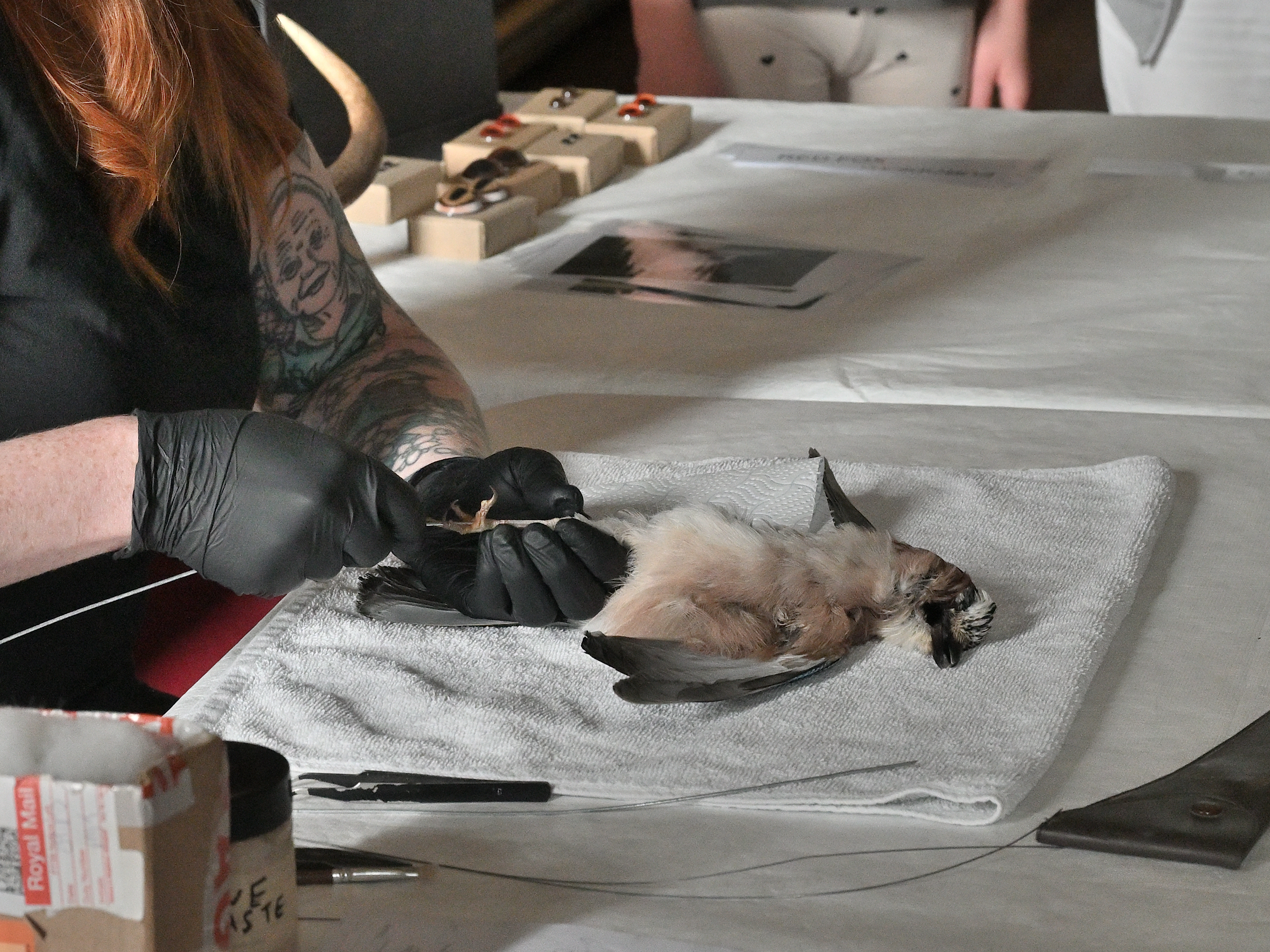
The day before the event, I get a deceased bird out of my freezer to thaw, take measurements and carefully remove its skin. Keeping the leg bones, wing bones and skull attached, I de-flesh the bones, clean out the skull and de-fat the skin. To make an exact replica of the carcass I use its measurements to make an artificial body, or form, from balsa wood.
Credit – National Trust/Steve Franklin
When the house at Calke opens at 11am and visitors start to trickle into the Saloon, I begin to wire up the bird skin. While threading wires into the bird’s legs I chat to visitors, explaining what I’m doing as I go. They usually ask a few questions, tell me how unusual/fascinating/strange/amazing it is, and then move on to viewing the collection. Sometimes a visitor will stay, standing in awe in front of my table, for hours on end, waiting to see the next stage of the process.
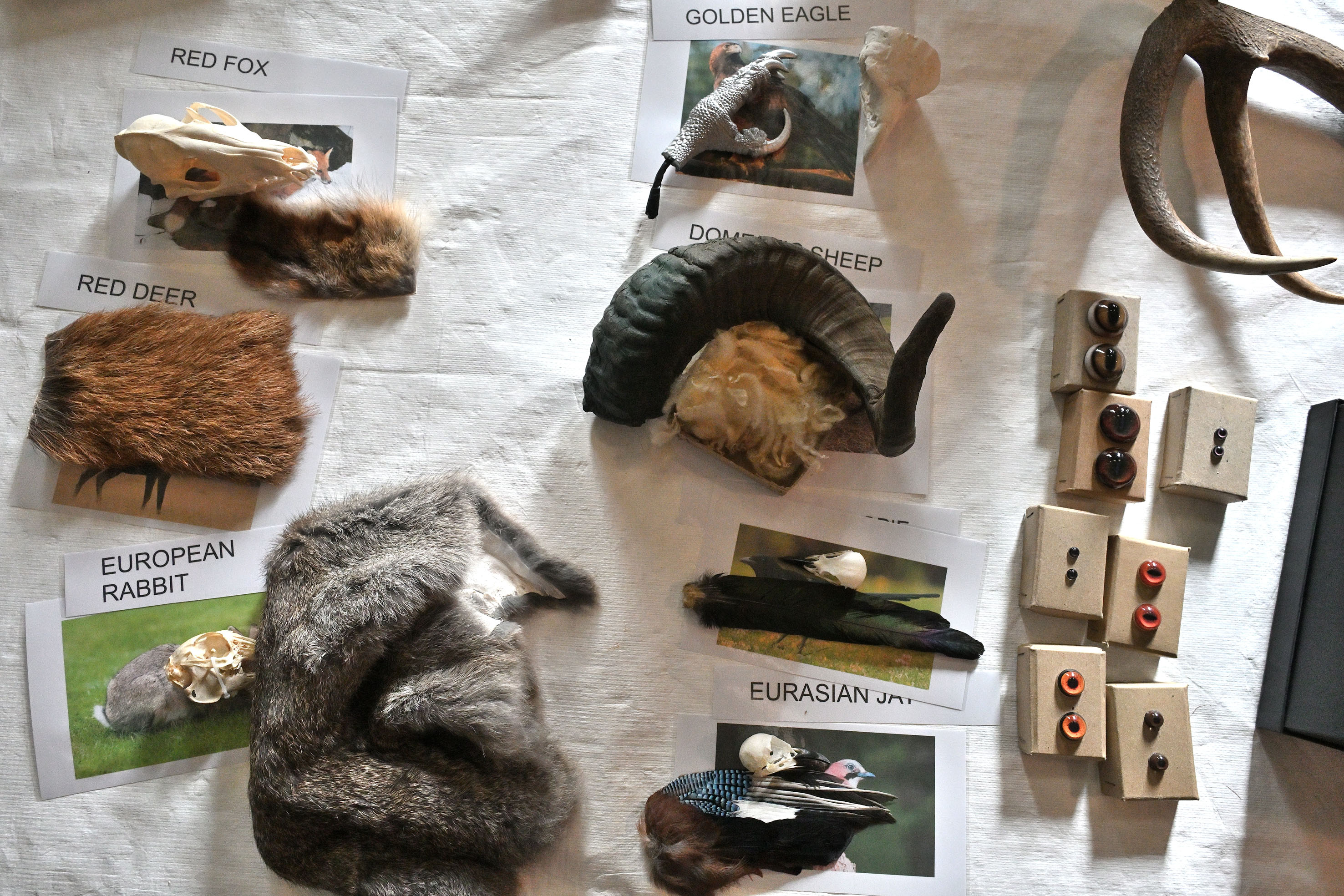
Once the legs are wired, I move onto the wings, then the skull, setting the eyes in clay using the measurements I took before skinning. I attach the form by gluing the neck wire into the skull. This gives me a chance to have a break while the hot glue sets, so I can focus on the interactive activity I bring along. Visitors are encouraged to match animal photos with their species name and then match two ‘body parts’ per animal with the correct species. This includes fur swatches, preserved wings, skulls, horns, antlers and feet. The activity concludes with matching pairs of artificial acrylic eyes, used in taxidermy, with the correct species.
I created this activity with different learning styles in mind. I find the opportunity to handle objects memorable, particularly for young people. The content is relevant to the current curriculum, as it covers predator/prey relationships, and bones and muscles, but it also helps broach the subject of taxidermy, using taxidermy materials like the acrylic eyes and tanned skin to answer one of the most frequently asked questions ‘is it real?’.
Credit – National Trust/Steve Franklin
When I pull the skin back over the skull, the bird starts to take shape. The eyes are looking back at the visitors, and the flat skin has become a 3D creature. I wire the legs and wings up to the form, insert a brace for the tail and stitch up the incision using a suture technique. This is the bit the hardcore bystanders are waiting for. Those who have stood at the table since the beginning see their perseverance pay off as the bird they have come to know and love rights itself on its perch. I spend the last hour arranging the skin and feathering the bird, using reference images to achieve an anatomically accurate mount.
As many taxidermists will say, we are trying to achieve the impossible by trying to make the animal look exactly as it did when it was alive, and so we often struggle to be proud of our work. What I can say I am very proud of, something that the Meet the Taxidermist events have given me the opportunity to do, is to inspire others to see taxidermy in a different light, to ignite an interest in an unfamiliar craft, or provide access to the natural world which previously they didn’t have.
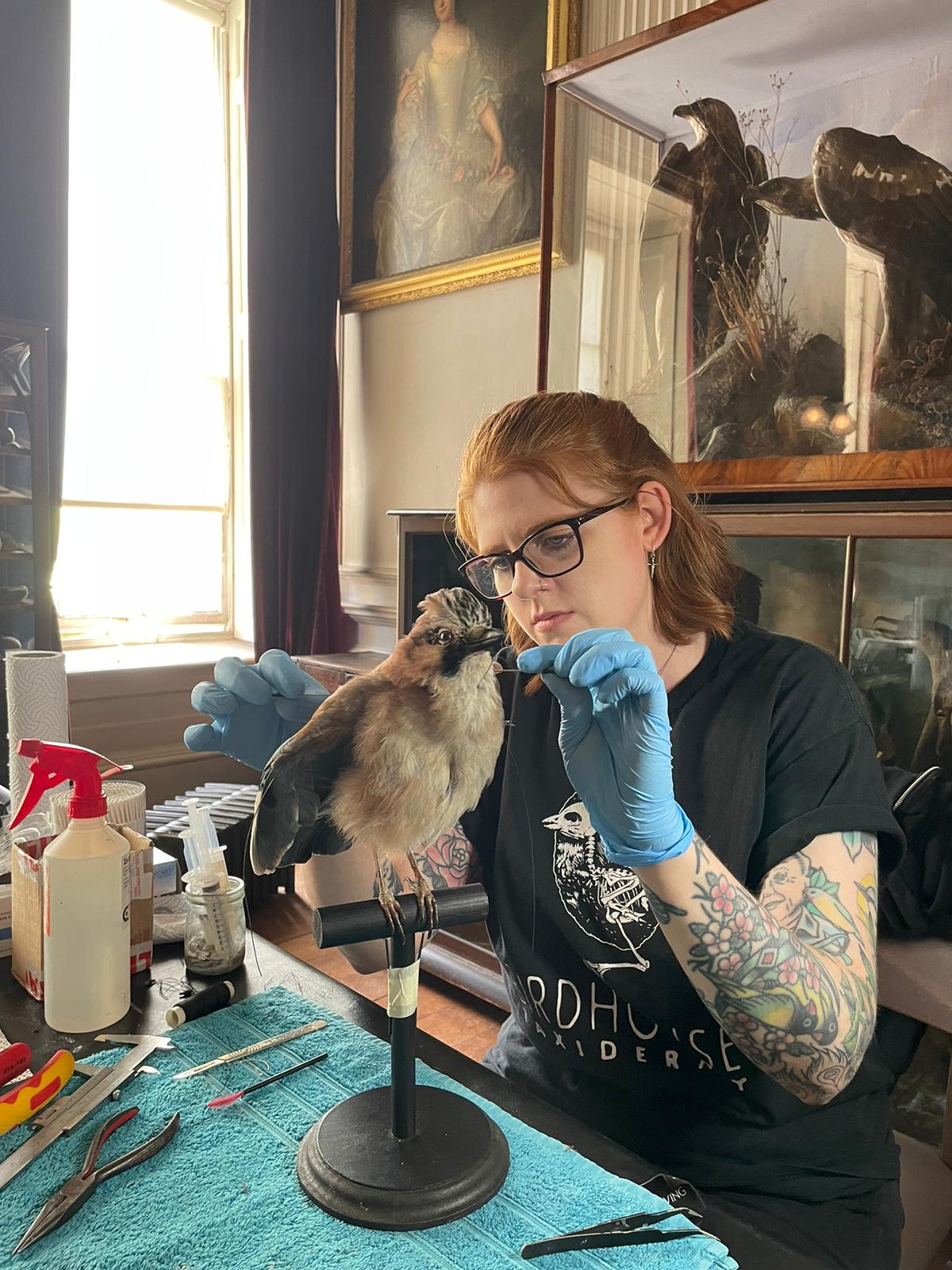
Credit – National Trust/Julie Griffith
In March 2025, the Meet the Taxidermist session was combined with a wonderful performance by Tom, a volunteer pianist who was blind. Throughout the afternoon I mounted a blue-billed teal duck, which would later go on open tactile display at Calke. Tom came over to my table with his guide dogs and explained he was a keen birder, identifying birds in the field from their song. He asked if he could touch the golden plover mount I had brought with me. As I use a non-toxic approach in my work, this is something I’m happy for people to do. Being able to experience birds in a way other than sound, something sighted people may take for granted, delighted Tom and highlighted the value of handling collections.
Another time, my demo caught the attention of a young girl. Her mum explained that her daughter was a keen naturalist, with her own collection of natural history finds, feathers and skulls she’d come across while exploring the outdoors. As I encouraged her to have a go at the object handling interactive, she came out of her shell. We then chatted about what I was working on, and her fascination grew as she learned about the process of taxidermy, beginning to realise it might be something she could do. Although I love to see interpretation on historical taxidermists in galleries, the opportunity for young people to see individuals they might be able to relate to, doing taxidermy as a career, is invaluable for the future of the craft.
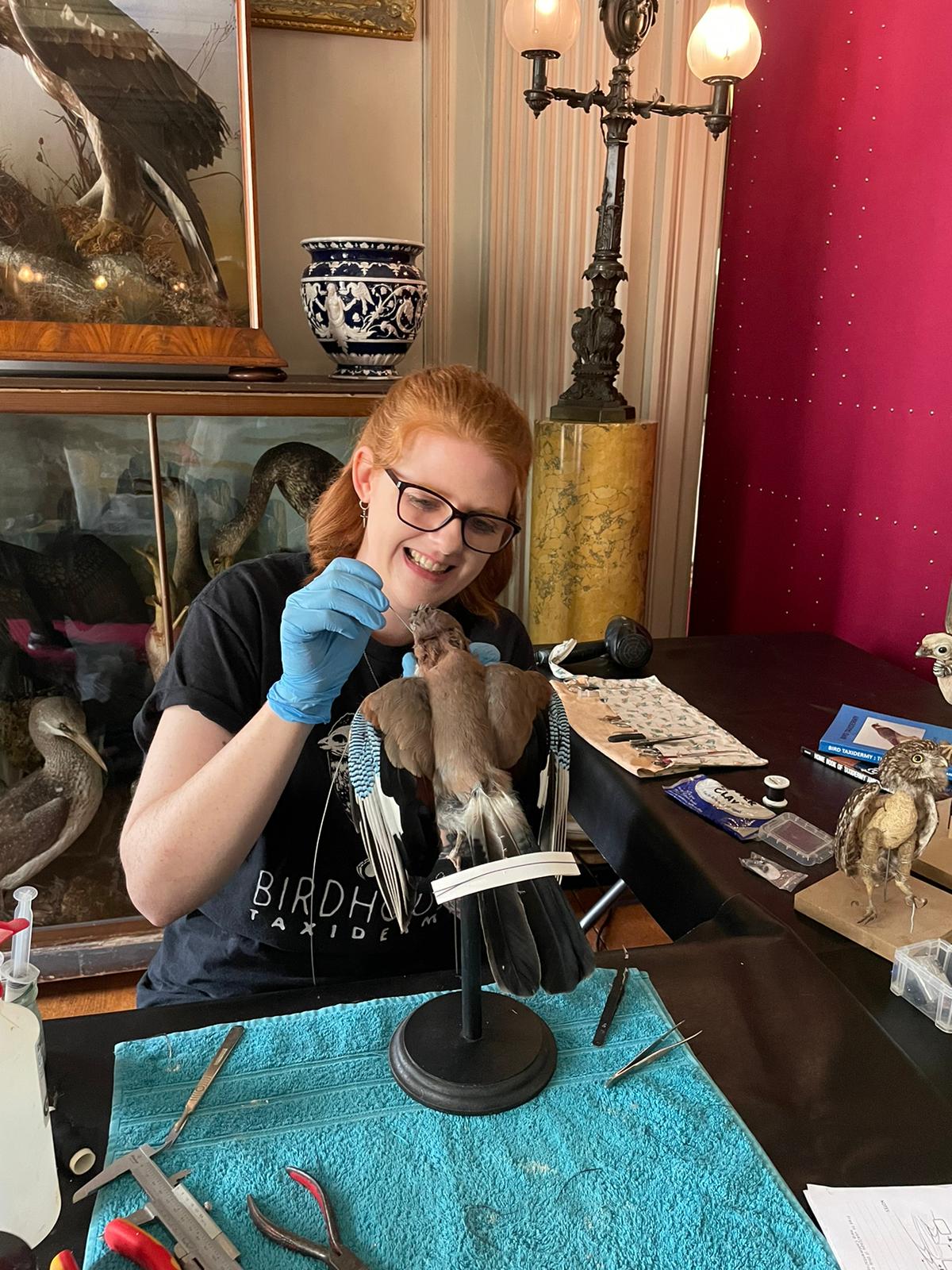
Credit – National Trust/Julie Griffith
It is experiences like these that make Meet the Taxidermist at Calke Abbey so special.
Making connections and encouraging the public to explore the process and the potential application of taxidermy is an important way in which museums, galleries and historic houses can help to justify their collections and bring them into the 21st century.
Julie – Calke Abbey
To understand the impact of the Meet the Taxidermist sessions we undertook observational evaluation detailing time spent at Sarah’s table, whether they engaged with her and whether their reaction to the taxidermy changed i.e. by observing body language and comments. We found that dwell time ranged from a few minutes to several hours, with some visitors exiting the house and then revisiting later in the day to see the progress. We actively promoted the second sessions and found evidence of people visiting specifically to experience the Meet the Taxidermist event. It had encouraged them into the house when previously they felt there was nothing for them there. The sessions were also popular with a range of age groups. There was an absence of negative or critical feedback, with the conversation favouring visitors sharing the event with others instead.
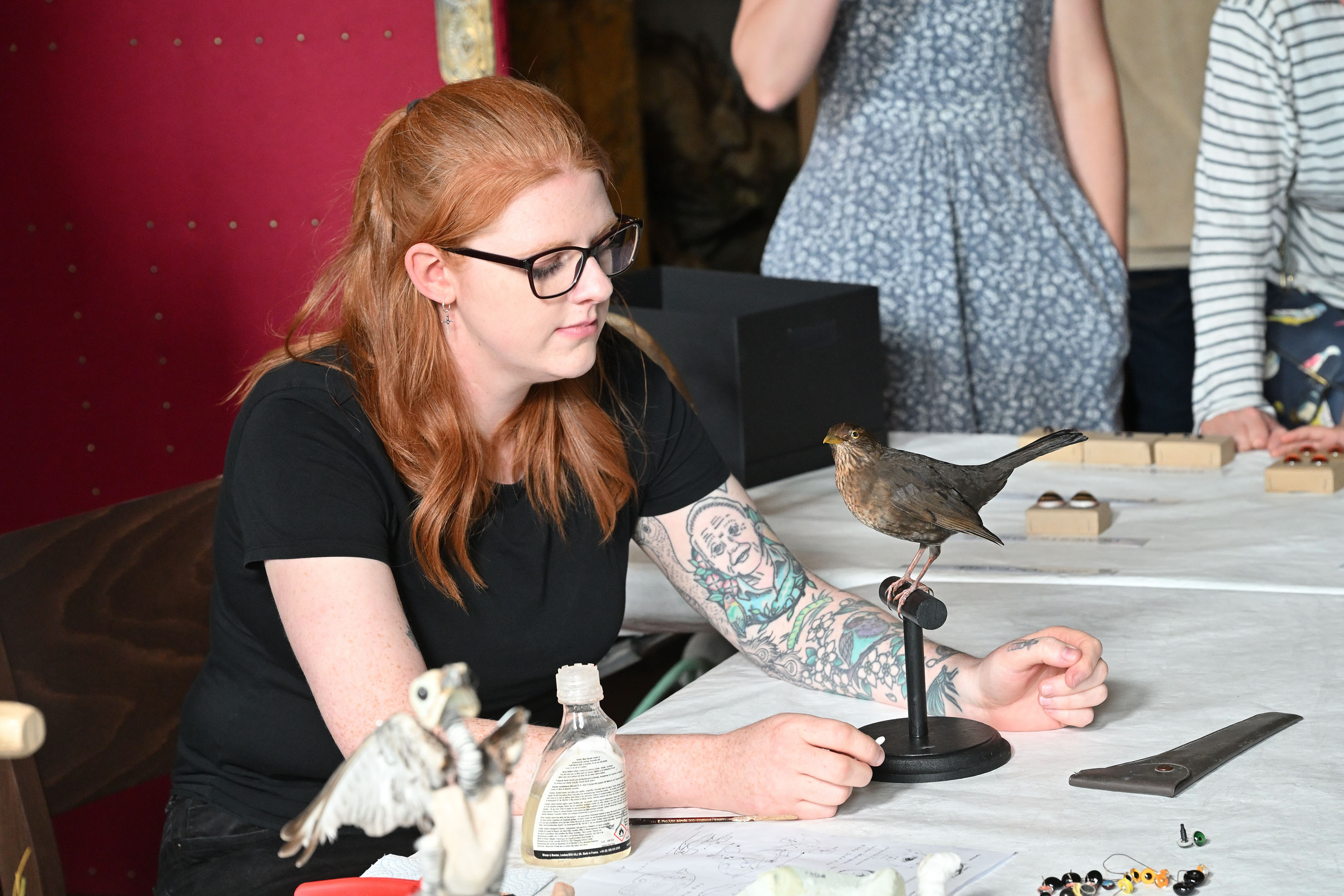
Credit – National Trust/Steve Franklin
The biggest success was Sarah herself. It was clear that having a knowledgeable, friendly and interesting facilitator was what made the experience for visitors. They frequently asked Sarah how she became a taxidermist, with this question becoming the gateway to further conversation and deeper engagement with taxidermy generally.
We are continuing with Meet the Taxidermist events this year. Visit Calke Abbey on Friday 24th and Saturday 25th April to see Sarah in action.
We are also developing our natural history programming for families, trialling a new session called ‘Wild habitats diorama day’ where families learn about the role of taxidermy dioramas with Sarah before enjoying a craft activity where they create their own.


