NatSCA

Natural Science Collections Association

Menu

Skip to content
  • About NatSCA
  • Guidelines for Contributors

Welcome

The Natural Sciences Collections Association (NatSCA) is a UK based membership organisation and charity run by volunteers from the membership.

NatSCA's mission is to promote and support natural science collections, the institutions that house them and the people that work with them, in order to improve collections care, understanding, accessibility and enjoyment for all.

Our website: natsca.org

Join now: natsca.org/membership

Have something to say?

If you would like to share something on the NatSCA blog, please contact us at blog@natsca.org

Tag Archives for public engagement

Sharing the Wonder of the NHM – From Front to Back of House (via a Pandemic), and Why Public Engagement is so Important.

Written by Emilie Pearson, Curatorial Assistant at the Natural History Museum, London.  

The Natural History Museum is a large, vibrant museum with over 900 staff working across many different teams. These include numerous collections-based teams, as well as the learning and engagement teams who work with a variety of audiences in different ways. There are many crossovers between these teams, with curators and researchers taking part in events such as the popular Nature Live in person and online series, as well as numerous evening events held by the museum Visitor Events teams. 

My journey with the NHM started back in 2016, when I joined as a Learning Volunteer. I’d come twice as a visitor before then, once when I was just 18, killing time before seeing a film in the BFI Imax (I nearly missed the start of the film as I didn’t want to leave!) I then came again during university holidays when I was studying for a Zoology degree (inspired partly by my first visit) and I was determined to go on one of the Spirit Collection Tours to see the Giant Squid. I made the friend I was going with queue up from 9:30 (the museum didn’t open till 10) to ensure we got a spot on one of the tours.

Continue reading →

Share this:

  • Tweet
  • Share on Tumblr
  • Click to share on Reddit (Opens in new window) Reddit
  • Click to print (Opens in new window) Print
  • Click to email a link to a friend (Opens in new window) Email
Like Loading...
September 19, 2024 by Natural Sciences Collections Association Categories: Advocating Collections, Audiences, Covid 19, events, Jobs, Meet the members, Uncategorized, Using Collections | Tags: access, advocacy, communication, museum collections, natural history, natural science collections, NHM London, public engagement | 1 Comment

Tails from the Weekly Live Preparation Sessions at Naturalis Museum

Written by Becky Desjardins, Senior Preparateur, Naturalis Biodiversity Center.

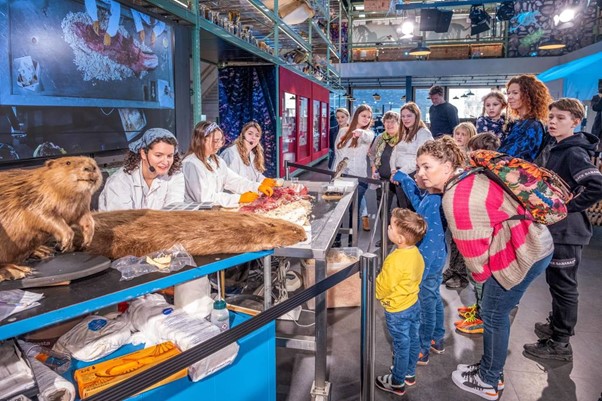
The day we prepared the largest beaver ever found dead in the Netherlands.

It is a Wednesday afternoon in Naturalis’ Live Science Hall. An older woman walks by, holding her nose, but watching us intently. Shortly after, teenagers on a school trip yell “eeeewww gross!” but then come in closer to check it out. A young girl says loudly “I think this is sad” while she drags her mom by the hand up to our silver lab table. On the table is a large Eurasian eagle-owl, now in two pieces. I am removing muscle from the detached wing, and my co-worker Liselotte is busy pulling the skin from the body. This owl, found dead by the side of the road, is being prepared as a study skin for the museum’s collection. But instead of in the lab, we are doing it live in front of the public in a hall that has free entry.

We prepare vertebrates, mostly mammals and birds (though we have worked on a giant ocean sunfish here too) live twice a week, all the while talking to visitors who stop by. On a quiet day, visitors can come right up to the table (they are kept at a bit of a distance by a stanchion) and on a busy day, people sit on the risers in the hall and interact with us via a science educator who walks around with a microphone taking visitor questions. We have a camera mounted in the ceiling zoomed in on the table. This is shown on the screen behind us so that even the smallest visitors can see what we are doing. 

Continue reading →

Share this:

  • Tweet
  • Share on Tumblr
  • Click to share on Reddit (Opens in new window) Reddit
  • Click to print (Opens in new window) Print
  • Click to email a link to a friend (Opens in new window) Email
Like Loading...
March 7, 2024 by Natural Sciences Collections Association Categories: Advocating Collections, Audiences, Conservation, events, Jobs, Projects, Uncategorized, Using Collections | Tags: advocacy, museum collections, natural science collections, Naturalis, practical tips, practice, public engagement, taxidermy | 1 Comment

Bone Idols: Protecting our iconic skeletons

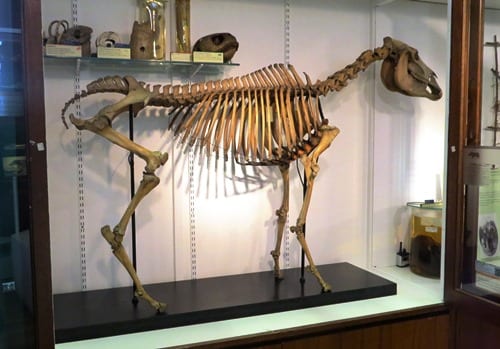
The quagga  after conservation and remounting. LDUCZ-Z581. Courtesy of Nigel Larkin

The quagga after conservation and remounting. LDUCZ-Z581. Courtesy of Nigel Larkin

In November 2015, the Grant Museum of Zoology, UCL launched one of the most ambitious conservation projects undertaken at the museum, and our first ever public fundraising campaign, generously supported by NatSCA’s Bill Pettit Memorial Award.

Bone Idols: Protecting our iconic skeletons aims to secure the long-term future of 39 of our rarest and most significant skeletons, some of which have been on display in the museum for 180 years. This includes what can be considered the rarest skeleton in the world: our extinct quagga – an unusual half-striped zebra.

Preserving the uncollectable

It is the only mounted quagga skeleton in the UK, and no more than seven quagga skeletons survive globally. In April the quagga returned to the museum, having been treated by natural history conservator Nigel Larkin. The work involved completely dismantling and chemically cleaning the irreplaceable skeleton, and then remounting it on a modified skeleton-friendly frame in a more anatomically correct position.

This major treatment has also been given to the Museum’s largest skeleton – that of a (hornless) one-horned rhino. This has been on open display since 1911, in a room once lit by oil lamps. The particulate pollutants that were removed as part of the project had significantly discoloured the bone. The rhino now stands in a more rhino-like pose, with its legs on the ground and its limbs meeting their sockets – all steps that will safeguard the impressive skeleton for hopefully centuries to come. More about the rhino’s treatment can be read on the museum’s blog.

Curing the quagga

A condition assessment of the museum’s most famous object had uncovered a wealth of problems. The sternum was oozing a black, sticky fat deposit; the femur was far from the pelvis, which is both unsightly and left the skeleton unstable; the neck vertebrae were on upside-down (a feature I’m embarrassed to say I hadn’t spotted, despite being a mammal nerd who has worked with this skeleton for ten years); the spine was held unnaturally straight by a horizontal rod; and much of the iron frame was rusting.

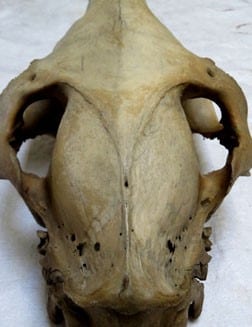
The quagga's skull half cleaned. Courtesy Nigel Larkin

The quagga’s skull half cleaned. Courtesy of Nigel Larkin

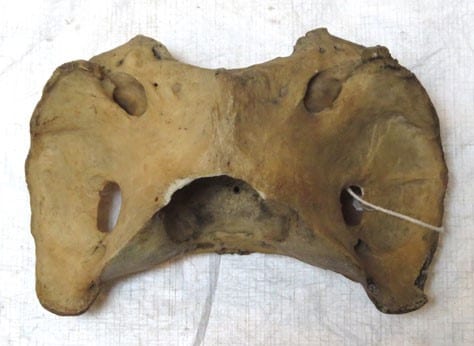
The quagga's atlas half cleaned. Courtesy Nigel Larkin

The quagga’s atlas half cleaned. Courtesy of Nigel Larkin

These ills, and many others, have been remedied. Although the specimen is the only one of the Bone Idols that has not been on open display, nor had it been regularly handled, the bone had still accrued a shocking amount of dirt and grime. This has been cleaned off using an alcohol ethoxylate (Synperonic A7) in distilled water.

A more detailed account of the quagga’s work appears on the Grant Museum’s blog.

Conservation in the public eye

Another aim of the Bone Idols project was to bring as much of the conservation work as possible to the gallery, allowing the public to engage in this critical work, which normally takes place behind the scenes.

Nigel Larkin is working on 13 of the 39 skeletons (those that require complex metal work), while the remaining 26 are being treated by UCL Museums Conservators. Days were set aside to prepare the large specimens for transport. We scheduled the work so that nearly all of it took place during opening hours (except that which involved dangerous equipment), at the heart of the museum. Staff and Nigel were on hand to explain what was happening.

For the in-house specimens, we have been advertising when this work is going on in the gallery, and even giving visitors a chance to take part in cleaning the skeletons themselves.

We are keeping the public engaged in the project through social media (#BoneIdols) and on our blog, and this content has proved very popular.

I’ll be talking more about the public aspect of the Bone Idols project at NatSCA’s Bone Collections event in September.

We are very grateful to the support of NatSCA and the Arts Council England’s Museum Development Fund for this project, as well as the thousands of pounds of public donations we have received. The work is ongoing, and will cost in excess of £30,000 to complete. If you would like to support the campaign you can make a donation on our online giving page, use this postal donation form (.docx, 63kB), or visit us in person in the museum.

Collectively each small gift will make this project possible, preserving these irreplaceable skeletons for the long-term future.

Jack Ashby is the Manager of the Grant Museum of Zoology, UCL

Share this:

  • Tweet
  • Share on Tumblr
  • Click to share on Reddit (Opens in new window) Reddit
  • Click to print (Opens in new window) Print
  • Click to email a link to a friend (Opens in new window) Email
Like Loading...
May 11, 2015 by jackashby Categories: Bill Pettit Award, Conservation, Social Media, Using Collections | Tags: bones, collections, fundraising, Grant Museum, Grant Museum of Zoology, osteology, public engagement, Quagga, rhino, Rhinoceros | 1 Comment

Post navigation

Search the blog

Enter your email address to follow this blog and receive notifications of new posts by email.

Join 3,781 other subscribers

Topic Archive

Find a topic by tag

access Activities advocacy advocating botany birds Blogs bones Book review Botanical Collections botany care & conservation CITES climate change Cole Museum of Zoology collection moves collections communication conference conservation Curation Decolonising collections digitisation dinosaurs entomology events exhibitions GCG Geological Curator's Group Grant Museum of Zoology herbaria herbarium Historical collections Horniman Museum and Gardens jobs Leeds Museums and Galleries legislation Manchester Museum museum museum collections Museum documentation museum jobs museums association National Museum Cardiff National Museum of Ireland National Museum Wales NatSCA Conference NatSCA Digital Digest natural history natural history jobs Natural History Museum Natural History Museum London natural science Natural Science blogs natural science collections NHM osteology OUMNH Oxford University Museum of Natural History Palaeontology policy practical tips practice research sampling Seminar social media SPNHC sustainability talks taxidermy tetzoo Top Ten Blogs training University Museum of Zoology Cambridge World Museum Liverpool

Twitter feed

Tweets by Nat_SCA
Blog at WordPress.com.
  • Subscribe Subscribed
    • NatSCA
    • Join 342 other subscribers
    • Already have a WordPress.com account? Log in now.
    • NatSCA
    • Subscribe Subscribed
    • Sign up
    • Log in
    • Report this content
    • View site in Reader
    • Manage subscriptions
    • Collapse this bar
 

Loading Comments...
 

    %d