Top 10 Blogs of 2020

Written by Jennifer Gallichan, NatSCA Blog Editor; Curator (Vertebrates/Mollusca), National Museum Cardiff.

2020 – what a year! Well done on getting through it, and a heartfelt thanks from me for all of the fantastic blog contributions this year. We saw a marked increase in online engagement when the first lockdown hit, with more of you reading and engaging with our blog page than in any other year. I have very much enjoyed reading all of the articles, and I hope you have too.

To reflect on the year, here are your Top Ten most read NatSCA blog articles from 2020. Covid obviously features, as well as a strong focus on discussions surrounding decolonising collections. I am also pleased to see that there is a healthy dose of solid natural history conservation practice this year. I know I have taken great solace from the fact that no matter what was happening in the world, time seemed to stand still the minute I entered the stores. I hope that focusing on the practicalities of caring and conserving our collections has been a healthy and hopefully reassuring distraction from the craziness surrounding us all.

10. Frequently Asked Questions about Taxidermy

Written by Ella Berry amateur taxidermist & MSc Conservation Practice student, Cardiff University. Attempting to deal with some of those tricky taxidermy questions.
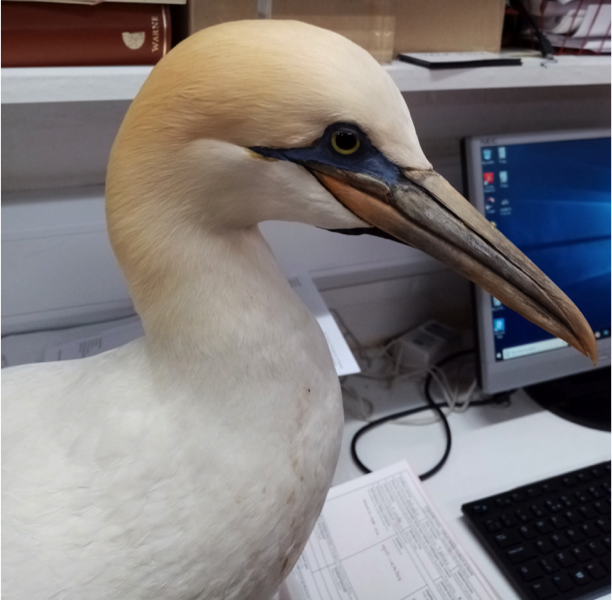
Photo of the taxidermy Gannet (Morus bassanus) waiting patiently(!) to go on display before the event. Photo by author.

9. Museums Beyond Covid

Written by Jan Freedman, Curator of Natural History, The Box, Plymouth. Exploring how our museum spaces and experiences might be very different in the future.
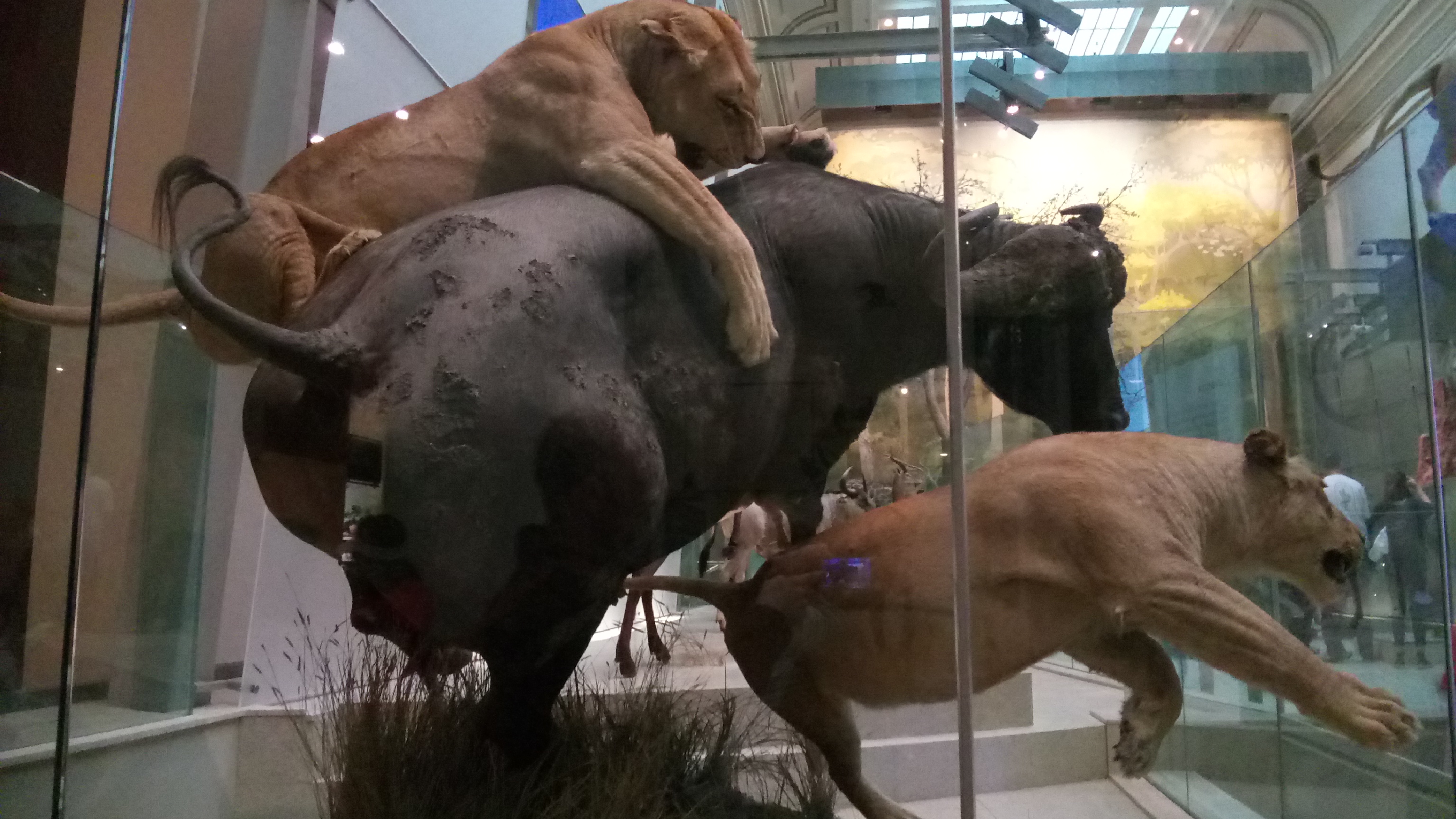
Beautiful taxidermy work of lions attacking a buffalo. I patiently waited 15 minutes until the case was clear of visitors for this photo. Photo by Jan Freedman.

Continue reading

#NatSCAConservation Twitter Conference

Written by Lucie Mascord, NatSCA committee conservation representative.

During the week of the 18th January 2021 NatSCA will be hosting their first ever Twitter conference all on the subject of conservation.

Following on from the success of our inaugural conservation conference “Caring for Natural Science Collections” held at Oxford University Museum of Natural History back in October 2018, the NatSCA conservation working group had hopes of another conference this year. However, it was not to be, so we are changing the format and coming to you in 2021!

The attendees of the “Caring for Natural Science Collections” one-day conference at Oxford University Museum of Natural History in 2018. ©Bethany Palumbo @bethany_bug

Given how strange this year has been we are keeping it simple. Just follow us on the week of 18th January (programme with exact dates and times to follow) on the hashtag #NatSCAConservation and we will bring the unique world of natural science conservation to you for free! Join us for this great opportunity to explore conservation work relating to the range of natural materials including bone, taxidermy, fluid preserved collections, geology, botany and entomology.

Continue reading

Trials From The Riverbank: Conserving a Taxidermy Otter

Written by Jen Gossman, MSc first year Conservation Practice student at Cardiff University.

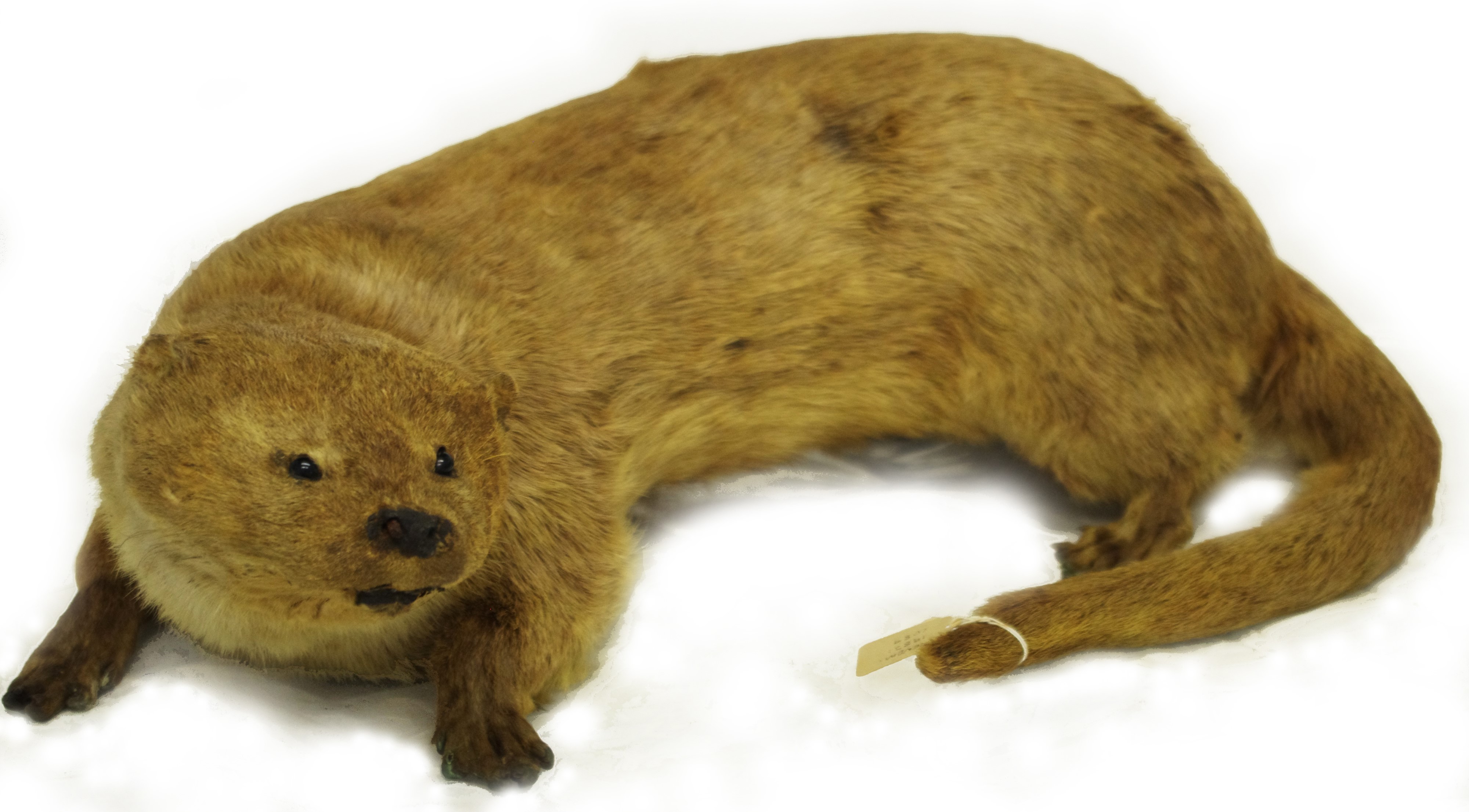
Otter mount © Jen Gossman

I received a mounted taxidermy otter in still life pose without a base from the Tenby museum, Wales where it had been in long term storage wrapped in Tyvek. On initial examination it showed some skin shrinkage and was covered in a thick layer of dirt, grease and dust.

Continue reading

CryoArks – Discover The UK’s First Zoological Biobank

Written by Andrew Kitchener, Principal Curator of Vertebrates, National Museums Scotland.

Many of us have probably been approached by eager PhD students and other researchers who want to snip a bit off those specimens or drill a few holes in others. As curators we start to feel somewhat uncomfortable about seeing our precious collections sliced and diced, and yet we are also keen to discover more about the genetic content of our specimens for their own sake. This is partly because collectively we can contribute to studies that benefit wild populations of species, including the conservation biology of many endangered species and the possibility of rewilding extirpated species. You may also have a chest freezer bursting with grip-seal bags or plastic tubes filled with tissue samples collected from specimens you have acquired, but you’ve no idea what to do with them, but you know they will be useful one day. Or maybe you have a freezer full of specimens you want to get rid of. CryoArks is a new initiative that just might help you to solve all these problems.

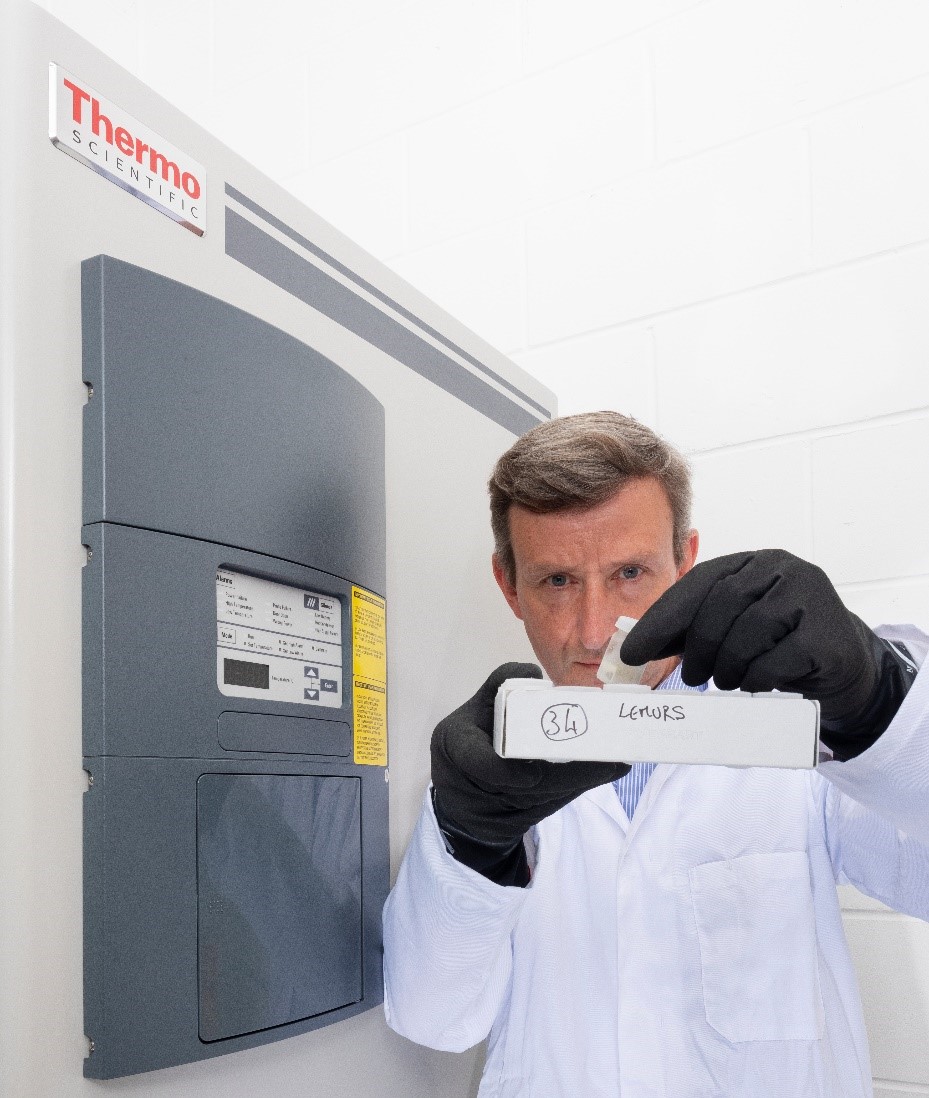
Sorting through lemur muscle samples at National Museums Scotland © National Museums Scotland

CryoArks is a BBSRC-funded project led by Professor Mike Bruford at Cardiff University, which has established the UK’s first comprehensive zoological biobank for research and conservation. CryoArks is a consortium of museums, zoos, academic institutions and biobanks, which is working together to establish common standards and working practices to store tissue and DNA samples and make them available on a common web portal, so that researchers and conservation biologists will be able to find out what is available for their research. This will help cut down on the sampling of our permanent collections by giving researchers something else to sink their scalpels into. CryoArks has two main sample storage hubs – at the Natural History Museum in London and at National Museums Scotland in Edinburgh – that currently house more than 65,000 samples, but we have room for almost a quarter of a million. The Royal Zoological Society of Scotland is also a joint CryoArks and European Association of Zoos and Aquaria biobank storage hub, bringing the zoo and non-zoo biobank communities together.

Continue reading

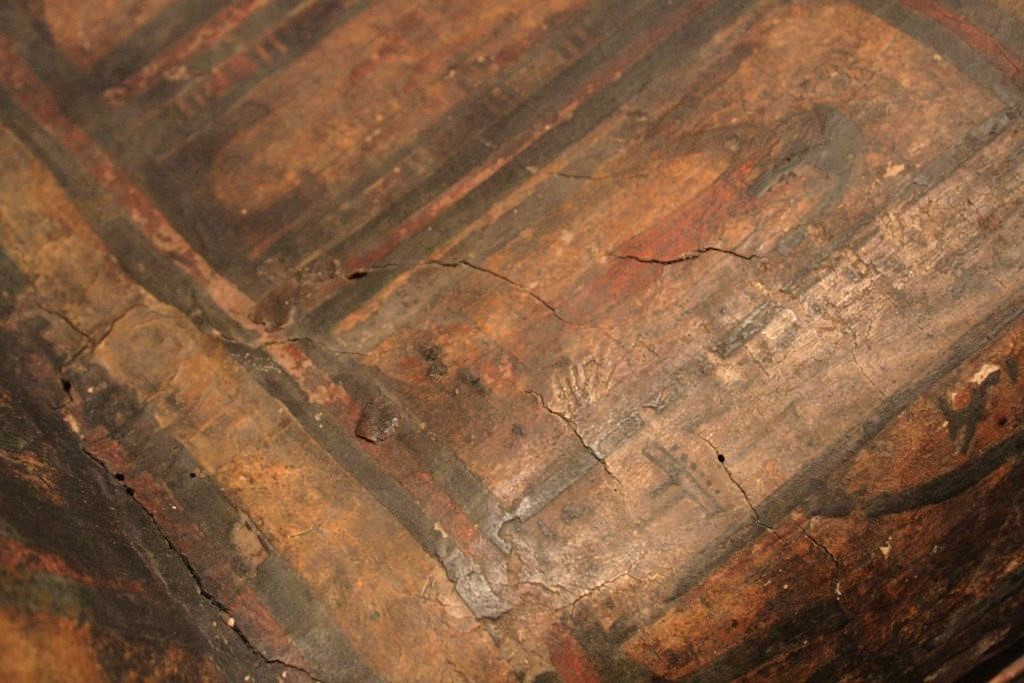
‘Tahemaa Transformed’ The Conservation of the Mummy Coffin at The Bournemouth Natural Science Society.

Written by Bethany Palumbo, ACR, Founder and Owner of Palumbo Conservation Services on behalf of the Bournemouth Natural Science Society.

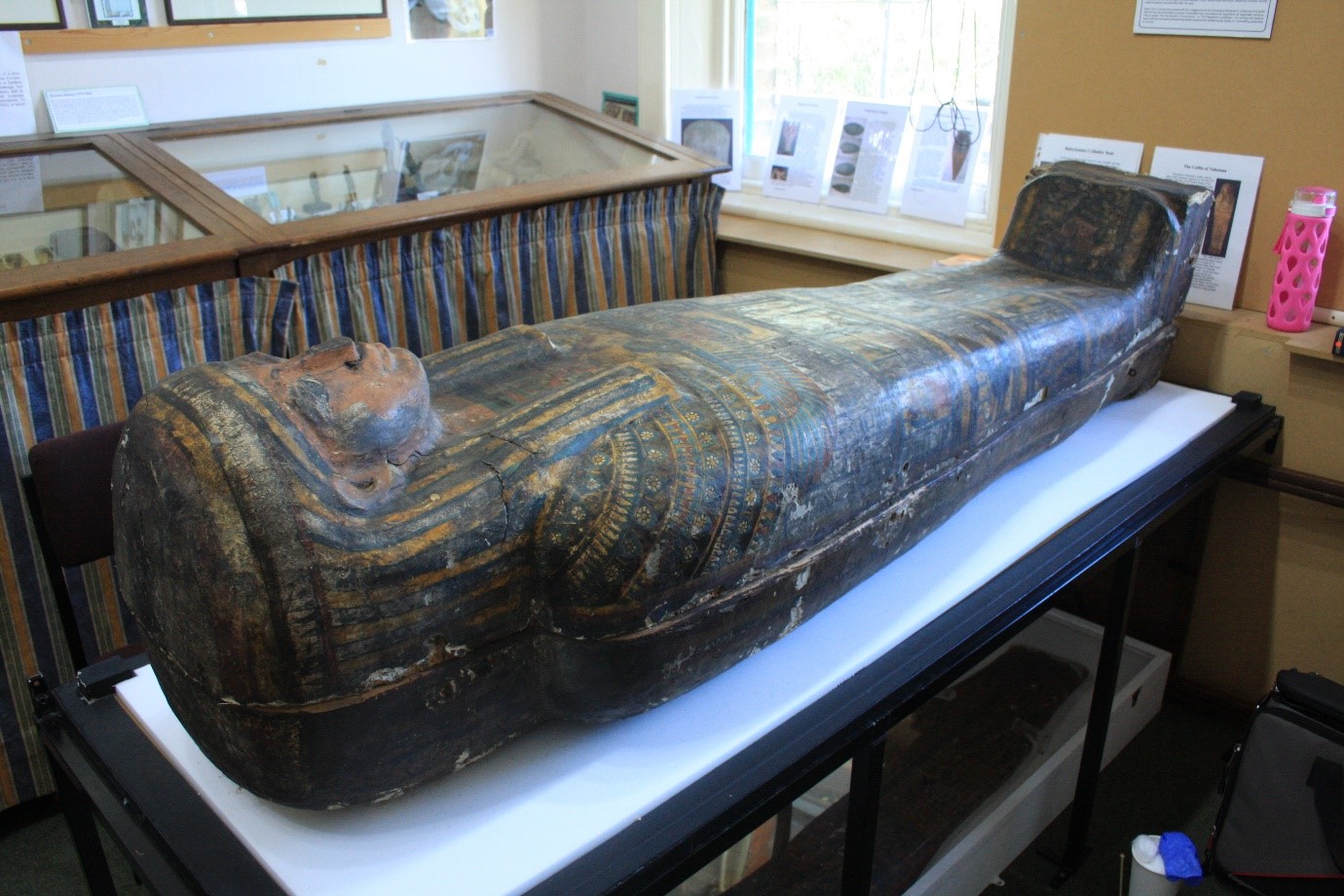
Tahemaa has been a resident of the Bournemouth Natural Science Society since 1922, when she was donated from the Salisbury museum (fig. 1). New research indicates that she arrived in the UK in 1823 from the ancient city of Thebes, now known as Luxor, on the river Nile. Her coffin is dated from 700 BC making her approximately 2700 years old. We know from the hieroglyphics on the side of her coffin that she was the daughter of a Hor a high priest of Montu, the Flacon-God of War. Other than this we know very little about her and her life in Egypt.

Figure 1. Tahemaa the Mummy at the Bournemouth Natural Science Society.

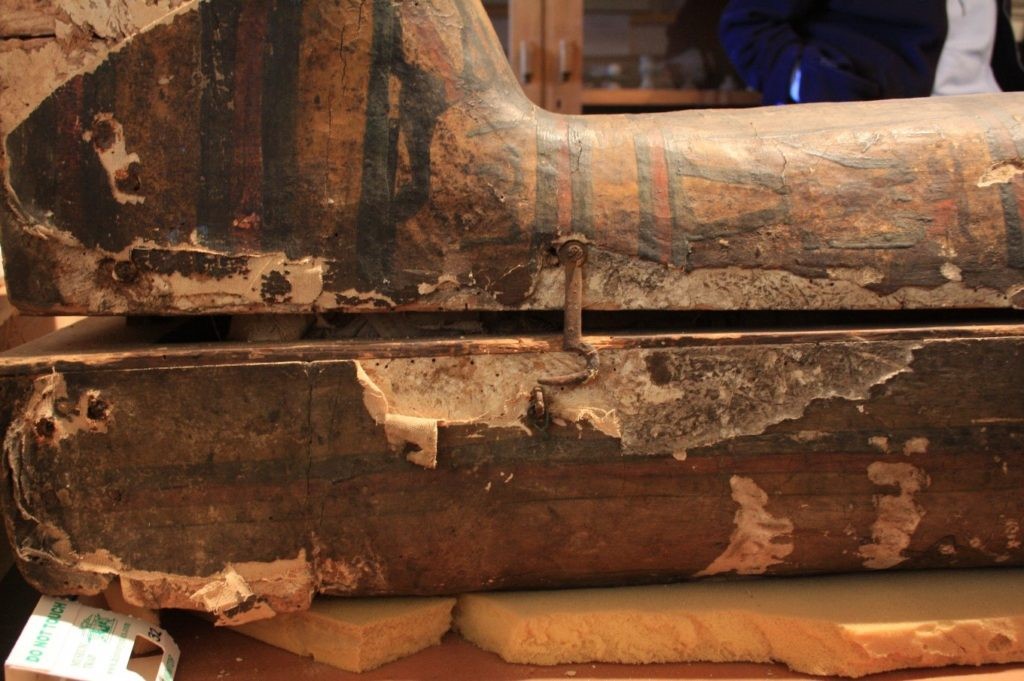
Tahemaa has been at the Society for nearly 100 years but she has spent most of this time locked away from public view. In 1993, the Society decided to put her on permanent display in the Egyptology exhibition. Since then she has been seen by thousands of admirers, however due to her age and fragile condition, she is in need of urgent conservation treatment. Hundreds of years in an unstable environment have caused significant damage to the coffin. The fluctuations have caused the wood, plaster layers and paint to crack and flake. The layers of the coffin have even separated in some areas, lifting away from the wooden frame (fig 2). Many years without a display case has also resulted in a thick layer of dark, engrained dirt concealing the original colours of her decorative paintwork (fig 3).

Figure 2. Layers of the coffin structure peeling away.

Figure 3. Original colours are darkened with the build-up of surface dirt.

Continue reading