Setting Natural Science Collections Data Free

Written by Jan Freedman (Freelance Museum Consultant).

Fossils. Rocks. Minerals. Invertebrates. Vertebrates. Plants. In the UK alone, there are an estimated 150 million natural science specimens spread across the country. These are a rich, unmatched record of biodiversity on our planet. Like a vast library, only the books are preserved specimens, and the information they contain is irreplaceable and unique to each one.

Every specimen is a record of that species, at that time, in that geographical place. And museums hold unfathomable amounts of data which can be used by researchers across the globe. We hold vast amounts of information with our specimens that can be used for research into climate change, habitat loss, biodiversity loss, pollution, food security and much more. But there is a conundrum, this data is currently locked up inside museums’ collections, how do we set them free?

Continue reading

Stepping Into The Genomics Age: A DNA Bank at World Museum, National Museums Liverpool.

By John-James Wilson, Curator of Vertebrate Zoology, World Museum, National Museums Liverpool.

From World Museum’s founding collection of study skins and taxidermy mounts bequeathed by the 13th Earl of Derby to the spirit-preserved amphibians collected by curator Malcolm Largen in the 1980s, World Museum’s Vertebrate Zoology collection has continued to expand and reflect the state-of-the-art in specimen preparation and storage.

As ethics around the sacrifice of animals for science have modernised, ‘traditional’ specimen types are no longer being prepared at the same rates, and growth of the collection has slowed abruptly. At the same time usage of the collection has diversified, including increases in requests for destructive sampling. In particular, the removal of small tissue samples, usually bird toe pad scrapes, is regularly requested for use in DNA extraction which produces a ‘pure’ DNA extract that can be used in a number of genomic investigations.

Continue reading

Persevering Through The Pandemic

Written by Paolo Viscardi, Curator of Zoology, National Museum of Ireland – Natural History.

Since Covid-19 hit the scene, time has not seemed to behave normally, with a Groundhog Dayesque sense of repetition that has eroded our patience and put our mental health to the test. For many people working with collections it has been a very difficult time, with projects being put on hold, contracts not being renewed, furlough and redeployment making normal work impossible and even the improvements seen in facilitation of working from home offering the thinnest and most tarnished of silver linings.

Dealing with leaks from the Dead Zoo roof

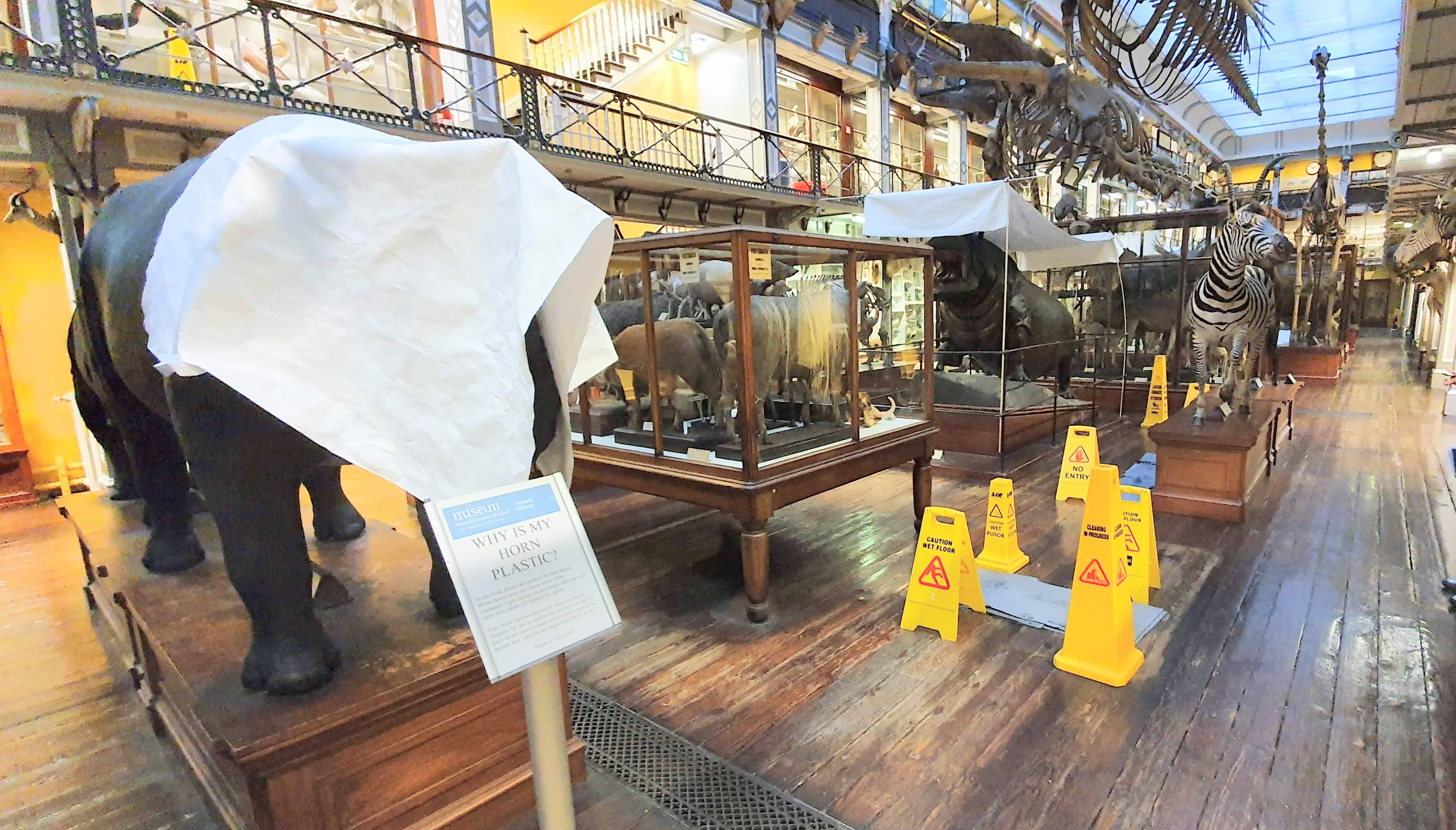
At the Dead Zoo in Dublin the pandemic has thrown up different challenges. With a leaking roof threatening the national collections, a project to safeguard them by undertaking a roof refurbishment was considered a priority and categorised as essential work. The first stage of this project was to remove two whales suspended from supports within the roofspace, which in turn required a substantial amount of preparation, given the crowded Victorian gallery space.

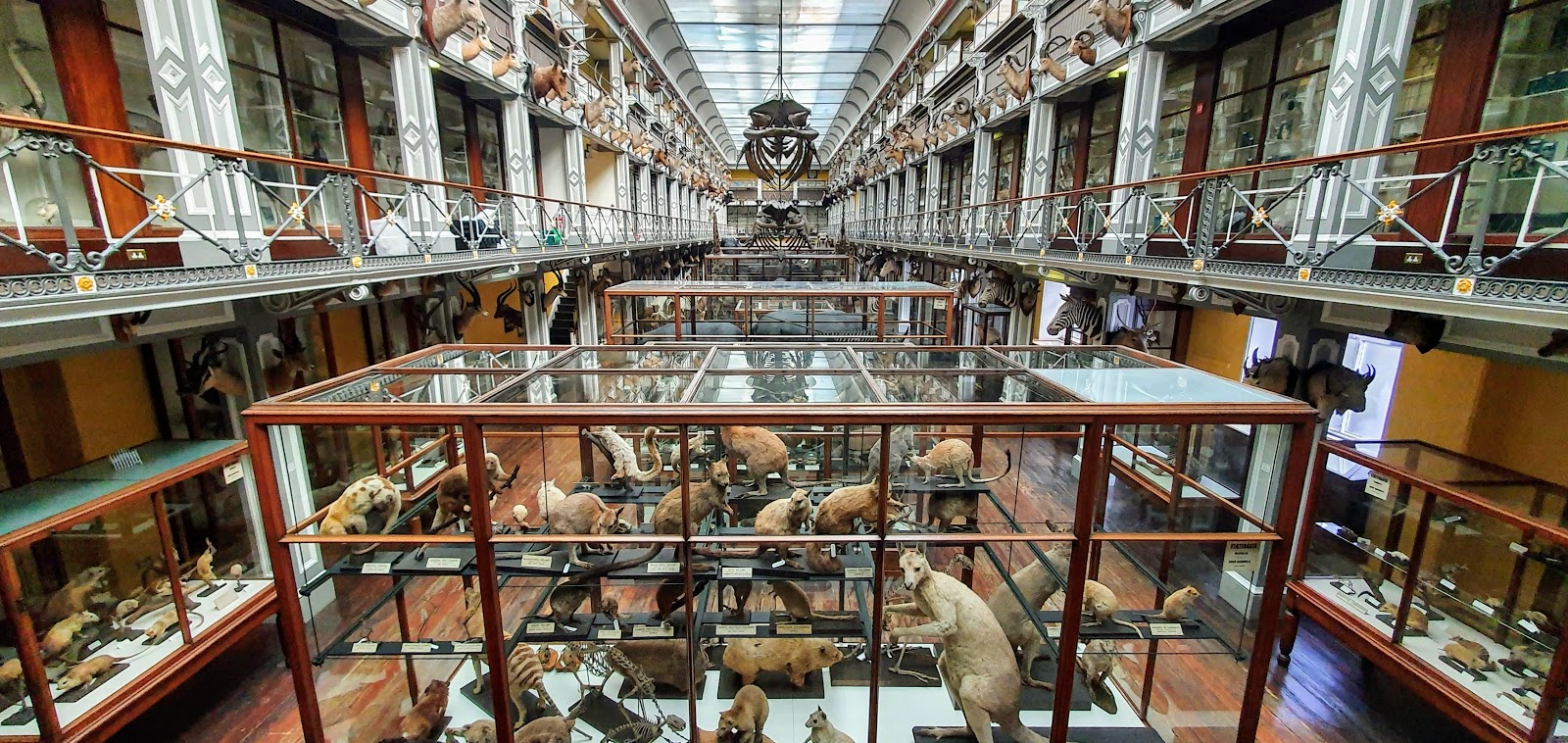
The 1st floor of the Dead Zoo, in all its crowded glory
Continue reading

Extinct – A New Exhibition At The Manx Museum

Written by Laura McCoy, Curator of Natural History for Manx National Heritage.

Wednesday the 8th September saw the opening of the new temporary exhibition ‘Extinct’ at the Manx Museum on the Isle of Man, in partnership with Manx Wildlife Trust, which also coincided with the launch of the Red Data bird list published by Manx BirdLife. There are many species that have become locally extinct on the Isle of Man, particularly birds and plants, and this trend is not slowing down, with the Yellowhammer, once one of our most ubiquitous farmland birds, disappearing from our Island only in 2019. Some may ask how these absences impact our day-to-day lives, why this matters, but as we are becoming increasingly aware, the complexity and variety of our environment is what sustains us; if you knock out enough of the bricks the wall will come tumbling down. These disappearances are symptomatic of a grave state of affairs and islands are particularly sensitive to changes in management and climate. The more protected and supported our environment is, the better it is able to withstand and buffer us from the global shifts that are to come.

When Manx Wildlife Trust came to Manx National Heritage with the idea of this exhibition we were fully on board; learning about these stories of the Isle of Man’s countryside has been a journey, sometimes an upsetting one, but it has also been a call to arms. I had no idea that currently 29% of our current resident bird species, never mind the ones that are already gone, are red listed, and 41% are amber. An estimated forty five species of plant are extinct, seventy seven are red listed. We are still trying to compile what invertebrates and fungi we have, never mind assess what has been lost. 

Continue reading

Size Matters: Pesticides in Large Mounted Vertebrate Specimens

Written by Becky Desjardins (Senior Museum Preparator & Conservator), Georgia Kay & Kim König (MSc students Museums & Collections – Leiden University; Naturalis Interns), Naturalis Biodiversity Center.

Back in 2013, Naturalis conducted a research project about arsenic in the museums’ specimens. The goal was to determine if arsenic was spreading from the collection areas into staff and or public areas of the museum. We tested many specimens with an XRF but also tested the elevators, door handles, floors, shelves, keyboards, etc. From this testing we developed protocols about handling specimens and how we use the spaces in the collection. You can read all about that project over here.

What didn’t get tested were the large mounted vertebrates. Back in 2013 the Naturalis collections were spread over a number of warehouses around Leiden. Because these external buildings were considered depots only (meaning no offices/canteens in these spaces) there was less concern about arsenic contamination in non-collection areas. The large vertebrates were considered to be high risk specimens (so very toxic), and were handled as such, they never had their moment with the XRF.

Continue reading