Written by Anna Robson, Associate Collections Curator – Biology, York Museums Trust
A new foyer case exhibition titled ‘The Life and Work of Botanist Catherine ‘Kit’ Rob: An insider’s look at the Yorkshire Museum’s Herbarium’ is now on display at the Yorkshire Museum. This exhibition displays the herbarium in a new light, being one of the only times the museum has exhibited the dried plant specimens to the public. It is also a special exhibit of material from Kit’s personal paper archive which has been kindly loaned by the University of York’s Borthwick Institute for Archives.
The Yorkshire Museum’s herbaria contain thousands of specimens, with its origins in the Yorkshire Philosophical Society (YPS) which was founded near 200 years ago. The YPS herbaria was first catalogued by Henry J. Wilkinson, Honorary Curator of Botany (1892 – 1933), and is still used as a reference guide by researchers interested in the museum’s herbarium and by curators.
Taking a walk through a forest, running through fields of wheat or even just gazing at trees, all a far-cry from dealing with the sheets of pressed, long-dead dried plants you come across in museum collections. Good taxidermy at least looks like the original animal.
Other problems with plant specimens include their need for low light, extremely careful handling and, occasionally, mercuric chloride. Despite being phenomenally important to researchers, for everything from tracking climate change to curing cancer, plant collections are not at the top of many people’s lists when it comes to exhibitions, events and workshops.
So, what public-facing engagement can you do with herbarium specimens? Here I’ve looked at a few great case studies where creative collections are delivering brilliant botany…Continue reading →
Written by Anna Robson, Graduate Intern Archaeology and Bioscience Collections, Durham University.
Background to the Collection
At Durham University, an herbarium of international scope has recently been reawakened revealing unique plant specimens and important stories about the Bioscience Collection as a whole. Over the past 18 months, the Archaeology and Bioscience Curator and Intern have undergone a process of conserving, managing, and researching the ex-teaching Bioscience Collection. Once part of the Bioscience Department’s teaching materials, this collection comprises of skeletal material, antler trophy heads, taxidermy, entomology, oology, a spirit collection and an herbarium.
To give a brief history to the collection, Durham University used to teach Zoology (established 1946) and Botany (established 1932), with Botany in the founding four departments of science in the University. The Department of Botany was spearheaded by Benjamin Millard Griffiths (1886-1942), one of the first readers in Botany who is described as a ‘true scientist’ and ‘inspired great affection’. As scientific advances changed from macro to micro to molecular, Durham’s Biosciences current department is an amalgamation of the former Botany and Zoology departments. Due to this shift, hands-on teaching using herbaria and animal osteological specimens gradually halted.
Written by Su Liu, BA English Language and Literature student at the University of Sheffield, formerly summer intern (2023) at Amgueddfa Genedlaethol Caerdydd – National Museum Cardiff.
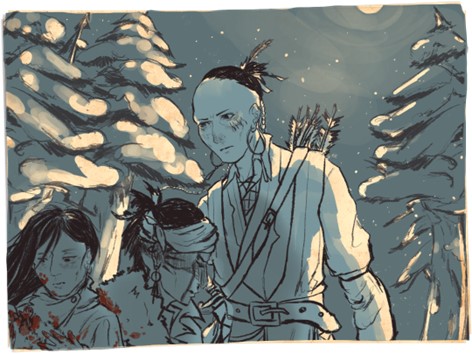
Thomas Drummond, a Scottish naturalist, witnessed the tragedy of his accompanying Native American family – the Iroquois hunters had just lost their beloved and a newborn in the severe winter of Saskatchewan, Canada. Yet their journey had to be continued to collect the 286 specimens in Drummond’s Musci Americani, one of the richest collections of North American mosses.
‘…the whole of the continent of North America has not been known to possess so many Mosses as Mr. Drummond has detected in this single journey.’ – Sir William J. Hooker (1830)
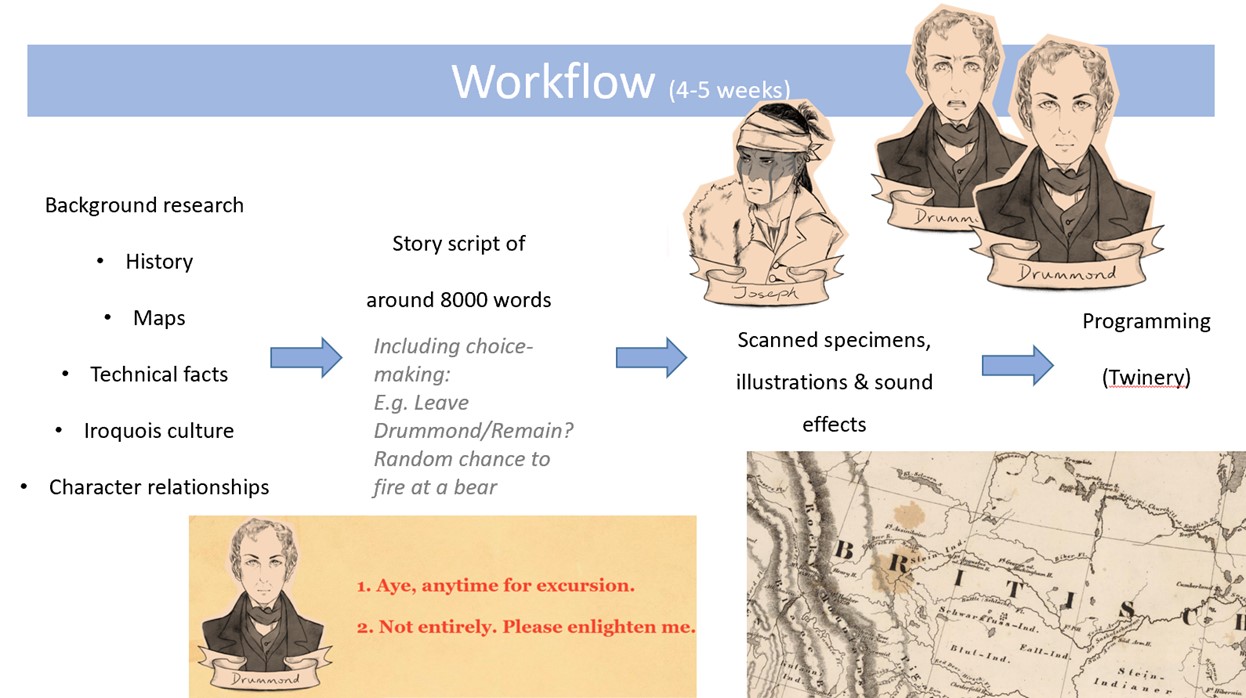
Above is a real event in Drummond’s Sketch of a Journey to the Rocky Mountains and to the Columbia River in North America, which records his excursions during Franklin’s second land expedition. It has been adapted into an interactive digital narrative, Snow, Bonfires and Mosses, in which the reader engages with a combination of novel, visualisations, sound effects and choice-making. Choice-making allows the reader to experience different narratives and explore possibilities amid ambiguities in history.
This browser game is accessible on most devices and comes with an ‘encyclopaedia’ that includes a selection of Drummond’s moss specimens and external links to the biographies of all historical characters.
Lost stories of a distant adventure and forgotten collectors
The story of Drummond’s adventure began in Saskatchewan, 1825, where he parted ways with Franklin’s party and was joined by Iroquois hunters employed by Hudson’s Bay Company, a dominant fur trading company at the time. Their journey near the Rocky Mountains was an underdeveloped version of Man vs. Wild, surrounded by hunger, blizzards, wildlife, and humans – conflict between different tribes continued regardless of the Europeans’ intrusion.
Drummond made excursions whenever he had the opportunity, followed by sleepless nights when he had to treat his specimens before the fur brigade departed. At times, he failed to follow the fur brigade’s pace and consequently much of his work was lost or destroyed. By the time he was brought back to reality from work, he realised that he had been left ‘alone with the Indians’.
In contrast with Drummond’s objectives, the emphasis of the expeditions had been more on the exploitation of new trading routes. The capitalist powers were eager to establish colonial influence in North America and appeared to have taken local labour for granted, so the natives were not having a great time either. Drummond sometimes found the ‘fickleness’ in them hard to deal with but nevertheless depended on their work.
My colleague and BA history student Harry Pointon has pointed out the conventionalised indifference towards local hunters in the early 19th century, whose contributions are acknowledged in Drummond’s Sketch due to the complexity of his journey, as the natives play essential roles in the naturalist’s survival and are experienced guides to the flora in their natural habitat. With that in mind, my digitalisation of the exsiccatae (numbered collections of dried herbarium specimens with a common theme or title) goes in tandem with decolonising the history of the participants, especially the Native Americans.
Behind the scenes of Snow, Bonfires and Mosses
I had a blast writing, drawing and programming to make historical science approachable without being a bore, especially for slightly older children. It was hard to imagine myself working on two-hundred-year-old mosses as an English student, but I was beyond excited to see moss specimens in a great variety of sizes and colours. With the help of the Biodiversity Heritage Library (BHL) and my supervisors, I was able to put together a full timeline of events without much barrier to scientific knowledge.
The historical accounts were quite a fun read. Early modern science writing (approximately from the 17th century onwards) consisting of all sorts of information, from each step of the experiments (even if it results in failure) to personal remarks from the researchers. Unlike contemporary science writing which aims to be brief and impersonal, these accounts are vividly descriptive, and they highlight the presence of all participants: naturalists, hunters and fur traders. Drummond’s Sketch is an excellent resource that conveys his passion for botany and has proven itself practical in helping me construct my storytelling of the specimens. It is also proof of Native American involvement in naturalist excursions.
Apart from the emphasis on Drummond’s excursions and specimens, the narrative also presents parts of Native American culture throughout the characters’ dialogues. Iroquois people, for example, tend to have a strong belief in astrology and female leadership. This will hopefully create a fuller image of the Indigenous collectors, their lives, and the ways they were treated by the Europeans.
As a literature student, my understanding of decolonising history is the liberation of artefacts from hidden archives and unravelling the stories of neglected participants in the most accurate detail as possible. Drummond’s Sketch is perhaps a fortunate case for decolonising the archive, considering the common lack of credit for Native Americans. It is encouraging to see readers entertained and captivated by the story, and hopefully this has been an inspiring attempt at digitalising and decolonising museum archives for educational purposes.
Written by Annette Townsend (Interdisciplinary Natural History Artist) & Sally Whyman (Curator: Botany Curator, Amgueddfa Cymru – National Museum Wales).
Aliens 1956. Close-up. Annette Marie Townsend. Image Dewi Tannatt Lloyd
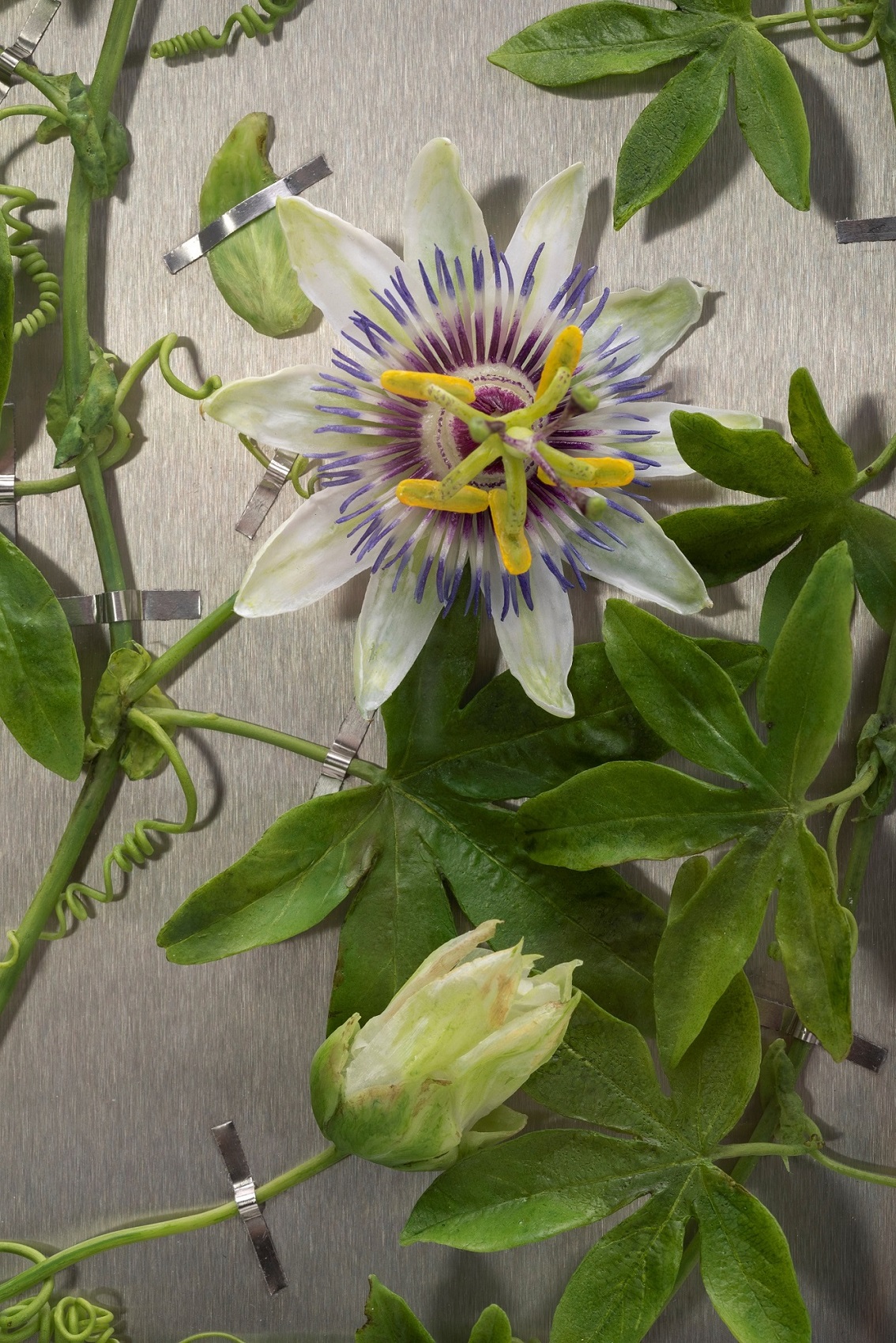
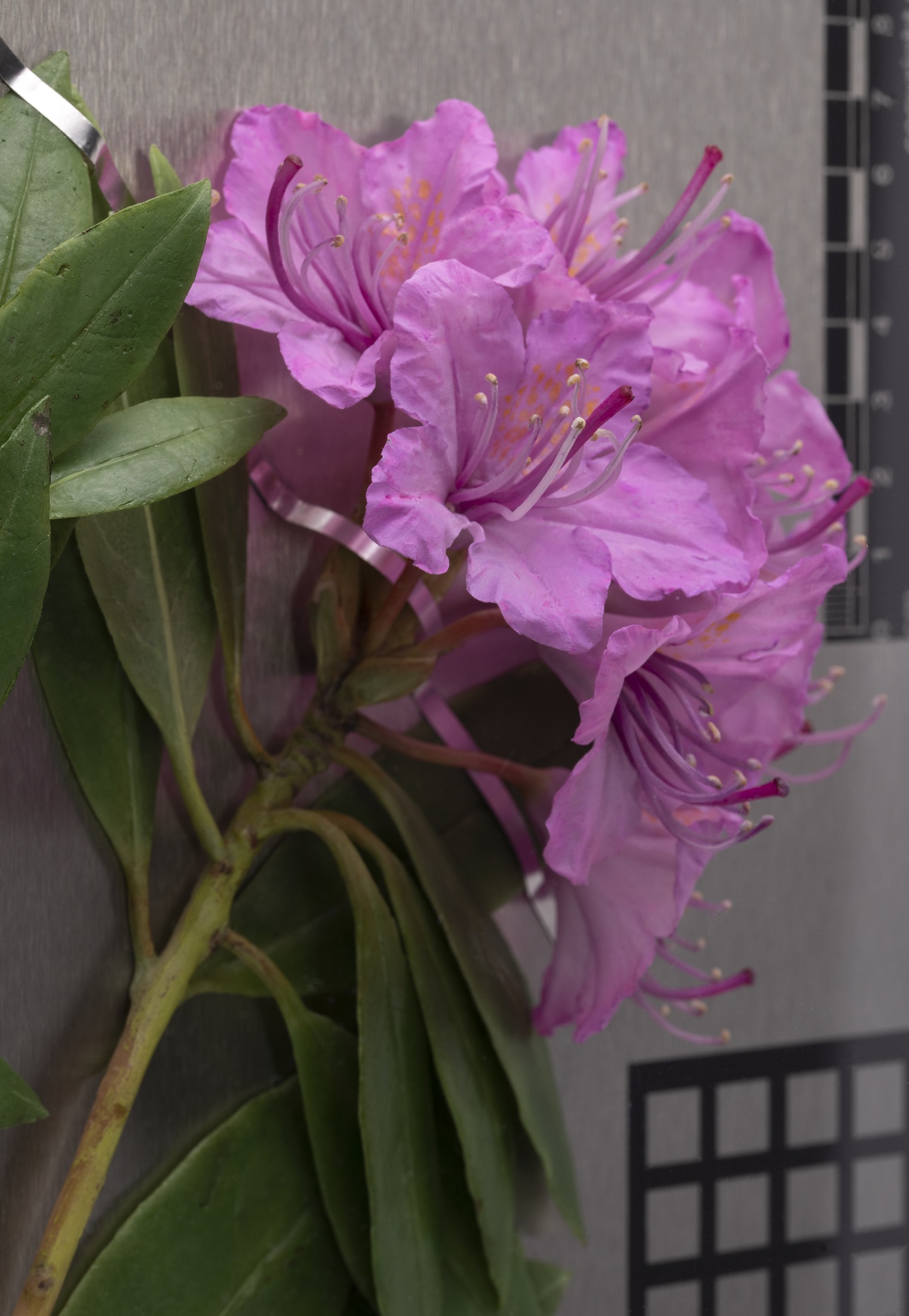
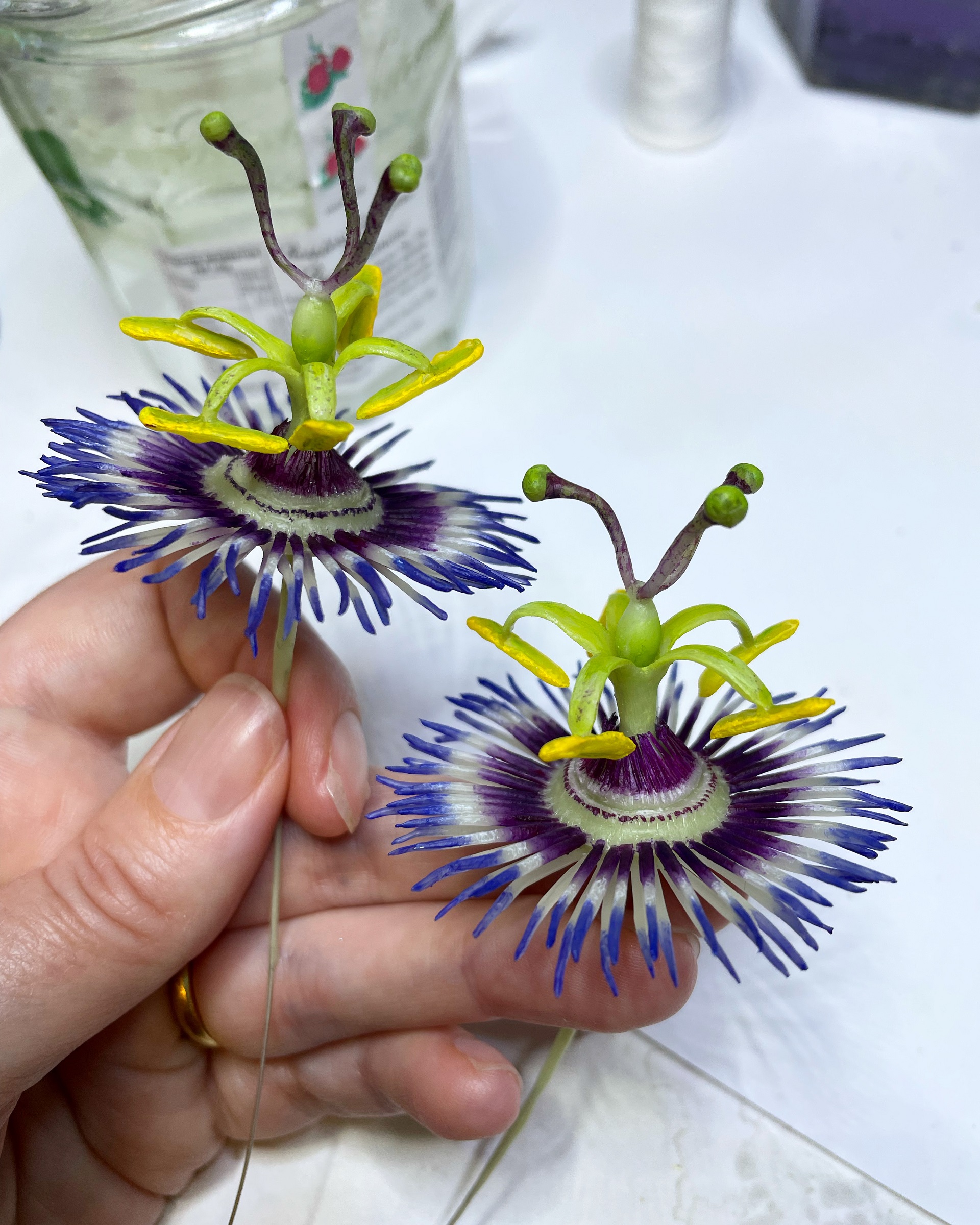
Plants growing on the wall of a London art gallery!! On closer inspection you discover they are alien plants, introduced to the UK. Looking even closer you realise they are delicate sculptures, handmade from beeswax, paraffin wax, tinned copper wire, tissue paper, cotton thread, artists’ pigments, acrylic paint and acrylic varnish.
Aliens 1992. Close-up. Annette Marie Townsend. Image Dewi Tannatt Lloyd
Mounted on stainless steel plates with stainless steel strips, and epoxy printed collector labels, in a juxtaposition of historic and modern materials and techniques, each sculpture mimics a real herbarium sheet, found in the Welsh National Herbarium, Amgueddfa Cymru.
Wax passion flowers in progress. Image A.M. Townsend
The brainchild of Annette Marie Townsend and Sally Whyman who wanted to combine the skill, vision and dexterity of the artist with the depth of collection knowledge of the curator, allowing the plants to come to life and escape the confining folders and cabinets of the herbarium. This Aliens series allows the plants tell their stories of biodiversity change and invasive species to new audiences, further afield than museum visitors and botanical researchers.




 NatSCA