Creating a New Diorama at the Booth Museum of Natural History

Editors note: This is the second of two concurrent blogs about the new diorama at the Booth Museum. Click here to read the first and find out more about how the diorama was created.

Written by Su Hepburn, Head of Learning & Engagement, Brighton & Hove Museums.
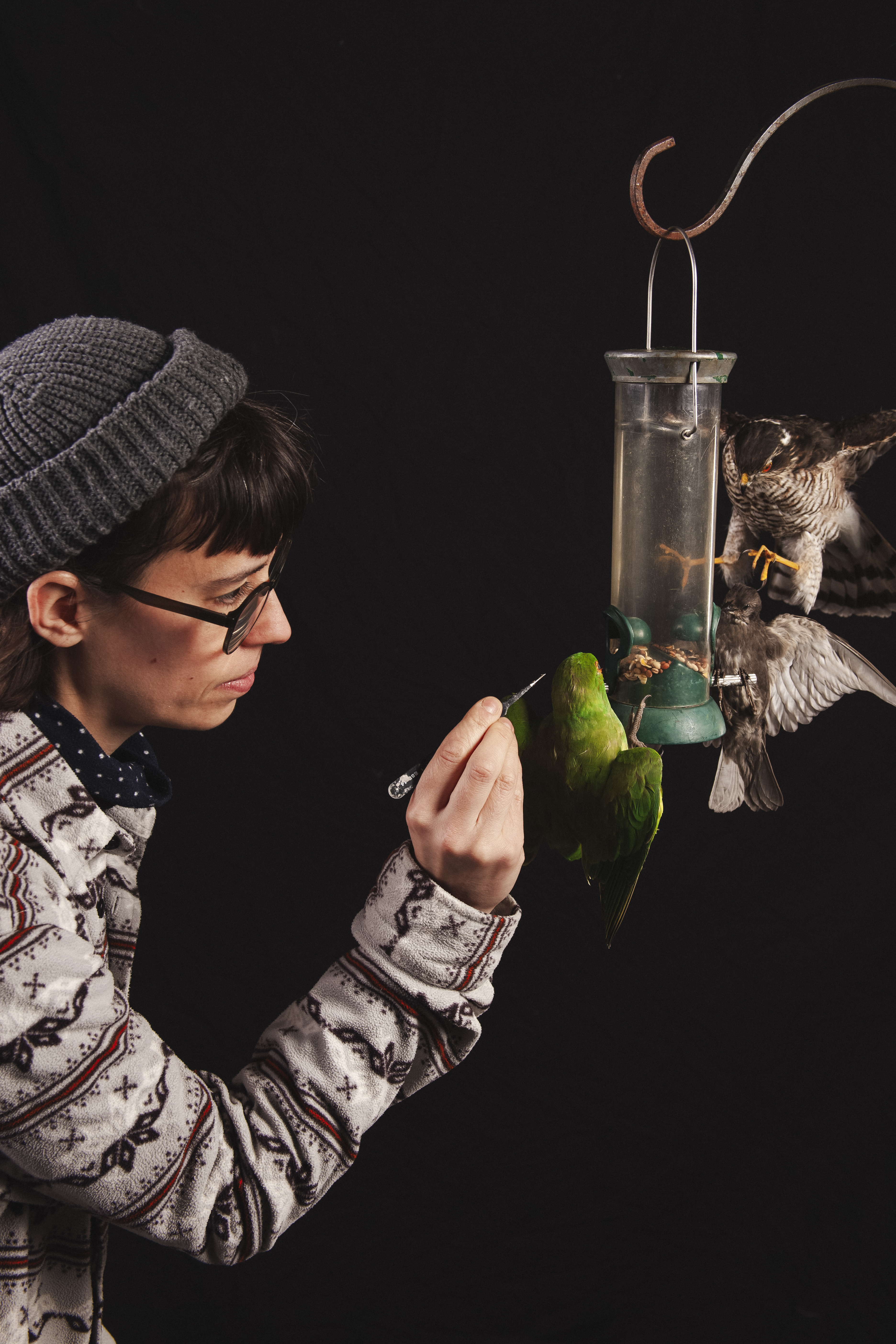
Jazmine Miles-Long, Taxidermist © Laurence Dean Photography

Why a new diorama?

In the autumn of 2022, we started our ‘Discover our Dioramas’ project at the Booth Museum of Natural History, part of Brighton & Hove Museums. Funded by an Esmée Fairbairn Collections Fund of £50,000 we set about building the first natural history diorama at the museum in 92 years. This was a significant project for a museum whose Victorian creator Edward Booth had lined every wall with dioramas of birds. Dioramas are an ideal way of storytelling. They are visual and can get a lot of key information to audiences without the need for words.

Alongside this we were also given £3000 from Rampion Windfarms to research and display more information about people especially women involved in the museum’s history. 

These projects gave us the time and space to be playful and to make friends. To impact on our audiences, our staff, our collections, and our future practices. It has brought joy to the museum, visitor and staff alike. 

Continue reading
Creating a New Diorama for The Booth Museum of Natural History – Taxidermy, Silk flowers and Wax Slugs.

Editors note: This is the first of two concurrent blogs about the new diorama at the Booth Museum, you can read the second one here.

Written by Jazmine Miles Long, Taxidermist. https://www.jazminemileslong.com, Twitter: @TaxidermyLondon; Instagram: @Jazmine_miles_long

The Booth Museum of Natural History was founded in 1874 by naturalist and collector, Edward Thomas Booth. Mr Booth collected a huge variety of British birds and was a pioneer of the taxidermy ‘diorama’, displaying birds in their natural habitat. His collection of over 300 detailed cases were donated to the city of Brighton in 1891 with the proviso the dioramas would not be changed. In 1971 the Booth became a Museum of Natural History. Today alongside the dioramas the museum has a huge collection of 525,000 insects, 50,000 minerals and rocks, 30,000 plants and 5,000 microscopic slides.

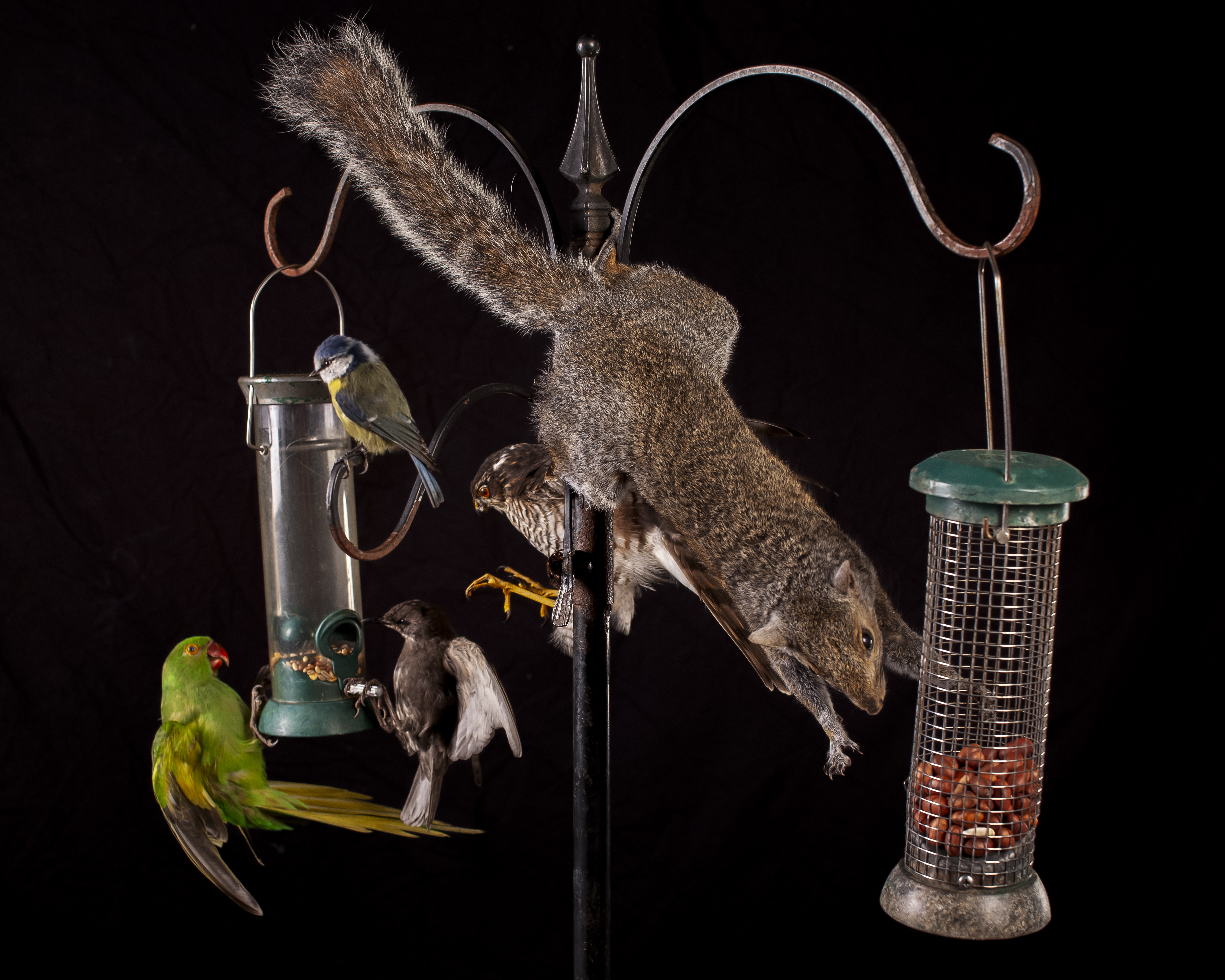
Life in the Garden. Image credit: Laurence Dean.
Continue reading

Exploring Materials in Natural History Dioramas

Written by Claire Dean, Curatorial Assistant at Tullie House Museum and Art Gallery, Carlisle, and MA Preventive Conservation student at Northumbria University.

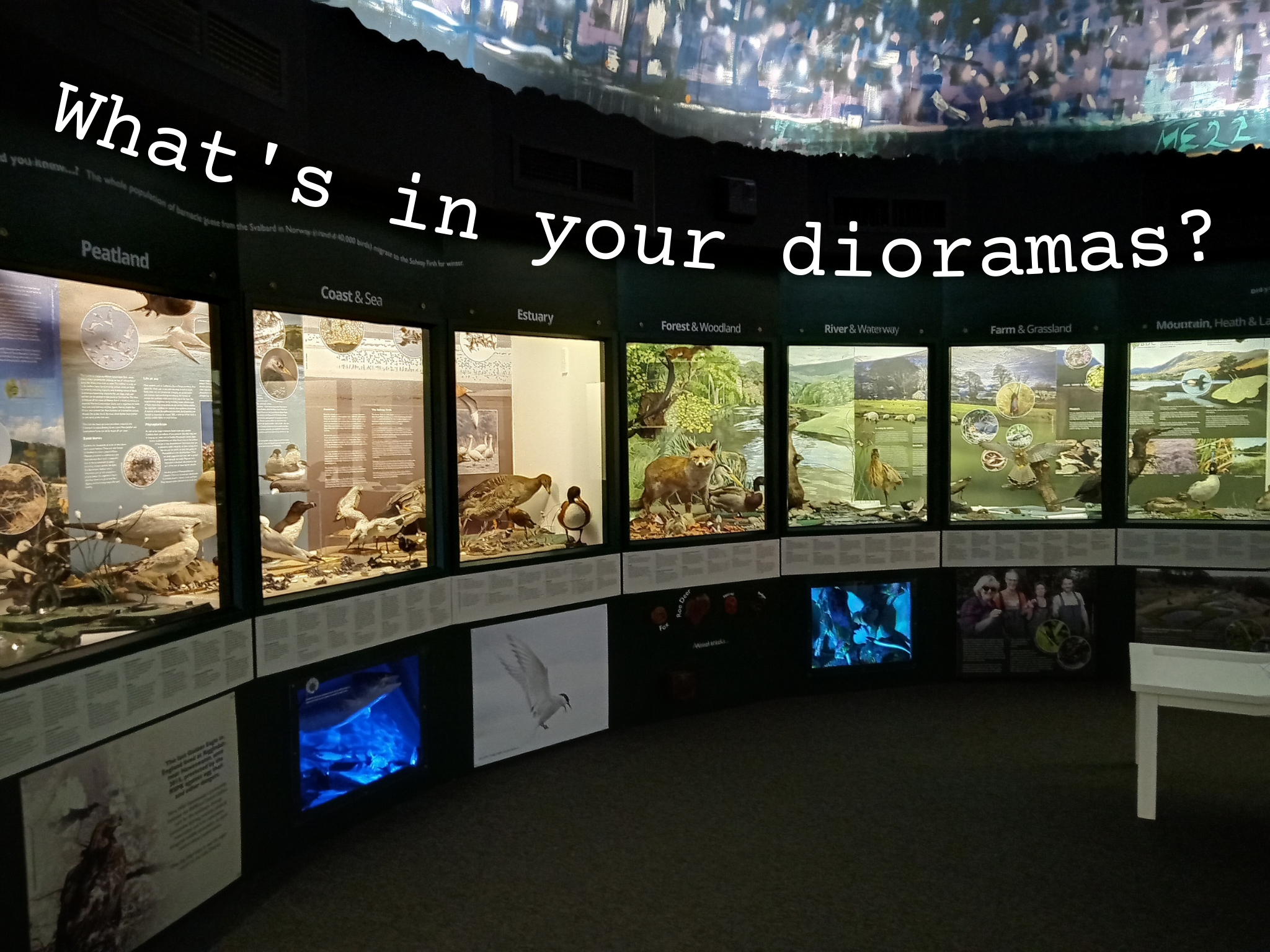
The wildlife dome at Tullie House Museum and Art Gallery
The wildlife dome at Tullie House Museum and Art Gallery Carlisle, C. Dean

In many old dioramas, material mysteries abound. As a Curatorial Assistant at Tullie House, I’ve encountered a tree trunk made from a Robinson’s fruit juice box, a fake roof that contained fibrous signs of asbestos, and a hodgepodge of unidentifiable paints and old plastics. The museum’s new-in-post Biodiversity Curator discovered pests thriving amongst the real vegetation and a 30-year-old slice of bread in a garden scene.

Dioramas aim to create the illusion of real habitats for their taxidermy inhabitants, and they use a huge range of materials to do so. After decades of neglect and destruction there is now wider recognition that habitat dioramas can instil a sense of wonder in visitors that no amount of digital wizardry can replace. Through my dissertation research for an MA in Preventive Conservation at Northumbria University, I wanted to find out more about what materials have been used in dioramas over time, how these might impact the preservation of specimens, and what we can do to better protect the dioramas that remain. I put a call out to ask, ‘What’s in your dioramas?’ through an online survey and received 30 responses from people with experience in a range of different sized institutions and private practice.

Continue reading

Animal Afterlives: Photography, Dioramas, and Forgetting that Taxidermy is Dead

Written by Jack Ashby, Assistant Director of the University Museum of Zoology, Cambridge.

A key aspect of taxidermy is that it permits the viewer to forget the animal is dead – something that is rather hard to miss when considering skeletons, specimens preserved in fluid, or insects with a pin stuck through them. Allowing ourselves to be tricked into thinking we are looking at a living, breathing – albeit very still – creature is surely one of the reasons that museum visitors so often ask, “Is it real?” when encountering taxidermy on display.

Eventually, it is the stillness that breaks the illusion, along with the obvious realisation that, no, it simply isn’t possible for a live tiger/antelope/walrus to be sat there behind glass in an urban building.

Continue reading