The Rediscovery of a Challenger Expedition Specimen in William Herdman’s Zoology Museum Collection at the University of Liverpool (and how digitisation is transformative).

Written by Leonie Sedman, Curator of Heritage & Collections Care, University of Liverpool.

Along with many other NatSCA members, I care for a mixed collection, meaning that one inevitably becomes something of a ‘Jack of all trades’ missing out on the academic satisfaction created by specialisation. As a curator who finds collections research to be the most satisfying part of my job, it can be frustrating when that research is often only possible on a ‘need-to-know’ basis – usually when a new display or exhibition is being planned, or when the specimens are to be used in teaching. Looking on the bright side though – this does provide glimmers of joy when the research produces something exciting!

In 2004 when I was first employed to manage the University of Liverpool’s Heritage Collections (medical & scientific museum collections built up through research or teaching), I retrieved a large proportion of the collections from attics and cellars where they languished because the objects and specimens were no longer actively used in teaching (this is now changing – but that would be a different blog). The Zoology Museum collection was one of these.

Continue reading

Dropping a Pin on the Salter Collection

Written by George Seddon-Roberts, PhD Student, John Innes Centre, work completed whilst on placement as a Curatorial Intern at Amgueddfa Cymru – Museum Wales.

When accessing an entomology collection, there are a few things that a researcher can expect to find. Each specimen should be pinned with labels describing its species and information about where it was collected – two valuable pieces of information which can help researchers to trace the specimen’s origin geographically and in time. Knowing where and when a specimen was collected can help researchers better understand the historical landscape and ecology and make predictions into the future. However, when collections receive specimens from private collectors, this standard of labelling might not be met. As part of a 3-month internship at Amgueddfa Cymru – Museum Wales, I aimed to transform one such collection.

The collection in context 

John Henry Salter (1862-1942) was an academic and naturalist, who spent much of his life as a lecturer at University College of Wales in Aberystwyth, where he would later be appointed as the first Professor of Botany. Outside of academia, Salter was a prolific collector of insects across several groups, most notably including coleoptera (beetles) and lepidoptera (butterflies and moths). Salter’s collection contains specimens from across Wales, as well as England, Tenerife and south-east France; regions where he spent time during his retirement. The specimens, which amount to over 15,000 individuals, were meticulously recorded in field logs by Salter, which were also donated to the museum with the collection.  

Continue reading

Discovering Treasures in the Depths of the Dagnall.

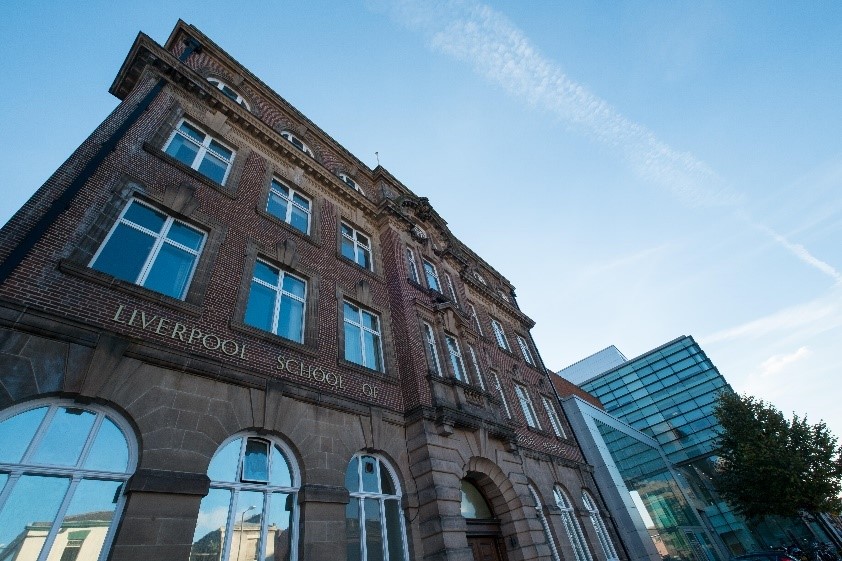
Written by Ruth Cowlishaw of Liverpool School of Tropical Medicine.

This year marks Liverpool School of Tropical Medicine’s 125th anniversary. The school was the first institute of its kind back in 1898, built to help investigate some of the tropical diseases brought back to the busy port city from shipping expeditions and trade. To celebrate such a major milestone an array of events and activities have been planned by the school, including outreach events and fundraising, whilst also giving us a chance to reflect on our history. One such planned scheme was the distribution of internal funds for exciting projects, proposed by staff members that would make a difference in this very special year.

Mary Kingsley Building, LSTM. ©LSTM

The Dagnall Laboratory situated in the Mary Kingsley Building is the main teaching laboratory for the school. Within its walls it houses many historical pathological and entomological samples, from mosquito wings and blood films to seven-meter-long tapeworms. Throughout the years a selection of these samples has been used to help educate thousands of medical professionals, postgraduate students and armed forces personnel. However, a large part of the collection became forgotten and neglected as specimen preservation skills and staff were lost over time. With news of potential funding myself and the team saw an opportunity to rediscover these “lost” specimens and decided to put together a bid with the aim to reinvigorate our collection. The project not only aligned with the 125 Anniversary theme of Heritage and History but also looked forward to the future.

Continue reading

Flora Explorer: Opening the Cabinets at Portsmouth Museums.

Written by Violet Nicholls, Assistant Curator (Herbarium), Portsmouth Museums.

Plants, lichens and fungi have captured the interests of collectors, scientists and artists for centuries, and I have discovered something about them for myself. As time passes from them being found in the field, they don’t get any less complicated, any less fascinating or any less beautiful. I am about 6 months into a two-year project working on the Guermonprez Herbarium called “Flora Explorer”, which is funded by the Headley Trust.

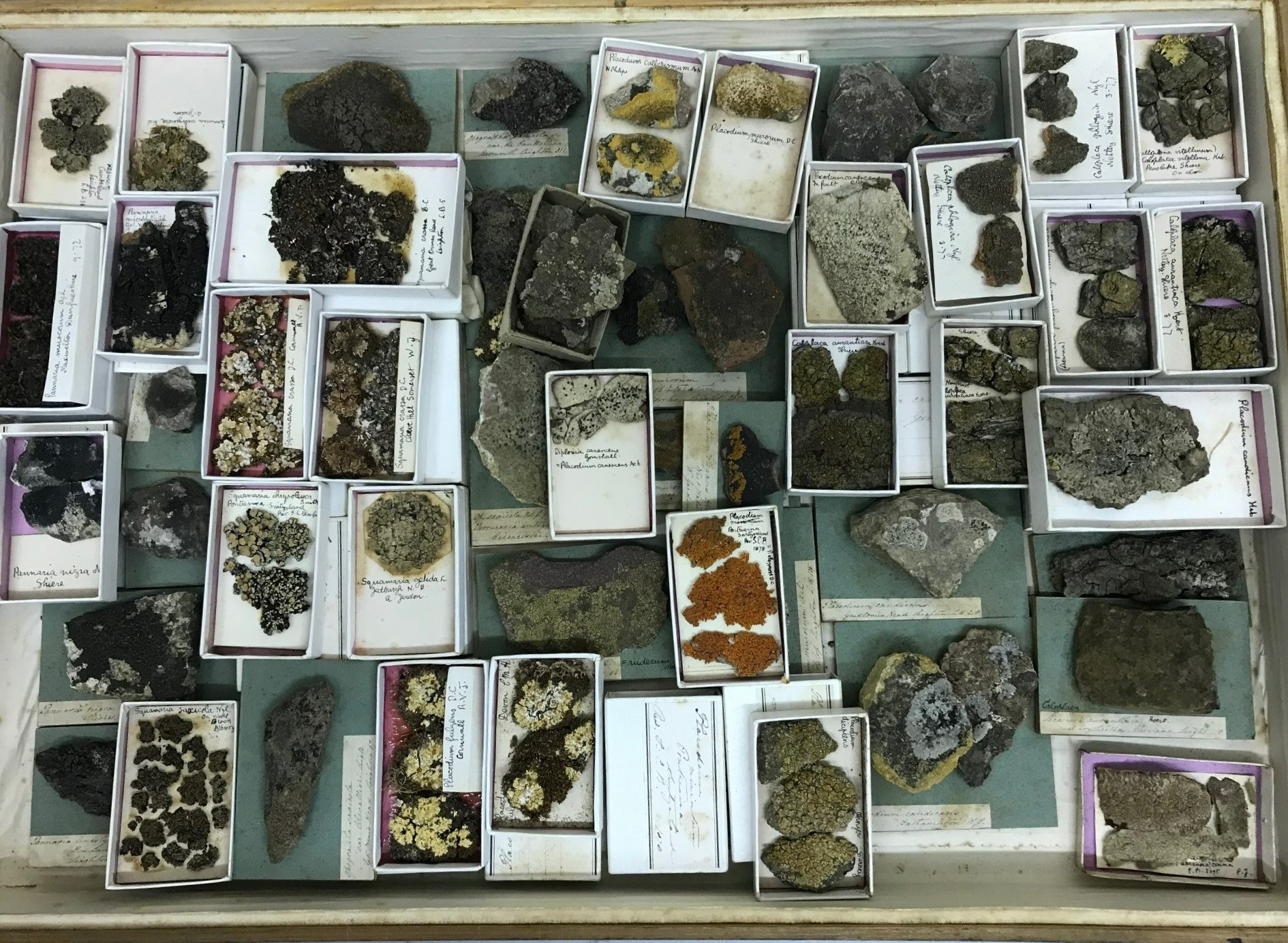
Image of lichen specimens in open trays
Fig. 1. Drawer of colourful specimens from the lichen cabinet.

The Herbarium

I have been cataloguing and studying the plant, fungi and lichen collections at Portsmouth Museums, and am learning a huge amount about past collecting practices, as well as taxonomy and the collectors themselves. There were so many! Sixty-two different names have cropped up whilst cataloguing the herbarium, with nearly 1000 plant specimens recorded on the database so far. There are around 10,000 plants in the Guermonprez Herbarium in total. How many more names will appear?

Henry Leopold Foster Guermonprez (1858-1924) was a taxidermist, ornithologist and “a botanist who should have been better known”.1 The herbarium is made up of plants collected by Guermonprez and members of his family, plants that were sent to him, and others that were purchased. The large collection was transferred from Bognor Regis Museum to Portsmouth Museum in the 1970’s. Many specimens were collected from West Sussex, where I have lived for most of my life.

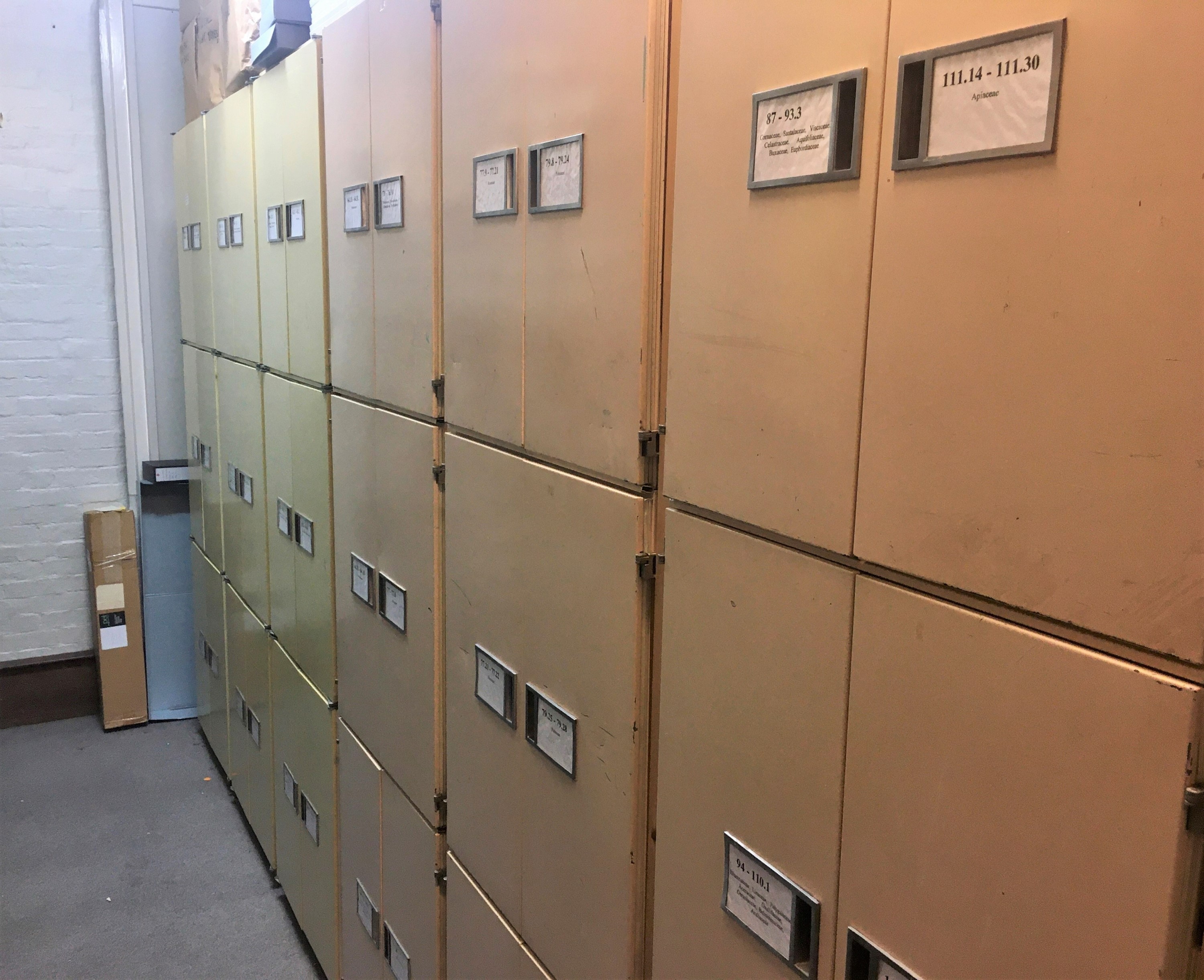
“Flora Explorer” builds on work carried out during the “Wild about Portsmouth” project, funded by the National Lottery Heritage Fund. The herbarium is organised into taxonomic order, stored in sealed herbarium cabinets, and the specimens are being catalogued using the relational database used by over 650 museums in the UK, Modes Complete. Digitising the collection has many benefits as it increases access for researchers, and for people who may need the data but can only obtain it remotely. Through the process I have also been updating the taxonomy where necessary, which adds further value to the collection.

Image of herbarium cabinets at Portsmouth City Museum
Fig. 2. Herbarium cabinets at Portsmouth City Museum, containing plant specimens arranged into taxonomic order.
Continue reading

A Collection of Sri Lankan Bird Skins.

Written by Eimear Ashe, Documentation Officer, National Museum of Ireland – Natural History.

The Temporary Number

During the course of my work in the Natural History Division of the National Museum of Ireland, (NMI) I came across a couple of boxes of bird skins that were in the wrong place. By deciding to move them to their correct place, I opened a metaphorical can of worms. It turned out that these 200 bird skins had been assigned modern numbers during a volunteer project 16 years ago. In the intervening period, the original accession number had been discovered. Never one to leave a wrong number in place, I took on the challenge to renumber this collection before rehousing them.

The Donor

First, I read the acquisition register and found the donor to be a gentleman named Colonel James Grove White, a career British Army officer. Upon retirement, Grove White came to live in Co. Cork in the south of Ireland, and like many British men in Ireland at that time, he came to hold high office during various periods, and was very active in the local community. It was during his time in Ireland, almost 100 years ago, that he donated his collection of “Ceylonese” bird skins. Presumably these were collected by him while on duty in Sri Lanka, although there is no documentation in the NMI to contribute the field collection details, other than the labels on the birds themselves.

Continue reading