Creating a New Diorama at the Booth Museum of Natural History

Editors note: This is the second of two concurrent blogs about the new diorama at the Booth Museum. Click here to read the first and find out more about how the diorama was created.

Written by Su Hepburn, Head of Learning & Engagement, Brighton & Hove Museums.
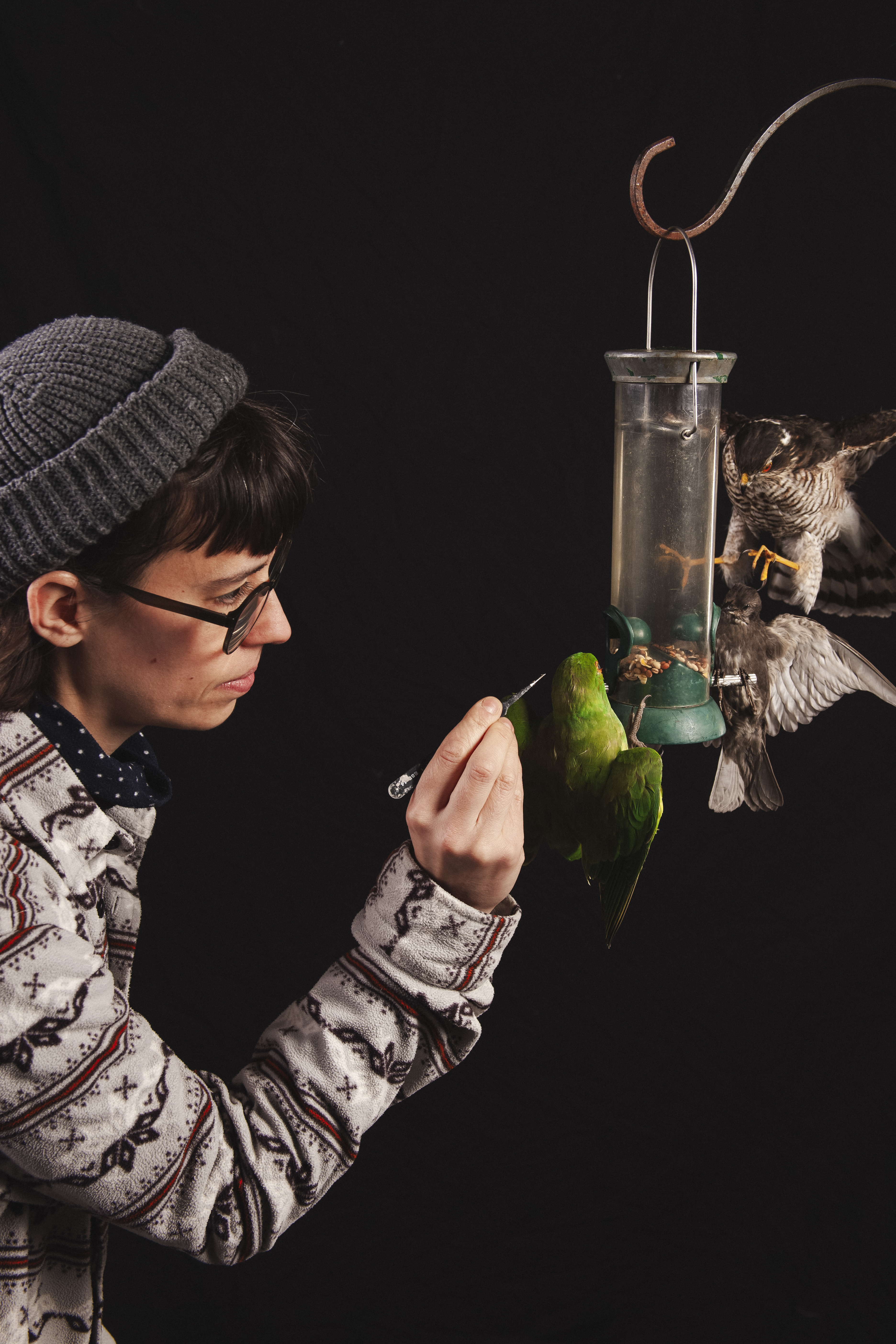
Jazmine Miles-Long, Taxidermist © Laurence Dean Photography

Why a new diorama?

In the autumn of 2022, we started our ‘Discover our Dioramas’ project at the Booth Museum of Natural History, part of Brighton & Hove Museums. Funded by an Esmée Fairbairn Collections Fund of £50,000 we set about building the first natural history diorama at the museum in 92 years. This was a significant project for a museum whose Victorian creator Edward Booth had lined every wall with dioramas of birds. Dioramas are an ideal way of storytelling. They are visual and can get a lot of key information to audiences without the need for words.

Alongside this we were also given £3000 from Rampion Windfarms to research and display more information about people especially women involved in the museum’s history. 

These projects gave us the time and space to be playful and to make friends. To impact on our audiences, our staff, our collections, and our future practices. It has brought joy to the museum, visitor and staff alike. 

Continue reading

Making a Green Gallery – A Leeds Story

By Sara Merritt, Audience Development Officer at Leeds Museums & Galleries.

Us: We want to retro-fit a permanent gallery! As sustainably as possible! With £40k! In two months! And we want to keep the space open to visitors!

Them: Umm, are you sure that’s a good…

Us: Great! We’ll get cracking.

2022 saw us undertake the retro-fit of our permanent Life on Earth gallery at Leeds City Museum, with the aim of making it as sustainable as possible. The gallery required an overhaul to meet current visitor expectations, with innovative design ideas and production methods to reflect our greater understanding of climate change, the biodiversity crisis, and Britain’s colonial history.

Our objectives were threefold and carefully considered:

  • To manage and deliver a sustainable retro-fit with the addition of creating a carbon calculator to measure our C02 output
  • To ensure the interpretation was relevant, and that we had a strong idea of our target audience to attract visitors who were already engaged in making climate-positive changes.
  • To identify robust materials and production methods which would stand up to visitors pulling, prodding, and everything in between.

We were used to working with greener materials for temporary exhibitions and knew the implications around material availability, longevity of eco materials, and higher associated costs. We therefore needed to keep the project resource light and put our efforts into the interpretation, rather than dramatic object moves. We took the bones of what we had, large cases and great objects, and retold the story with the emphasis on using our objects to inspire our visitors to live more sustainably.

Continue reading

Putting Natural History Museums to Work for Human Rights

Written by Henry McGhie, Curating Tomorrow, henrymcghie@curatingtomorrow.co.uk.

Every year, 10th December is commemorated as International Human Rights Day, the date when the Universal Declaration of Human Rights was adopted by the members of the United Nations. This year is particularly momentous, as it is the 75th anniversary of the Declaration’s adoption. What has this got to do with museums? The original Declaration includes a number of commitments (set out in 30 Articles) that are obviously related to the work of museums: the right to education, the right to information and freedom of expression, the right to take part in public affairs, among others. Museums often focus on one (article 27) that gets summarized as being ‘the right to participate in cultural life’, but that isn’t it’s full or proper title or scope: more correctly, it is that “Everyone has the right freely to participate in the cultural life of the community, to enjoy the arts and to share in scientific advancement and its benefits.” Note especially the part about sharing in scientific advancement and its benefits: we will come back to this.

Now, the Universal Declaration is not perfect, it is 75 years old after all, and it reflected a world rather different than our world today. Hundreds of millions of people were still under colonial rule. The environment didn’t feature in the Declaration, as human impacts on the environment were not as massive, and not as obvious. Nevertheless, the Declaration has been supplemented by many additional agreements, many of which have a legal standing. However, the necessity of a decent quality environment has been recognized for decades. Indeed, it has been argued that most or possibly all of the 30 rights in the original Universal Declaration rely on a decent quality environment. Sustainable development really got going in the early 1970s, with the Stockholm Conference on the Human Environment, that recognized that people have a right to a decent quality environment. Fast forward 50 years, to 2022, and that right was finally formally recognized by the United Nations. More recently, the inherent rights of nature have been the subject of court cases and in some cases natural features have been granted rights, which helps protect them and to take polluters to court for environmental damage. 

Continue reading

Rights-based Environmental Action: A key element of Sustainable Development

Written by Henry McGhie, Curating Tomorrow, henrymcghie@curatingtomorrow.co.uk.

Bio: Henry McGhie has a background as an ecologist, museum curator and manager. He set up Curating Tomorrow in 2019 to help empower museums and their partners to contribute to sustainable development agendas, including the SDGs, climate action, biodiversity conservation, Disaster Risk Reduction and human rights. He is a member of the ICOM Sustainability Working Group, and a Churchill Fellow working on these topics.

This blog post takes in some of the development over the last couple of years, and sets out some current opportunities for museums with natural history collections to strengthen their contributions to environmental sustainability.

This blog post builds on a previous post, on the Convention on Biological Diversity and the Paris Agreement. 

Museums can seem to have lots of rules – conditions for loans, environmental conditions, rules for acquisition and disposal, rules on what people can and can’t do in galleries, and so on – but what about the goals? What is the point of museums? If we look at museums from a rights-based approach (i.e. from the perspective of respecting and fulfilling human rights), we can easily see museums as related to the right to participate in cultural life, to education, to information, to take part in public affairs, freedom of expression, and more. Yet museums don’t make much of human rights or rights-based approaches. The same can be said of environmental protection and restoration. 

As I wrote in the last post, the Framework Convention on Climate Change and the Convention on Biological Diversity are both now over 30 years old, yet their main aims are not written into the work of the museum sector, or indeed the wider cultural sector. This is unfortunate on three counts: first, it holds back the international agreements from making progress to address these massive challenges; second, it denies people the opportunity to even know about these agendas and related programmes; and third it stops the museum sector from contributing effectively to achieving these agendas. 

Continue reading

Unpacking the Unnatural History Museum (Season 1)

Written by Verity Burke, John Pollard Newman Fellow of Climate Change and the Arts, University College Dublin.

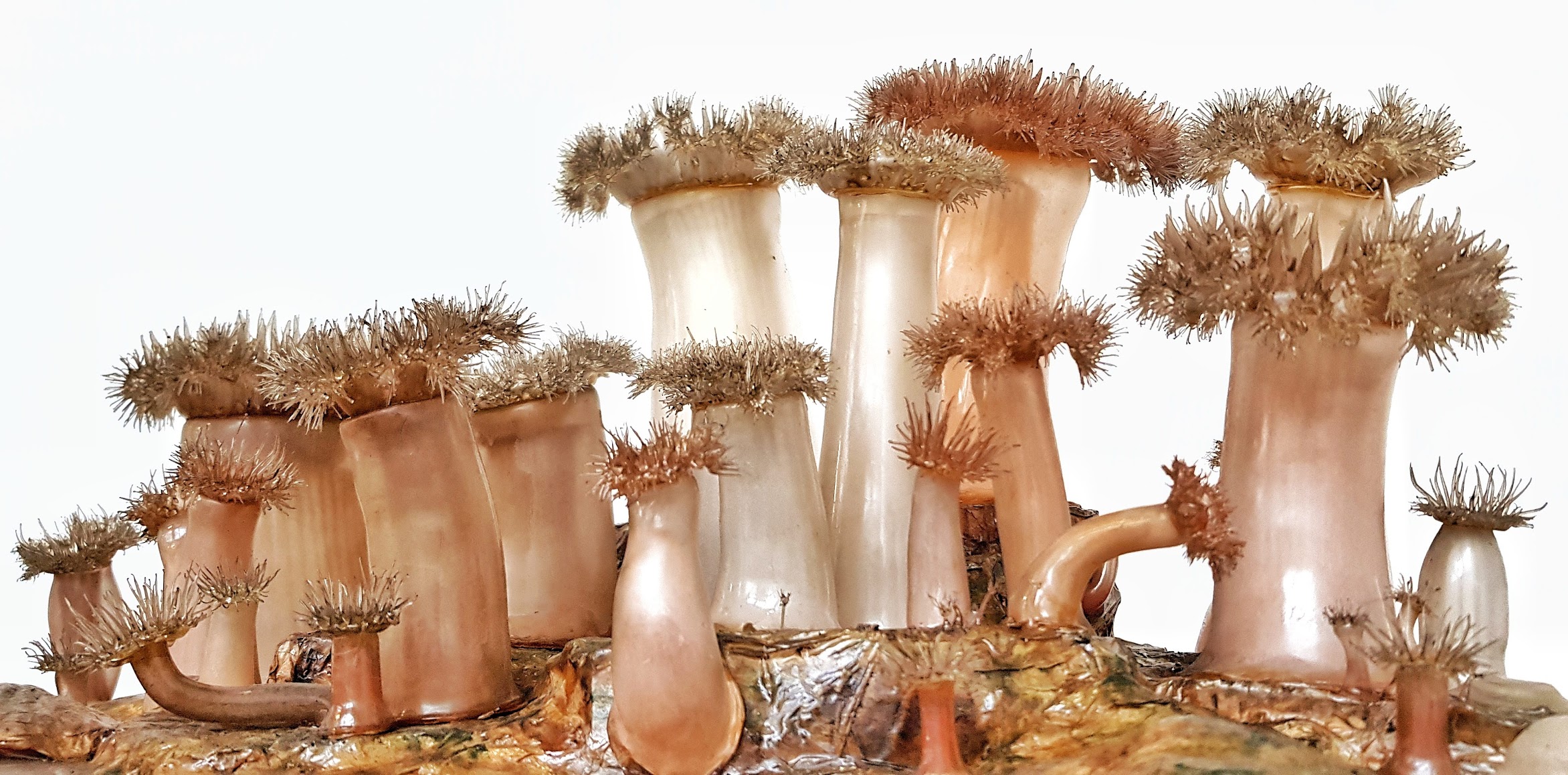
Blaschka Models. Image credit: courtesy of the National Museum of Ireland: Natural History.

We’re at a crucial historical moment, in which the International Union for Conservation of Nature Red List has announced a catastrophic decline in global biodiversity, and the Intergovernmental Panel on Climate Change has reported on the devastating trajectory of the climate crisis. Museums have an important role to play in communicating the value of nature. Yet nature is, necessarily, mediated in museums, through taxidermy dioramas and skeletal mounts; virtual tours and digital databases; image, text and film. While the natural world has always been mediated in the museum space, what does this mediation mean now for natural history museums and collections, and the natures they present?

These are some of the questions which drive my research into museum representations of the natural world, and was the inspiration behind putting together an event series called ‘The Unnatural History Museum: Mediating Nature in the Sixth Mass Extinction’ (part of the Irish Research Council-funded project ‘Still Lives: Organic and Digital Animals in the Natural History Museum’ at Trinity College Dublin). I was keen to make a space to have these conversations across disciplines and sectors (something which we get surprisingly few opportunities to do, despite often working on similar topics or issues), to allow us to share what we were doing and discuss why. This blog is a short overview of the topics that the first season of the Unnatural History Museum engaged with from September 2022 to April 2023, with some excitement about what arose in the first season, and in anticipation of continuing these conversations in a planned second season.

Continue reading