Planet Ocean: Using Local Collections to Celebrate Global Climate Action

Written by Sarah Marden, Curator of Natural History at The Box, Plymouth.

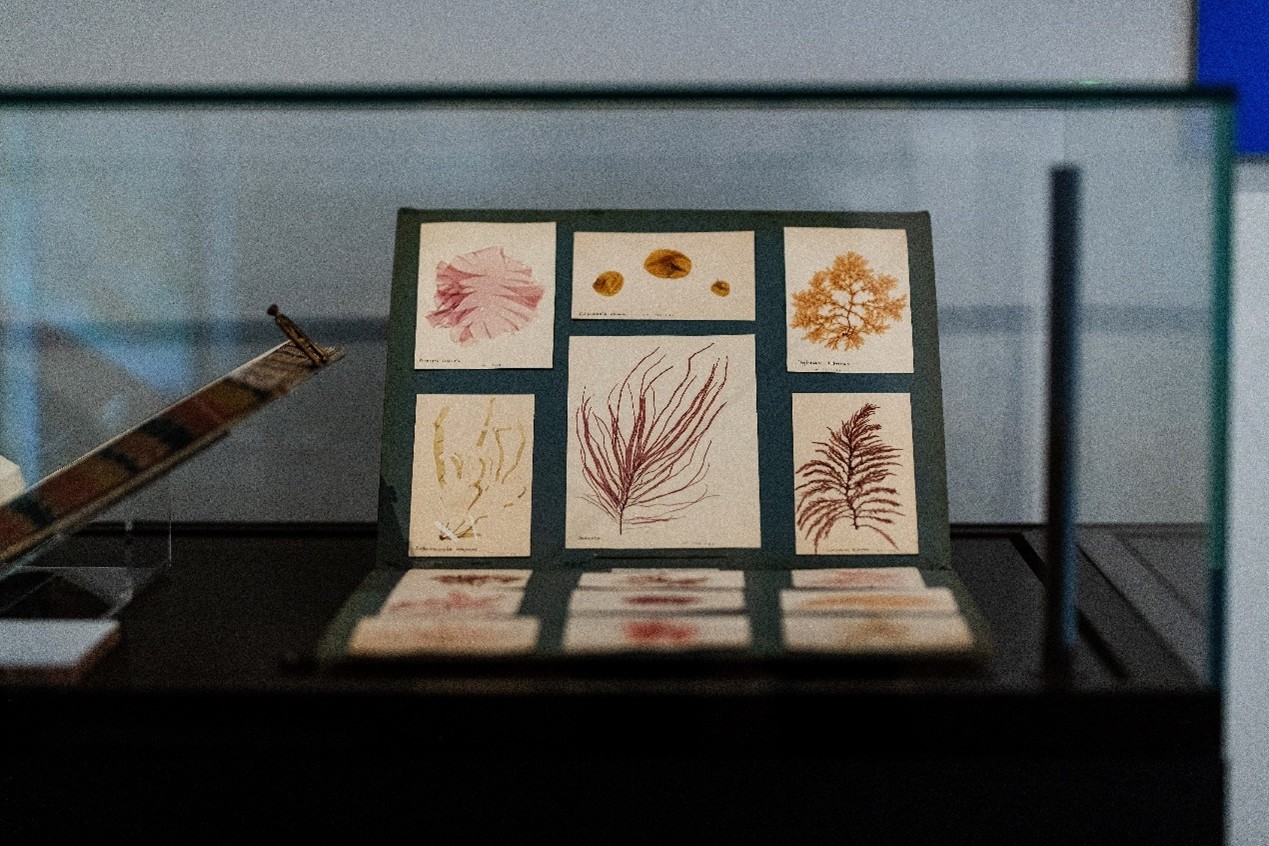
From March 2024 to April 2025, a new exhibition at The Box called Planet Ocean explored Plymouth’s marine heritage and contemporary identity as “Britain’s Ocean City”. Specimens from our natural history collections, including spirit-preserved marine invertebrates, molluscs, corals, mounted sea birds and seaweed folios were displayed alongside art, world cultures collections, image and film and loan material from local partners.

Flowers of the Sea folio by Emily Johns, © Dom Moore

Taking inspiration from science fiction writer and undersea explorer Arthur C Clarke who said “how inappropriate to call this planet Earth when it is clearly ocean”, we explored why the ocean is so important- the fact that we literally couldn’t survive without it as it gives us around half the oxygen we breathe, but also that it sustains and supports us locally with food, jobs, leisure, health and wellbeing. Alongside this quote, the entrance wall of the exhibition featured a moving graphic created collaboratively with Plymouth Marine Laboratory. It used one of the oldest datasets in existence of changing ocean temperatures recorded in Plymouth Sound. This data was input into a globe representing our ocean planet that changed and distorted according to the human impact of climate change over time. This was the first example of science meeting art and partnerships that we developed throughout the exhibition.

Continue reading

A Time Capsule of Extinction: Scotland’s Iconic Wildlife

Written by Caitlin Jamison, Museum Collection Technician, Montrose Museum: ANGUSalive.

Montrose Museum in Angus, northeast Scotland, houses an impressive natural history collection. Everything from taxidermy to fossils to rare minerals are housed in a modest, Greek-revival style museum off the high street. Built in 1842, it is one of the first purpose-built museums in Scotland.

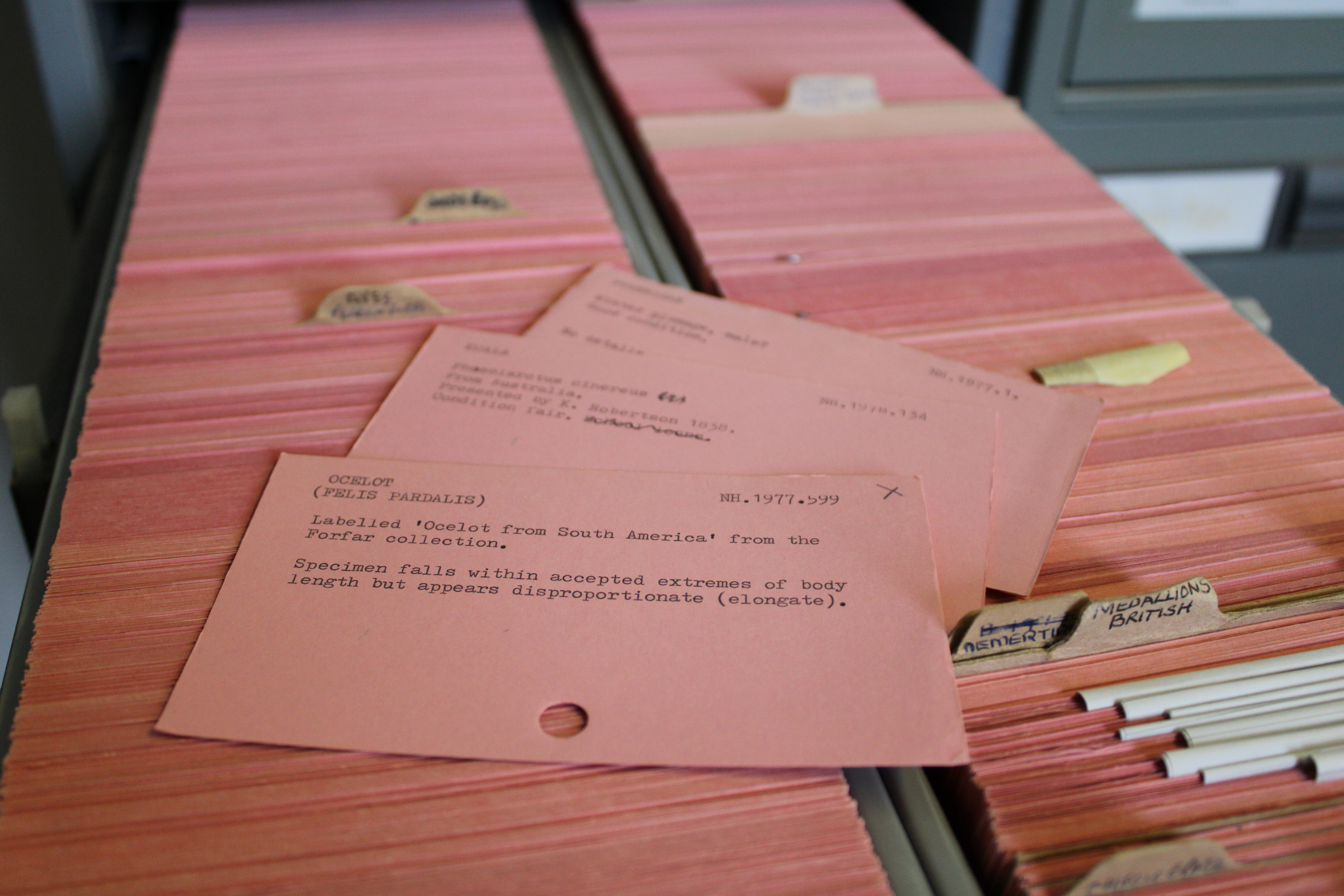
Sadly, due to changing public interest (and the challenging funding situation facing many local authority museums) the collection has been somewhat forgotten since it was catalogued onto neat pink index cards in the late 1970s.

Montrose Museum’s 1970s card catalogue (author’s own photo)
Continue reading

Addressing Biodiversity Loss and Climate Change Together: A Great Opportunity for Museums with Natural History Collections

Written by Henry McGhie, Curating Tomorrow, henrymcghie@curatingtomorrow.co.uk

This year has seen not one but two ‘COPs’ (Conference of the Parties), the big meetings where governments monitor their progress towards international agreements. In early November, COP16 for biodiversity was held in Cali, Colombia. In the second half of November, COP29 was held in Baku, Azerbaijan. These big meetings get a lot of press attention, but they are rather poorly understood and are not always reported that well. If you think the COPs are where the leaders of the world get together to hammer out the world’s future, the reality is much more humdrum. By the time countries gather together, they have usually made up their minds on their negotiating positions and not much will change from there on. COP has also become too big and has many ‘layers’ to it. For the climate COPs, there is the Blue Zone, which you need to get a special accreditation to enter (referred to as a ‘badge’), and within that there will be really big plenary events and smaller side events that everyone with a badge can attend. There are also lots of negotiations taking place, inside rooms, that you often can’t access as well as a mass of pavilions, mostly from countries and in some years, businesses. Outside the Blue Zone, there is a public-facing Green Zone that the public can access (sometimes it is in a museum, as it was in 2021 when it was in Glasgow Science Centre). When the climate COP is on there is also a lot of activity going on outside of COP itself, mostly organized by civil society groups, and also by businesses. So, when people say they’ve ‘been to COP’ it can mean a few different things.

Continue reading

Creating a New Diorama at the Booth Museum of Natural History

Editors note: This is the second of two concurrent blogs about the new diorama at the Booth Museum. Click here to read the first and find out more about how the diorama was created.

Written by Su Hepburn, Head of Learning & Engagement, Brighton & Hove Museums.

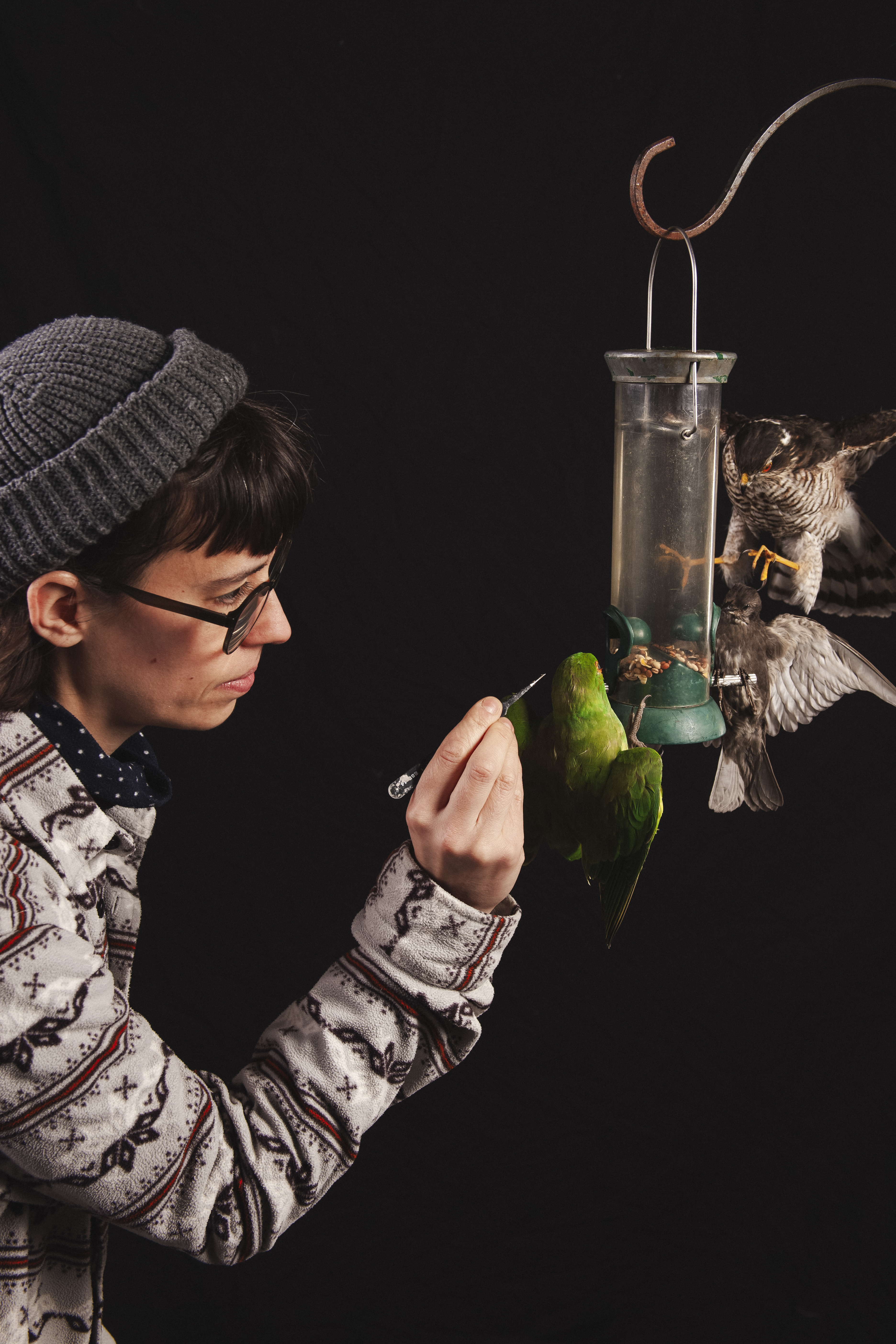
Jazmine Miles-Long, Taxidermist © Laurence Dean Photography

Why a new diorama?

In the autumn of 2022, we started our ‘Discover our Dioramas’ project at the Booth Museum of Natural History, part of Brighton & Hove Museums. Funded by an Esmée Fairbairn Collections Fund of £50,000 we set about building the first natural history diorama at the museum in 92 years. This was a significant project for a museum whose Victorian creator Edward Booth had lined every wall with dioramas of birds. Dioramas are an ideal way of storytelling. They are visual and can get a lot of key information to audiences without the need for words.

Alongside this we were also given £3000 from Rampion Windfarms to research and display more information about people especially women involved in the museum’s history. 

These projects gave us the time and space to be playful and to make friends. To impact on our audiences, our staff, our collections, and our future practices. It has brought joy to the museum, visitor and staff alike. 

Continue reading

Making a Green Gallery – A Leeds Story

By Sara Merritt, Audience Development Officer at Leeds Museums & Galleries.

Us: We want to retro-fit a permanent gallery! As sustainably as possible! With £40k! In two months! And we want to keep the space open to visitors!

Them: Umm, are you sure that’s a good…

Us: Great! We’ll get cracking.

2022 saw us undertake the retro-fit of our permanent Life on Earth gallery at Leeds City Museum, with the aim of making it as sustainable as possible. The gallery required an overhaul to meet current visitor expectations, with innovative design ideas and production methods to reflect our greater understanding of climate change, the biodiversity crisis, and Britain’s colonial history.

Our objectives were threefold and carefully considered:

  • To manage and deliver a sustainable retro-fit with the addition of creating a carbon calculator to measure our C02 output
  • To ensure the interpretation was relevant, and that we had a strong idea of our target audience to attract visitors who were already engaged in making climate-positive changes.
  • To identify robust materials and production methods which would stand up to visitors pulling, prodding, and everything in between.

We were used to working with greener materials for temporary exhibitions and knew the implications around material availability, longevity of eco materials, and higher associated costs. We therefore needed to keep the project resource light and put our efforts into the interpretation, rather than dramatic object moves. We took the bones of what we had, large cases and great objects, and retold the story with the emphasis on using our objects to inspire our visitors to live more sustainably.

Continue reading