In 1895 The Borough of Bolton Botanical Society was formed. This group concerned itself, as the name implies, with botany alone but eventually a feeling emerged among naturalists in Bolton that other aspects of natural history should be covered.
On February 7th 1907 a group of keen local naturalists met at the Chadwick Museum (Bolton Museum’s first building). The group included members of the Botanical Society as well as ornithologists, entomologists and others representing natural history from astronomy to geology – from the heights of the sky to the depths of the earth.
They soon settled on the name Bolton Field Naturalists’ Society.
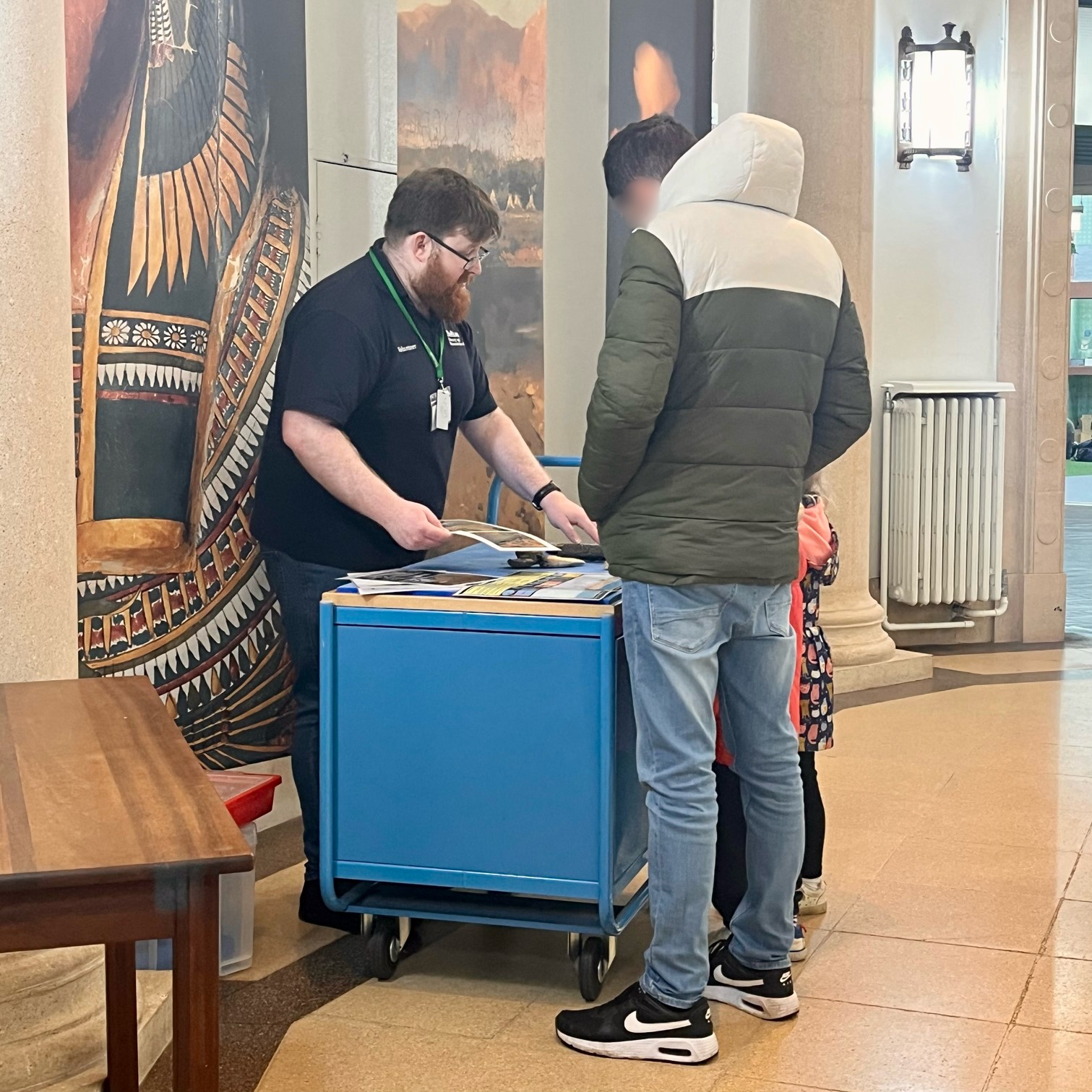
Written by Callum Smart, a natural history volunteer at Bolton Museum. He works both in the stores, documenting the collections, and in the gallery engaging with visitors using the objects to start conversations. Here he shares his experience of one afternoon with a school group.
It’s Wednesday afternoon at Bolton Museum and I have just finished setting up the fossil touch tray, a selection of ancient artefacts for visitors to get hands on with. A school trip marches through the atrium, passing the gift shop with furtive glances, heading towards the wonderful Egyptian exhibits. The children clutch their worksheets, a scavenger hunt checklist filled with items from around the museum’s galleries. They whisper to each other, checking if they’ve missed anything in the Bolton’s History gallery and making bold claims over what they’ll find in the next room.
A few of them spot the fossils on my trolley and start to stop, blurting out questions, weighing up whether to reach out and touch the strange rocks. I’d love for kids to interact with the fossils, it’s why I’m there. But I also don’t want to distract them from their trip, so I’m grateful when the teacher steers them on. Their teacher asks if I would be able to talk to the children about the fossils when they finish in the Egypt gallery. “Of course,” I say, “I’d be happy to.”
Compiled by Ellie Clark, Collections Moves Team Leader at the Natural History Museum
Welcome to the February edition of NatSCA Digital Digest.
Digital Digest is a monthly blog series featuring the latest on where to go, what to see and do in the natural history sector including jobs, exhibitions, conferences, and training opportunities. We are keen to hear from you if you have any top tips and recommendations for our next Digest, please drop an email to blog@natsca.org.
Sector News
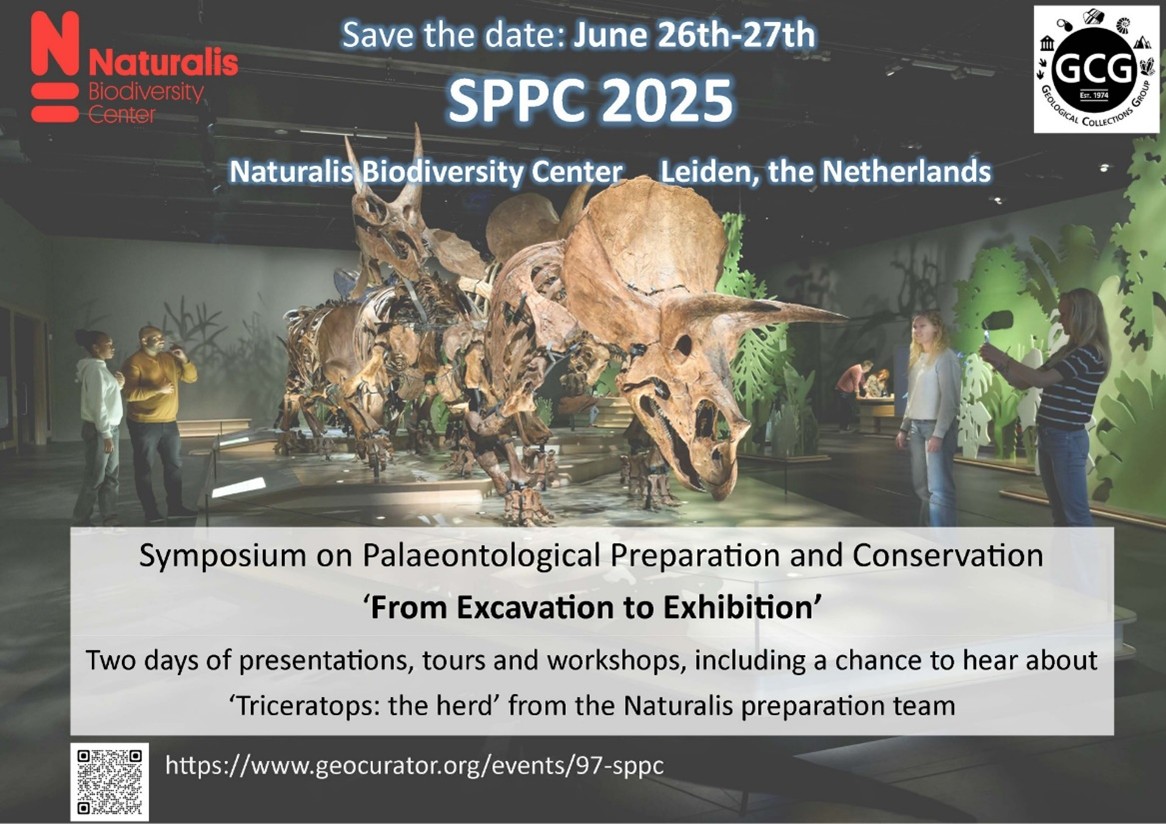
Save the Date: SPPC, June 26th – 27th 2025
The 30th Symposium on Palaeontological Preparation and Conservation will be held in the Netherlands this year on 26-27th June.
The theme will be From Excavation to Exhibition including aspects of the story of how geological collections end up on display in our museums, as well as their conservation and preparation. A call for abstracts and registration is coming soon. For more details visit: https://www.geocurator.org/events/97-sppc
I like a nice little link to a place I am visiting. And there is a wonderful (if not a little tenuous) link between where I work in Plymouth and Cambridge. Charles Darwin studied theology at University of Cambridge in the old oak clad lecture theatres. And it was through the connections he made at Cambridge that set him on board the HMS Beagle, on a journey that would change the world of scientific thinking forever. The HMS Beagle, with Darwin and all the crew, set sail from in Plymouth after a three month delay. It’s a neat little link.






 NatSCA
