NatSCA Digital Digest

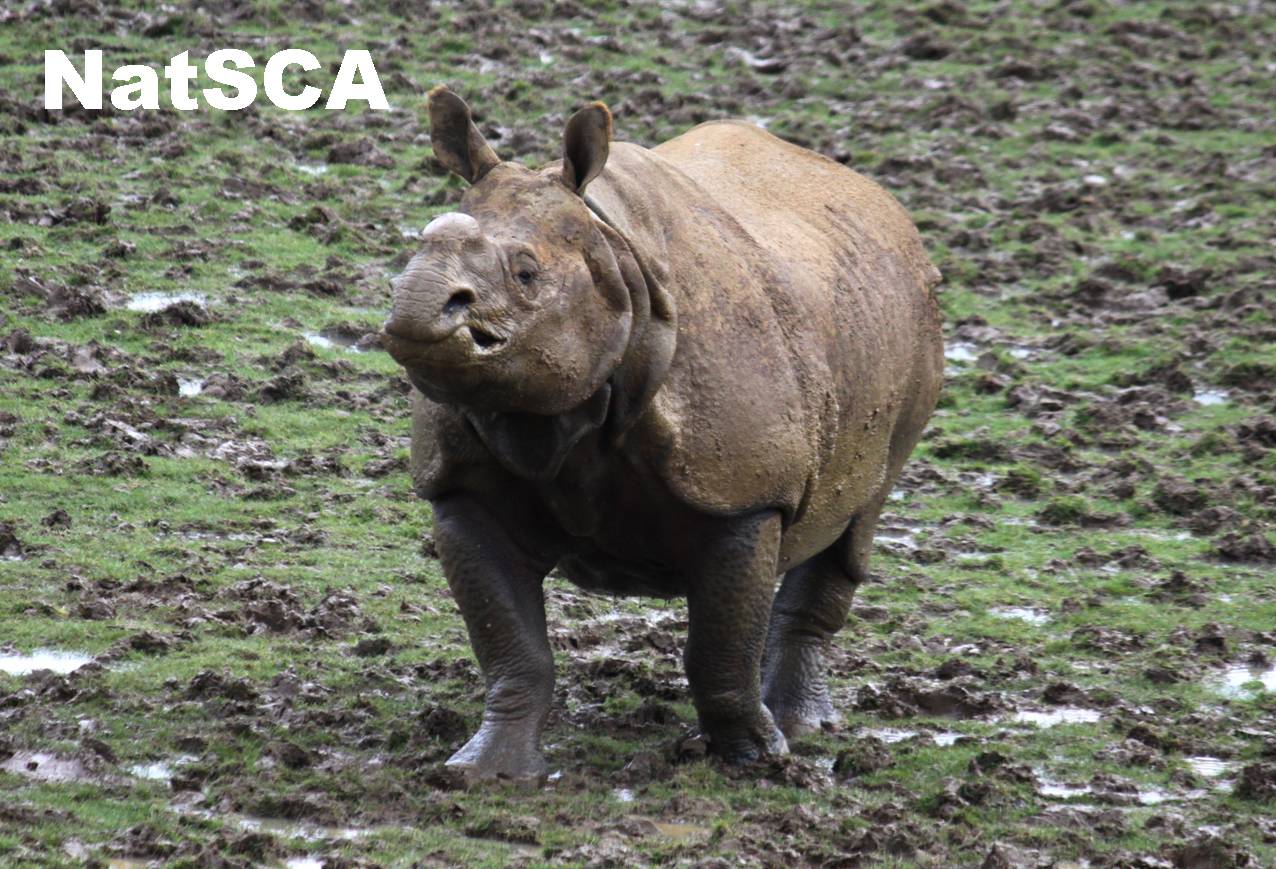
Greater one horned rhino (© E-L Nicholls)

Greater one horned rhino (© E-L Nicholls)

News

Our very own Paolo Viscardi has moved to the inner belly of London to join the team at the Grant Museum of Zoology as their fourteenth Curator. This shift will at some point inevitably create a faunal interchange of curators amongst the natural sciences collections of the world, so keep your ears to the ground future Deputy Keepers of Natural History…

Advert

Last weekend was the Festival of Geology, always a great weekend full of fossils, rocks and geeky conversations. If anyone who went would like to write a short piece for the NatSCA blog, do get in touch via our normal email address blog@natsca.org. We do love a good write up!

Events

If you live near or are visiting Gloucester anytime this month, the previously mentioned 2015 British Wildlife Photography Awards exhibition has been extended until the 29th November. Located at the Nature in Art collection.

Around the Web

As you probably all know, it was the Museums Association Conference and Exhibition last week. I know a few people who attended this year and have heard great things, so if you missed it too and would like to view some highlights, check out the MA’s archive of the event here.

Despite Mark Carnall having left the Grant Museum of Zoology at UCL for the heavier-on-dinosaurs but lighter-on-quaggas Oxford University Museum of Natural History, his ever entertaining blog series Underwhelming Fossil Fish of the Month continues. Well, thank goodness for that. If you’ve not had the delight before, this blog is a shining example of how to use the unused-for-good-reason areas of your collections.

NatSCA Digital Digest

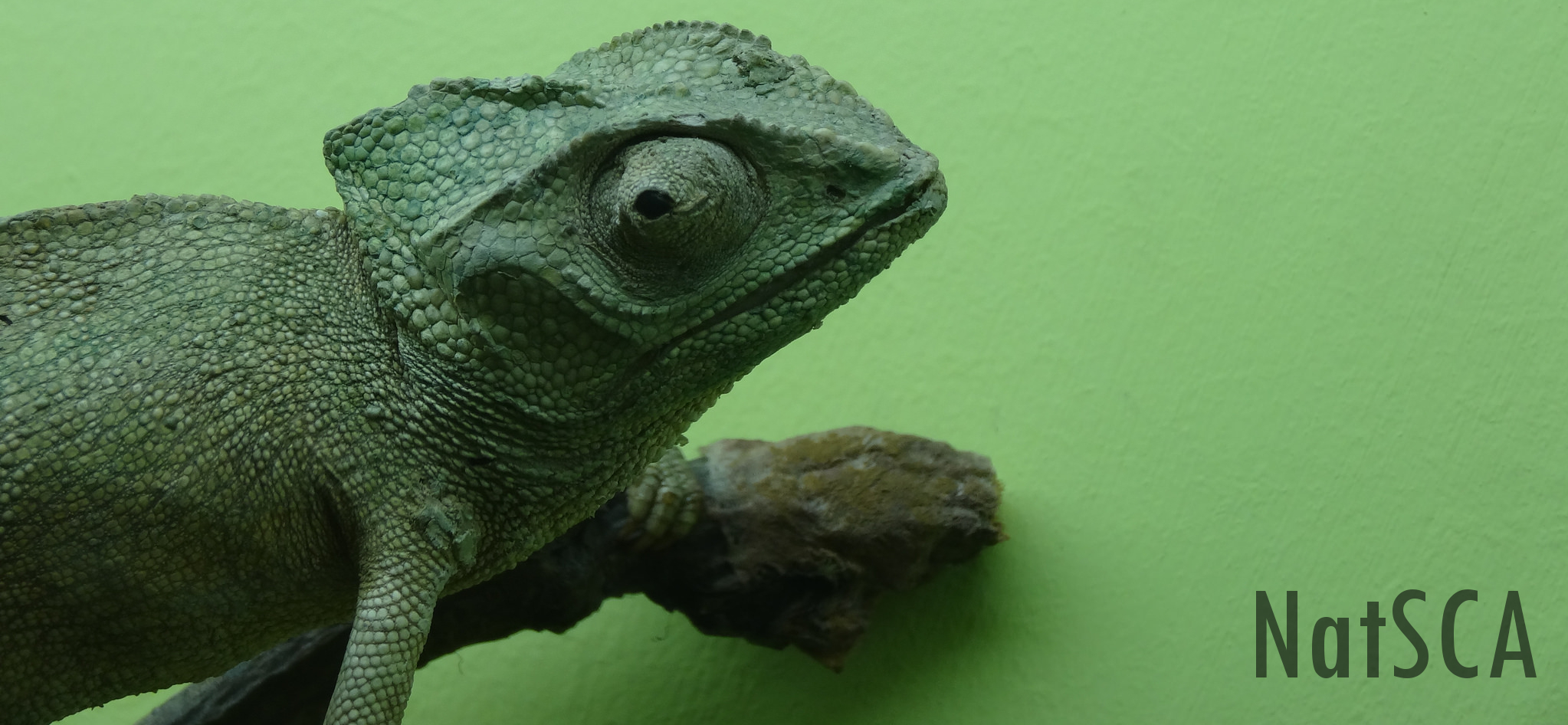
Chameleon

News

Save the date! The 2016 NatSCA Conference & AGM will be held 21 – 22 April 2016 in Derby, at the Silk Mill and Derby Museum & Art Gallery. A call for papers and more details will follow. We look forward to seeing you there!

Jobs

Museum Manager, Great North Museum: Hancock. A great opportunity to manage the Hancock and its wonderful Natural Science collections. Applications close 12 November 2015.

Assistant Curator, National Museums Scotland. Two six-month posts in Natural Sciences, one working with the bird collections, the other with mammals and wet specimens. Applications close 16 November 2015.

Vertebrate Palaeontologist, Qatar Museum, Doha. A full-time, permanent position in sunny Qatar! Applications close 30 November 2015.

Events

26 November 2015: A talk about the #naturedata pilot system at the Natural History Museum (NHM), London. Flett Lecture Theatre, 2.30pm.

1 – 2 December 2015: Geological Curator’s Group (GCG) AGM. The full programme is now available online, and there is still time to book.

Around the Web

The National Guard had to be called in to airlift a baby Pentaceratops excavated by the New Mexico Museum of Natural History and Science.

The Londonist went behind the scenes at the Grant Museum of Zoology, UCL.

Historic series of museum specimens have helped to solve the puzzle of the evolution of the sparrow’s bill.

A new species of bat has been discovered in the collections of the NHM, where it has resided in a jar since 1983. A relatively short shelf-life by museum standards!

Society of Vertebrate Paleontology (SVP) 2015

NatSCA Digital Digest

Hello and welcome to an SVP conference-themed edition of the NatSCA blog. Before we get started, I’d like to introduce you to two very special lion cubs: These two are from the species Panthera leo spelaea, the now-extinct cave lion. They are at least 10 000 years old and they look like they died yesterday. Here’s a link to Brian Switek’s story of the find.

The Society of Vertebrate Paleontology (SVP) conference this year was an avalanche of information, not only for those who attended but for those of us following the live tweets too! I won’t be able to recount the entire thing and you’re probably best off taking a look at the Storify but I’ll mention a few of the highlights for me.

There were non-avian dinosaurs with blue eggs, as well as research on the basal condition of archosaur parenting based on extant bird and croc behaviour.

Bob Bakker presented a view of Dimetrodon as a “Permian bear”: an opportunistic feeder, pulling burrowing animals out of their tunnels by the face some days – while shark-wrestling and taking chunks out of other Dimetrodon the next. I look forward to further studies of these claims but it’s great to see pre-mesozoic behaviour getting an airing.

Nanotyrannus lancensis has been sunk by Dr. Thomas Carr as a juvenile Tyrannosaurus rex. For many this will not be ground-breaking news and there are still questions surrounding its outsized forelimbs that need addressing. Carr compared it to Jane, the Burpee’s spectacular sub-adult specimen and saw clear transitional features from sleek juvenile to hefty adult. Here’s the press release from the SVP.

Paul Sereno gave a frustrating talk on the poor swimming abilities of Spinosaurus aegyptiacus which, given its recently revised body plan, left people wondering what exactly Spinosaurus did well. This could not have come at a worse time for our dear old sailed theropod, as a recent review – published in the PeerJ – of the material associated with Spinosaurus has reattributed much of it to a separate genus of spinosaurid, Sigilmassasaurus. While we wait for Ibrahim et al’s much-anticipated monograh, here’s a recap of the story so far by Mark Witton.

Traces of weening behaviour may hold clues as to the cause of mammoth extinction. By studying nitrogen isotopes in the tips of mammoth tusks, Michael Cherney of the University of Michigan discovered that calves were coming off their mother’s milk younger and younger leading up to their extinction. Shortened weaning can be caused by the stresses of over-hunting in modern elephants and points to over-hunting by our ancestors as the probably cause of their demise. This, combined with John Alroy’s work on the Australian megafauna extinction – also pointing to the spread of humans as primary cause – made this year’s SVP an awkward time to be an human.

Next year’s SVP will be held in Salt Lake City, I can’t wait to hear what this year’s “zomg $8 beer” brigade make of that one (dry town, folks. Dry. town).

Finally, don’t forget to book your Tetzoocon tickets – it is right around the corner!

Sam Barnett, NatSCA Blog Editor

NatSCA Digital Digest

natsca

Conference

We will be holding our 2016 annual conference & AGM on 21st and 22nd April, generously hosted by Derby Museums. The venues will be The Silk Mill and Derby Museum & Art Gallery. So, it goes without saying, Save The Date!

Events

On 29th October there is a talk at the Natural History Museum on one of my favourite things: curatorial research!
‘Curatorial research gets a bad name when it serves personal ends, but can it help unlock collections for wider engagement?
This talk is based on a project to understand the life and work of a Victorian ornithologist, Henry Dresser.‘
Held at the Flett Events Theatre, from 2.30–3.30pm. Click here for details.

Speaking of my favourite things, the Wildlife Photographer of the Year exhibition is open at the Natural History Museum. If, like me, you’ve been avoiding social media so you get to see the images for the first time at the exhibition, you can now do so.

Around the Web

Did you know Manchester Museum has an important collection of almost 17,000 earwigs? A type catalogue of this fantastic resource has been published with a description of the collection and its history and is freely downloadable here.

The Love London Awards hosted by Time Out and voted for by the general public has issued its shortlists. In the Bloomsbury, Fitzrovia and Holborn area ten museums and collections are jostling for position, you can click here to vote. Two of the ten are natural history collections, and could be voted for, by you, if you so desired, just saying…

The Symposium of Vertebrate Palaeontology and Comparative Anatomy is often referred to as the friendly conference. Not just palaeontology, the conference also covers comparative anatomy and thus attracts a natural history audience as well. However the guise under which the conference is going to continue into the future is currently under debate, and those with an interested are being invited to comment.

The Bill Pettit Memorial Award 2015

NatSCA is pleased to invite applications to this year’s Bill Pettit Memorial Award. Up to  £1,500 of grant money will be made available to NatSCA members every year to support projects including the conservation, access, and use of natural science collections.

colour-logo(900pxwide)Charles Arthur William ‘Bill’ Pettit (1937 – 2009) started his career with the National Institute of Oceanography, but moved to the Manchester Museum in 1975 to become Assistant Keeper of Zoology. In his time at Manchester, Bill worked tirelessly for the collections and was instrumental in projects such as FENSCORE, as well as numerous publications. It is in recognition of his commitment to natural science collections that we would like to offer this annual award.

Applications are invited under a wide range of categories. Each project will be considered on its own merits by the NatSCA committee and the committee’s decision, including not awarding any money that year, will be final. Grants up to £1,500 are available. To apply, please put together a 700-word project proposal, which must include:

  • The name and status (e.g. charity, individual, local authority) of the applicant
  • The proposed outcomes of the project and benefits to the museum
  • Detailed costs
  • Accurate timescale (including any work undertaken so far and the project end date)
  • Details of other funding/match funding already secured for the project

Grants will be considered on an annual basis in January or February.

Deadline for 2015 applications: Friday 11th December

Successful applicants will be announced at the NatSCA annual general meeting and are required to produce a report/article on their project for publication.

Applications are open to NatSCA individual or institutional members only.

Please contact David Gelsthorpe (david.gelsthorpe@manchester.ac.uk, 0161 3061601) for further information or to submit a grant application.