Giant Sequoia at the Natural History Museum

Written by Lu Allington-Jones, Senior Conservator & Chelsea McKibbin, Conservator, at the Natural History Museum, London.

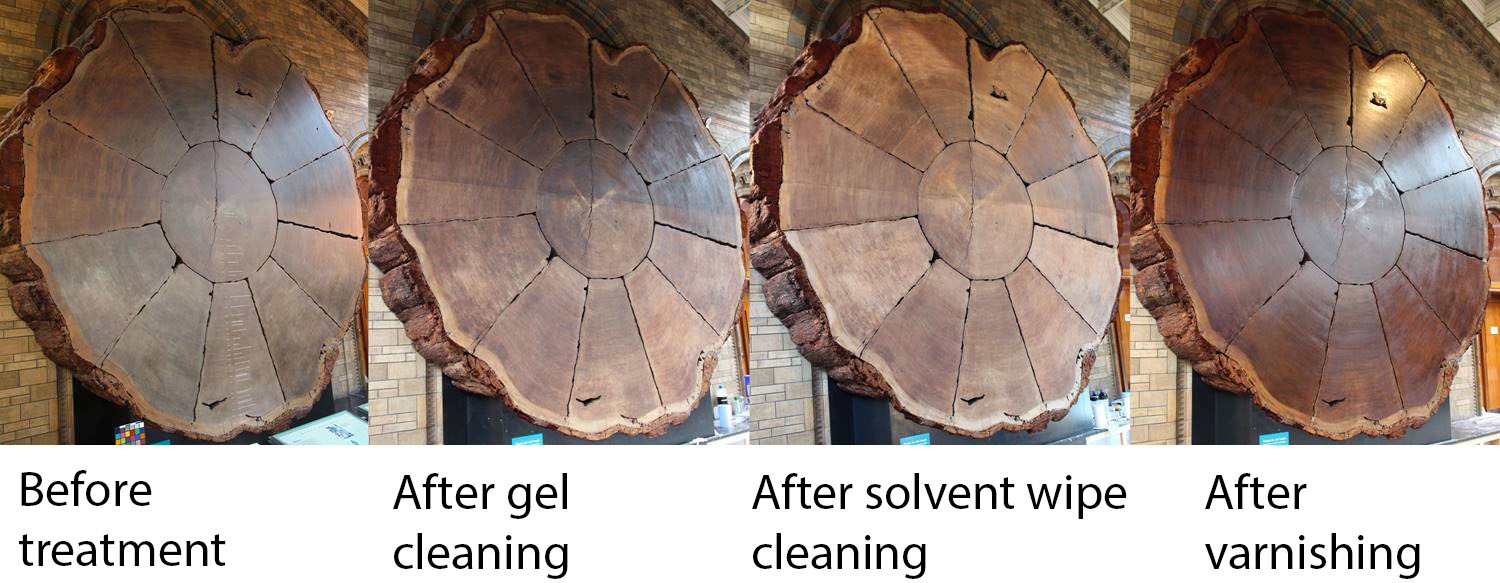
In 2016 a team undertook conservation of the slice of giant sequoia tree which is on display in Hintze Hall of the Natural History Museum in London. Following condition mapping, the treatment involved dry cleaning, removal of the old varnish with solvent gel and applying a fresh coat of varnish. A time-lapse video was taken of the whole process, which spanned 12 weeks, and can be viewed at the end of this post.

Figure 1. The stages of treatment

The Specimen

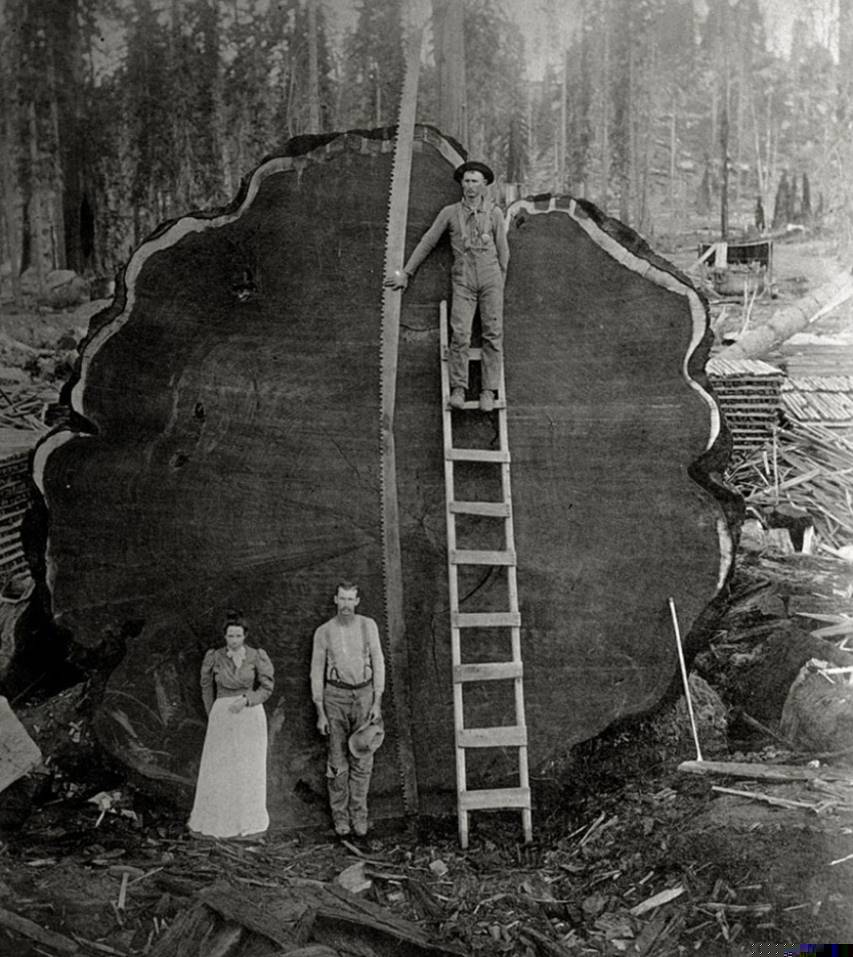
The giant sequoia (from Kings Canyon National Park, California, USA) was felled in 1891 at the age of 1,341 years. It had been 101 m tall and just over 5 m in diameter. Two sections were cut for display. The bottom and slightly larger one was sent to the AMNH while the top section was split into 12 pieces: one central disc and 11 radial segments to enable shipping to the UK. They arrived at the South Kensington site in April 1893.

Figure 2. The tree when it was felled

The giant sequoia section went on display the following year, in one of the bays of the central hall. It was moved in 1902 to stand against the wall dividing the north and central halls, and again in 1971 to its current location on the second-floor balcony.

Continue reading

Resurrection 101

Written by Paolo Viscardi, Curator of Zoology, National Museum of Ireland – Natural History

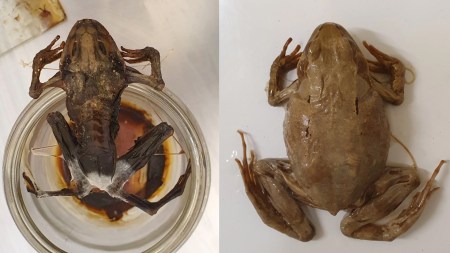
Anyone who has to deal with fluid collections, without the support of a natural history conservator, probably has nightmares about cracked jar lids and desiccated specimens. But would you sleep more easily if I told you that it’s possible to get a transformation like this using a straightforward and inexpensive method?

Frog_before-after

Here’s my account of how I resurrected this dehydrated specimen using stuff you probably have sitting in your museum cupboards or that you can buy for less than £20. It’s worth noting that the technique will not always work and if you plan to use it on a specimen that may have useful DNA to contribute, you should take a sample before rehydrating, since it is likely to reduce the quantity and quality of DNA you can extract.

Continue reading

NatSCA Digital Digest – April

Compiled by Lily Nadine Wilks, Intern at Museum Development Yorkshire.
Welcome to the April edition of NatSCA Digital Digest!

A note from the Blog editor:

As you know, Digital Digest is our monthly blog series featuring the latest on what’s new in the natural history sector. We normally feature the latest on where to go, what to see and do in the natural history sector including jobs, exhibitions, conferences and training opportunities. With the onset of the lockdown, we can’t go anywhere physically, but perhaps now more than ever, there is still heaps of stuff out there to keep you entertained. I would like to welcome Lily to the Digital Digest team, who had the tough job of compiling her first ever Digest in our first month of lockdown! Many thanks and well done for all of your suggestions.

In this strange and unusual time more and more of us are looking online for fun things to do, read and watch. I have compiled some of my favourites:

Where Can I ‘Visit’?

If you are like me and are missing going out to museums and seeing physical exhibitions, the Smithsonian – National Museum of Natural History have the next best thing with a range of virtual tours through their permanent, current and past exhibits. There are plenty to choose from to keep you entertained.

Chester Zoo did two wonderful live virtual tours of some of their animals throughout the day on their Facebook page and YouTube channel. They are still up and if you didn’t catch them first time round they are definitely worth watching. My favourites are the adorable Red Pandas and the curious Meerkats. Find them all on YouTube here.

What Can I do?

The Natural History Society of Northumbria have issued the North East Bee Hunt to get help recording bee species across the North East. It comes with a handy identification guide, this is something I will be trying in my garden and on my daily outdoor exercise.

If you don’t have time to watch but are able to listen, I have enjoyed the Ologies series with Alie Ward, a comedic science podcast on all things ‘Ology’. I enjoyed Plumology (feathers) featuring Dr. Alison Shultz, the Ornithology curator at the Natural History Museum of LA.

I enjoy a good bit of competition and the University of Cambridge Museum of Zoology have created Open Your Window Bingo! You can get points for looking out your window and spotting Butterflies, Birds, Plants and Extras.

Good Reads?

I enjoyed reading the Late bloomer: the exquisite craft of Mary Delany blog from the British Museum, beautiful visuals accompany a story about Mary Delany who at 72 began producing floral collages. It is mind-blowing that the images are not painted but are paper collages.

April Fools came around once more and I thought the National Trust is definitely my favourite this year. Rangers on Brownsea Island are helping squirrels find their nuts.

As another bit of light relief, Laura Bailey has been sharing the adventures of Moley on Twitter. Moley is a stone seal. I have to agree with Moley on this one.

Before You Go…

If you have any top tips and recommendations for our next Digest please drop an email to blog@natsca.org.

Similarly, if you have something to say about a current topic, or perhaps you want to tell us what you’ve been working on, we welcome new blog articles so please drop Jen an email if you have anything you would like to submit.

Stay safe and keep well.

How To Get Money For Your Natural Science Collection

Written By Clare Brown, Curator of Natural Science, Leeds Museums and Galleries.

So you’ve got a lovely collection, with lots of lovely potential, you yourself have loads of lovely ideas for all the lovely things you could do with it but you have no money. It’s a pretty common situation in museums but there are ways to fund your collections and the rewards for doing so are BIG.

©Leeds Museums and Galleries

Where and How to Look

There are various companies you can subscribe to who will produce lists of funders that suit your project. People like https://www.grantfinder.co.uk/ and https://www.fundingcentral.org.uk/default.aspx but others are available. We’ve used these in the past in Leeds but haven’t kept up our subscription as museum funders rarely seem to change from year to year.

The main funders to consider in the natural science collection world are:

https://ellerman.org.uk/,

https://www.artscouncil.org.uk/funding-finder/designation-development-fund,

https://www.esmeefairbairn.org.uk/,

https://www.wolfson.org.uk/,

https://garfieldweston.org/,

https://www.museumsassociation.org/collections/esmee-fairbairn-collections-fund,

https://www.heritagefund.org.uk/

and absolutely not forgetting https://www.natsca.org/awards-and-bursaries

Continue reading

What Is That Spiny Thing?

Written by Ranee Om Prakash, Senior Curator – General Herbarium IV, Algae, Fungi and Plants Division, Department of Life Sciences, Natural History Museum

The Natural History Museum (NHM) holds over 80 million specimens and every single specimen tells a story.

Amongst these 80 million objects, one such object is a specimen (Fig. 1) that the museum acquired from Mexico over 2 decades ago. This object excites curiosity amongst novices, students and the general public alike. Whenever anyone looks at this, the first thing they ask is what is that? A pineapple? A furry cat? Is it a sponge? The imaginations are limitless….

Fig. 1. Flower of Melocactus (© The Trustees, Natural History Museum, London)

Continue reading