New loose taxidermy storage at Canterbury Museums

The following is a review by Philip Hadland, of a storage project undertaken by the Canterbury Museums:

Introduction

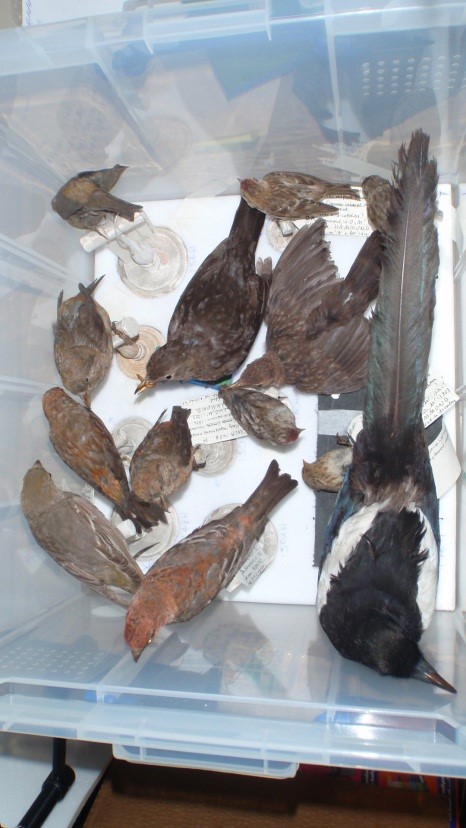
Much of Canterbury Museums taxidermy collection is loose taxidermy and is stored in shelved cupboards without any additional physical protection from handling, movement, or insect pest damage. A pilot project was carried out in 2013/14 to develop a new storage system for this section of the taxidermy collection to improve its care and management.


Aims of the Project

  1. Improve storage conditions and long term care
  2. Improve the management of the collection
  3. Free up storage space


Evaluation of Potential Storage Methods

To get a feel for what might work in practice I sent an email to the NATSCA Mailing List asking for ideas on what works well and what works not so well. Based on the plentiful feedback I received, I evaluated the advantages and disadvantages of the methods suggested.

From this initial research it is clear that there is no single method that can satisfy the needs of the great variety of sizes and shapes of taxidermy that exist in museum collections. Some methods are of course better than others in satisfying similar aims but cost is also an issue.

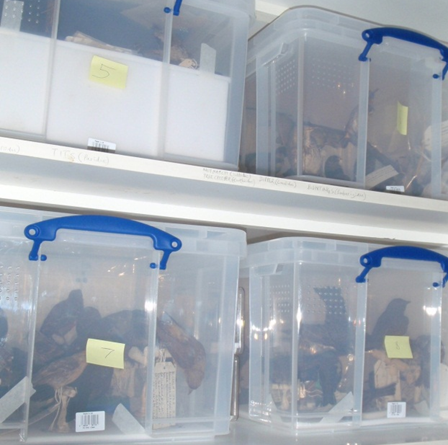
It was decided that a method based on Really Useful boxes was the best solution. The main reasons were the amount of time needed to prepare each box was minimal, there were very good offers available to acquire the boxes cheaply at the time and the sizes available matched up very well to the storage cupboards.


Method
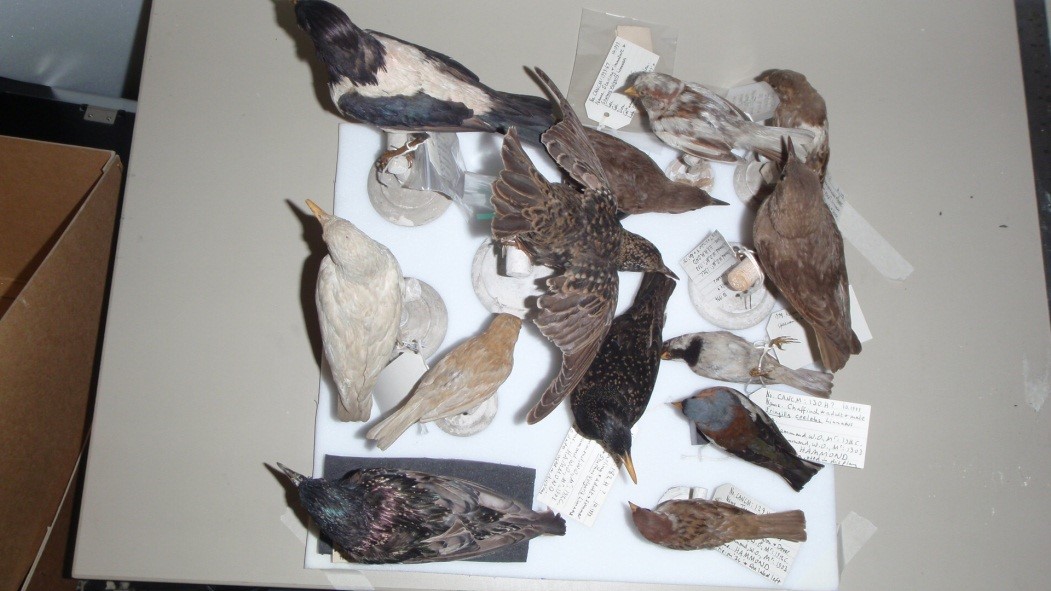
2014-06-03_birds

Plastazote was first cut to fit the boxes. Then the bases of specimens were drawn around in pen with the specimen number written alongside and orientation to enable easy identification of what goes where. A list was also kept of the contents of each box.
2014-06-03_cut-foam

The foam was cut using a Stanley knife and affixed to the bottom of the box using masking tape.
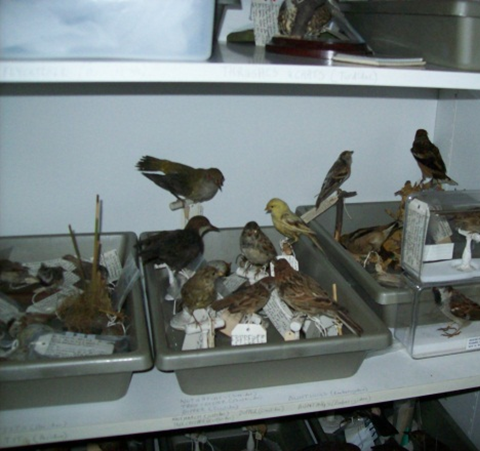
The birds were then carefully slotted into place and the boxes were labelled and the location documentation was updated.

Before
2014-06-03_before

After

2014-06-03_after1

2014-06-03_after2

Resource breakdown and cost

Really useful boxes x 10 £110
Approximate cost of Plastazote used £20
Fixings and adhesives £1
Mothballs £4
Total material cost £135
Curatorial time (including planning) £300
Volunteer time (for photography and documentation 10 hours
Total cost £435


Summary

127 items of taxidermy have been rehoused and are well supported in robust, waterproof and conservation standard materials that are easily moved without the birds toppling and they are transportable. This will limit damage to the collections through preventing unnecessary handling, toppling, and pest attack – increasing their long term care. Each specimen now has a specific box location linked to the database so that it can be found easily when required.


I’d like to thank my colleagues and the NatSCA community for their help with this project.

Review of a Training Course on Pesticides and the Latest Legislation

The following is a review made by Roberto Portela Miguez, Mammal Group Curator at the NHM London:

About a week ago I attended a course and talk at the Natural History Museum of London, entitled “Control of Pesticide Regulations 1986 (as amended 1997) EU Biocides Regulations 528/2012”.

I know that, even if your two passions in life are pesticides and obscure legal documents, it is highly unlikely that you would rush to sign up for it.

After attending the event I can assure you that I still do not wish to look into both topics more than I need to. I do however strongly recommend all collections management staff to attend any future opportunity to listen to Bob Child’s talk or training event on this topic.

Robert Child was formerly Head of Conservation at the National Museum of Wales, and is now a Conservation Consultant, Advisor on Insect Pests to the National Trust and Director of Historyonics.

His company, Historyonics, sells insect pest products and carries out treatments on historic buildings and collections – so he has plenty of first-hand anecdotes to illustrate the various points he makes during his talks.

His experience on these matters is vast, but possibly more important: he is a brilliant communicator that can easily turn what is a dry and dull topic into two hours of effective and entertaining training.

The course Bob runs is required training for anybody using pesticides as part of their work ( this includes volunteers ) and is based on the requirements of the Control of Pesticides Regulations 1986 (as amended), the Control of Substances Hazardous to Health Regulations 1988 (as amended) and the new Biocides Regulation 528/2012. It is further based on the HSE’s publication ‘Recommendations for Training Users of Non-agricultural Pesticides’.

The course lasts for about two hours and covers both theoretical aspects on a Powerpoint and practical demonstrations of:

  • principles of pest control and nature of pesticides
  • legislation
  • storage and transport of pesticides
  • use of pesticides (on site assessments)
  • labels and data sheets
  • safety in preparation, clean up and disposal.
  • emergency procedures
  • record keeping

Once you have gone through the training, you will be qualified to apply pesticides in your collections and, without doubt, be extremely grateful that Bob has done all the reading of the relevant EU legislation on your behalf.

I know most of us do our best to prevent infestations but, just in case, better to be prepared and qualified than …you know.

Keep checking our NatSCA website and blog for news on future workshops and training events and if you want to contact Bob to run the course at your institution, you can email him to bobchild@historyonics.com .

NatSCA Digital Digest

Welcome to the weekly digest of posts from around the web with relevance to natural science collections. We hope you find this useful and if you have any articles that you feel would be of interest, please contact us at blog@natsca.org

1. Blog: Six Questions for a Geological Curator

Geological Curators’ Group

Synopsis

‘This is the first post in our series where we ask geological curators around the country a series of questions that allow them to advocate the collections in their charge. This post is kindly provided by Dean Lomax who is Contract Assistant Curator of Palaeontology at the Doncaster Museum & Art Gallery, working on the CIRCA Project which is funded by the Esmée Fairbairn Foundation. He is the author of two books, Fossils of the Whitby Coast and Dinosaurs of the British Isles.’

Six Questions for a Geological Curator

2. Article: EU Makes it Easier to Return Looted Cultural Objects

Patrick Steel, Museums Association

Synopsis

‘The European Parliament has approved changes to a directive aimed at helping EU countries organise the return of cultural objects unlawfully removed from one member state to another. The Department for Culture, Media and Sport (DCMS) believes will see a rise in requests for returns across the EU as a result’

EU Makes it Easier to Return Looted Cultural Objects

3. Job Vacancy: Curatorial Assistant

The Grant Museum of Zoology, Department of Public and Cultural Engagement

Synopsis

‘Full time until July 2015, thereafter it will be part time, 18.25 hours per week, 50% FTE, unless further funding is identified.

The curatorial assistant post will be based primarily in the Grant Museum of Zoology, one of the foremost zoology museums in the UK, with a growing reputation for innovative and experimental work.

The job will involve working closely with the collections to make them accessible to UCL and external audiences and improve their storage, documentation and use; as well as contributing to the museum’s public programmes and online activities. Details can be found on the UCL jobs page.

Deadline: 15th June. For information about the post please contact the Museum Manager, Jack Ashby – j.ashby@ucl.ac.uk  and for information about the application procedure contact UCL Museums’ Administrator Lauren Sadler – l.sadler@ucl.ac.uk.’

Curatorial Assistant Job Vacancy

Compiled by Emma-Louise Nicholls, NatSCA Blog Editor

Collecting biological specimens essential to science and conservation

A letter signed by more than 100 biologists and biodiversity researchers,  published online in Science today (Science 23 May 2014: Vol. 344 no. 6186 pp. 814-815 DOI:10.1126/science.344.6186.814), states why collecting plant and animal specimens is essential for scientific studies and conservation and does not, as some critics of the practice have suggested, play a significant role in species extinctions.

Beetle collection. Image by Paolo Viscardi

The letter is a response to an April 18 Perspectives article in Science arguing that alternative methods of documentation—such as high-resolution photography, audio recordings and nonlethal tissue sampling for DNA analysis—make the field collection of animal and plant specimens unnecessary. As most natural sciences collections professionals are fully aware, this is simply not the case.

“None of the suggested alternatives to collecting specimens can be used to reliably identify or describe animals and plants,” said Cody Thompson, mammal collections manager and assistant research scientist at the U-M Museum of Zoology.

“Moreover, identification often is not the most important reason to collect specimens. Studies that look at the evolution of animal and plant forms through time are impossible without whole specimens. Preserved specimens also provide verifiable data points for monitoring long-term changes in species health and distribution.”

In addition, specimens from museum collections and their associated data are essential for making informed decisions about species management and conservation now and in the future, the authors state.

“Photographs and audio recordings can’t tell you anything about such things as a species’ diet, how and where it breeds, how quickly it grows, or its lifespan—information that’s critical to assessing extinction risk,” said Luiz Rocha of the California Academy of Sciences, who organized the response to the Science article.

And contrary to statements made in the April 18 Science article titled “Avoiding (Re)extinction,” collecting biological specimens does not play a significant role in species extinctions, according to the rebuttal authors.

In the April article, Arizona State University’s Ben Minteer and three co-authors cite several examples of species extinctions and suggest that the events were linked to overzealous museum collectors.

Not so, according to authors of the rebuttal letter, who reviewed the evidence and found that none of the cited extinctions—including the disappearance of flightless great auks in Iceland and Mexican elf owls on Socorro Island, Mexico—can be attributed to scientific collecting.

Millions of great auks were harvested for food, oil and feathers over the millennia, and only about 102 exist in scientific collections. Mexican elf owls were common when specimens were collected between 1896 and 1932, and the most likely reasons for extinction around 1970 were habitat degradation and predation by invasive species.

At the same time, Minteer and his colleagues failed to point out any of the valuable services that museum biological collections have provided over the decades, according to the rebuttal authors.

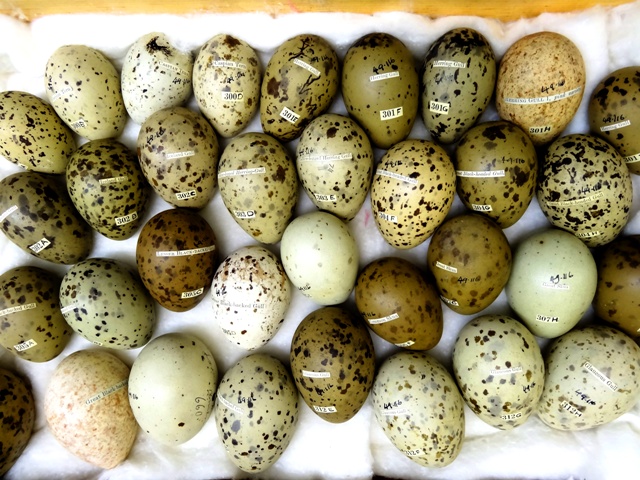
Both historical and new collections played a key role in understanding the spread of the chytrid fungus infection, one of the greatest current global threats to amphibians. The decision to ban DDT and other environmental pollutants was based on the discovery of thinning bird eggshells collected over an extended period. And the declining body size of animals, one of the negative effects of climate change, was discovered using body-size data from museum specimens.

Egg collections like this helped identify the harm done by DDT. Image by Paolo Viscardi

In other cases, genetic data from decades-old scientific specimens has even been used to “de-extinct” species. One of these, the Vegas Valley leopard frog, was thought to have gone extinct in the wake of Las Vegas development. However, a study published in 2011 compared the genetics of specimens from the extinct population to individuals from surviving populations of similar-looking frogs elsewhere in the Southwest and found them to be the same species.

These types of discoveries are “the hallmark of biological collections: They are often used in ways that the original collector never imagined.” And with the continuing emergence of new technologies, this potential only grows.

That potential, combined with the increasing number of threats species face and the need to understand them, suggests that the need to collect specimens—and to share the information they hold—has never been greater.

In their April article, Minteer and his colleagues erroneously portray scientific collecting in a negative light that distracts from the primary causes of modern extinctions: habitat degradation and loss, unsustainable harvesting and invasive species.

“Halting collection of animal and plant specimens by scientists would be detrimental not only to our understanding of Earth’s diverse biota and its biological processes, but also for conservation and management efforts,” said Diarmaid O’Foighil, director of the U-M Museum of Zoology and a co-author of the rebuttal letter.

“That detriment in understanding would only increase with time because having museum specimens available for future generations of scientists will allow their study using research methodologies that have yet to be invented.”

A pre-publication pdf version of the letter can be read here.


NatSCA Digital Digest

Welcome to the weekly digest of posts from around the web with relevance to natural science collections. We hope you find this useful and if you have any articles that you feel would be of interest, please contact us at blog@natsca.org

1. Blog: Lyme Regis Fossil Festival

Lil Stevens, Natural History Museum, London

Synopsis

The Lyme Regis Fossil Festival took place in Dorset on 2-4 May 2014. Our palaeontologists Lil Stevens and Zoe Hughes report back from a weekend of sun, sea, fossils and fun.

On the right hand side of this page, you will find links to two other blogs, Lyme Regis Fossil Festival Day 1 and Day 2, which outline the activities of the weekend.

Lyme Regis Fossil Festival

2. Conference: Woodward 150 Symposium: Fossil Fishes and Fakes

Natural History Museum, 21st May 2014

Synopsis

‘Arthur Smith Woodward contributed widely to our knowledge of fossil fish, extinct animals and regional geology. This symposium considers his influence on palaeontology and the legacy of his work at the Museum.’

Woodward 150 Symposium

3. Exhibition: Nature, not just ‘red in tooth and claw’

Manchester Museum, Now until September

Synopsis

‘We have an exhibition, ‘From the War of Nature’ that revisits the idea of a ‘struggle for existence’, a very widely misunderstood and misapplied phrase. The exhibition links to the WW1 centenary, and explores whether nature is cruel, nice or anything else. The answer is that it’s not one thing- it’s lots of things. Sometimes animals co-operate, collaborate or divide resources up between them. The old idea of nature red in tooth and claw is a very misleading one- and does a real disservice to the complexity of nature. The exhibition runs until September. It was very rewarding to work on.’

Nature, not just ‘red in tooth and claw’

Compiled by Emma-Louise Nicholls, NatSCA Blog Editor