Rights-based Environmental Action: A key element of Sustainable Development

Written by Henry McGhie, Curating Tomorrow, henrymcghie@curatingtomorrow.co.uk.

Bio: Henry McGhie has a background as an ecologist, museum curator and manager. He set up Curating Tomorrow in 2019 to help empower museums and their partners to contribute to sustainable development agendas, including the SDGs, climate action, biodiversity conservation, Disaster Risk Reduction and human rights. He is a member of the ICOM Sustainability Working Group, and a Churchill Fellow working on these topics.

This blog post takes in some of the development over the last couple of years, and sets out some current opportunities for museums with natural history collections to strengthen their contributions to environmental sustainability.

This blog post builds on a previous post, on the Convention on Biological Diversity and the Paris Agreement. 

Museums can seem to have lots of rules – conditions for loans, environmental conditions, rules for acquisition and disposal, rules on what people can and can’t do in galleries, and so on – but what about the goals? What is the point of museums? If we look at museums from a rights-based approach (i.e. from the perspective of respecting and fulfilling human rights), we can easily see museums as related to the right to participate in cultural life, to education, to information, to take part in public affairs, freedom of expression, and more. Yet museums don’t make much of human rights or rights-based approaches. The same can be said of environmental protection and restoration. 

As I wrote in the last post, the Framework Convention on Climate Change and the Convention on Biological Diversity are both now over 30 years old, yet their main aims are not written into the work of the museum sector, or indeed the wider cultural sector. This is unfortunate on three counts: first, it holds back the international agreements from making progress to address these massive challenges; second, it denies people the opportunity to even know about these agendas and related programmes; and third it stops the museum sector from contributing effectively to achieving these agendas. 

Continue reading

NatSCA Digital Digest – June 2023

Compiled by Olivia Beavers, Assistant Curator of Vertebrate Zoology at World Museum, National Museums Liverpool.

Welcome to the June edition of NatSCA Digital Digest.

A monthly blog series featuring the latest on where to go, what to see and do in the natural history sector including jobs, exhibitions, conferences and training opportunities. If you have any top tips and recommendations for our next Digest please drop an email to blog@natsca.org.

Sector News

HOGG Conference & Field Meeting

The History of Geology Group (HOGG) conference & Field Meeting in Ireland will take place between Tuesday 15th and Friday 18th August 2023 on ‘Aspects of the history and progress of geology in Ireland’.

The programme includes the one-day conference and three days of field and archive visits, including a visit to the birthplace of modern seismology, and opportunity to look at material not often open to view. There is flexibility – so you do not have to attend all four days of the programme. 

The conference day (15th) is at Trinity College Dublin and includes aspects of geology that spread from Ireland as well as geology on the island itself.  Very low conference fee of €17 ((£15) cash payable at the conference to include refreshments and lunch. Registration is via Eventbrite by clicking here . More details are provided on the Eventbrite page or email duncan.hawley.hogg@gmail.com

Come to Dublin this August and help make this first post-pandemic HOGG conference a success! We look forward to seeing you.

Continue reading

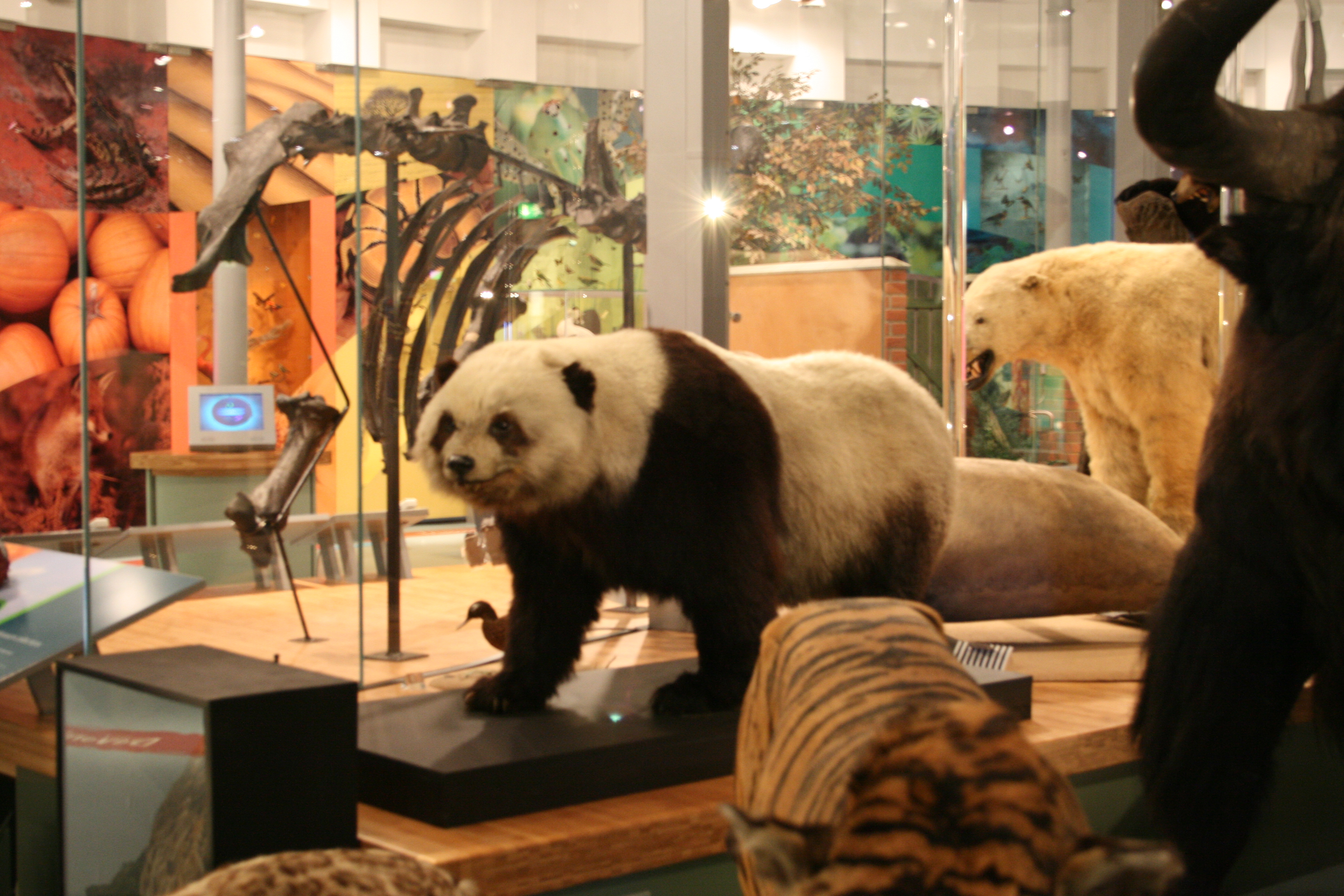
How a Giant Panda – possibly called Grandma – ended up at Leeds City Museum.

Written by Clare Brown, NatSCA Membership Secretary & Curator of Natural Science, Leeds Museums and Galleries, Leeds Discovery Centre.

On display in the basement gallery of Leeds City Museum is a stuffed Giant Panda. We’ve always known and referred to her as “Grandma”, the panda that died only a few days after arriving in London in 1938.

Photograph of a taxidermy giant panda at Leeds Museum.
‘Grandma’ the Giant Panda ©Leeds Museums and Galleries.

Grandma, named as she was the oldest of the group, and her compatriots Happy, Grumpy, Dopey and Baby (Snow White was released in March that year) were the first live Giant Pandas to arrive in the UK. They had taken a long and complicated journey out of central China. Trapped in the forests above Weizhou, Sichuan, the pandas were initially kept at Chengdu under the care of Elizabeth and Floyd Tangier Smith.

Over several weeks, paperwork was prepared and plans were put in place for moving six pandas across the country during a Japanese invasion. It was then Elizabeth who, leaving a poorly Floyd to catch a plane, navigated her way to the Hong Kong Society for Prevention of Cruelty to Animals’ Dogs Home, a journey of some 1400km. One panda died en route.

Continue reading

Unpacking the Unnatural History Museum (Season 1)

Written by Verity Burke, John Pollard Newman Fellow of Climate Change and the Arts, University College Dublin.

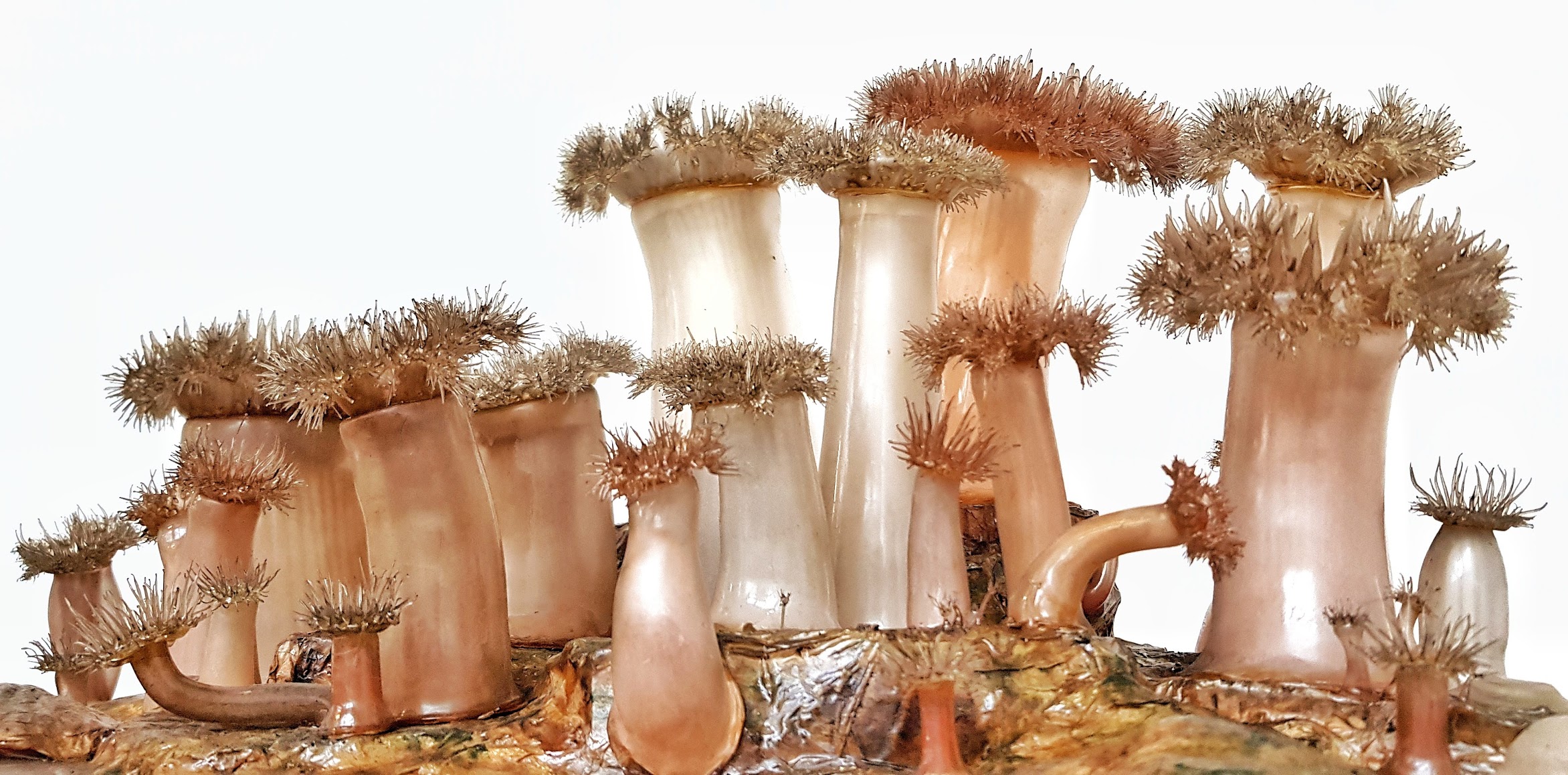
Blaschka Models. Image credit: courtesy of the National Museum of Ireland: Natural History.

We’re at a crucial historical moment, in which the International Union for Conservation of Nature Red List has announced a catastrophic decline in global biodiversity, and the Intergovernmental Panel on Climate Change has reported on the devastating trajectory of the climate crisis. Museums have an important role to play in communicating the value of nature. Yet nature is, necessarily, mediated in museums, through taxidermy dioramas and skeletal mounts; virtual tours and digital databases; image, text and film. While the natural world has always been mediated in the museum space, what does this mediation mean now for natural history museums and collections, and the natures they present?

These are some of the questions which drive my research into museum representations of the natural world, and was the inspiration behind putting together an event series called ‘The Unnatural History Museum: Mediating Nature in the Sixth Mass Extinction’ (part of the Irish Research Council-funded project ‘Still Lives: Organic and Digital Animals in the Natural History Museum’ at Trinity College Dublin). I was keen to make a space to have these conversations across disciplines and sectors (something which we get surprisingly few opportunities to do, despite often working on similar topics or issues), to allow us to share what we were doing and discuss why. This blog is a short overview of the topics that the first season of the Unnatural History Museum engaged with from September 2022 to April 2023, with some excitement about what arose in the first season, and in anticipation of continuing these conversations in a planned second season.

Continue reading

NatSCA Digital Digest – May 2023

Compiled by Glenn Roadley, NatSCA Committee Member, Curator of Natural Science at The Potteries Museum & Art Gallery.

Welcome to the May edition of NatSCA Digital Digest.

A monthly blog series featuring the latest on where to go, what to see and do in the natural history sector including jobs, exhibitions, conferences and training opportunities. If you have any top tips and recommendations for our next Digest please drop an email to blog@natsca.org.

Sector News

NatSCA Conference

The NatSCA annual conference and AGM was held at The Potteries Museum & Art Gallery on Thursday 27th and Friday 28th April 2023. The focus this year was So how do we actually do all this? Hopeful futures and turning theory into practice for big issues in natural history collections.

With 86 delegates present each day plus over 20 online, it was great to welcome everyone back to physical NatSCA conferences. A huge thanks to everyone that attended and to our speakers for the brilliant talks! For those that were unable to attend, we’re hoping to make the presentations available online in the near future.

SPNHC Conference

The 38th Annual Meeting of The Society for the Preservation of Natural History Collections is being held in San Francisco, California 28 May – 2 June 2023. Full details here.

SHNH International Summer Meeting

This year’s SHNH International Summer Meeting, ‘The Language of Nature’, will take place at Thinktank, Millennium Point, Birmingham on Tuesday 13 June 2023 (with visits planned for 14 June). This one-day international meeting will explore the language of nature in its broadest sense. Over centuries, different formats and mediums, stylistic approaches and classification systems have been used to describe and represent the natural world. These ‘languages’ influence how we conceive of nature, how we categorise it, how we wonder at it and who we credit with its ‘discovery’. This conference aims to bring new perspectives to the history of natural history writing and other expressions of nature, exploring not only the creativity and originality involved but also the limitations and biases that shape our understanding of the natural world and how it has been perceived throughout history. Full details here.

Continue reading