NatSCA Digital Digest

Welcome to the weekly digest of posts from around the web with relevance to natural science collections. We hope you find this useful and if you have any articles that you feel would be of interest, please contact us at blog@natsca.org

1. Blog: Natural History Blog

Russell Dornan

Synopsis

A great blog worth checking out:

‘My name is Russell Dornan and I was the biology curatorial trainee at Hereford and Ludlow Museums. I blogged throughout my 12 month journey through their natural history collections and went on to be the Natural History Project Co-ordinator at the Horniman Museum in London.

I am now the Web Editor at Wellcome Collection.

All views expressed in this blog are mine alone and do not represent the opinions of my employer.’

Russell Dornan's #MuseumSelfie

Russell Dornan’s #MuseumSelfie (Image by Russell Dornan)

Wunderkammer

2. Volunteer Position: Mudchute Volunteer Coordinator

Mudchute, East London Countryside

Synopsis

We have a fantastic opportunity for an experienced Volunteer Coordinator to join our team at Mudchute Park and Farm to manage the recruitment, supervision and support of our volunteering programme.

We are looking for an organised, dynamic and enthusiastic individual who has the experience of working in a multi-cultural environment Inner City Environment with groups and individuals from a diverse background. Experience of working with and the ability to enthuse and motivate disadvantaged individuals is essential.

If you think this could be you, we’d love to hear from you! For more details about this part time position, including how and when to apply, please download the application pack by following the website below.

Please note that applications must be received by noon on Friday, August 29th.

Mudchute Volunteer Position

3. Training: Accreditation Plus Training- Making your objects accessible

University of the Arts, London

Synopsis

Wednesday 10 September 2014, 1.30-4pm

Central St Martins

http://www.arts.ac.uk/csm/about-csm/find-us/

‘Research has proven that touching and handling objects is an important part of the learning experience. However for many museums, allowing visitors to handle objects is an area in which they lack confidence or ‘trained’ staff. This training will address the issue of how we balance the care and conservation of objects against issues of access. Experienced practitioners from Central St Martins will provide guidance on best practice in object handling and discuss how robust systems can make it possible to manage access to collections through handling whilst still protecting them for future generations.

In the session you will:

  • Look at a range of things to consider in order to handling by your visitors.
  • Explore why we use object handling in our museums
  • Learn best practise for handling objects

It is aimed at staff and volunteers who will be developing and delivering handling sessions within their museums.’

To book, fill in an online application form on the Regional Programmes website:

Training Programmes

Training course booking form

Compiled by Emma-Louise Nicholls, NatSCA Blog Editor

NatSCA Digital Digest

Welcome to the weekly digest of posts from around the web with relevance to natural science collections. We hope you find this useful and if you have any articles that you feel would be of interest, please contact us at blog@natsca.org

1. Blog: The Importance of Natural Sciences

Jack Ashby, Manager of the Grant Museum

Synopsis

Comparing attitudes across the Atlantic

The importance of natural sciences

2. Training: Interpretation Planning

Friday 18th July, Museum of London

Synopsis

‘Nick Poole from Collections Trust will be delivering an add on session from 1-1.30pm on digitisation and the potential of using your collections on line through various platforms’.

Interpretation Planning

3. Museum and Heritage Awards

Advisor- the team behind the M and H show and awards

Synopsis

A review of this year’s award winning projects

Museum and Heritage Awards

Compiled by Emma-Louise Nicholls, NatSCA Blog Editor

Review of a Training Course on Pesticides and the Latest Legislation

The following is a review made by Roberto Portela Miguez, Mammal Group Curator at the NHM London:

About a week ago I attended a course and talk at the Natural History Museum of London, entitled “Control of Pesticide Regulations 1986 (as amended 1997) EU Biocides Regulations 528/2012”.

I know that, even if your two passions in life are pesticides and obscure legal documents, it is highly unlikely that you would rush to sign up for it.

After attending the event I can assure you that I still do not wish to look into both topics more than I need to. I do however strongly recommend all collections management staff to attend any future opportunity to listen to Bob Child’s talk or training event on this topic.

Robert Child was formerly Head of Conservation at the National Museum of Wales, and is now a Conservation Consultant, Advisor on Insect Pests to the National Trust and Director of Historyonics.

His company, Historyonics, sells insect pest products and carries out treatments on historic buildings and collections – so he has plenty of first-hand anecdotes to illustrate the various points he makes during his talks.

His experience on these matters is vast, but possibly more important: he is a brilliant communicator that can easily turn what is a dry and dull topic into two hours of effective and entertaining training.

The course Bob runs is required training for anybody using pesticides as part of their work ( this includes volunteers ) and is based on the requirements of the Control of Pesticides Regulations 1986 (as amended), the Control of Substances Hazardous to Health Regulations 1988 (as amended) and the new Biocides Regulation 528/2012. It is further based on the HSE’s publication ‘Recommendations for Training Users of Non-agricultural Pesticides’.

The course lasts for about two hours and covers both theoretical aspects on a Powerpoint and practical demonstrations of:

  • principles of pest control and nature of pesticides
  • legislation
  • storage and transport of pesticides
  • use of pesticides (on site assessments)
  • labels and data sheets
  • safety in preparation, clean up and disposal.
  • emergency procedures
  • record keeping

Once you have gone through the training, you will be qualified to apply pesticides in your collections and, without doubt, be extremely grateful that Bob has done all the reading of the relevant EU legislation on your behalf.

I know most of us do our best to prevent infestations but, just in case, better to be prepared and qualified than …you know.

Keep checking our NatSCA website and blog for news on future workshops and training events and if you want to contact Bob to run the course at your institution, you can email him to bobchild@historyonics.com .

NatSCA Digital Digest

Welcome to the weekly digest of posts from around the web with relevance to natural science collections. We hope you find this useful and if you have any articles that you feel would be of interest, please contact us at blog@natsca.org

1. Blog: ARKive’s Top Ten Eggs

Kathryn Pintus, ARKive

Kathryn Pintus
Kathryn Pintus

Synopsis

For those of us with a public programme to fill each holiday season, ideas and inspiration from other sources can never be too much or too numerous. I for one know first hand what it is like to keep trying to deliver a programme that is constantly fresh and original. As we egg-sit (sorry) another Easter of promoting eggs, egg-laying, anything eggy or egg-like that we have in our collections, I thought you may appreciate a pick me up. Here is a refreshing and quirky blog from ARKive that should do the trick.

ARKive’s Top Ten Eggs

Peacock butterfly eggs. © John Bebbington FRPS

Peacock butterfly eggs. © John Bebbington FRPS

Continue reading

NatSCA Digital Digest

Welcome to the weekly digest of posts from around the web with relevance to natural science collections. We hope you find this useful and if you have any articles that you feel would be of interest, please contact us at blog@natsca.org

1. Blog: Eton College, Natural History Museum

George Fussey, Curator, and colleagues

Synopsis

Rather than drawing your attention to a specific article on this blog, I am rather pointing out that this blog exists in case you hadn’t yet come across it. Having been to the Natural History Museum at Eton College myself, I can tell you that it is well worth the visit. I had the great pleasure of being shown around the Museum by Curator George Fussey, and there are certainly treasures to be seen there. I encourage you to have a look at this blog, it may be one of great interest to many people in our sector.

Eton College, Natural History Museum Blog

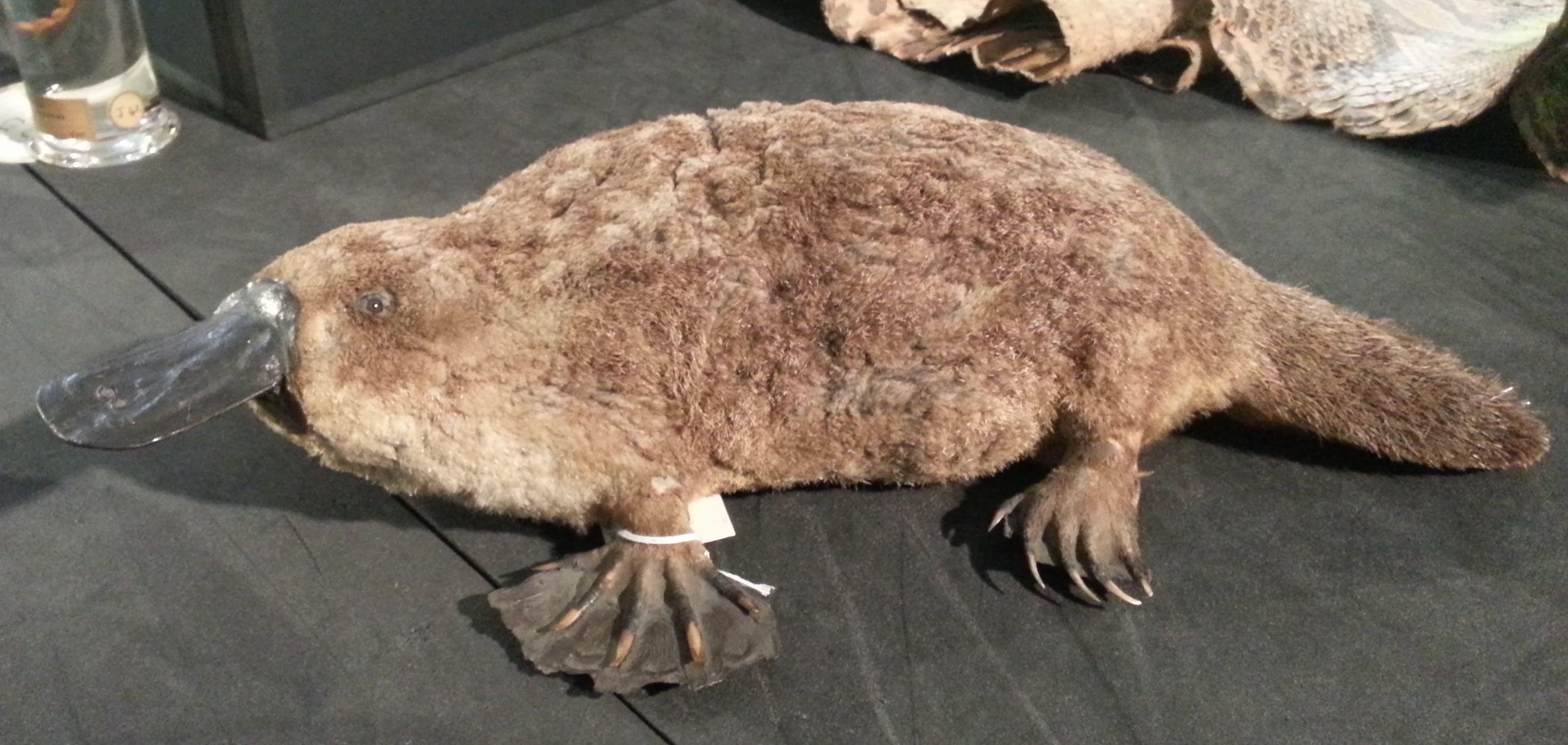
If you think our platy is a fatty, you should see the one at Eton! Specimen LDUCZ-Z20 (C) UCL / Grant Museum

If you think the Grant Museum’s platy is a fatty (above), you should see the one at Eton! Specimen LDUCZ-Z20 (C) UCL / Grant Museum

2. Conference: Radiation and Extinction: Investigating Clade Dynamics in Deep Time

The Linnean Society of London, 10-11th November 2014

Synopsis

To address the issues in the modern day caused by global warming, this conference aims to look at the past. It will focus on:

“Determining the causes and drivers of evolutionary dynamics is central to our understanding of life on Earth. What factors shaped the modern biota? Why did some groups go extinct, whilst others survived and radiated? Why are some groups so much more diverse than others? What will happen to organisms as the Earth continues to warm up?”

Radiation and Extinction: Investigating Clade Dynamics in Deep Time

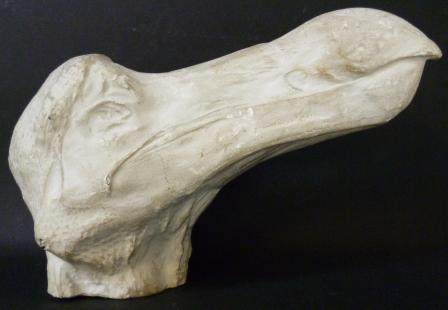
A representative of extinction- the dodo head cast. Specimen LDUCZ-Y86 (C) UCL / Grant Museum

A representative of extinction- the dodo head cast at the Grant Museum of Zoology. Specimen LDUCZ-Y86 (C) UCL / Grant Museum

3. Training: Documentation Training Course

Museum of London, Docklands, 25th April 2014

Synopsis

Museum volunteers are invited to attend this course run as part of the Regional Museums Development programme. The course is designed to look at how to deal with issues of documentation, as well as the theory behind collections management.

Contact kwebbgreen@museumoflondon.org.uk to book.

Compiled by Emma-Louise Nicholls, NatSCA Blog Editor