NatSCA Digital Digest

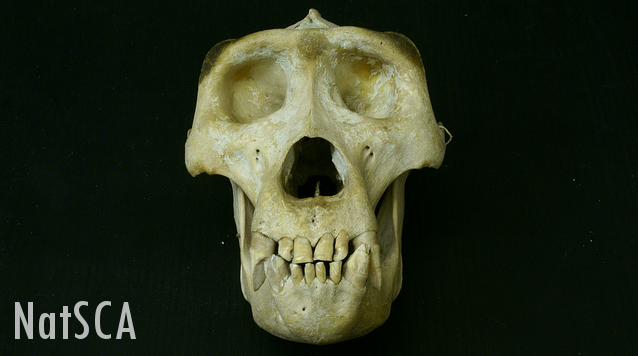
Gorilla skull on a black background

Your weekly round-up of news and events happening in the wonderful world of natural sciences!


Jobs

Unusually, there are a few natural science jobs out there in the UK at the moment:

Curatorial Assistant (Human Remains and Repatriation) – Natural History Museum. Applications close 29th March.

Curator/Lecturer in Vertebrate Palaeontology – Cambridge University. Applications close 3rd April.

Several interesting posts at Royal Botanic Gardens, Kew, including an Assistant Curator (applications close 7th April).

And, just in case you haven’t already seen it:

Collections Manager (Life Collections) – Oxford University Museum of Natural History. Applications close 10th April.

Events

Simon Moore’s renowned fluid preservation course will next run on 1st – 4th June at the Horniman Museum & Gardens. The four-day course costs £300 (NatSCA members can apply for a bursary). See here for details and booking.
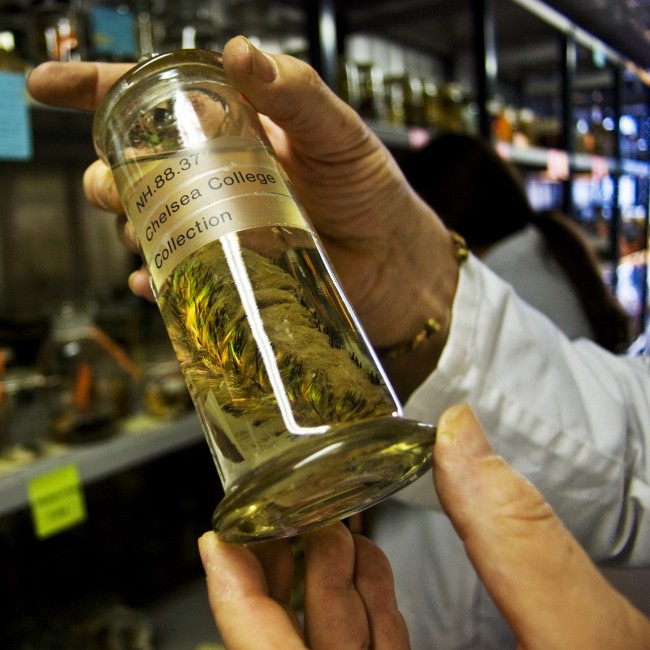
A fluid-preserved specimen in a jar is held up to the camera. Image: Russell Dornan

Learn the skills to care for fluid-preserved specimens (Image: Russell Dornan)

The Society for the History of Natural History (SHNH) has put out a call for speakers for their annual conference, to be held at Wakefield Museum on 31st July – 1st August.

The Museum Ethnographers Group (MEG) 2015 conference is entitled Nature and Culture in Museums, and will explore the relationship between natural science and ethnography. It takes place at the Powell-Cotton Museum on 20th – 21st April, and booking is open now!

In the Media

Today is Taxonomist Appreciation Day, a holiday devised by Dr Terry McGlynn, of California State University Dominguez Hills, to highlight the decline in taxonomic skills and the importance of museum collections.

These taxonomists definitely deserve some appreciation: A census of all known marine life by WoRMS (the World Register of Marine Species) has added many new species and removed 190,400 duplicates!

Darwin’s ‘strangest animals ever discovered’ finally find their place in the tree of life.


Got a submission for the blog or Digital Digest? Email us at blog@natsca.org!

Curating a Deep Sea Fish Collection at Glasgow’s Hunterian Museum

Hunterian Zoology Museum, Glasgow University. Photo: Glenn Roadley

Hunterian Zoology Museum, Glasgow University (Photo: Glenn Roadley)

The third week-long placement of my HLF Natural History Curatorial Traineeship took place at The Hunterian Zoology Museum, part of the University of Glasgow’s impressive campus. I had visited The Hunterian in Glasgow once before, in November, as part of a meeting with my traineeship mentor, Maggie Reilly, the Curator of Zoology. While before I only had time for a quick tour of the museum galleries, this time I was able to get hands-on with a full project.

Shelves of fluid-preserved animal specimens in jars, in the Hunterian's spirit collection. Photo: Glenn Roadley

The Hunterian’s spirit collection (Photo: Glenn Roadley)

During 2011, a research team from the University of Glasgow set out to trawl the Porcupine Abyssal Plain, ~4800m deep in the Atlantic Ocean, as part of an investigation into the effect of commercial fishing on the marine ecosystem. As fish stocks are depleted, commercial fisheries are trawling deeper and deeper. Much of life on the sea floor is unknown, and investigating the diversity of deep sea organisms will help us to understand the potential effects of deeper trawling. The fish collected during the research cruise were measured (body length, head length, tail length and wet weight), assigned a unique number, labelled, and preserved in a formalin solution. These were then transported to the Hunterian Zoology Museum, to be added to the spirit collection. The fish had been identified as well as possible, rinsed of the formalin, and transferred to 70% ethanol solution, but still needed to be separated out by taxon, stored in their own jars (rather than plastic buckets), and added to the museum database. This was to be my task.

A toothy anglerfish: a gloved hand holds a fluid-preserved specimen of an anglerfish. Photo: Glenn Roadley

A toothy anglerfish (Photo: Glenn Roadley)

Deep sea fish are definitely a bizarre and fascinating lot. The collection I was working with contained a wide range of taxa, with ghostly-looking members of the genus Coryphaenoides occurring particularly often. Anglerfish and common fangtooth also stood out for their menacing looks – the former rather closely resembling a scrunched up bin-liner with teeth. Some had been identified all the way to species level, while others were yet to be identified. Who knows, maybe I handled a yet-undescribed species during my time at the Hunterian?

After preparing a large batch of 70% ethanol solution, in which the fish are preserved, I set about recording them on the Hunterian’s database, KE Emu. Pulling a specimen from a bucket of mixed fish and laying it onto a tray, I was able to use the unique collection number and site of collection on the label to match it to the records on the research cruise data sheets, which contained the exact location co-ordinates, date, species ID, and measurements. I could then enter this data into KE Emu and assign the fish a unique museum accession number. Once the fish label had dried (though care had to be taken not to let the specimen dry out too), it could be permanently marked with the accession number, before the specimen was sorted into a jar of ethanol by site and species ID.

Coryphaenoides leptolepis: a fluid-preserved specimen of a fish sits in a clear container. Photo: Glenn Roadley

Coryphaenoides leptolepis (Photo: Glenn Roadley)

It was fascinating to work with such a wide range of rarely seen species, and served as a good boost to my knowledge of fish taxonomy. Most importantly, I was able to see the true context of the collection – working from start to finish to accession the collection – while using the cruise research data and reports to populate the database enabled me to really understand where these specimens had come from and their value to science. These deep-sea fish will now be housed in the Hunterian Museum, accessible for further scientific research for decades to come.

Glenn Roadley
Natural History Curatorial Trainee
batdrawer1.wordpress.com

NatSCA Digital Digest

Welcome to the weekly digest of posts from around the web with relevance to natural science collections. We hope you find this useful and if you have any articles that you feel would be of interest, please contact us at blog@natsca.org

1. Blog: Natural History Blog

Russell Dornan

Synopsis

A great blog worth checking out:

‘My name is Russell Dornan and I was the biology curatorial trainee at Hereford and Ludlow Museums. I blogged throughout my 12 month journey through their natural history collections and went on to be the Natural History Project Co-ordinator at the Horniman Museum in London.

I am now the Web Editor at Wellcome Collection.

All views expressed in this blog are mine alone and do not represent the opinions of my employer.’

Russell Dornan's #MuseumSelfie

Russell Dornan’s #MuseumSelfie (Image by Russell Dornan)

Wunderkammer

2. Volunteer Position: Mudchute Volunteer Coordinator

Mudchute, East London Countryside

Synopsis

We have a fantastic opportunity for an experienced Volunteer Coordinator to join our team at Mudchute Park and Farm to manage the recruitment, supervision and support of our volunteering programme.

We are looking for an organised, dynamic and enthusiastic individual who has the experience of working in a multi-cultural environment Inner City Environment with groups and individuals from a diverse background. Experience of working with and the ability to enthuse and motivate disadvantaged individuals is essential.

If you think this could be you, we’d love to hear from you! For more details about this part time position, including how and when to apply, please download the application pack by following the website below.

Please note that applications must be received by noon on Friday, August 29th.

Mudchute Volunteer Position

3. Training: Accreditation Plus Training- Making your objects accessible

University of the Arts, London

Synopsis

Wednesday 10 September 2014, 1.30-4pm

Central St Martins

http://www.arts.ac.uk/csm/about-csm/find-us/

‘Research has proven that touching and handling objects is an important part of the learning experience. However for many museums, allowing visitors to handle objects is an area in which they lack confidence or ‘trained’ staff. This training will address the issue of how we balance the care and conservation of objects against issues of access. Experienced practitioners from Central St Martins will provide guidance on best practice in object handling and discuss how robust systems can make it possible to manage access to collections through handling whilst still protecting them for future generations.

In the session you will:

  • Look at a range of things to consider in order to handling by your visitors.
  • Explore why we use object handling in our museums
  • Learn best practise for handling objects

It is aimed at staff and volunteers who will be developing and delivering handling sessions within their museums.’

To book, fill in an online application form on the Regional Programmes website:

Training Programmes

Training course booking form

Compiled by Emma-Louise Nicholls, NatSCA Blog Editor

NatSCA Digital Digest

Welcome to the weekly digest of posts from around the web with relevance to natural science collections. We hope you find this useful and if you have any articles that you feel would be of interest, please contact us at blog@natsca.org

1. Blog: The Importance of Natural Sciences

Jack Ashby, Manager of the Grant Museum

Synopsis

Comparing attitudes across the Atlantic

The importance of natural sciences

2. Training: Interpretation Planning

Friday 18th July, Museum of London

Synopsis

‘Nick Poole from Collections Trust will be delivering an add on session from 1-1.30pm on digitisation and the potential of using your collections on line through various platforms’.

Interpretation Planning

3. Museum and Heritage Awards

Advisor- the team behind the M and H show and awards

Synopsis

A review of this year’s award winning projects

Museum and Heritage Awards

Compiled by Emma-Louise Nicholls, NatSCA Blog Editor

Review of a Training Course on Pesticides and the Latest Legislation

The following is a review made by Roberto Portela Miguez, Mammal Group Curator at the NHM London:

About a week ago I attended a course and talk at the Natural History Museum of London, entitled “Control of Pesticide Regulations 1986 (as amended 1997) EU Biocides Regulations 528/2012”.

I know that, even if your two passions in life are pesticides and obscure legal documents, it is highly unlikely that you would rush to sign up for it.

After attending the event I can assure you that I still do not wish to look into both topics more than I need to. I do however strongly recommend all collections management staff to attend any future opportunity to listen to Bob Child’s talk or training event on this topic.

Robert Child was formerly Head of Conservation at the National Museum of Wales, and is now a Conservation Consultant, Advisor on Insect Pests to the National Trust and Director of Historyonics.

His company, Historyonics, sells insect pest products and carries out treatments on historic buildings and collections – so he has plenty of first-hand anecdotes to illustrate the various points he makes during his talks.

His experience on these matters is vast, but possibly more important: he is a brilliant communicator that can easily turn what is a dry and dull topic into two hours of effective and entertaining training.

The course Bob runs is required training for anybody using pesticides as part of their work ( this includes volunteers ) and is based on the requirements of the Control of Pesticides Regulations 1986 (as amended), the Control of Substances Hazardous to Health Regulations 1988 (as amended) and the new Biocides Regulation 528/2012. It is further based on the HSE’s publication ‘Recommendations for Training Users of Non-agricultural Pesticides’.

The course lasts for about two hours and covers both theoretical aspects on a Powerpoint and practical demonstrations of:

  • principles of pest control and nature of pesticides
  • legislation
  • storage and transport of pesticides
  • use of pesticides (on site assessments)
  • labels and data sheets
  • safety in preparation, clean up and disposal.
  • emergency procedures
  • record keeping

Once you have gone through the training, you will be qualified to apply pesticides in your collections and, without doubt, be extremely grateful that Bob has done all the reading of the relevant EU legislation on your behalf.

I know most of us do our best to prevent infestations but, just in case, better to be prepared and qualified than …you know.

Keep checking our NatSCA website and blog for news on future workshops and training events and if you want to contact Bob to run the course at your institution, you can email him to bobchild@historyonics.com .