Welcome to the August edition of NatSCA Digital Digest.
A monthly blog series featuring the latest on where to go, what to see and do in the natural history sector including jobs, exhibitions, conferences, and training opportunities. We are keen to hear from you if you have any top tips and recommendations for our next Digest, please drop an email to blog@natsca.org.
Sector News
#SPPC2023 – Registration is now open!
Registration is now open for the 2023 Symposium on Palaeontological Preparation and Conservation which will be held on 6th September 2023 at the University of Lincoln, UK.
#SPPC2023 will take place at the Minerva Building, Lincoln UK, in conjunction with the Symposium on Vertebrate Palaeontology and Comparative Anatomy. Platform presentations will take place in the morning, with time during tea break and lunch for delegates to view posters. You can register here. Registration closes: Monday 21 August 2023.
Welcome to the July edition of NatSCA Digital Digest.
A monthly blog series featuring the latest on where to go, what to see and do in the natural history sector including jobs, exhibitions, conferences, and training opportunities. We are keen to hear from you if you have any top tips and recommendations for our next Digest, please drop an email to blog@natsca.org.
Sector News
HOGG Conference & Field Meeting
There’s still time to register for the upcoming The History of Geology Group (HOGG) conference & Field Meeting. The event will be hosted at Trinity College Dublin, Ireland and will take place between Tuesday 15th and Friday 18th August 2023 on ‘Aspects of the history and progress of geology in Ireland’.
The programme includes the one-day conference and three days of field and archive visits, including a visit to the birthplace of modern seismology, and opportunity to look at material not often open to view.
Registration is €17 (£15) and can be completed through Eventbrite by clicking here. For more information, visit the event page or email duncan.hawley.hogg@gmail.com
Written by Fiona Roberts (Collaborative ESRC PhD student, Cardiff University & Amgueddfa Cymru-National Museum Wales) and Violet Nicholls (Assistant Curator in Herbarium, Portsmouth Museums).
This post is dedicated to Dr Dagoberto Lima Azevedo (1979-2023), Tukano researcher, translator, scholar, author and a voice for the Indigenous peoples of the Rio Negro in the northwestern Amazon.
The workshop ran in partnership with Museu Goeldi, Brazil and the Department of Cultures and Languages, Birkbeck, University of London. It addressed the question, ‘how ethnobotanical collections in museums can best be used to support Indigenous communities?’. Dr Dagoberto Lima Azevedo, from the Federação das Organizações Indígenas do Rio Negro, and Claudia Leonor López Garcés (Museu Paraense Emílio Goeldi) travelled from the Brazilian Amazon for the event. They met with fellow panellists Professor Mark Nesbitt (Royal Botanic Gardens, Kew), Professor Luciana Martins (Birkbeck, University of London), Cinthya Lana (University of Gothenburg) and Dr William Milliken (Royal Botanic Gardens, Kew).
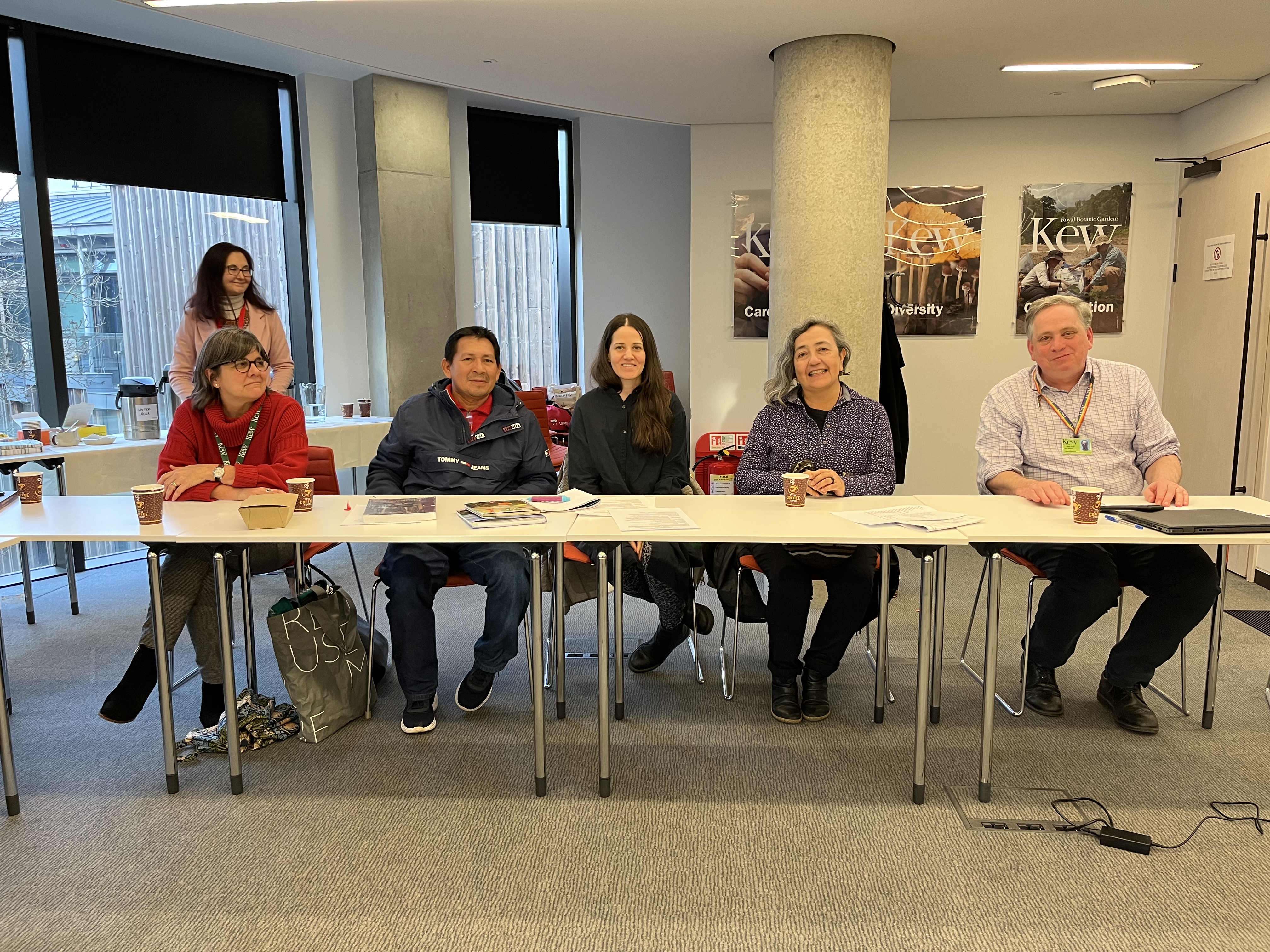
Fig. 1. Some members of the panel at the workshop with, from left to right, Cynthia Sothers, Luciana Martins, Dagoberto Lima Azevedo, Cinthya Lana, Claudia Leonor López Garcés and Mark Nesbitt. Photo by Gayathri Anand.
The Richard Spruce collection (1849-1864) was used as a case study. Spruce collected plants and recorded their uses in South America, and is considered to be an early ethnographer, as he also recorded the traditions and customs of the different communities that he met on his travels.1 He collected over 14,000 herbarium specimens in the Andes and Amazon regions, and 350 items are in his ethnobotanical collections.2
Written by Verity Burke, John Pollard Newman Fellow of Climate Change and the Arts, University College Dublin.
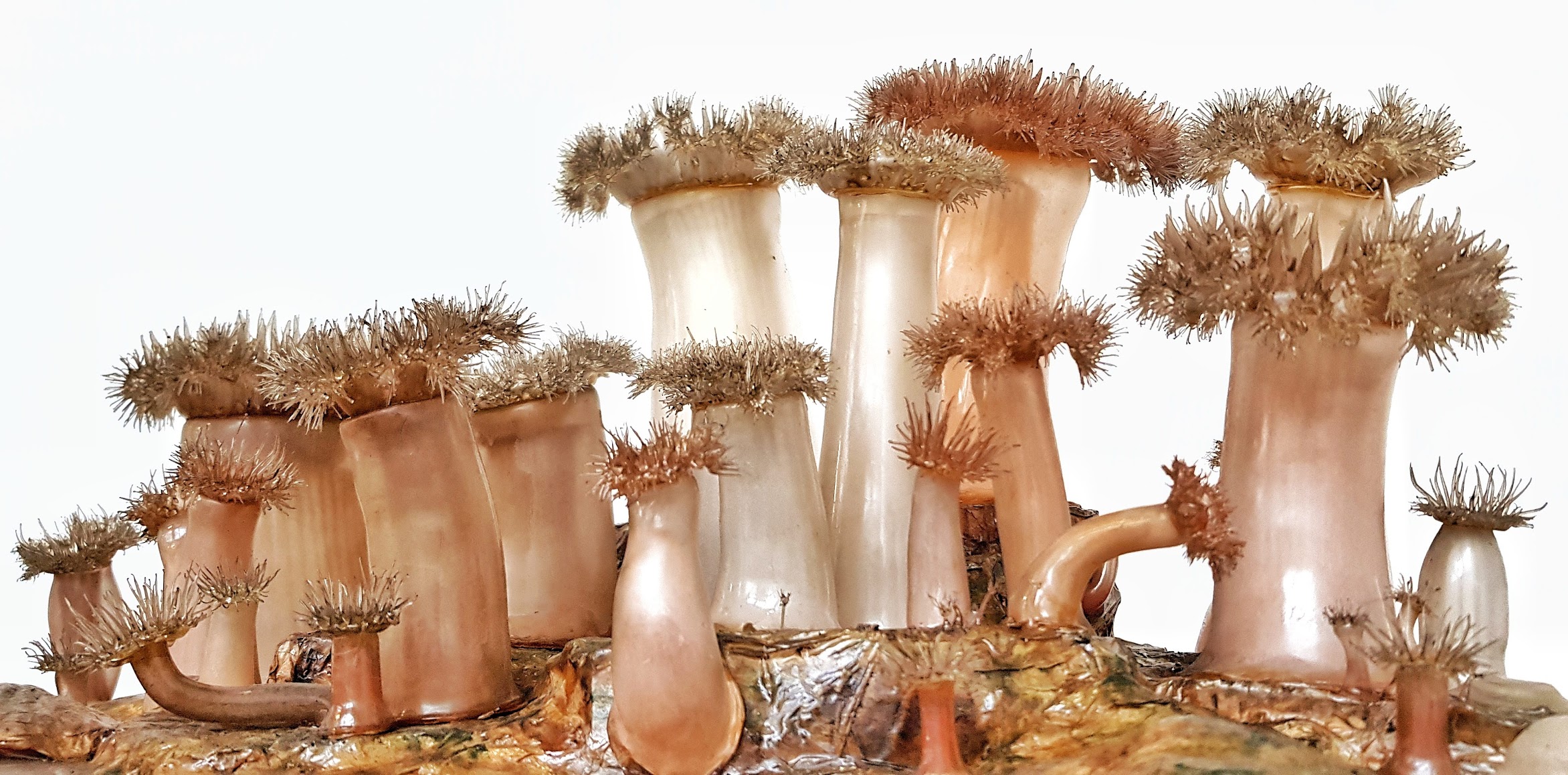
Blaschka Models. Image credit: courtesy of the National Museum of Ireland: Natural History.
We’re at a crucial historical moment, in which the International Union for Conservation of Nature Red List has announced a catastrophic decline in global biodiversity, and the Intergovernmental Panel on Climate Change has reported on the devastating trajectory of the climate crisis. Museums have an important role to play in communicating the value of nature. Yet nature is, necessarily, mediated in museums, through taxidermy dioramas and skeletal mounts; virtual tours and digital databases; image, text and film. While the natural world has always been mediated in the museum space, what does this mediation mean now for natural history museums and collections, and the natures they present?
These are some of the questions which drive my research into museum representations of the natural world, and was the inspiration behind putting together an event series called ‘The Unnatural History Museum: Mediating Nature in the Sixth Mass Extinction’ (part of the Irish Research Council-funded project ‘Still Lives: Organic and Digital Animals in the Natural History Museum’ at Trinity College Dublin). I was keen to make a space to have these conversations across disciplines and sectors (something which we get surprisingly few opportunities to do, despite often working on similar topics or issues), to allow us to share what we were doing and discuss why. This blog is a short overview of the topics that the first season of the Unnatural History Museum engaged with from September 2022 to April 2023, with some excitement about what arose in the first season, and in anticipation of continuing these conversations in a planned second season.
Welcome to the May edition of NatSCA Digital Digest.
A monthly blog series featuring the latest on where to go, what to see and do in the natural history sector including jobs, exhibitions, conferences and training opportunities. If you have any top tips and recommendations for our next Digest please drop an email to blog@natsca.org.
Sector News
NatSCA Conference
The NatSCA annual conference and AGM was held at The Potteries Museum & Art Gallery on Thursday 27th and Friday 28th April 2023. The focus this year was So how do we actually do all this? Hopeful futures and turning theory into practice for big issues in natural history collections.
With 86 delegates present each day plus over 20 online, it was great to welcome everyone back to physical NatSCA conferences. A huge thanks to everyone that attended and to our speakers for the brilliant talks! For those that were unable to attend, we’re hoping to make the presentations available online in the near future.
SPNHC Conference
The 38th Annual Meeting of The Society for the Preservation of Natural History Collections is being held in San Francisco, California 28 May – 2 June 2023. Full details here.
SHNH International Summer Meeting
This year’s SHNH International Summer Meeting, ‘The Language of Nature’, will take place at Thinktank, Millennium Point, Birmingham on Tuesday 13 June 2023 (with visits planned for 14 June). This one-day international meeting will explore the language of nature in its broadest sense. Over centuries, different formats and mediums, stylistic approaches and classification systems have been used to describe and represent the natural world. These ‘languages’ influence how we conceive of nature, how we categorise it, how we wonder at it and who we credit with its ‘discovery’. This conference aims to bring new perspectives to the history of natural history writing and other expressions of nature, exploring not only the creativity and originality involved but also the limitations and biases that shape our understanding of the natural world and how it has been perceived throughout history. Full details here.








 NatSCA
