Feeling Older than Your Age? The Importance of Museum Collections for Radiocarbon Dating, and a Request for Collections containing Bivalves Collected Before 1950 from the UK

Written by Rachel Wood, Associate Professor, Oxford Radiocarbon Accelerator Unit, School of Archaeology, University of Oxford.

Radiocarbon dating is routinely used to work out the age of archaeological and palaeontological sites, and often pops up in news articles and TV dramas. But some substantial problems remain. One of these is the calibration process, which allows us to convert the ratio of 14C (“radiocarbon”) and 12C (the common stable form of carbon) to an age estimate. This is particularly challenging when we are trying to date marine shells or any animal that has eaten food from the marine system. This means that it can be difficult for us to get an accurate age for a sample that should be straightforward – for example, the skeleton of Medieval person or a Mesolithic dog.

The Oxford Radiocarbon Accelerator Unit is starting a project looking for samples of marine shells to help resolve this problem (Fig. 1). Natural history collections in museums are key to its success, and we would be very grateful to hear if anyone has a collection of pre-1950 marine bivalve shells.
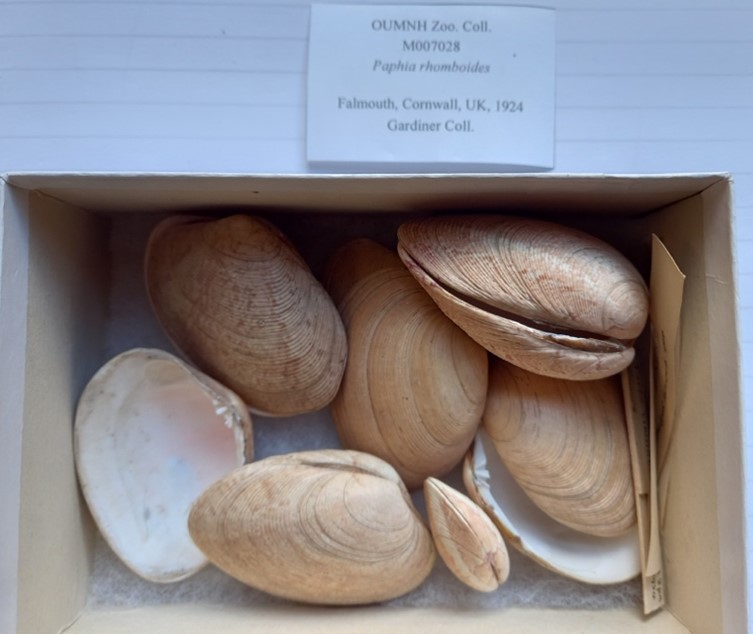
Figure 1. Marine bivalves, suitable for helping us to calibrate radiocarbon dates. Please let us know if you have similar material that can be analysed by sampling a small strip from the edge. (Photo Peter Ditchfield, Courtesy Oxford University Museum of Natural History)

The Problem

At school, we are taught that radiocarbon dating works because radiocarbon decays radioactively at a known rate. By comparing the amount of 14C to a stable form of carbon called 12C, we can work out the age of a sample (Fig. 2). This is true, but only partially so because the starting 14C:12C varies. To get around this problem, we need to calibrate radiocarbon dates. Most 14C is produced in the upper atmosphere, and is incorporated into plants by photosynthesis and then passed through the food chain. This means, that if someone is eating terrestrial food – they will have a similar 14C:12C ratio in their bodies as in the atmosphere.

Continue reading

Taxidermy and the Country House: Where Natural History Meets Social History – a review 

Written by Jack Ashby, Assistant Director of the University Museum of Zoology, Cambridge.

Pat Morris is the authority on the history of British taxidermy, and there is arguably no-one better to write an exploration of the specific context of taxidermy collected for and displayed in private country houses. Although their materiality is identical, by their nature, these collections are often conceptually very different – the antithesis, even – to those in public museum. These differences are not the focus of the book, nonetheless this perspective offers great potential to help us consider more roundly the story of taxidermy and those that made and collected it.

The similarities museum and country house collections do share include their origin-stories, and of course the practicalities of preserving specimens. Like museums, these private collections trace their histories back to cabinets of curiosities. Preservability was fundamental to what could be kept, and Morris begins by explaining that early cabinets of curiosities in country houses were mainly items that required no preservation – dry materials like shells and bone. The only skins that were widely kept were those that could be simply dried without being prone to insect attack, which is why durable specimens like taxidermy crocodiles, hollowed-out armadillos and inflated pufferfish were commonplace in these early collections, rather than the birds and mammals which later became the norm.

Continue reading

Mainstreaming Biodiversity in Museums

Written by Henry McGhie, Curating Tomorrow henrymcghie@curatingtomorrow.co.uk.

Link to the guide: https://curatingtomorrow236646048.files.wordpress.com/2023/11/mainstreaming-biodiversity-in-museums_2023.pdf

‘Mainstreaming’ is a policy and planning approach that means that we don’t just create a new programme or strand of work, but that we embed it across all activities. We can embed support for biodiversity and environmental concerns across museum activities. Why is this important? Well, for a few reasons. Firstly, biodiversity is not yet fully mainstreamed into museum thinking – in terms of their goals, actions, or evaluation. Second, museums present a massive potential to support biodiversity in different ways, notably through education, research, public awareness and partnerships. Third, museums make big negative impacts on biodiversity and the environment, through their contributions to climate change (from use of energy, waste, and visitor emissions), and their involvement in environmentally damaging activities (e.g. how their investments are used). Fourth, because biodiversity is in deep crisis: species continue to decline, major challenges are getting worse, and there is no clear prospect of a change for the better. Lastly, fifth, because people and nature are interdependent: if the environment suffers, people and communities suffer.

Continue reading

Snagged Setae 2, The Sequel: Packing Materials After 14 Years in Fluid Storage

By Lu Allington-Jones (Senior Conservator), Wren Montgomery (FTIR Specialist) and Emma Sherlock (Senior Curator), The Natural History Museum, London UK

Many years ago, we undertook some research into a suitable replacement for cotton wool as bungs for vials holding small fluid-stored specimens. In 2008 we placed samples of Parafilm MTM, white Plastazote® LD45 and colourless HDPE (high-density polypropylene) lids in 10% formalin, 100% ethanol, and 80% IMS (Industrial Methylated Spirit, aka Industrial Denatured Alcohol) and allowed them to steep for 3 years. We undertook visual inspections, pH tests and FTIR analysis and concluded that Parafilm MTM was an unsuitable replacement, but that the other materials had undergone no change and had caused no contamination of the host fluids.  

We decided to revisit the samples after an additional 11 years on a south-west facing sunny lab windowsill, for a total of over 14 years of storage in the various fluids. 

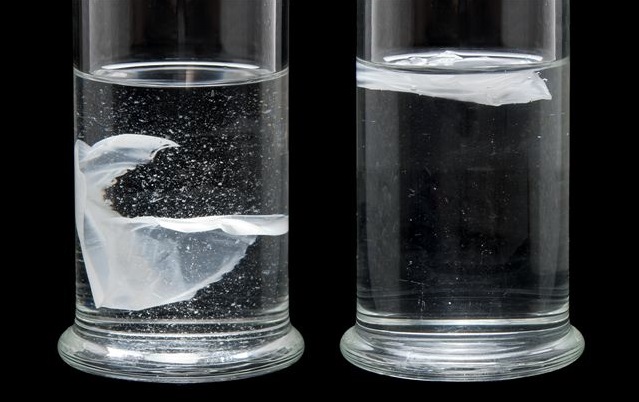
The state of ParafilmTM after only 3 years: particles are visible to the naked eye in the 100% ethanol on the left. The ParafilmTM in the formalin on the right showed a thinning and perforation at its edges. ©The Trustees of the Natural History Museum
Continue reading

Natural History Museums for a World in Harmony with Nature: Now’s the Time!

Written by Henry McGhie, Curating Tomorrow, henrymcghie@curatingtomorrow.co.uk.

Bio: Henry McGhie has a background as an ecologist, museum curator and manager. He set up Curating Tomorrow in 2019 to help empower museums and their partners to contribute to sustainable development agendas, including the Sustainable Developmet Goals (SDGs), climate action, biodiversity conservation, Disaster Risk Reduction and human rights. He is a member of the ICOM Sustainability Working Group, and a Churchill Fellow working on these topics.

This blog post takes in some of the developments over the last couple of years, and sets out some current opportunities for museums with natural history collections to strengthen their contributions to environmental sustainability.

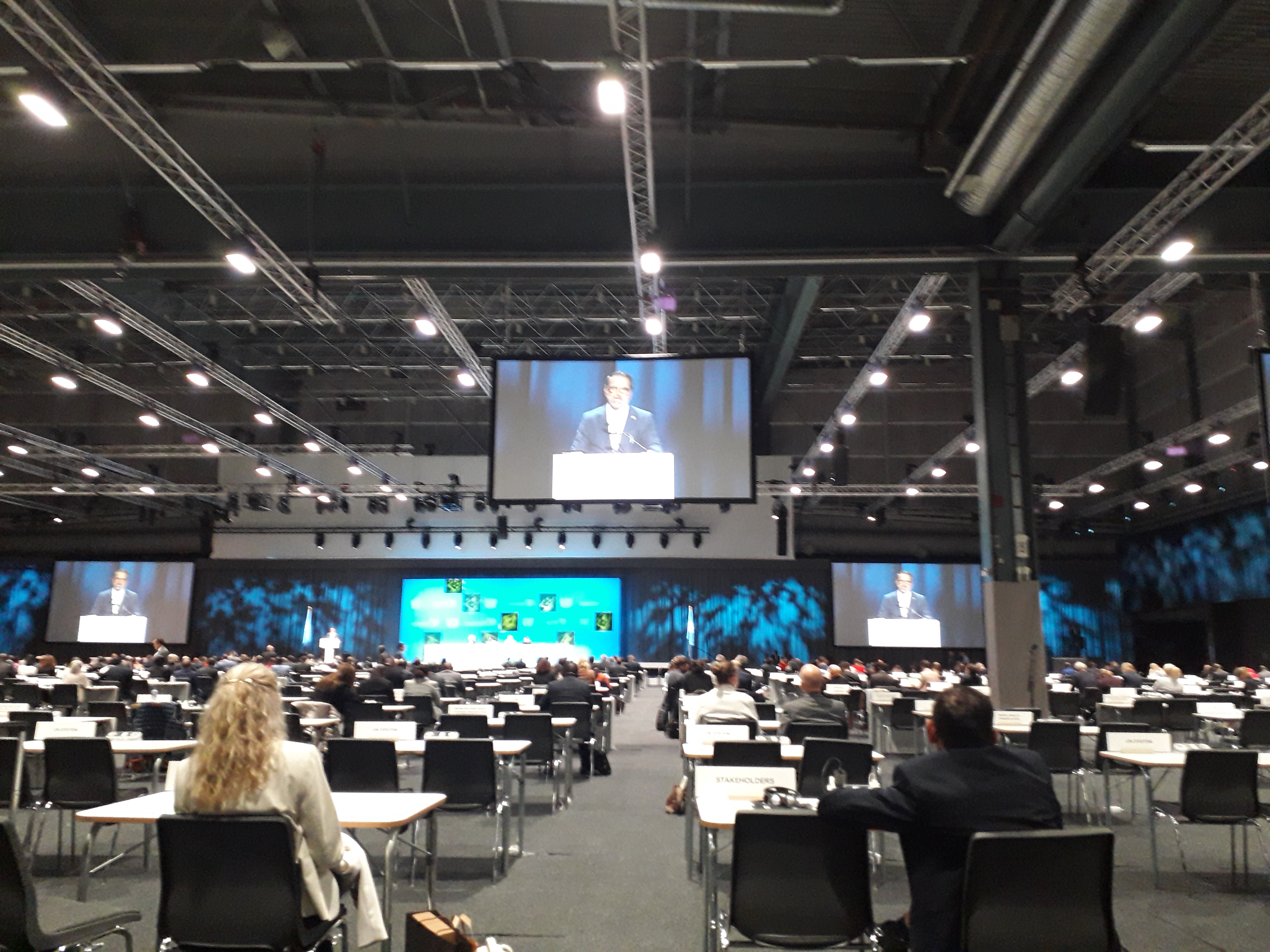
Let’s cast our minds back to 1992, over thirty years ago now, when representatives of all countries agreed to take action in three areas. This was the Rio Earth Summit, which adopted the Convention on Biological Diversity, the Framework Convention on Climate Change (the grandparent of the Paris Agreement) and the Convention to Combat Desertification. It’s entirely possible you may not even have heard of all of these, but don’t worry you’re far from alone. While governments signed onto these agreements, they were broad, framework agreements. It is true that governments were supposed to take the lead in these, and other agreements, but surely sectors – including museums – don’t need to wait to be asked? However, the agreements have just not been turned into action, and that is a fault of governments, but also of the sectors, that could have gained a lot by saying ‘we have something to contribute here’. What I’m proposing isn’t just that museums take up these agreements to look good, sound good, show off, or compete with one another or with other sectors, but to use them as practical tools.

Why? Because connecting with the big picture and international agreements helps museums to:

  • Shape their programmes and activities, to provide people interested in these topics with educational and participatory activities.
  • Put their unique resources to good use in pursuit of positive social and environmental outcomes.
  • Play a significant and distinctive part in an ambitious programme for a better world.
  • Build partnerships and collaborations, with one another and with other sectors, working to shared goals.
  • Create and demonstrate impact, showing that museums and collections are not a nice-to-have, but essential players in securing a future in harmony with nature.
Continue reading