NatSCA Digital Digest

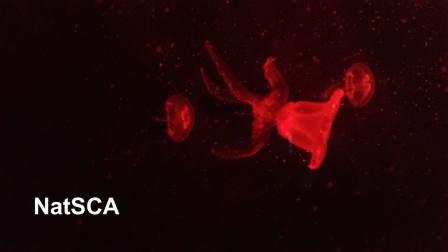
(Image by Ton Rulkens, in public domain)

(Image by Ton Rulkens, public domain)


Your weekly round-up of news and events happening in the world of natural sciences

News

The BBC just posted a down to earth (or sea) article called The man who swims with sharks, by Melissa Hogenboom, feature writer for BBC Earth. Combined with beautiful images, it talks about swimming with and photographing sharks and summarises some very interesting facts about these majestic animals.

Exhibitions

If you haven’t seen the Natural History Museums’ exhibition Coral Reefs: Secret Cities of the Sea, you should definitely go this weekend. If you have seen the Natural History Museums’ exhibition Coral Reefs: Secret Cities of the Sea, you should definitely go this weekend. It will be your last opportunity to see (or re-see) the exhibition as it closes on the 13th September. There are fantastic specimens, cool interactive games and a video of the only coral spawning ever to have occurred in captivity. I personally recommend it to you.

Opened just last week is the new exhibition In the Footsteps of Elephants. This two and a half week exhibition is only open from the 3rd to the 20th September, so if it’s up your street you need to get a wriggle on. The exhibition is being held at the Nature in Art Museum and Gallery in Gloucestershire, which looks really worth too.

Jobs

If you are looking to move, or move into a, role in natural sciences the Naturejobs Career Expo in London on Friday 18th September should be a great place to meet others in the field, attend workshops and conference talks, schmooze with potential employers, and even get your CV looked at.

If Brachiopods are your thing, then the Natural History Museum in London is currently looking for a curatorial assistant to join them in the Earth Sciences Department. The contract is for a year, and the deadline is the 14th September. Sounds like a shell of a good opportunity (!)

As ever, if you would like to write a blog for NatSCA on anything natural sciences related, give us an online shout blog@natsca.org.

Exciting new natural science workshops and a new book

Time is racing away, and in just a few days we will be at the NatSCA Bone Collections day in Cambridge (8th September 2015). The talks and posters promise to be really varied, interesting, and hugely informative. There is also the added bonus of a practical session to get your hands on some skeletal material, and, under the expert guidance of Bethany Palumbo, learn all about the basics of bone conservation.

Just a month later (15th October 2015), Paolo Viscardi will be leading a workshop on the identification of natural materials, a free course run by NatSCA and held at the Royal Albert Memorial Museum in Exeter (now sold out).

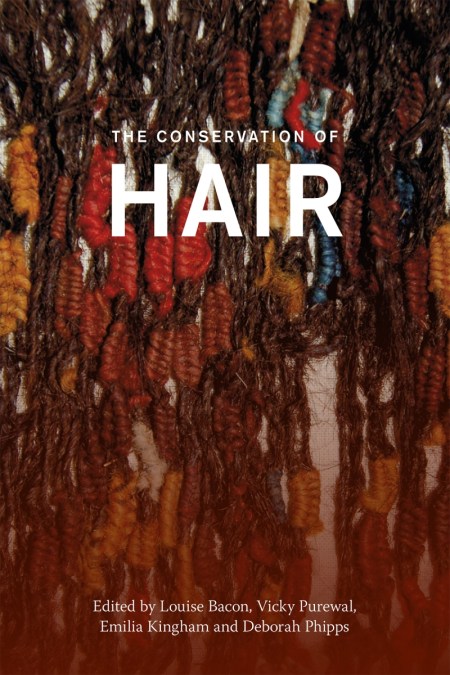
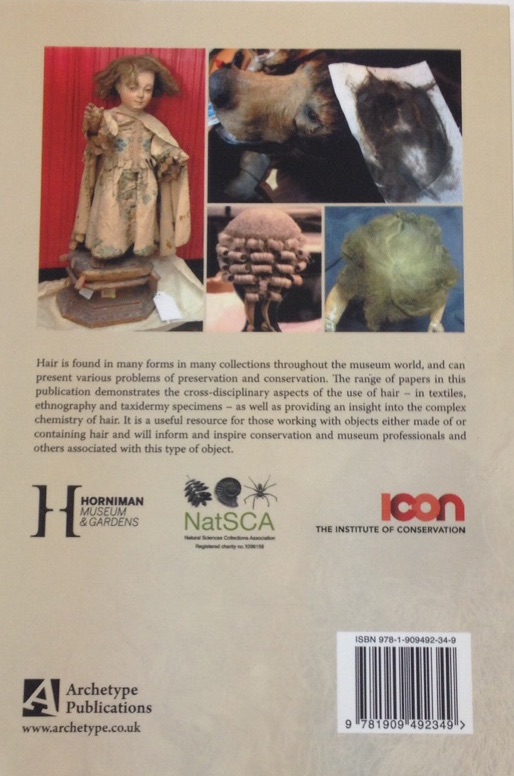
There is still more good news in that NatSCA, the Horniman Museum and Gardens, and Icon have published a book containing the full papers given at the Conservation of Hair conference held in June 2014. The book is published by Archetype books.

Conservation of Hair Publication

back_hair

NatSCA Digital Digest


NatSCA 2

Your weekly round-up of news and events happening in the world of natural sciences

Conferences and Workshops

As PalaeoSam mentioned in the last Digital Digest, the Symposium of Vertebrate Palaeontolotgy and Comparative Anatomy is on next week. It is my personal palaeo highlight of the year and so am sad that I will miss it this year. (Though not too sad given I am missing it to be in Italy for the Grand Prix.) If you are attending and would like to do a super write up of the weeks’ events, please do let us know.  I look forward to experiencing SVPCA through the eyes of a blogger.

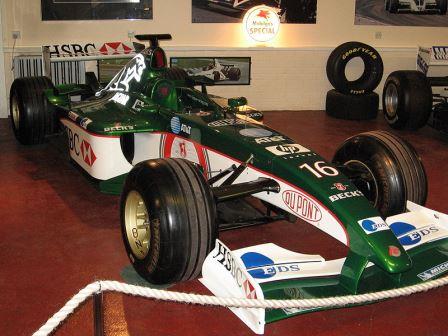
Jaguar

Those of you who are fans of F1 will know why this car is relevant to natural history (image in public domain)

News

Not really on the subject of natural history, but a topic that will touch the heart of any museum professional or visitor. ISIS have taken even more away from the us, the global nation, via the destruction of an Ancient temple in Palmyra. These open air museums are original sites of cultural heritage and are irreplaceable once gone. Not at the top of the list of the most tragic event of the last couple of weeks by any means, but a sad day for museums nevertheless.

News from the Blogosphere

The #MuseumInstaSwap phenomenon has launched as staff from some of the top museums in London (including the NHM and the Horniman) swap museums and take to social media to chat about it. An article in Time Out nicely summarises what is going on but a lot of the museums involved have their own exciting blogs on it worth looking up. Hence this is in the News from the Blogosphere section, see?

Highlights from the Papers

More and more, scientists are relying on Citizen science, as a means of collecting data. The mode of research is especially important in fields such as marine biology where the incorporation of sightings made by anglers, for example, can add significantly increase the size of datasets. An article in Nature called Rise of the Citizen Scientist explores the good the bad and the ugly of this practice as a research tool.


As ever, if you would like to write a blog for NatSCA on anything natural sciences related, give us an online shout blog@natsca.org.
Request for Poster Submissions for Bone Collections Conference

Bone Collections: Using, conserving and understanding osteology in museums.

Tuesday, 8th September 2015
University Museum of Zoology, Cambridge

NatSCA invites you to submit abstracts for short, informal poster presentations to be held at the NatSCA Bone Collections day on the 8th September at the University Museum of Zoology, Cambridge.

The day will include both a workshop on in-depth case studies of bone cleaning, re-articulation, conservation and restoration as well as presentations on bone identification and preparation, covering a wide variety of museum osteology topics.

Spaces are still available for both workshop and talks. The full programme and booking are available here.

Working with, understanding, using, maintaining and conserving bone collections is a large and complex topic. If you have experience and would like to submit a poster, please follow the guidelines below.

We hope that this poster session will facilitate skills-sharing and friendly discussion among participants, as well as providing an opportunity to exchange tips and tricks. Poster presentations are an ideal format for student projects, case studies, innovative ideas, and tried and tested techniques, as well as research related to this topic.

Abstracts must be submitted by 14th August, 2015. All submissions will be acknowledged within a few days. The posters will be on view throughout the day, with an organised time period for authors to discuss posters with conference attendees. Please ensure posters are no larger than A2 (420 x 594mm).

All abstracts will be printed and made available to attendees, and all posters will be made available on the NatSCA blog in pdf format.

Abstract submission:

  • List all authors: surname first, followed by first and middle names or initials. Separate authors’ names with semicolons
  • List authors’ institutions and addresses
  • Include the title in boldface
  • Abstract

Please send your abstracts and any queries to:

Natalie Jones

nj273@cam.ac.uk
T 07786 023709

or

Vicky Purewal

E vjpurewal@gmail.com
T 07917533411

Introducing the new Conservation Representative for NatSCA

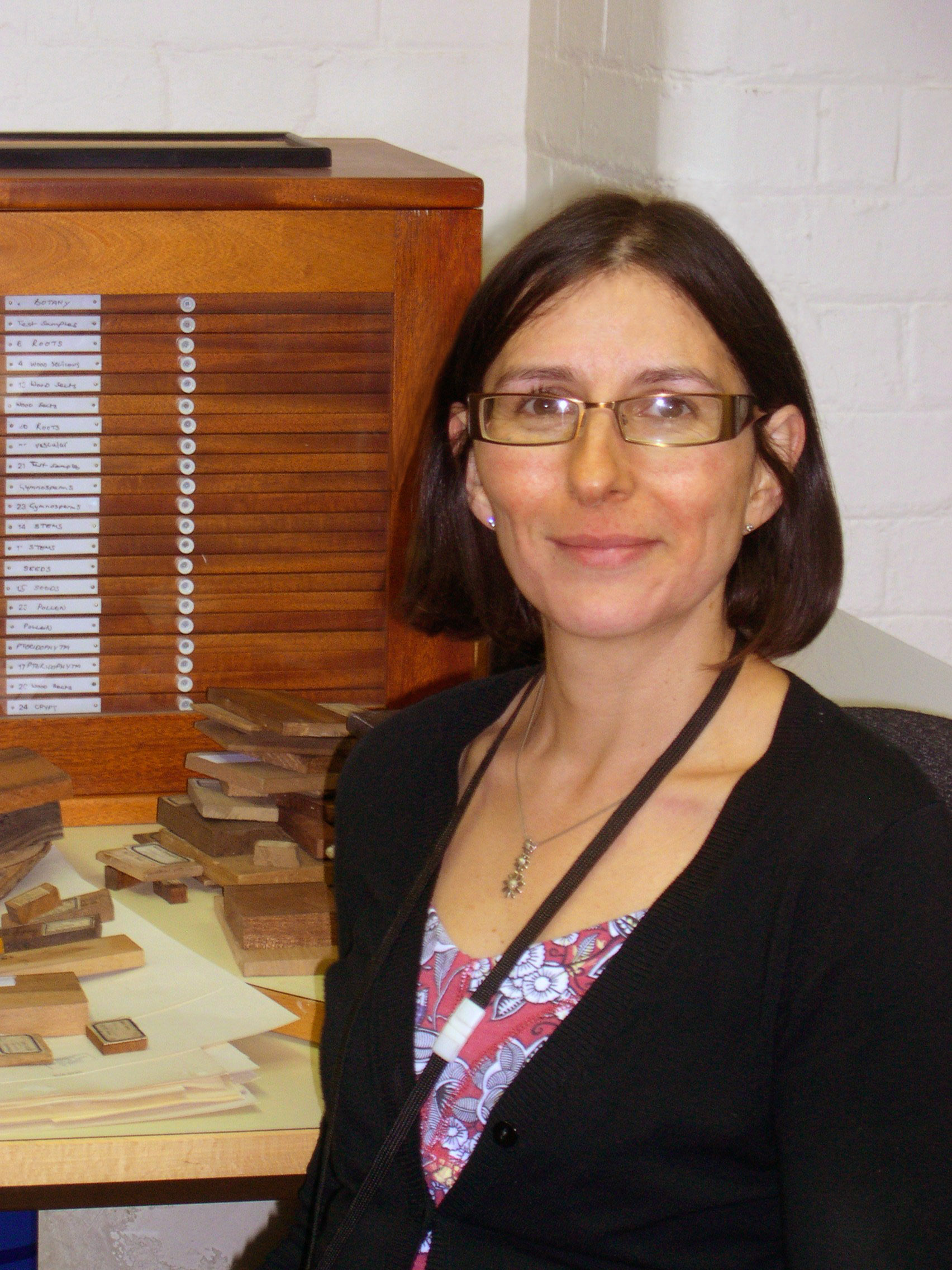
After many years of sterling work, Simon Moore has decided to step down from NatSCA committee, and so, with his continuing support, I have taken up the reins as Conservation Representative for NatSCA.

Vicky_1

Quick introduction…My background is biology and ecology. I am an accredited natural sciences conservator, specialising in plants, paper, bound herbaria and historic biocides.

Since graduating, I worked at the National Museum Wales (AC-NMW) as the botanical conservation and research officer. During this time I achieved an MSc in Conservation Science, and later a doctorate in devising a simple tool to identify mercury in herbarium collections and for mitigating hazardous biocides from the working environment.

This area of work still interests me, and I provide advice to individuals and institutions on how best to tackle this area. I recently left the museum after 24 years (I know!) and have set up my own conservation consultation company.

I have been very fortunate in gaining some really interesting projects to work on since leaving the museum and will post snippets about these shortly.

DSCN0188

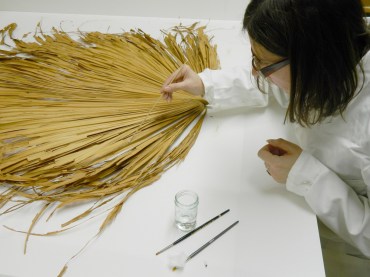
Conserving Kew’s Wallace Palm collection

NatSCA is a highly motivated and inspirational institution and requires a lot of time and energy from its committee. To keep this
level of commitment to its membership, NatSCA is now championing Volunteer roles to aid committee core roles. To help with sourcing information and input for this blog, I will be supported by Lucie Graham Natural History Conservation Officer at Lancashire Conservation Studio, Manchester. Thanks very much Lucie!

Apologies in the long delay in this announcement but please watch this space as there is plenty of upcoming conservation news and events, which will be posted regularly to this blog; the NatSCA calendar and the notes and comments where more detailed information will be posted. I look forward to hearing your news and hopefully we can keep this a lively and informative blog.

Vicky Purewal

Dr V Purewal ACR
Pure Conservation
Cardiff

vjpurewal@gmail.com