SPNHC Annual Meeting 2016

The Society for the Preservation of Natural History Collections (SPNHC) Annual Meeting – Berlin, Germany June 2016

Green Museum – How to Practice what we  Preach

The 31st annual meeting of SPNHC was jointly hosted by the Museum fur Naturkunde (Leibniz Institute for Evolution and Biodiversity Science) and the Botanic Garden and Botanical Museum, Berlin (Freie Universitat Berlin).  The GGBN conference on genomics ran in parallel with a joint opening session, trade show and dinner at the Botanical Garden; in all there were probably around four hundred delegates.

The venue was Hotel andel’s with its substantial conference facility, on the northeastern side of the central part of the city.  Unlike the five other SPNHC annual meetings I’ve been able to attend, on this occasion, the conference poster, trade fair and presentations and most of the delegates (other than those of us who sought out cheaper accommodation) were based on one site.  That this was not a museum did feel a bit strange. Evening networking was aided by some great organised activities – a pub quiz at a beer garden in Spandau, a bicycle tour of the city centre (including a stop at the reconstructed section of the Berlin wall) and a meal and dancing at the Botanical Garden.  Museum tours were available in conjunction with the icebreaker session on the Friday afternoon.  The main conference ran from midday Tuesday to midday Friday. The extensive poster display was located within the trade fair and lunch venue so was easy to access.  Voting slips and prizes for the best posters encouraged delegates to engage with this part of the conference.  Unfortunately, I was not able to stay for the weekend of post-conference workshops or enjoy any of the pre-conference trips.
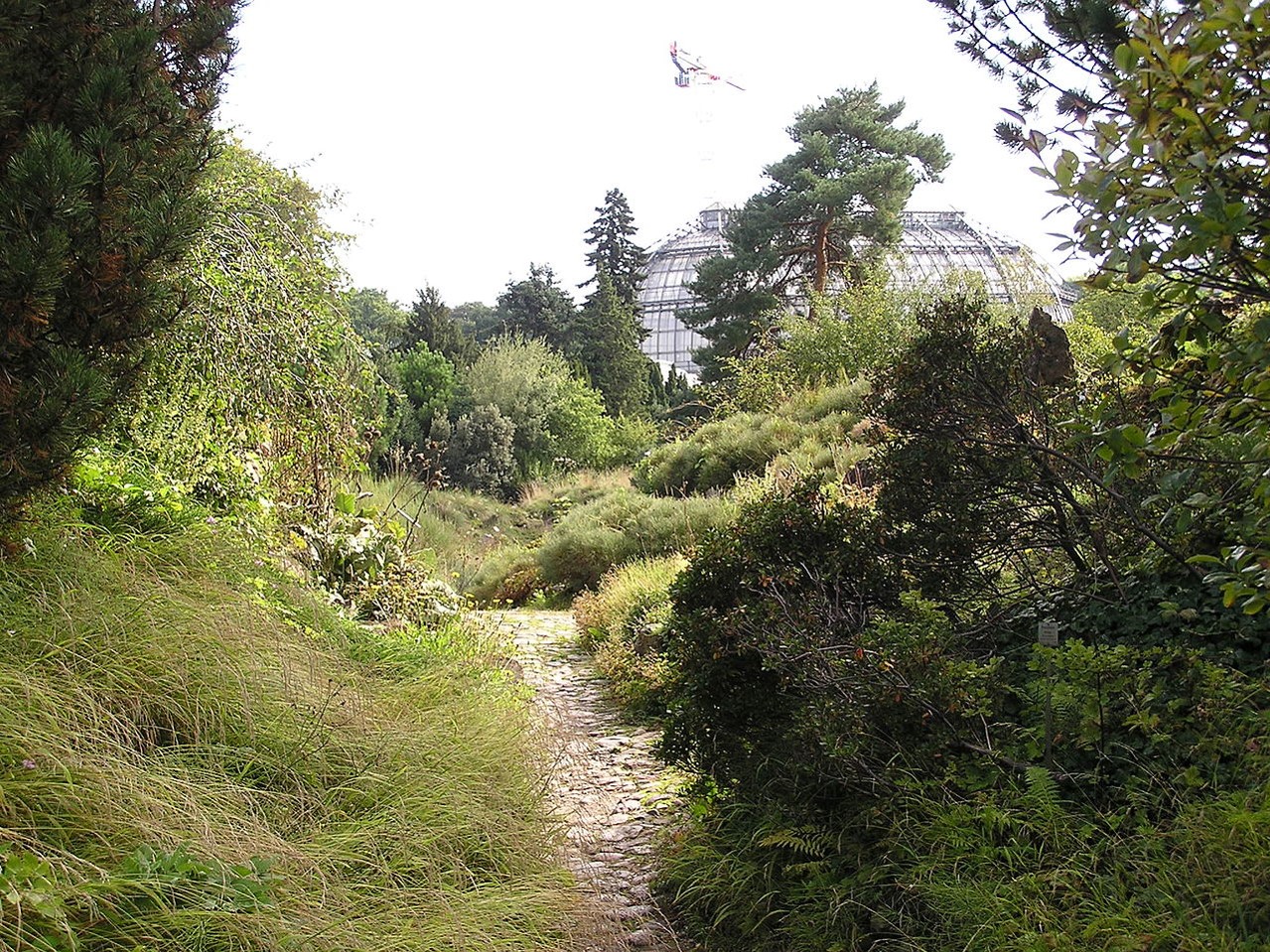
A view within the Botanic Garden, Berlin. (Mauruszat, 2006, image in public domain).

A view within the Botanic Gardens, Berlin. (Mauruszat, 2006, image in public domain).

My reason for attending was to update my knowledge of digitisation and find out what other natural science museums had tried out and succeeded within this field, as well as to promote the geology collection digitisation project at Ludlow Museum via a presentation.  I therefore attended mainly imaging and digitisation sessions.  Sessions covered preventative conservation, iDigBio, SYNTHESIS, GBIF, collections for the future and the Green Museum theme.  By Thursday, in order to accommodate the large number of practitioner presentations, the number of parallel sessions and different themes became rather overwhelming.  Although sessions largely kept to time allowing delegates the option of planning a ‘play-list’ of presentations to attend, the number of concurrent sessions, late nights, 8.30am starts and possibly also the acronyms, meant that audiences were a little sparse in some sessions.

At 200 pages long, the conference publication contained the programme, normal length abstracts of the posters and something I’ve not come across before; two or three page short papers complete with illustrations and references for most of the oral presentations.   This has allowed me to check back, post-conference, on what it was that I missed. However, it was really rather too dense to absorb during the meeting itself.

Highlights – as ever, the multidisciplinary nature of SPNHC meant that people from all branches of the natural sciences and all museum roles were at the meeting allowing for a rich free flowing of ideas.  Paul Mayer of the Field Museum Chicago presented on how digitisation tamed the Tully monster, describing how in three weeks, digital images taken in low angle and polarised light of 1305 specimens in siderite nodules from the US Mazon Creek Formation, Westpahlian D, were used to identify the frequency of morphological features.  The result was the classification of a creature, well known from specimens (and presentations at at least two previous SPNHC meetings) but until this project, un-classified, as an Agnathan fish. This really jumped into focus standing next to Paul looking at hammerhead sharks in the fluid collection gallery on the Museum tour.  Personally, I  was also able to catch up with friends and former colleagues from across the world, some of whom I  haven’t seen for more than a decade.

Presentations ranged from the cutting edge and erudite, through practical solutions, to the wicked issues of collections management.  I learnt that babies could be carbon positive if nappies were cellulose based and recycled into compost, that the synthetic black delegate bag was probably the least green thing about the conference and that as well as benefiting biodiversity, garden based agriculture was far more efficient than large scale agribusiness.  In a twist on the usual apes and human statistic, I was pleased to hear that Homo sapiens and elephants share 70% of the same DNA.  I was also taken back to a task I was allocated in 1988 by ‘a rock is just a rock if it has no data’ in a presentation covering the rationalisation and curation of university Ph.D. research collections.  I was pleased to hear that tight climate control in museums is slowly coming to be recognised as potentially damaging due to rapid fluctuations around the set point, unnecessary and too expensive to operate.  In the refurbishment of the upper floors of the Museum fur Naturkunde it is also deemed to be un-affordable.  The solution developed in the fluid collection gallery is cooling of the gallery walls with buried pipes routing chilled water, and in the upper floor areas currently being refurbished, a sorbent earth based render and plaster wall finish (described as loam) which will serve to buffer extremes of relative humidity.  The pressure to use resources effectively (including the knowledge and ideas to achieve this) was a common theme across all types of museums present at the meeting, with austerity worldwide a key driver – a very different feel to annual meetings I attended early in my museum career where good practice (but also a degree of one upmanship) was the main driver and financial considerations for larger institutions didn’t really come in to it.
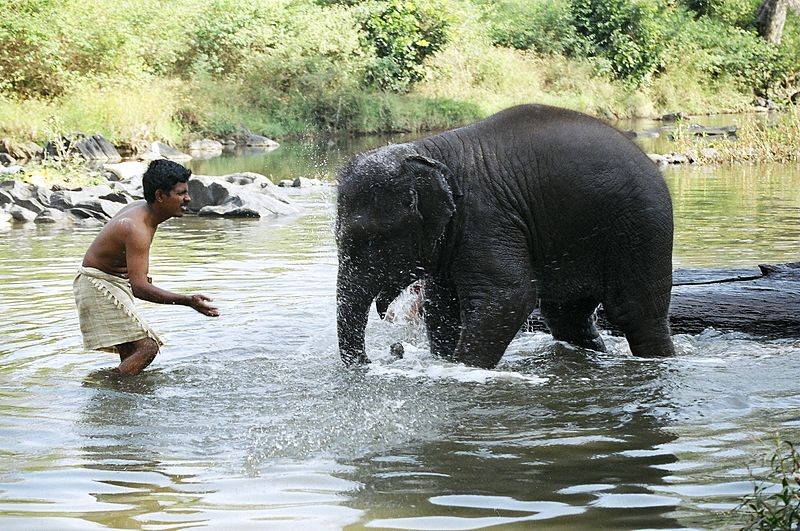
Humans and elephants share 70% of the same DNA. (Franklin, 2005, image in public domain).

Humans and elephants share 70% of the same DNA. (Franklin, 2005, image in public domain).

The SPNHC business meeting included a well-deserved award to David Pinniger for his work in developing Integrated Pest Management systems for museums.  It also provided the opportunity to showcase the venue for SPNHC 2017 (Denver, Colorado) and for the team from Otago, New Zealand to present on their proposal to host the meeting in a few years’ time.

Organising a SPNHC annual meeting and conference is a hugely complex process. This meeting was one of the biggest natural history meetings I have ever attended, so must have been especially difficult.  Congratulations must go to the local organising committee, I hope they enjoyed a well earned rest before getting back to their museum jobs.  I would also like to thank the Friends of Ludlow Museum for supporting a significant part of the cost of my attendance at the meeting from the FISH digitization project funds and NatSCA for a training bursary.

By Kate Andrew


Cold Case Curation

Museums have many curious objects behind closed doors. Recently, volunteers discovered some ‘cold ones’ at Tullie House Museum and Art Gallery Trust.

Behind Closed Doors

If museums are icebergs, then museum exhibits are just the tip; and the remaining 90% or so of specimens are tucked away safely behind closed doors. Many people, lucky enough to have visited these museum storage areas (‘behind-the-scenes’), will be familiar with almost endless rows of racks and shelves packed with all sorts of different objects, ranging from Chinese vases to taxidermy monitor lizards. But few non-curators would be familiar with the idea of freezers full of dead animals!

We have two large freezers, at our off-site storage facility, packed full of animals; we needed to know exactly how many animals were in there and where they were from, hence this project- Cold Case Curation. The specimens also have excellent provenance; labels with location details including specific grid references and dates. Therefore this Cold Case Curation project was as much a biological survey (albeit indoors) as a detailed museum inventory.

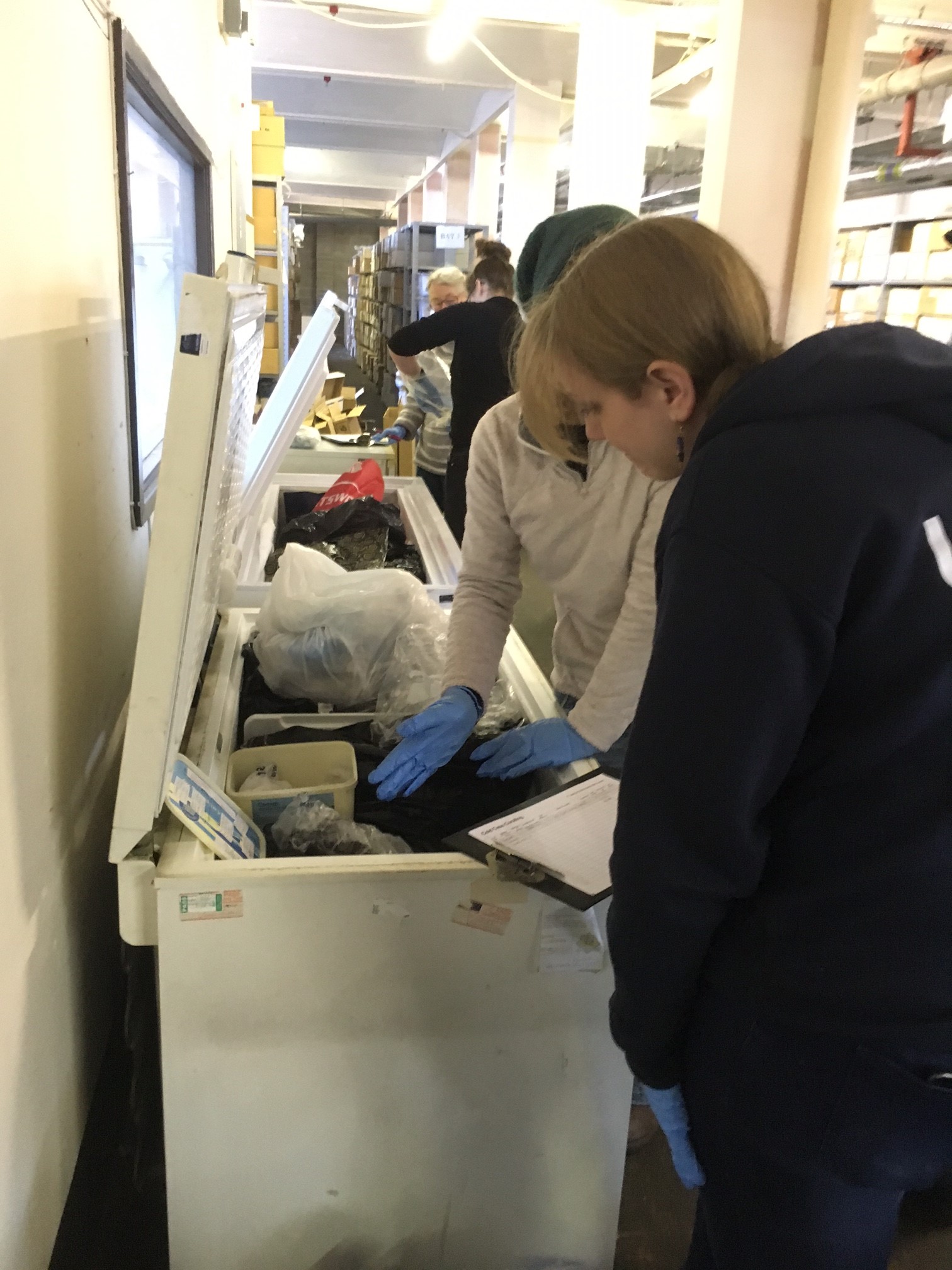
Cold Case Curation in action; the team of five volunteers “surveying” the “fauna” of our freezers

Cold Case Curation in action; the team of five volunteers surveying the ‘Fauna of our Freezers’.

Volunteer-Power

Enter our team of volunteers. They were specially recruited for a day for this Cold Case Curation task; to survey the frozen fauna, matching specimens against existing inventory records. This was a joint initiative with our Cumbria Biodiversity Data Centre (hosted at the Museum), to capture biological records. Most of our volunteers are long-term with the Museum and the Centre, and are current university students.

As our team of five volunteers eagerly crowded around the two huge freezers, they were fascinated with the idea of freezing animals to preserve them before they are stuffed and prepared as taxidermy specimens (but don’t worry, they all died naturally!).

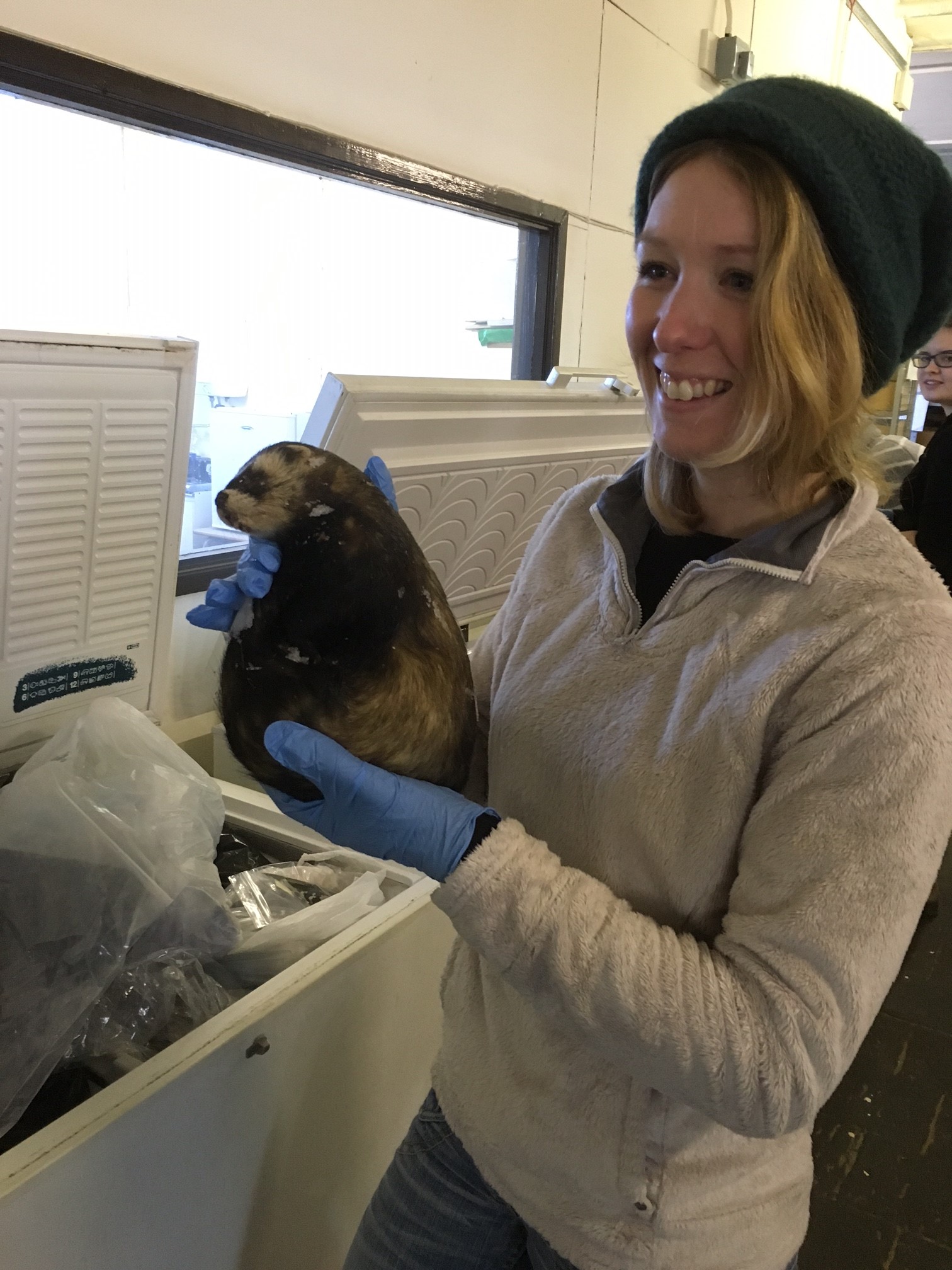
In teams, the volunteers enthusiastically worked their way through documenting the freezer contents. 241 individual specimens later, we had documented 11 species of mammal and 48 species of bird. Interesting discoveries included a bittern, a little grebe chick, 10 waxwings and a white-tailed tropic bird (with stomach contents). Volunteers delighted in handling iconic British species including 54 red squirrels and 24 barn owls.

Volunteer, Jessica Mitchell proudly wielding a polecat from the freezer “faunal assemblage"

Volunteer, Jessica Mitchell proudly wielding a polecat from the freezer faunal assemblage.

Their experiences are best summarised in their own words;

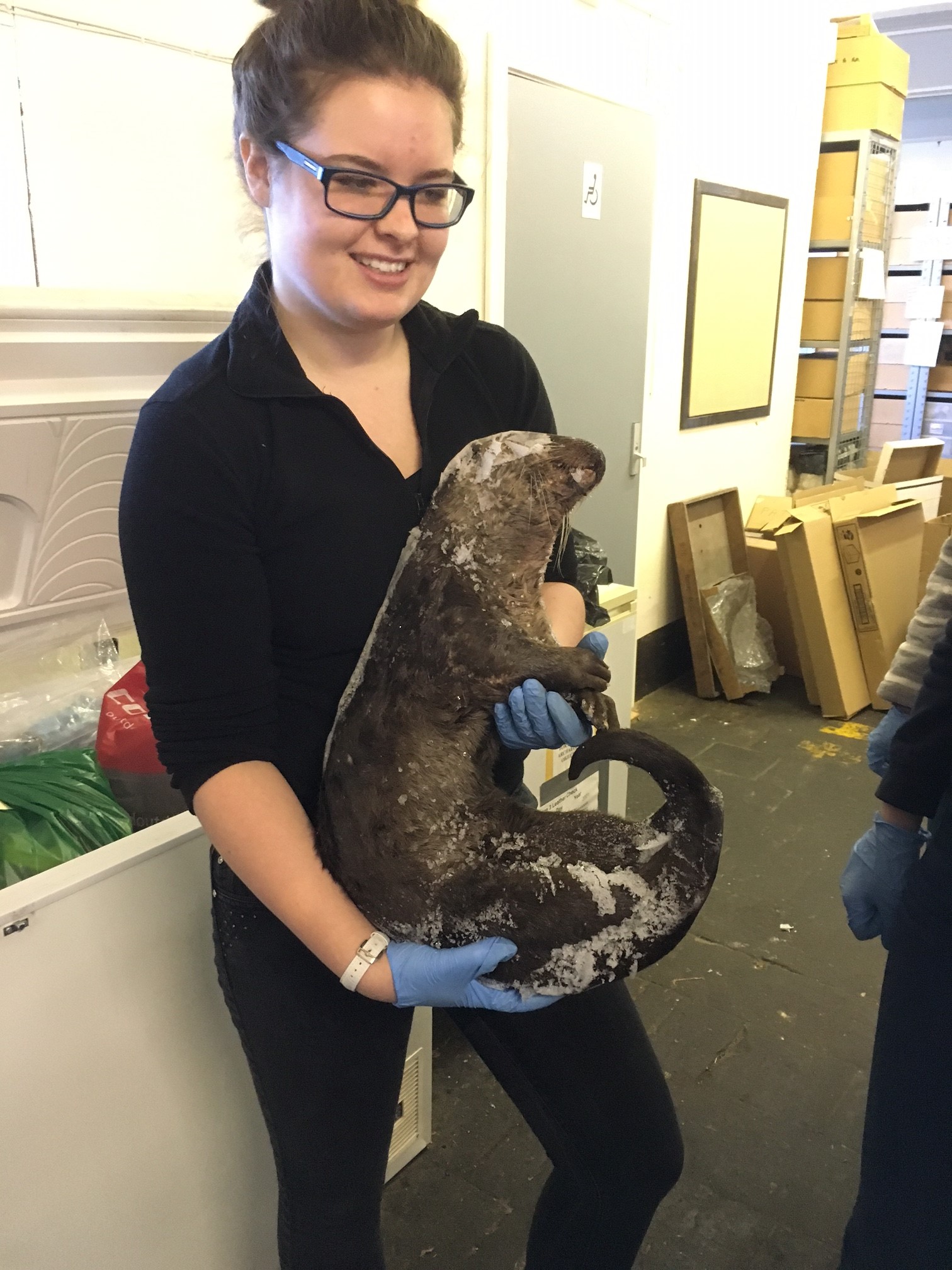
“After helping out at Tullie House with their cold case curation, recording everything they had in the freezers, we found some amazing specimens from polecats to owls, your typical garden birds to brown hares, but I have to say my favourite by far was the river otter. This otter was fantastic and it was brilliant to see it so upclose as it is a creature I have only seen from afar in the wild. This event was extremely educational and rewarding to myself as I’m studying zoology here in Carlisle”.  Volunteer, Laura Carter.

Volunteer, Laura Carter with River Otter discovery from freezer

Volunteer, Laura Carter with a River Otter discovery from the freezer.

Another volunteer, Donna Salter was also drawn to the otter:

“It’s a bit obvious to go for the big, furry, cute mammal, but my favourite has to be the otter. I was somewhat of an otter obsessed child: other girls wrote fan letters to Mark Owen or Ronan Keating while I wrote to Philip Wayre, founder of the Otter Trust (he sent back a signed visitors guide – I still have it). So for me, getting to hold and see the details of an otter can’t really be beaten!”

Cold Case Reflections; Learning from the Model

The Museum has greatly benefited from this exercise with our detailed inventories and biological records which will go into our database and ultimately end up on the Global Biodiversity Network Gateway for public access (and we also have the data we need to make more informed decisions over which specimens we decide to formally accession). However, this project proved to be a particularly successful public engagement event. It was a combination of the fact that volunteers were seeing and handling a variety of animals and that they were ‘discovering specimens’, whilst working together as a team, which is vastly more enjoyable than lone working. The event was enhanced with use of Twitter  (#coldcasecuration), which captured some of the magical moments of discovery.

This exercise illustrates how a relatively routine (inventory) collections management exercise can be turned into an exciting public engagement project, capturing critical data for the museum and inspiring a future generation of potential young scientists and curators.

By Simon Jackson, Curator, Tullie House Museum and Art Gallery Trust

Curators of the Caribbean

300-year-old plant collection brings Bristol Museum & Art Gallery and the Natural History Museum Jamaica together!

vol_3_jamaican_p324

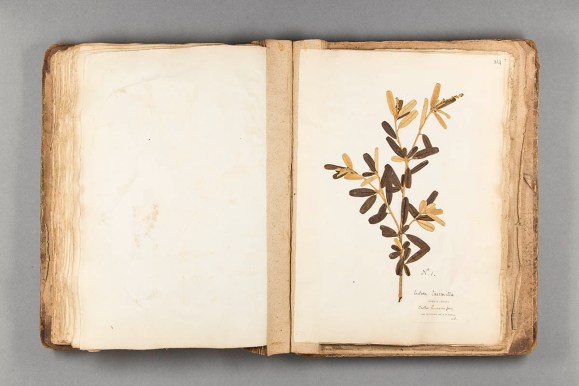
A digitised page from Volume 4 of the Jamaican herbaria

In the autumn of 2014, I was fortunate to be contracted by Bristol Museum to conserve and digitise 4 bound volumes of plant specimens dating from the 1770s and collected by the prestigious botanist Dr Arthur Broughton. The conservation and digitisation was completed in early 2015, yet two years on I am still working with and fascinated by this fabulous collection.

slide1

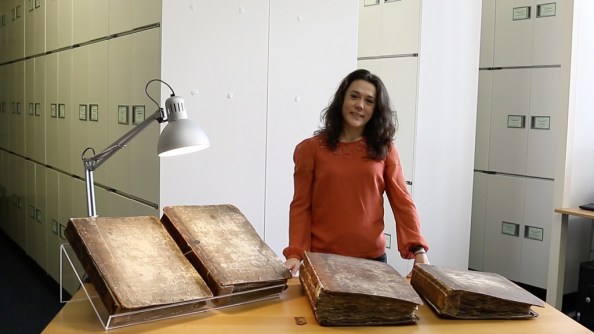
Rhian Rowson and the 4 volumes of 18th century bound herbaria

Dr Arthur Broughton, was a Bristolian who made the mammoth journey to Jamaica, due to ill health, and myself and Rhian Rowson, biology curator at Bristol Museum & Art Gallery, are trying to piece together his years studying botany in Jamaica and the impact this renowned botanist has had on the island and the world of botany. The volumes are large, heavy, leather bound books holding c. 1000 specimens including extremely rare and type material. The books were analysed for biocides, cleaned in preparation for digitisation, digitised and then each specimen was painstakingly removed from the volumes and re-mounted onto archival sheets. This project has mitigated the risk of contamination from handling the treated pages, has increased access and ease of handling but most importantly the images have been shared with other institutions. The ebook highlights some of the star specimens in the collections

The most exciting connection made during the research side of this project was with the Natural history museum of Jamaica (NHMJ). Through this collaboration, the opportunity has arisen for both me and Rhian to travel to Jamaica to collect modern material, research the historic plant specimens and illustrations held in Bristol museum and the collectors behind them. We have been extremely fortunate to gain funding from both WIRP (Working Internationally Regional Project) and the Jonathan Ruffer Curatorial Grant. Both funders were extremely supportive and constructive in helping towards our submitting a successful application.

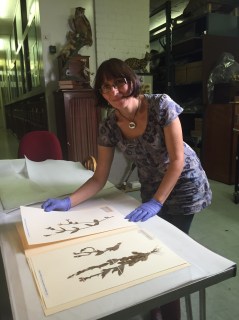
Victoria Purewal viewing Broughton plant specimens

Victoria Purewal viewing remounted specimens from one of the Jamaican volumes.

We fly into Kingston, Jamaica on Tuesday 27th September and will be gathering historical data on Dr Broughton and other prestigious botanists including Robert Long and the Reverend Lindsay, both of whom were collecting and working during this interesting time in history. We will be met by Keron Campbell, the botany curator at the NHMJ and together with the natural history team we will be escorted around the island, helping us to identify and verify plant specimens and localities. Modern day specimens will be collected to help interpret our historic material and provide a contemporary and fresh perspective that we can use to engage with our Bristol and Jamaican communities. We will be keeping active on social media whilst there, and hopefully offer some insight on the specialisms and research being conducted in Jamaica but also on the botany and the habitats on the island of Jamaica.

bmagnhmjcultureicomart


NatSCA Digital Digest

natsca

Jobs and Traineeships

If, like many, your world will never be the same again once Dippy the Diplodocus retires from his position adorning the entrance hall to the Natural History Museum in South Kensington, you can at least help secure him a happy future by going for the job of Corporate Partnerships Manager- Dippy the Dinosaur on Tour at the NHM. The deadline is the 25th January so there’s still time to affect the life of this semi-retired much loved icon.

If digital engagement is more your thing then the University of Cambridge Museums (UCM) are currently looking for a Digital Engagement Specialist. The deadline for this post is also the 25th January, with interviews on the 8th February.

Events and Exhibitions

The London Transport Museum is holding an interesting half day symposium on 7th March 2016 called Contemporary Collecting. The symposium is free and includes an evening reception at the Museum. There are six areas of focus listed on the website, ranging from risks of collecting to acquisitions that ‘are inherently, and/or overtly, political’. Sounds exciting!

Around the Web

The project of digitising the Charles Lyell Fossil Collections is well underway at the Oxford University Museum of Natural History. The blog (link above) is a fun and interesting read but more importantly, if you have any Charles Lyell specimens in your collection, Sarah Joomun and Eliza Howlett at the OUMNH would love to hear from you.


NatSCA Digital Digest

Firstly and most importantly…

MERRY CHRISTMAS EVE!!!

Secondly, everything else…

Jobs and Traineeships

With the period known as the ‘run up to Christmas’ well underway it is slim pickings for new vacancies in natural history. However a number of posts still open in areas such as Norwich, Aberdeen and Sheffield, that have been previously advertised through NatSCA, can still be found here. Deadlines for applications begin early January so perhaps write yours out before you start to suffer from excess-turkey-consumption lethargy.

Events and Exhibitions

Fans of natural history have a great reason to visit the British Museum at the moment thanks to a new temporary exhibition called Scanning Sobek: Mummy of the crocodile god. Open until the 21st February, the exhibition is just inside the main door and is completely free. It couldn’t be easier!

If you are in or able to get to Berlin any time soon, the most complete Tyrannosaurus rex ever found is now on display at the Museum für Naturkunde in a special exhibition called Tristan: Berlin bares teeth. Tristan has only been baring his teeth to the public since 17th December 2015 and I for one am going to visit him asap.

Around the Web

There’s a rather festive Underwhelming fossil fish of the month blog, complete with santa hat and palaeofied lyrics to a well known Christmas favourite, over on the Grant Museum of Zoology blog.

Now I’m going to go to sleep (yes I know it’s only 11am) so that Christmas comes sooner. That’s how time works.

!!MERRY CHRISTMAS!!