‘What is the Work of a Curator of a “Closed” Museum?’

There are many of us that have had to justify our job’s existence, especially in these times of never ending cuts. Often those with the purse strings have no idea what a curator does on a day to day basis, and this lack of understanding is something that we are constantly trying to rectify to help ensure the safety and future accessibility of the collections under our care.

Depending on your point of view, it may be sad or comforting to know that this is something curators have had to deal with for generations. The following article was written by Miss Joan Harding, the curator of Warwickshire Museum from 1938 to just after WW2. The museum was closed and emptied for refurbishment in 1938 and Miss Harding packed up the collections with little help to a draughty, leaky building nearby. Before works began, the museum was requisitioned by the army as a Civil Defence store, and all of the collections had to remain in their rather inadequate temporary location for a lot longer than was originally planned. To add insult to injury, the Education Committee tried to disperse the collection in 1947, but this was fortunately not approved.

Despite her best efforts over this decade of mothballing, some objects were lost during the constant battle of attrition, and Miss Harding left and emigrated to South Africa in 1948, possibly after running out of patience. Miss Jocelyn Morris took her place shortly afterwards and oversaw the long overdue renovations for the next 3 years, opening up the museum to great fanfare in May of 1951.

Without further ado, here is a transcription by Janet Vaughan of the observations of Miss Harding:


What is the Work of a Curator of a “Closed” Museum?

From Miss Harding’s Notebook, CR 2547/146, held at Warwickshire County Records Office

“This question suggested itself to me when an educational authority (and one who should know better since this particular human is administered by an Education Committee) voiced in my hearing “I can’t think what she finds to do.”

Continue reading

A Blog from the Up and Coming

In 2016 I graduated with a BSc (Hons) in Zoology from the University of Reading. I picked the degree because I always loved animals and really enjoyed science at school. But studying zoology has given me a whole new appreciation for the natural world and a new interest in palaeontology and natural history collections. During my degree, I had access to the university’s lovely little museum, called the Cole Museum of Zoology. I had many practical lessons based on the Cole’s collections, and even did my final year dissertation on studying their ichthyosaur fossils.

In addition to this, I was lucky enough to gain a lot of work experience there through volunteering and doing summer placements. Initially, I helped with cataloguing the Cole’s seashell collection into a little notebook. But eventually I was assisting with rehousing a huge fossil collection, which involved re-boxing specimens, identifying the material, generating unique accession numbers for them and creating new records for a database. I enjoyed my time at the Cole very much and was sad to say goodbye after graduating and moving back to London.

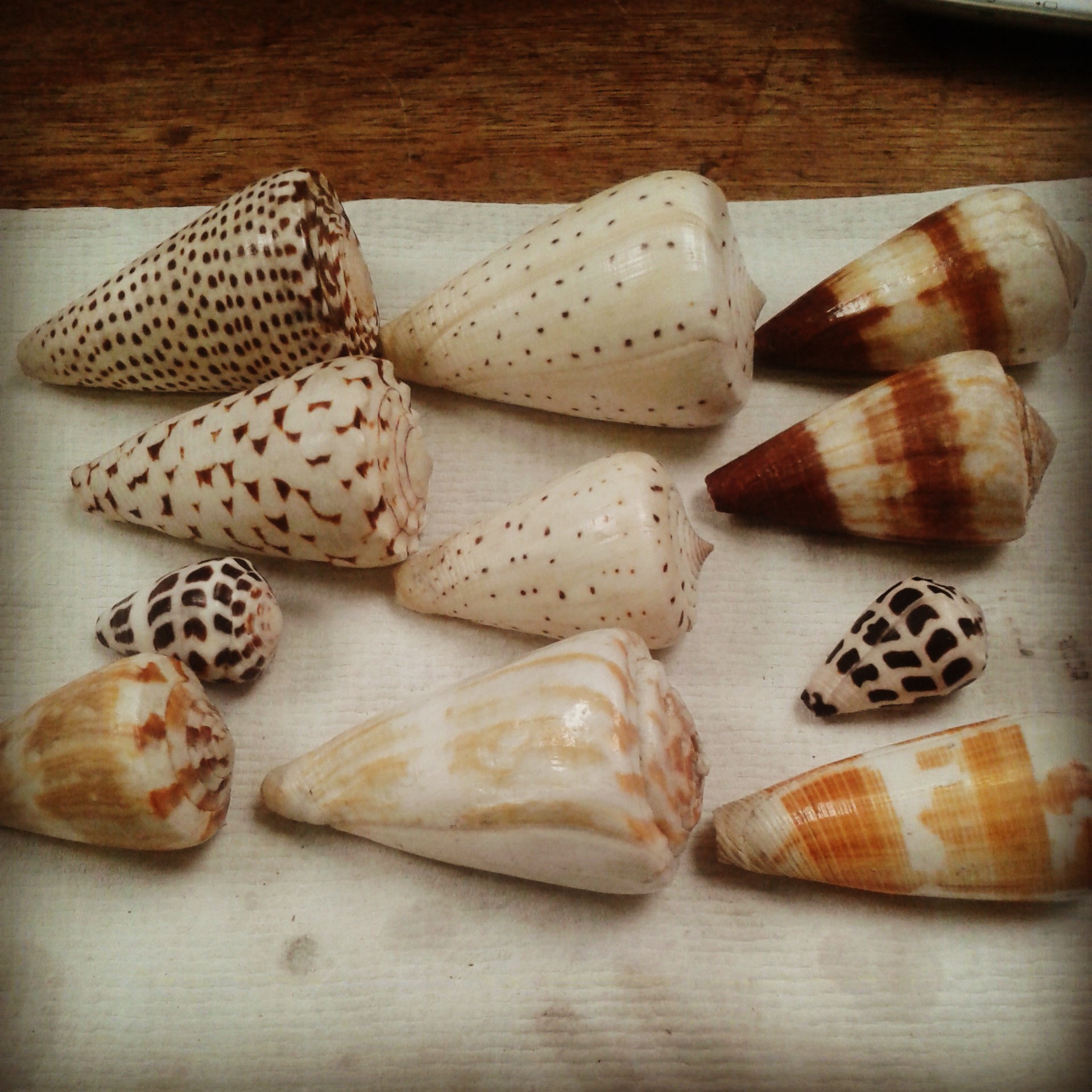
Some beautiful cone shells, belonging to the Cole Museum of Zoology’s shell collection.

Life after graduation was fairly chilled at first, free from university deadlines and the horrors of exam stress! Eventually I began working in retail while I continued to look for a career in science research or more interestingly… natural history museums. But I was beginning to lose hope as these kinds of opportunities were very competitive and felt very rare. I really started to miss being in the museum environment (and dislike being in retail… sales assistants have feelings too!). Continue reading

Stirring the hornet’s nest – are natural science collections even legal?

I was wrapping up a particularly difficult male peacock with a helper a few weeks ago and we were discussing natural science collections. “Do you think one day they’ll just be made illegal?” she asked, straight-faced and sincere. I was miffed – this was someone saying to a natural science curator that really, it shouldn’t be allowed. I sighed and spent the rest of the wrapping session (porcupine was also tricky) explaining how wonderful – and legal – natural science collections are.

Continue reading

Meet the NatSCA Committee – Lucie Mascord

Meet the NatSCA Committee: Ordinary Member

Name: Lucie Mascord

What is your role on the NatSCA Committee? I am the new Conservation Representative

Job title and institution: Conservator of Natural History, Lancashire Conservation Studios

Twitter username: @LuceGraham

Tell us about your day job: I am a specialist natural history conservator, working for a museums service and my own business. In both, I provide conservation services to the heritage and private sector. This is mainly in the North West – everywhere from Cumbria or to Cheshire, but my work has taken me all over the country which means I get to visit lots of new collections.

My role covers all scope of natural history collections but I specialise in bone, fluid preserved collections and taxidermy. My work is incredibly varied; as well as a conservator I am a preparator – preparing bone, skins, taxidermy and fluid preserved material. I can spend 200 hours plus conserving a single specimen, or carry out a whole collection survey in 72 hours! I also provide training to institutions in natural history collections care.


Visiting the Galerie de Paléontologie et d’anatomie comparée

Natural science collections are very popular with visitors. Why do you think this is?

Overall, I think it is about innate curiosity – the natural world is deeply fascinating and diverse. The reason natural history collections are popular with children is they are still in that stage of uninhibited curiosity.

Continue reading

NatSCA Digital Digest – July

What Should I Read?

If you like a good nose, the second part of TetZoo’s Elephant Seal article has just been published, which you can read here. And here is a thoughtfully placed link to the first part in case you missed it and wanted to catch up.

For a fun bit of ‘history of natural history’, this article is all about the secret that the Natural History Museum’s blue whale has been hiding since the 1930s, unknown to anyone until it’s recent clean prior to the big unveiling next week. Those naughty conservators… chuckle.

Whilst some of this article raised my quizzical-shark-scientist’s-eyebrow, such as the scale bar for instance, researchers believe they have uncovered a big clue as to why the Megalodon went extinct. Definitely worth a read if, like everyone, you like sharks. Although this article came out in January, it is receiving media attention at the moment so I thought I’d treat you to it.

Continue reading