MusEaster

There are so many eggciting natural history themed events going on this Easter that it seemed like a good idea to put all of the egg-events into one basket-blog. Feel free to add anything we’ve missed into the comments, or email us at blog@natsca.org.


Powysland Museum

Easter Activities

‘Crafts, puzzles and activities for all ages relating to animals, Gerald Durrell and the Museum’s current exhibition Bones to Bronze.’

20th April

More information here.

Bones to Bronze; Extinct Species of the Mascarene Islands

‘An incredible exhibition of beautiful and inspiring bronze sculptures created by the sculptor Nick Bibby depicting extinct species of the Mascarene Islands.’

3rd March – 23rd May

More information here. Continue reading

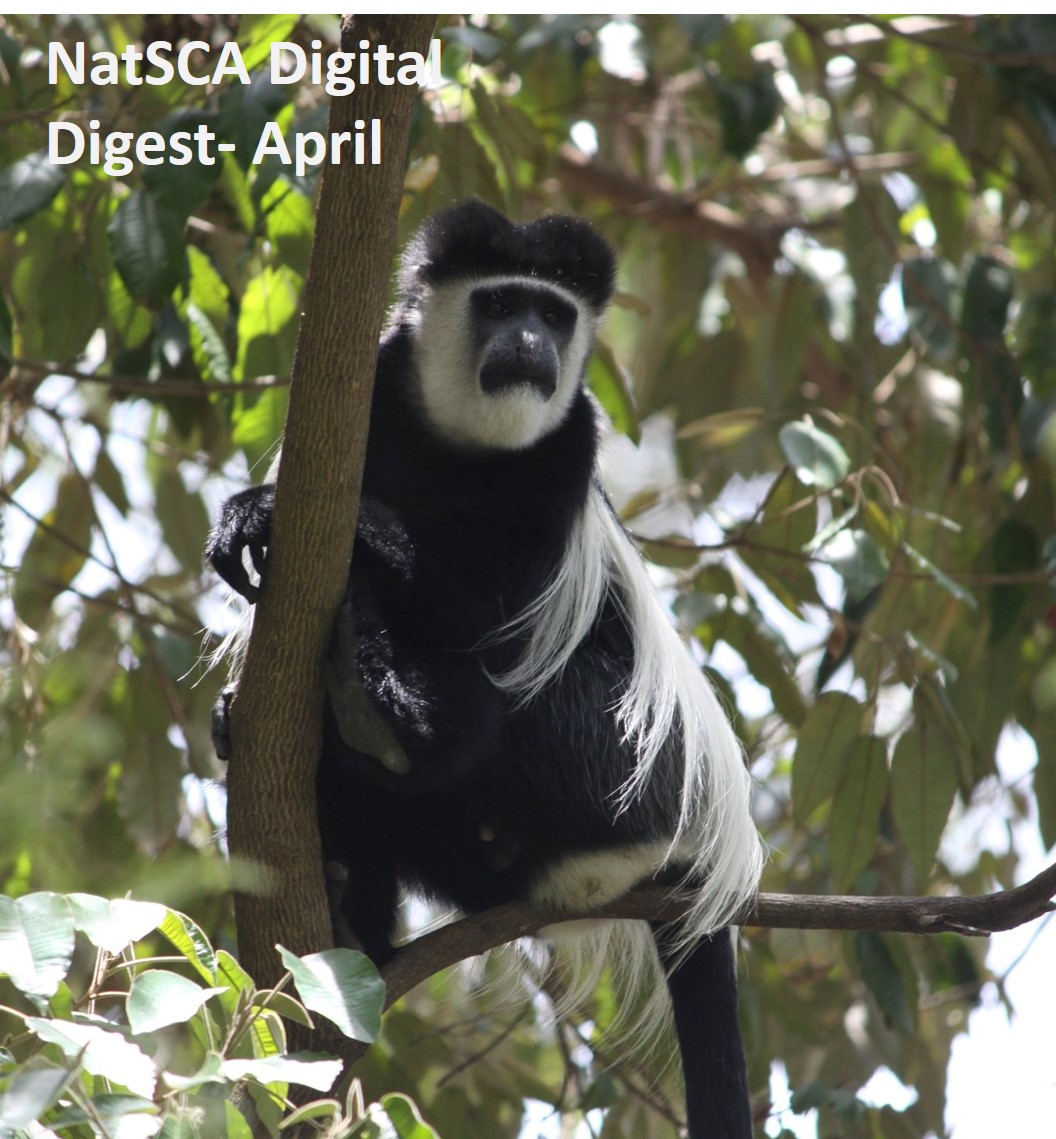
NatSCA Digital Digest – April

Colobus monkey © E-L Nicholls

What Should I Read?

I came across a very entertaining blog by Lily Nadine Wilks which looks at the frustrations of museum documentation in Mysteries of the Past. She has been working on the Charles Lyell digitisation project at the Oxford University Museum of Natural History.

Having noticed lately that there are more harlequin ladybirds in my house than there are Lego sets*, I was interested to come across A decade of invasion – a story of Harlequin Ladybird in the UK. I can’t believe THAT many ladybirds exist in the UK having only arrived in 2004. They are clearly a prolific species, if only I could teach them to write research papers. Continue reading

Meet the NatSCA Committee – Rachel Jennings

Meet the NatSCA Committee: Editor

Name: Rachel Jennings

What is your role on the NatSCA Committee? I am the Editor, responsible for managing our published content: Journal of Natural Science Collections, and NatSCA Notes & Comments.

Job title and institution: Documentation Assistant, Horniman Museum and Gardens.

Twitter username: @rachisaurus

Tell us about your day job: I work across the collections at the Horniman, but at the moment I am mostly focused on cataloguing and photographing objects selected for a major redisplay of our anthropology collection. I get to work with a fascinating variety of objects from all over the world. I’m really excited to see the new World Gallery when it opens next year. Continue reading

Famous Flies – Petiver

Yes. That is the title and this is a blog telling you about some of them. I was tasked with the job of hunting through the thousands of drawers, the hundreds of jars and the millions of slides to find the most famous or most infamous of specimens within the Collection at the Natural History Museum London. I have worked on the fly collection at the museum for over ten years now but still regularly come across hidden gems in the collection. Just in the fly collection, we have approximately 3-4 million specimens (when you see jars swimming with flies you will understand why this estimate has such a large degree of error), that have been collected since the early 17th Century from every geographical region around the world. Some of the collectors are recognisable whilst others are less so but have come to mean so much to us who deal with the collection.

So, let me welcome you to the collection. It is arguably the best fly collection in the world – I admit I may be a little biased but please be patient with me. I get very excited about the flies and forget most of my impartiality. Continue reading

It’s All In The Subconscious

Biologically speaking, women (in general) are built lighter than men and with less physical strength. In the past this has been used to decide that women are therefore weaker in all ways, including in intelligence, and even worse, in worth. Putting aside those people whose brains are wired a little strangely and believe it’s genuinely ok to be racist, homophobic, sexist, misogynistic, etc, society at large, full of good, caring and wonderful people, still has a curious way of putting men first.

It is often by accident and sometimes it’s even in an errant attempt to put women first; for example I recently read a headline that said ‘Top Female Scientist Discovers…’. Great! But if it had been a male scientist, it wouldn’t have said ‘Top Male Scientist Discovers…’, it would have said top scientist. This perpetuates the idea that a scientist is a man unless otherwise stated. Another example aimed at a more general audience is that infuriating feminine hygiene product advert that has a sassy DJ jumping up and down saying ‘As a woman, I can step aside or step up’. Erm actually, men have the choice of whether to step aside or step up too. Being trod down and overlooked is not just for women. Continue reading