
Written by Caitlin Jenkins, Collections Move Assistant (NHM Unlocked), Natural History Museum, London.
A major component of the Natural History Museum’s Unlocked programme will involve 28 million specimens moving to a new purpose-built site at Thames Valley Science Park. Preparations for relocation have been ongoing over several years to stabilise and rehouse specimens that are at risk of damage if moved in their current condition. The project provides opportunities to not only improve the long-term storage of collections but also address historic storage and packing practices that no longer align with modern conservation standards.
One example of obsolete practice is the use of soft polyurethane foam to support palaeontological specimens. This material is now known to be inherently unstable, becoming friable and releasing acidic byproducts as it ages. Historically, its use had been commonplace with large items in the Fossil Mammal collection. The Unlocked Conservation team removes it wherever it is identified, replacing it with polyethylene Plastazote foam, as this modern alternative is better suited to long-term contact with specimens.
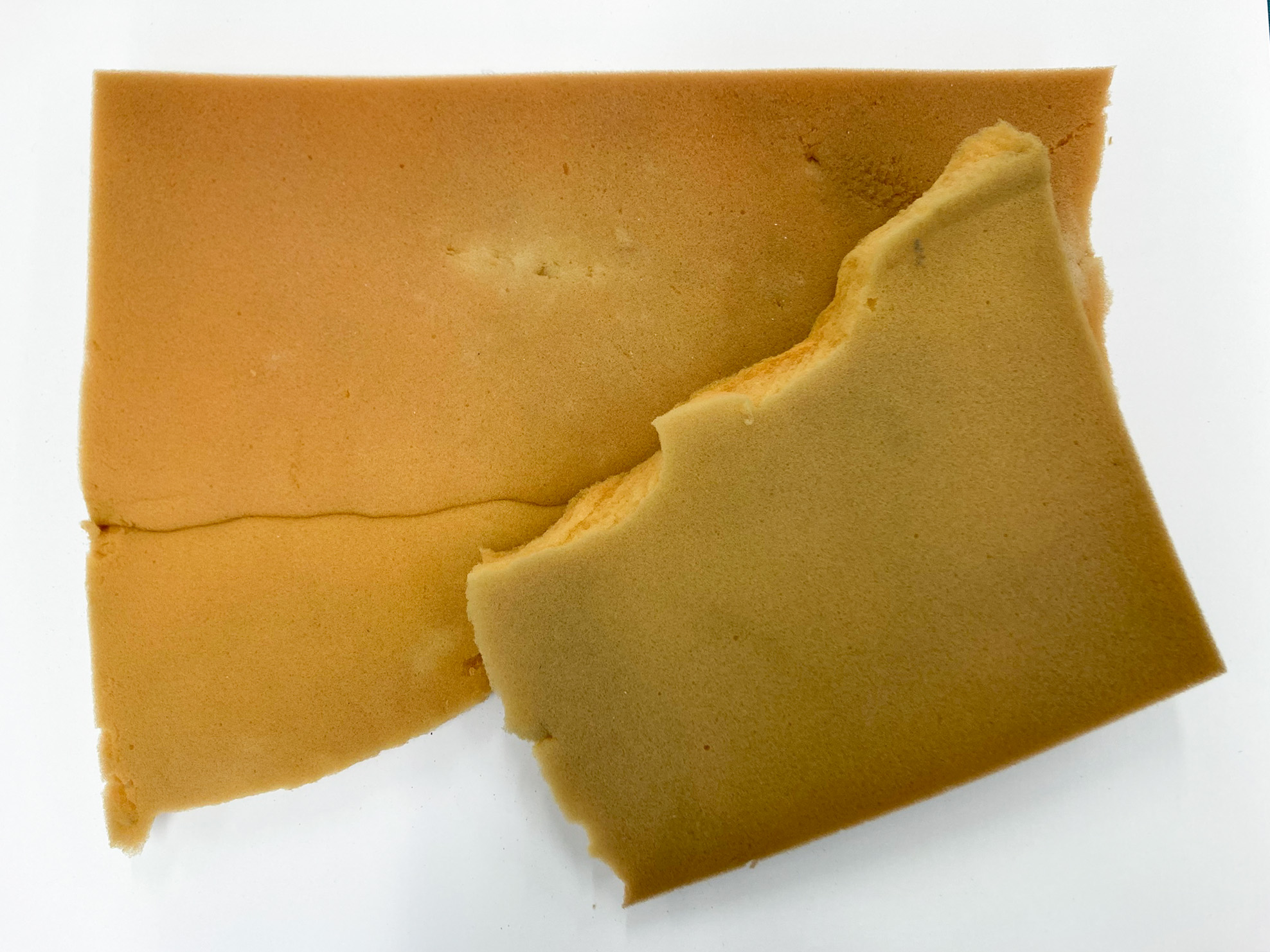
Soft polyurethane foam removed from specimen. © The Trustees of the Natural History Museum, London.
Historically, rigid polyurethane foam has also been used in palaeontological collections. Its properties, including rapid expansion during application, meant it was deemed useful for temporary moulding or as a field jacket medium. However, as with its soft-foam cousin, it also degrades over time. Dust released from deteriorating cured foam is a known respiratory irritant, presenting an additional risk for those handling the collection. For these reasons, it is also removed by the Conservation team wherever it is encountered. While many examples of such practical treatments could be cited, this article focuses on one small project as described below.
Four fossil rhino and gomphothere lower jaws were referred to the Unlocked Conservation team for stabilisation. They were collected by museum scientists William R. Hamilton and Peter J. Whybrow on fieldwork in Saudi Arabia and presented to the museum in 1974. Each specimen had been mounted upright in rigid polyurethane blocks. This was done to facilitate easy access to the teeth for researchers. Although close inspection revealed that a thin plastic barrier layer had been included in each block, it did not always fully separate the foam and specimen. The foam was discoloured and crumbling, indicating that its condition had deteriorated over time. Its brittle state also meant that it could no longer provide adequate support for the specimens to be moved safely. As there was a risk to both specimens and future collection users, it was decided to remove the foam from the mandibles and provide improved stability for future relocation.
Lower jaws mounted in foam blocks. Clockwise from top left: NHMUK PV M 42942 (Gomphotherium), 36903, 36904, 36902 (Rhinocerotidae). © The Trustees of the Natural History Museum, London.
The teeth and tooth sockets of each specimen were clearly visible. However, the ramus and body of each were embedded within the foam to varying degrees. The concern was that the foam might be obscuring unstable or fragile areas, particularly as there was also evidence of historic repairs on some of the specimens. To minimise the risk of exacerbating or creating further damage, the uppermost layers of foam were gradually cut away mechanically using scalpels and dental excavators. Although time-consuming, this slow incremental approach provided greater control than alternatives such as electrical tools or solvents. Foam removal was carried out under extraction to safely manage any generated dust or particulates. Fortunately, the degraded condition of the foam meant removal of the bulk of the material was relatively easy and all four specimens were successfully extracted from their blocks without issue. Any small pieces of foam or barrier layer that remained adhered to the specimens were carefully picked off with a scalpel.
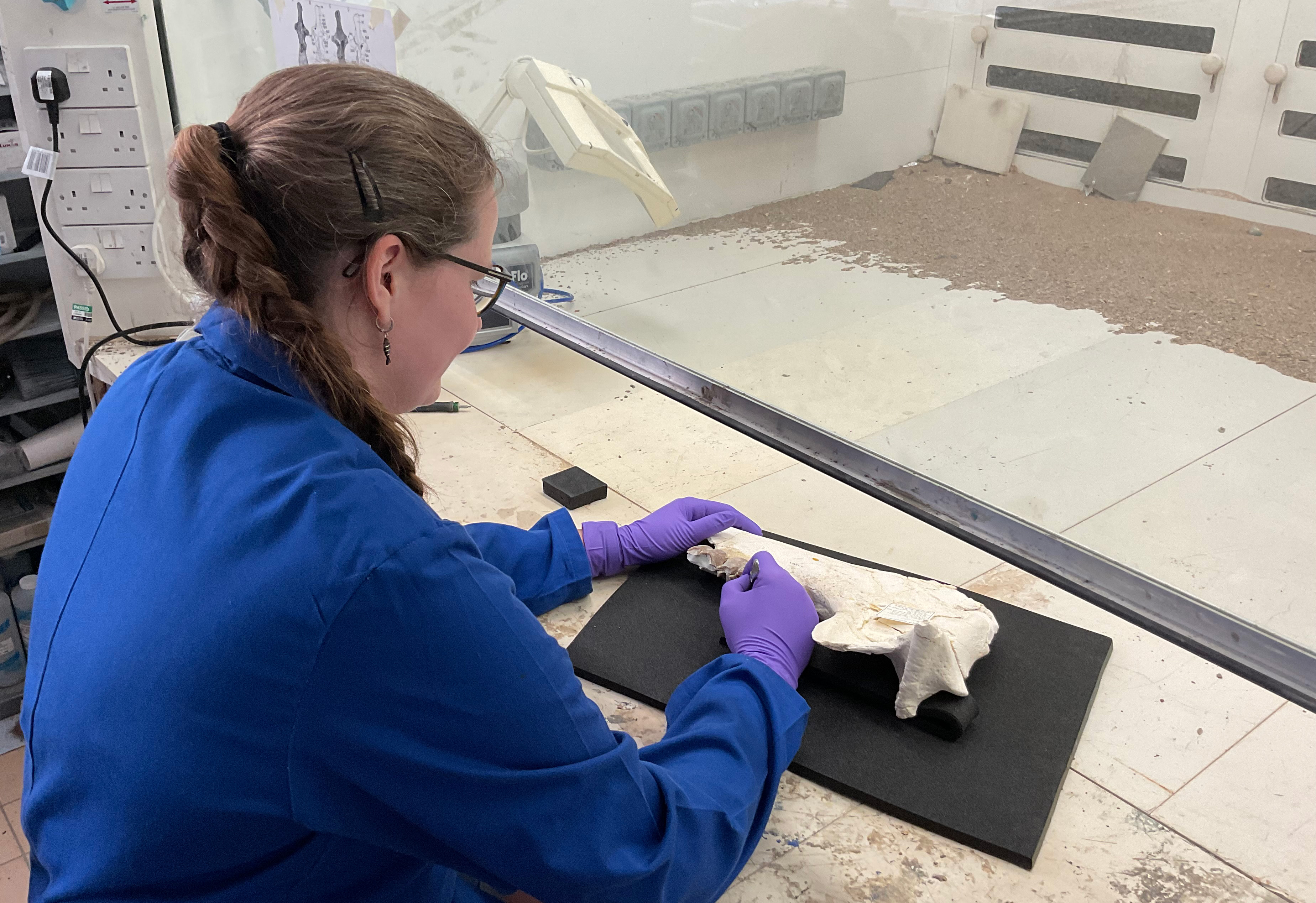
Treatment in progress. © The Trustees of the Natural History Museum, London.
On completion of post-treatment assessment, the lower jaws were rehoused in bespoke, stackable, acid-free card boxes. Once again, foam has been used as surrounds – however, this time, the specimens have been supported by conservation-grade Plastazote cut-outs. They are now not only fully accessible and safe for handling by researchers but also protected in preparation for the upcoming transition to Thames Valley Science Park.
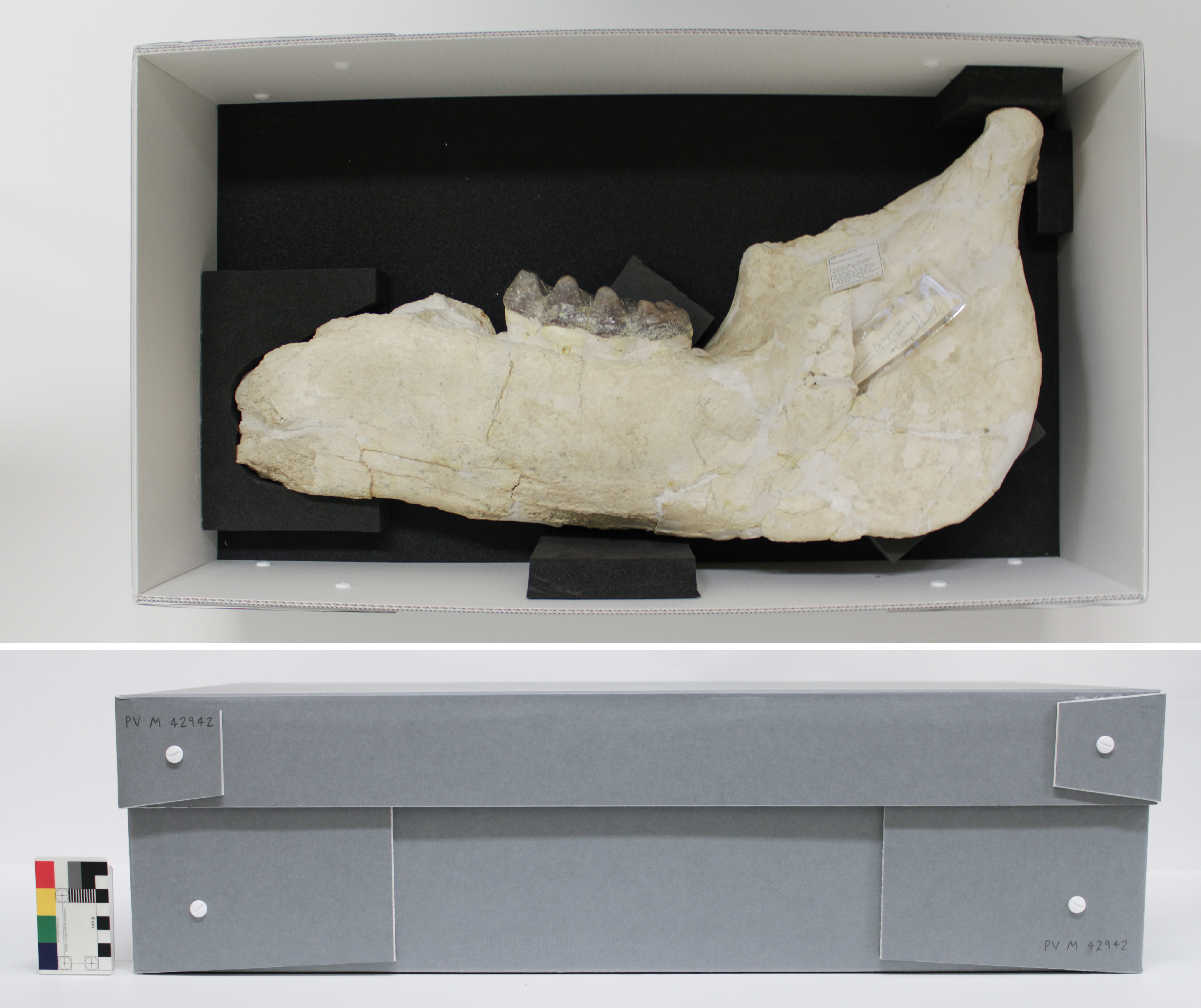
NHMUK PV M 42942 rehoused in bespoke box with Plastazote foam supports. © The Trustees of the Natural History Museum, London.
This short article highlights the challenges and treatment of four specimens that form a small part of the Fossil Mammal collection. Nevertheless, it provides a snapshot of the much broader work being carried out by the wider Unlocked project teams, who are using the planned relocation as an opportunity to address historic collection care issues. This work will not only facilitate a smooth relocation to a new facility but also help safeguard historic collections for the use of present and future generations.
NHM Unlocked is funded by the UK government with additional funding from the Wolfson Foundation. For a wider overview of the programme’s stabilisation work within the Fossil Mammal collection, see this blog posted earlier this year ‘A Mammoth Task: Stabilising and Protecting Fossil Mammal Specimens in a Sustainable and Access-friendly Way for a Large-scale Collections Move‘.


