William Thomas March, a Jamaican Collector, Naturalist and Early Pioneer of Biological Data Recording in Jamaica.

Written by Olivia Beavers, Assistant Curator of Vertebrate Zoology at World Museum, National Museums Liverpool.

Figure 1. William Thomas March’s bird skins stored in the Vertebrate Zoology collection at World Museum, National Museums Liverpool © National Museums Liverpool (World Museum: NML-VZ T1134, NML-VZ T760, NML-VZ T5652, NML-VZ 1989.66.1279, NML-VZ T19525, NML-VZ T12817, NML-VZ T9981, NML-VZ T1128, NML-VZ T14037, NML-VZ T14031/ Olivia Beavers)

August celebrates Jamaican independence, so what better way to celebrate than to talk about a Jamaican collector from the 1800s whose contributions to understanding Jamaican biodiversity are not yet fully recognised. 

I recently finished the project stage of the Associateship of the Museum Association (AMA). My project focused on helping to tell untold stories of the collections held at World Museum. 

Through trial and error, I started to look through World Museum’s database and Google the names of collectors to see if we had collectors who had black or brown heritage – with a focus on collectors with specimens from the Caribbean. I ended up finding William Thomas March. Only two previous papers were written about him, both by Catherine Levy (Managing Director of Windsor Research Centre, former President of the Caribbean Birds, and of BirdLife Jamaica). 

To coincide with the research and my project, I created a new dataset titled ‘Bird skins from Jamaica in the collections of World Museums Liverpool’ – now available on the Global Biodiversity Information Facility (GBIF) website. It includes specimens from William Thomas March.

Continue reading
Hunterian Heads: Cleaning Large Skeletal Specimens

Written by Caitlin Jenkins, Project Conservator at Parliamentary Archives (previously Assistant Conservator at Royal College of Surgeons of England).

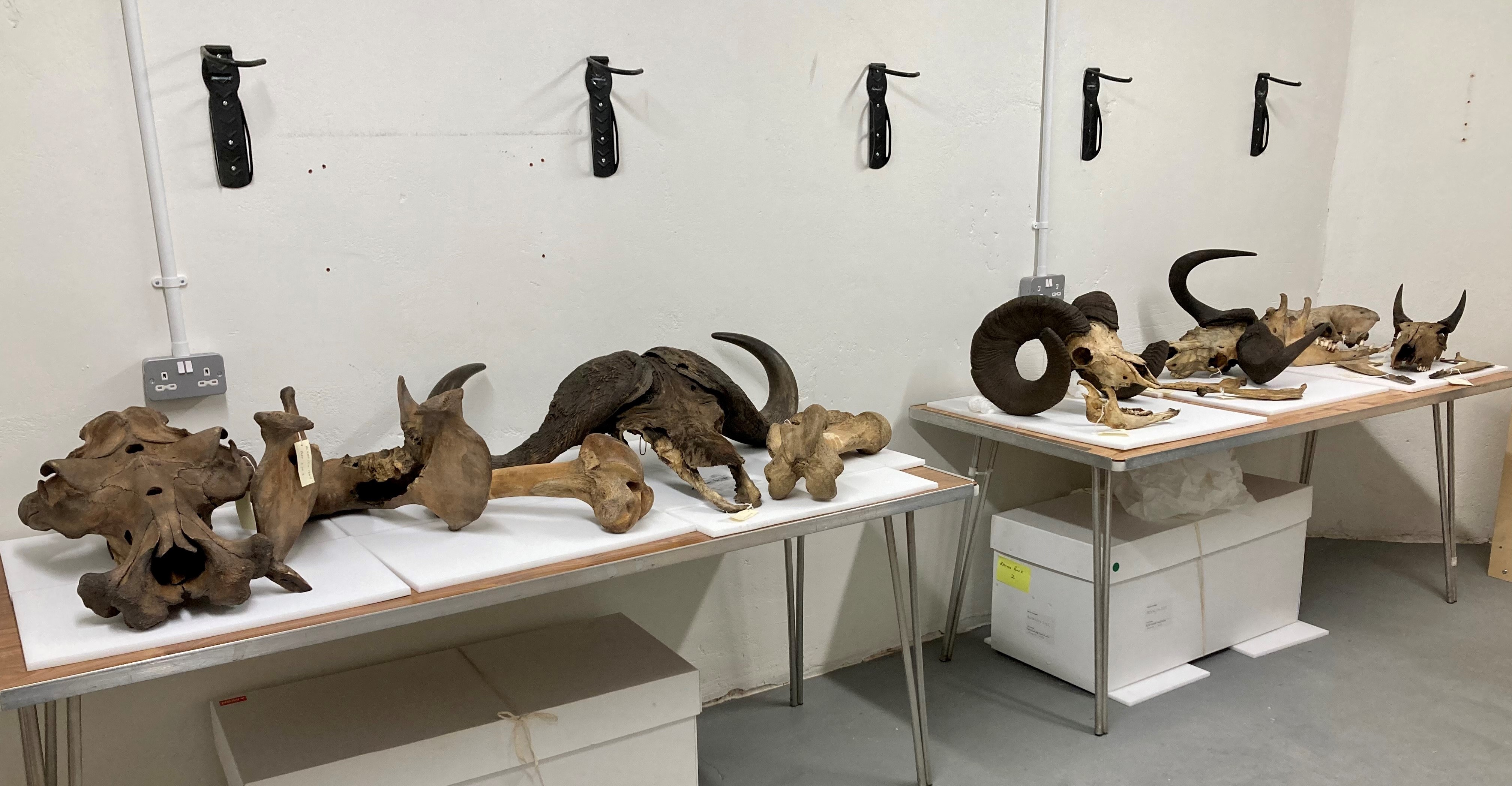
The Hunterian Museum at the Royal College of Surgeons (RCS) in London closed in 2017 for redevelopment. This necessitated the temporary removal, storage, and condition assessment of its contents. One particularly challenging project was the conservation of 19 large animal skulls. These specimens are part of the museum founder John Hunter’s original collection, dating from the 18th century.

Although the skulls had been sealed in secure crates since the museum’s closure, most had some noticeable dust and dirt accretions and needed attention before they could be redisplayed. Due to their size and number, a team of conservators from Virtu Conservation Housekeeping was brought in to assist with this task. There was a lack of suitable bench space to accommodate so many large specimens at once, so temporary cleaning stations were set up.

Continue reading

People and Plants Workshop Three: Sharing Knowledge in the Amazon

March 10th, 2023, Royal Botanic Gardens, Kew

Written by Fiona Roberts (Collaborative ESRC PhD student, Cardiff University & Amgueddfa Cymru-National Museum Wales) and Violet Nicholls (Assistant Curator in Herbarium, Portsmouth Museums).

This post is dedicated to Dr Dagoberto Lima Azevedo (1979-2023), Tukano researcher, translator, scholar, author and a voice for the Indigenous peoples of the Rio Negro in the northwestern Amazon.

The third and final workshop of a one-year project ran in March 2023, at Royal Botanic Gardens, Kew. The project, “People and Plants: reactivating ethnobotanical collections as material archives of indigenous ecological knowledge”, began in January 2022, and was supported by NatSCA (Natural Sciences Collections Association). Funded by the Arts and Humanities Research Council (AHRC), it was led by National Museums Scotland, the Powell-Cotton Museum and Royal Botanic Gardens, Kew. 

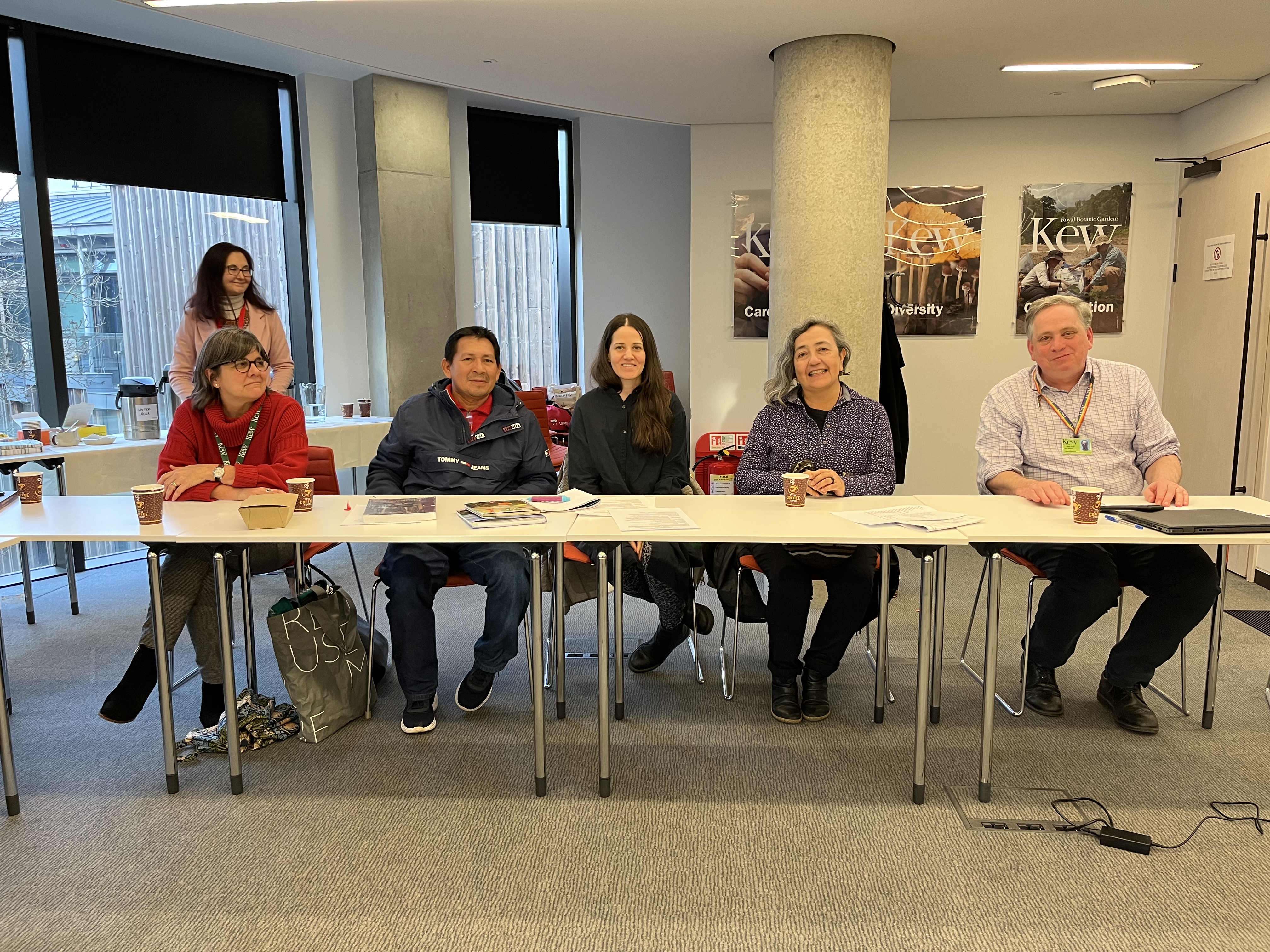
The workshop ran in partnership with Museu Goeldi, Brazil and the Department of Cultures and Languages, Birkbeck, University of London. It addressed the question, ‘how ethnobotanical collections in museums can best be used to support Indigenous communities?’. Dr Dagoberto Lima Azevedo, from the Federação das Organizações Indígenas do Rio Negro, and Claudia Leonor López Garcés (Museu Paraense Emílio Goeldi) travelled from the Brazilian Amazon for the event. They met with fellow panellists Professor Mark Nesbitt (Royal Botanic Gardens, Kew), Professor Luciana Martins (Birkbeck, University of London), Cinthya Lana (University of Gothenburg) and Dr William Milliken (Royal Botanic Gardens, Kew).

Fig. 1. Some members of the panel at the workshop with, from left to right, Cynthia Sothers, Luciana Martins, Dagoberto Lima Azevedo, Cinthya Lana, Claudia Leonor López Garcés and Mark Nesbitt. Photo by Gayathri Anand.

The Richard Spruce collection (1849-1864) was used as a case study. Spruce collected plants and recorded their uses in South America, and is considered to be an early ethnographer, as he also recorded the traditions and customs of the different communities that he met on his travels.1 He collected over 14,000 herbarium specimens in the Andes and Amazon regions, and 350 items are in his ethnobotanical collections.2

Continue reading

Rights-based Environmental Action: A key element of Sustainable Development

Written by Henry McGhie, Curating Tomorrow, henrymcghie@curatingtomorrow.co.uk.

Bio: Henry McGhie has a background as an ecologist, museum curator and manager. He set up Curating Tomorrow in 2019 to help empower museums and their partners to contribute to sustainable development agendas, including the SDGs, climate action, biodiversity conservation, Disaster Risk Reduction and human rights. He is a member of the ICOM Sustainability Working Group, and a Churchill Fellow working on these topics.

This blog post takes in some of the development over the last couple of years, and sets out some current opportunities for museums with natural history collections to strengthen their contributions to environmental sustainability.

This blog post builds on a previous post, on the Convention on Biological Diversity and the Paris Agreement. 

Museums can seem to have lots of rules – conditions for loans, environmental conditions, rules for acquisition and disposal, rules on what people can and can’t do in galleries, and so on – but what about the goals? What is the point of museums? If we look at museums from a rights-based approach (i.e. from the perspective of respecting and fulfilling human rights), we can easily see museums as related to the right to participate in cultural life, to education, to information, to take part in public affairs, freedom of expression, and more. Yet museums don’t make much of human rights or rights-based approaches. The same can be said of environmental protection and restoration. 

As I wrote in the last post, the Framework Convention on Climate Change and the Convention on Biological Diversity are both now over 30 years old, yet their main aims are not written into the work of the museum sector, or indeed the wider cultural sector. This is unfortunate on three counts: first, it holds back the international agreements from making progress to address these massive challenges; second, it denies people the opportunity to even know about these agendas and related programmes; and third it stops the museum sector from contributing effectively to achieving these agendas. 

Continue reading

How a Giant Panda – possibly called Grandma – ended up at Leeds City Museum.

Written by Clare Brown, NatSCA Membership Secretary & Curator of Natural Science, Leeds Museums and Galleries, Leeds Discovery Centre.

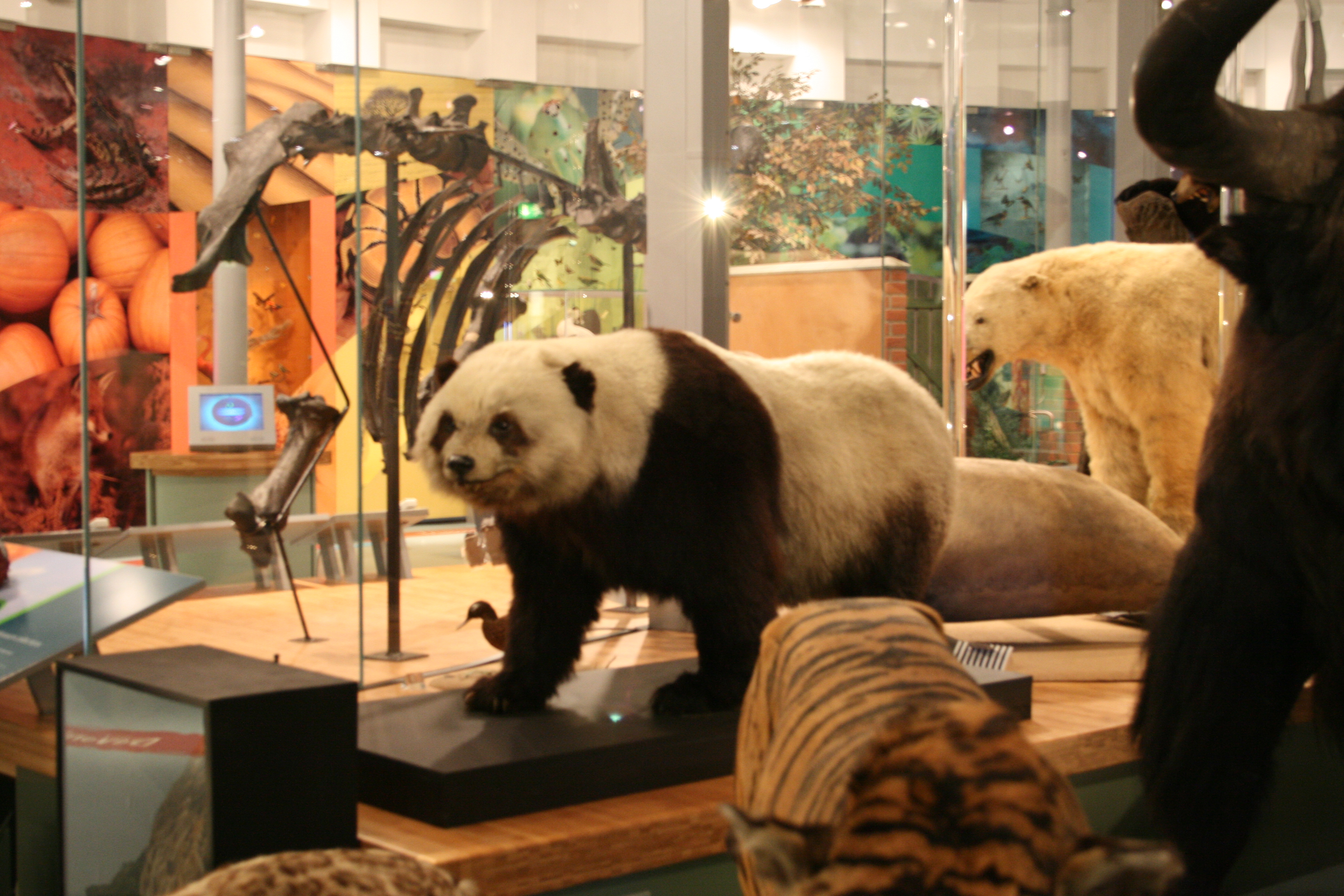
On display in the basement gallery of Leeds City Museum is a stuffed Giant Panda. We’ve always known and referred to her as “Grandma”, the panda that died only a few days after arriving in London in 1938.

Photograph of a taxidermy giant panda at Leeds Museum.
‘Grandma’ the Giant Panda ©Leeds Museums and Galleries.

Grandma, named as she was the oldest of the group, and her compatriots Happy, Grumpy, Dopey and Baby (Snow White was released in March that year) were the first live Giant Pandas to arrive in the UK. They had taken a long and complicated journey out of central China. Trapped in the forests above Weizhou, Sichuan, the pandas were initially kept at Chengdu under the care of Elizabeth and Floyd Tangier Smith.

Over several weeks, paperwork was prepared and plans were put in place for moving six pandas across the country during a Japanese invasion. It was then Elizabeth who, leaving a poorly Floyd to catch a plane, navigated her way to the Hong Kong Society for Prevention of Cruelty to Animals’ Dogs Home, a journey of some 1400km. One panda died en route.

Continue reading