Collecting Coventry, a Temporary Exhibition at the Herbert Art Gallery & Museum

Written by Ali Wells, Curator (Herbert Collections), Herbert Art Gallery & Museum.

This blog post details a temporary exhibition at the Herbert, how it was presented, how decolonisation and feedback were integrated into the show. This is an overview, please get in touch if you would like more information on any aspect of the exhibition.

In May 2024 the Herbert launched its latest major temporary exhibition, Collecting Coventry. The display focuses on the history of collecting in Coventry museums and showcasing the breadth of the collections.

The main aims were to

  • Present the Herbert’s collections after several years of external or predominately loan-based temporary exhibitions.
  • Get out visitor favourites like the Lowry and display stored objects for the first time.
  • Look like a museum store.
  • Give visitors the opportunity to comment on aspects of museum work and ask questions relating to collections and displays. For example, Collections Development policy, display of human remains, use of technology, future exhibitions, representation.
Continue reading

Going ‘Extinct’ for Jewellery

Written by Sonal Mistry (Masters Students in Scientific Illustration, Zuyd University of Applied Sciences, the Netherlands) and Olivia Beavers (Assistant Curator of Vertebrate Zoology at World Museum, National Museums Liverpool).

Last year, Sonal approached the vertebrate zoology team at World Museum Liverpool to see the Nicobar Pigeon taxidermy mounts, study skins, as well as the Liverpool Pigeon study skin and dodo skeleton to use as reference for her work. From the first meeting, it was fascinating to see the detailed nature of her initial sketches and how quickly she worked.

World Museum has received requests from wood carvers and illustrators to access the osteology collection, taxidermy mounts and/or study skins as a reference for their work. The in-person visits help them to create more accurate drawings and carvings compared to using 2D images for reference. 

Collaborating with researchers of a particular species or family broadens our understanding of the collections. For example, Sonal’s explanation of her university assignment shed light on the endangered status of Nicobar Pigeons and the unconventional use of their gizzard stones in jewellery which I was unaware of.

Sonal is currently pursuing a master’s degree in Scientific Illustration, at Zuyd University of Applied Sciences in Maastricht, the Netherlands. Her passion for the sciences and the arts enriches her illustrations with a unique quality that is evident in her diverse projects, showcasing a blend of creativity and scientific accuracy.

Continue reading

Divorced or Separated? Naming the Specimens on Display at the Zoologisches and Palaontologisches Museum, Zurich.

Written by Richard Crawford, who has just completed a PhD thesis at the University of the Arts London, entitled ‘Re-presenting taxidermy, Contemporary Art interventions in Natural History Museums’.

Do people read labels in museums? If they do, what do they learn about the object on view? It has been the custom to use labels to give factual names to the things on display in scientific museum displays, but Art curators have taken a different approach and put titles to works that suggest a particular reading of the artwork. These may be suggested by the artist. A good example of this style of labelling is Damien Hirst’s ‘Mother and Child divided’, an artwork that used preserved specimens.

For this work, Damien Hirst famously sawed a cow and a calf in half and exhibited the separate halves in tanks filled with formaldehyde, which he placed apart with sufficient space for a viewer to walk between the two halves of each animal carcass so that they could observe the internal organs of both cow and calf. When it was exhibited at the Tate Gallery in 1995, it helped win him the Turner Prize. The title was ironic. Hirst’s work critiques romantic depictions of the animal as part of harmonious natural order, a place in which mothers protect and nurture their young according to supposedly universal maternal instincts. In place of natural harmony, he presented the viewer with the disjuncture and division brought about by human intervention that brought early death to these two animals, destined for the meat market.

Continue reading

Aliens Escape the Herbarium

Written by Annette Townsend (Interdisciplinary Natural History Artist) & Sally Whyman (Curator: Botany Curator, Amgueddfa Cymru – National Museum Wales).

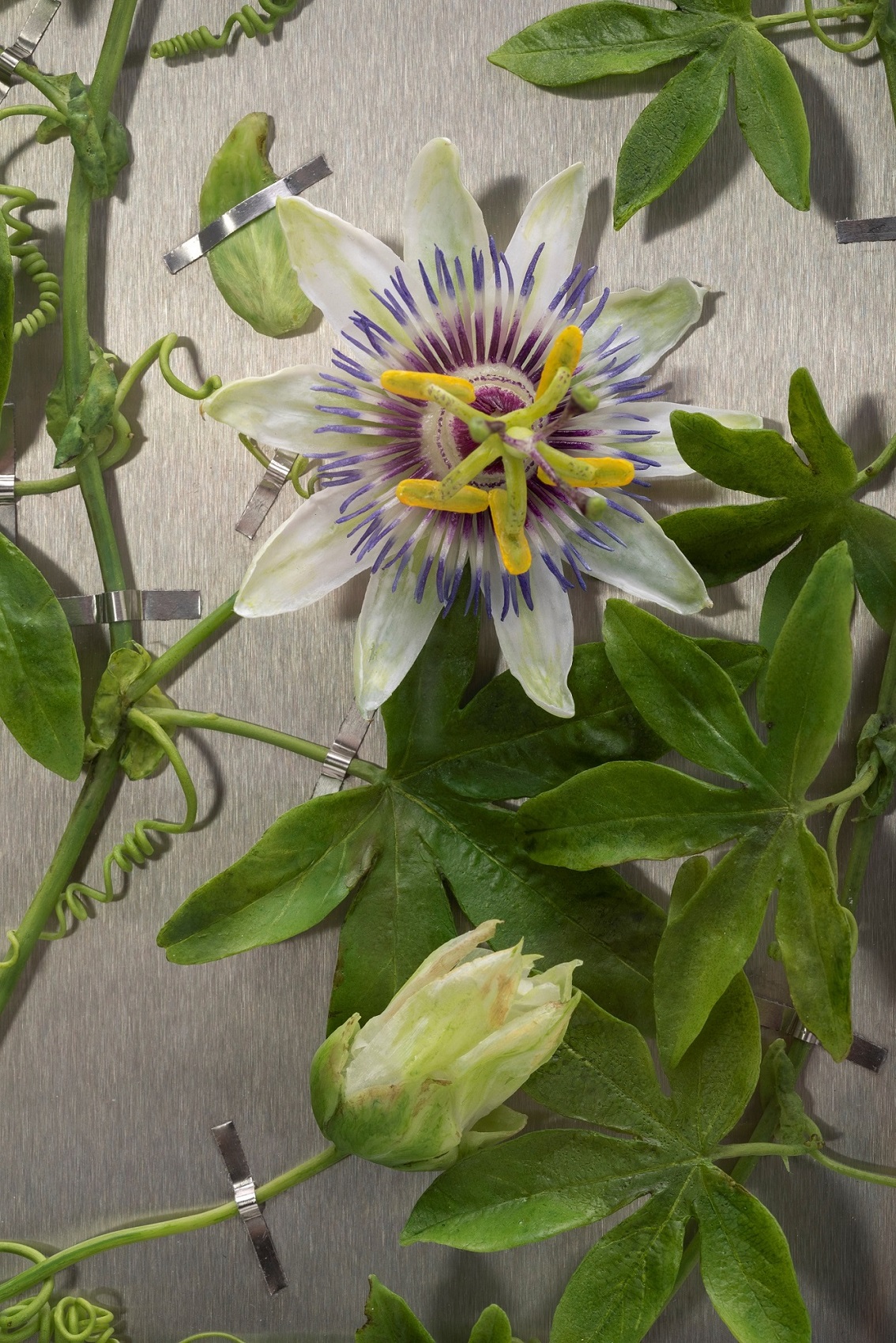
Aliens 1956. Close-up. Annette Marie Townsend. Image Dewi Tannatt Lloyd

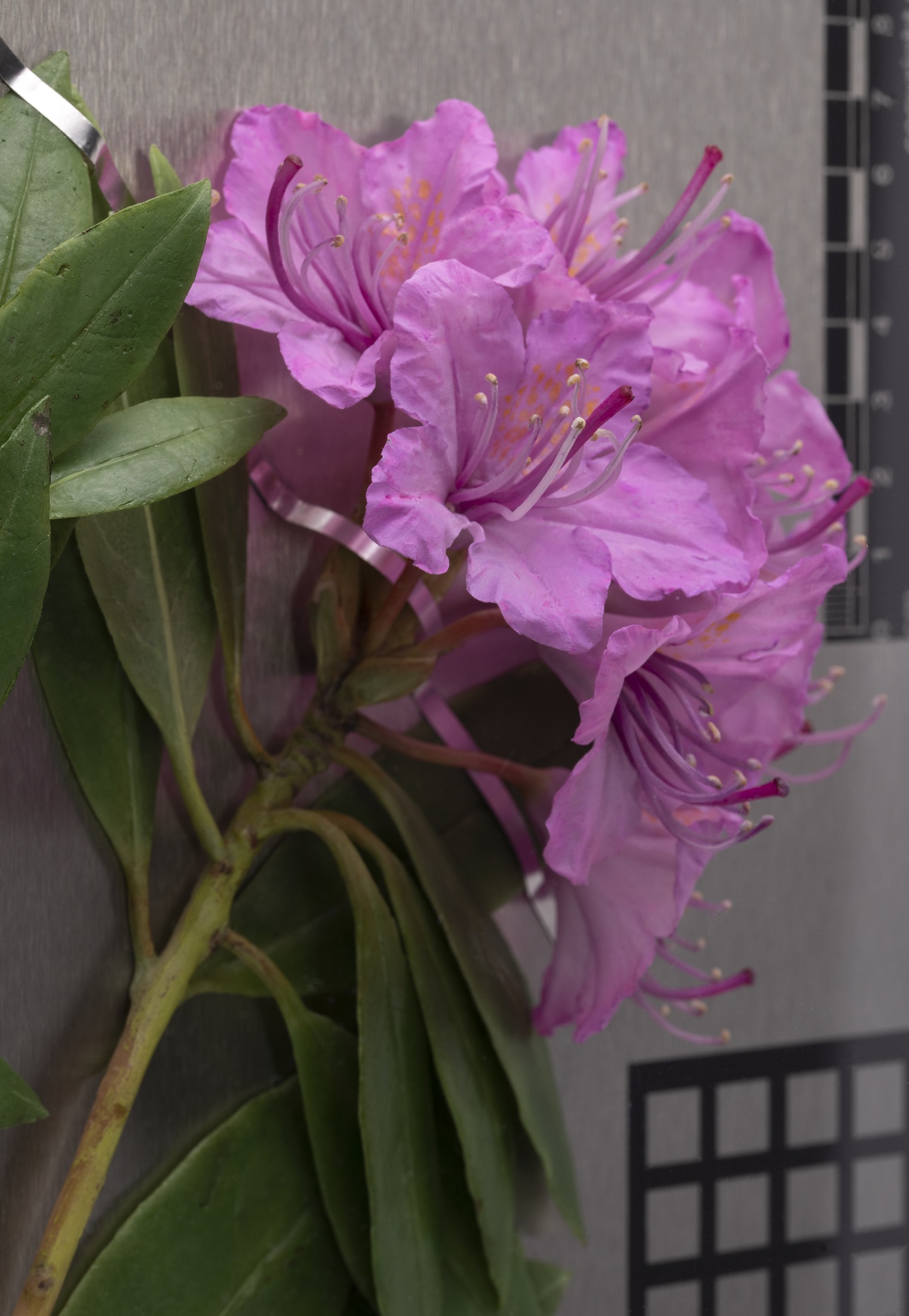
Plants growing on the wall of a London art gallery!! On closer inspection you discover they are alien plants, introduced to the UK. Looking even closer you realise they are delicate sculptures, handmade from beeswax, paraffin wax, tinned copper wire, tissue paper, cotton thread, artists’ pigments, acrylic paint and acrylic varnish.

Aliens 1992. Close-up. Annette Marie Townsend. Image Dewi Tannatt Lloyd

Mounted on stainless steel plates with stainless steel strips, and epoxy printed collector labels, in a juxtaposition of historic and modern materials and techniques, each sculpture mimics a real herbarium sheet, found in the Welsh National Herbarium, Amgueddfa Cymru.   

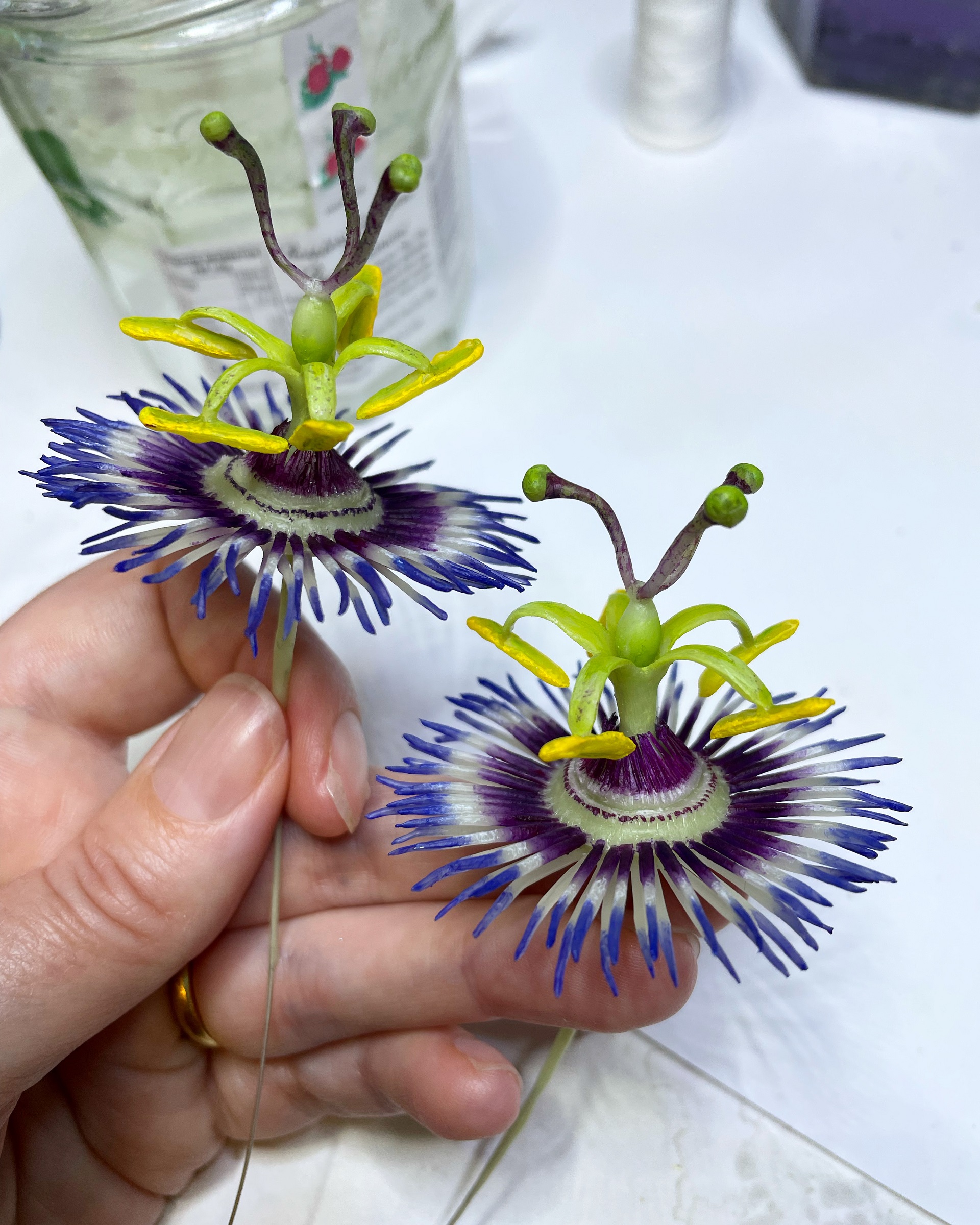
Wax passion flowers in progress. Image A.M. Townsend

The brainchild of Annette Marie Townsend and Sally Whyman who wanted to combine the skill, vision and dexterity of the artist with the depth of collection knowledge of the curator, allowing the plants to come to life and escape the confining folders and cabinets of the herbarium. This Aliens series allows the plants tell their stories of biodiversity change and invasive species to new audiences, further afield than museum visitors and botanical researchers.    

Continue reading

The Dead and the Living: Natural History’s Two Key Pillars in New Art Exhibition

Written by Jack Ashby, Manager of the University Museum of Zoology, Cambridge, and curator of ‘Evolution as Inspiration’

Over the past year, I’ve been working with one of the world’s leading naturalists, Jonathan Kingdon, to produce an exhibition of his artworks, entitled Evolution as Inspiration. Translating his science through his art, Kingdon has sought to explore and explain the how’s of why’s of animal appearances.

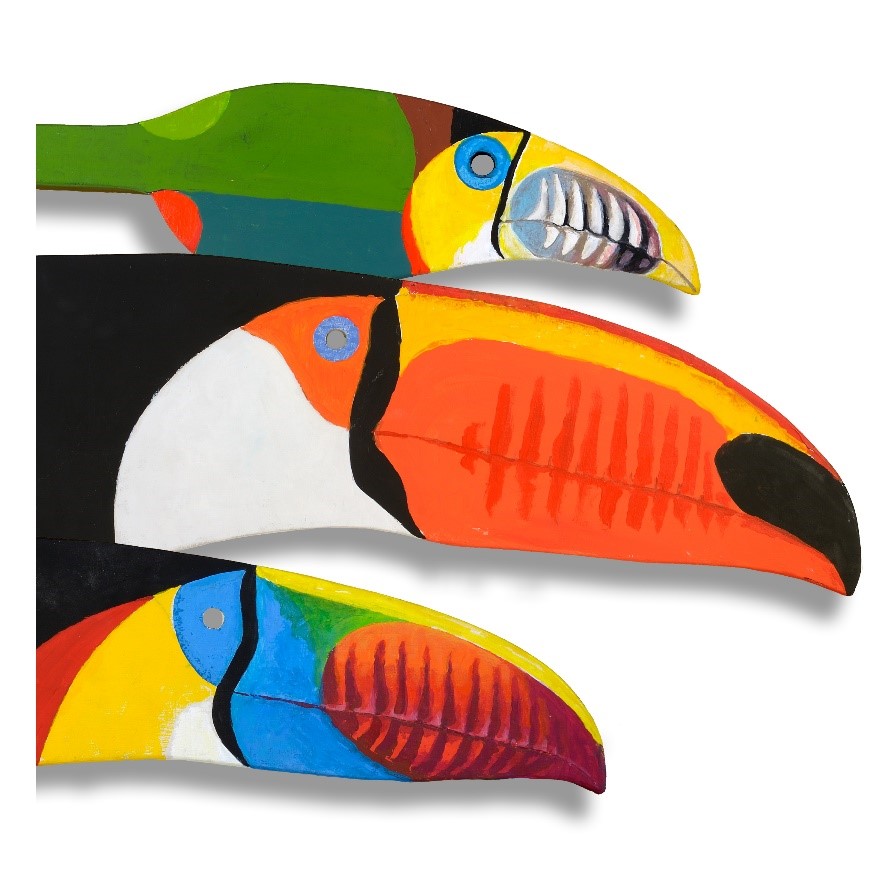
Beaks as Flags (detail), 2010. Jonathan Kingdon

Although it is an art exhibition of ceramics, sculpture, paintings and drawings, in several senses a natural history museum like ours is the perfect place for this show. Evolution as Inspiration is arranged in two parts. One focusses on the drawings Kingdon made whilst dissecting animal carcasses as he sought to document and understand the adaptations beneath the skin; the other explores his scientific analysis of the evolution of animal signalling and colouration, resulting from decades of observing the behaviours of wild animals.

These two elements of Kingdon’s work reflect two central pillars of natural history: what we can learn from dead specimens is very different to what we can understand by watching live animals in the field. These dual strands of zoological research are also embodied by the history of our collections, and by the people who work and study here in the Museum, in the University of Cambridge’s Department of Zoology in which we are embedded, and in the Cambridge Conservation Initiative (CCI) with whom we worked with to co-curate this exhibition.

Continue reading