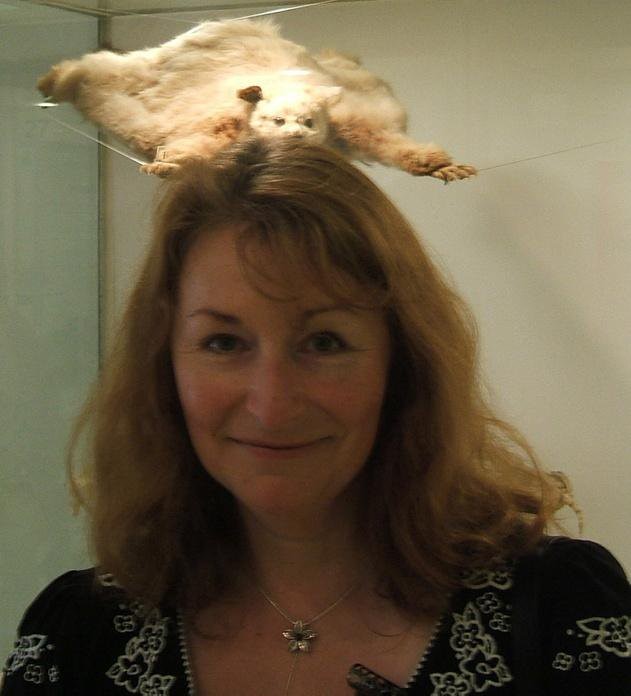
Meet The NatSCA Committee – Amanda Callaghan

Written by Amanda Callaghan, Curator/Director of the Cole Museum of Zoology at the University of Reading.

What is your role on the NatSCA Committee?

I only recently joined the Committee but will be taking over the organisation of training courses from Clare Brown in the New Year. NatSCA offers really interesting and relevant courses for people working in this sector and I would welcome any ideas of courses you would like to see, or repeats of courses you missed. I attended a couple of these recently, including by far the smelliest day I have ever spent, at the skeleton preparation course at Fort Cumberland in Portsmouth.

Job title and Institution

Curator/Director of the Cole Museum of Zoology at the University of Reading/Professor of Invertebrate Zoology.

Twitter username

@ACallaZoo

Tell us about your day job?

Working as a University academic means that you have lots of hats. My hats include teaching undergraduate zoology, supervising PhD and undergraduate student research and no end of random teaching leadership roles. These roles are all very interesting but by far the best part of my working week is spent in the Cole Museum where I have been the curator for the past 15 years.

Continue reading

NatSCA Digital Digest – July

Compiled by Jan Freedman, Curator of Natural History, Plymouth Museums Galleries Archives.

Welcome to the July edition of NatSCA Digital Digest.

Where Should I Go?

Dippy is in Newcastle over the summer, so if you haven’t seen this iconic cast, pop on over!

A nice exhibition is on at the Cambridge University Museum of Zoology, Evolution as Inspiration. A mixture of artworks and natural history specimens look at how animals have evolved visual cues.

What Should I Read?

There’s a new book coming out on Britain’s lost ice age giants. The Missing Lynx: The Past and Future of Britain’s lost mammals is out on 11th July. Written by the co-creator of Twilight Beasts, this book explores the history of some of our amazing large mammals that once roamed Britain. Rewilding, ancient DNA, cave fossils and more – it’s a fabulous book (I’ve had a sneak peak!). And well worth one for the reading list!

Six North Atlantic Right Whales have been found dead in the last 3 months. With just 400 individuals left in the world, this species is highly threatened. In museums we are in a unique position to help highlight species at risk, so if you have any North Atlantic Right Whale specimens on display, lets update our labels! Read about it here.

Continue reading

Museums Unleashed #NatSCA2015

Next Thursday NatSCA will be holding our annual conference in Bristol. This meeting tends to be the highlight of the year for many natural history collections staff – a chance to catch up with colleagues, make new contacts and help shape the direction of our sector.

NatSCA conference attendee group photo from 2012. Image by Rachel Jennings, 2012

NatSCA conference attendee group photo from 2012. Image by Rachel Jennings, 2012

This year the conference is called Museums Unleashed, and the theme is sharing collections using a variety of media – from the traditional television, radio and print to newer digital and social media. This topic has a much broader relevance to the museum sector than the usual NatSCA theme and so there will be a broad diversity of speakers from broadcasting, journalism and a variety of different museum disciplines – check out the full programme and list of abstracts.

Museums Unleashed #NatSCA2015

This broader focus of the meeting will allow the NatSCA membership to learn lessons in engaging audiences from different perspectives and really make the most of our collections in order to advocate for the ongoing use and support.

Of course, this broad speaker base will also allow non-natural-science-specialist to benefit more from the meeting, providing an opportunity for the increasing number of generalist museum staff to break the ice with specialists who can help support them in their role – be it collections focussed or more outwards-facing.

If you haven’t booked a space there is still time, as bookings close on 19th May – although spaces are running out! Just head to the NatSCA website and book online.

If you want to attend the conference meal you’d better be quick though – orders need to be with the restaurant by Wednesday.

We hope to see you there, but if you can’t makes it, be sure to follow the hashtag #NatSCA2015 to keep updated!

Let’s Not Forget the Old Ways

Museums Unleashed is the conference to get to in 2015. The theme, as the title suggests, is unleashing your collections: getting them out ‘there’ using social media, blogs, TV, and newspapers. With an excellent programme of speakers, the conference will discuss inspiring new ways of sharing our collections, both to familiar audiences and new ones.

The conference will be an excellent opportunity to hear case studies on what other museums are up to and how different methods are being used. This is where wonderful, new, and exciting ideas are thought up, leading to the birth of outrageously different projects (this often happens in the pub).

As Viscardi (2012) writes, advocacy is essential for survival of the sector as a whole. We all do it, and more than we think. Probably eight or nine times a week. We talk to our colleagues and friends about our collections, or a cool specimen that we are working on. We get on the radio and talk about projects. This is great advocacy. Exciting discoveries or research in our store rooms are often accompanied by media reports highlighting the awesome museum collections.

Capricorn Beetle (Cerambyx cerdo)

Capricorn Beetle (Cerambyx cerdo) found at Plymouth University in 2007. Specimen is the first sighting of this species since 1947, and was donated to the museum. A short article was written for the local newspaper (http://www.plymouthherald.co.uk/Giant-beetle-time-Plymouth-city-native/story-23139707-detail/story.html)

As museum professionals, we should embrace new communication media without forgetting the old ways. One of the most effective means of letting staff at other museums know about your work or your collections is by writing an article for the Journal of Natural Science Collections. The Journal is fully peer-reviewed, and is written by those working with natural science collections for those working with natural science collections. This is a great way of sharing your expertise, your knowledge, and your passion for your collections with your colleagues.

All of the published articles are also made freely available online. The first two Volumes of the Journal are already available, with interesting and useful articles about conservation, collections reviews, education and the history of different collections. Some articles will be useful to your everyday work as a reference, others may spark ideas for future collaborative projects. We are now seeking contributions for Volume 3. If you have something you’d like to share, get in touch and send in an article!

The deadline for the next Volume is 15th July 2015. Please contact the Editor, Jan Freedman, for further information (editor@natsca.org). Guidelines for authors are available here, and are currently being updated.


Jan Freedman
Curator of Natural History, Plymouth City Museum and Art Gallery

Collections at Risk

The biggest problems facing collections today are almost certainly posed by reductions in funding. The financial support for museums of all sizes has been decreasing every year, with jobs being lost and stored collections often bearing the brunt of cuts, since they are usually out of sight and therefore out of mind for many decision makers.

Hidden treasurers? Specimens in storage can be overlooked by decision makers in favour of public-facing elements of museum business.

Hidden treasurers? Specimens in storage can be overlooked by decision makers in favour of public-facing elements of museum business.

NatSCA has been to trying to keep track of threats to collections and offer our support in an effort to make the vital role of collections, and the people with the skills to care for them, more clearly recognised by management. Much of this work in the UK has been alongside our colleagues in the Geological Curators Group.

The first issue of our new online publication NatSCA Notes & Comments provides a case study of decline from the Midlands, written by Geoffrey Hall. Although the picture painted is bleak, there have been some small wins, as Ludlow have since acknowledged the importance of maintaining a geologist to manage their globally important geology collection.

We have also been looking at the wider societal role of collections and have been working to raise their profile at a variety of levels, including internationally, alongside the Society for the Preservation of Natural History Collections. Our message about the importance of collections is being heard by a wider and more influential audience, something that is reflected in this week’s Nature, which features an article about the importance and decline of collections.

If you know of any collections that are at risk from staff loss or disposal, please let us know by editing our Natural History Near You map or emailing us at advocacy@natsca.org