And the Winner is…

Well, there were two fantastic projects that we wanted to give the NatSCA Bill Pettit Memorial Award to this year. Here are the details:

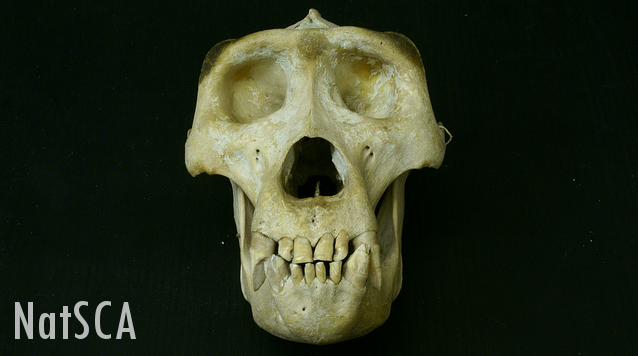
Saving the World’s Rarest Skeleton

The specimen of the quagga at the Grant Museum.

The specimen of the quagga at the Grant Museum.

In 2014-15 the Grant Museum will undertake a major project in remedial conservation to disarticulate, clean and remount its skeleton of the extinct quagga. It is the only articulated quagga in the UK, and can be considered the rarest skeleton in the world. The work is intended to secure the long-term preservation of the specimen – that no subsequent work would be necessary in the future.

The quagga would be the focus – and most involved element – of a major project of conservation of 39 large specimens, many of which have been on open display for over a century without any treatment. Interventions will range from cleaning (in the majority of cases) to remounting (quagga and dugong).

As much of the conservation as possible will be performed in the public eye in the gallery, shedding light on a crucial element of museum work which gets little public attention.

Curation of Discovery deep-sea samples at the National Oceanography Centre, Southampton

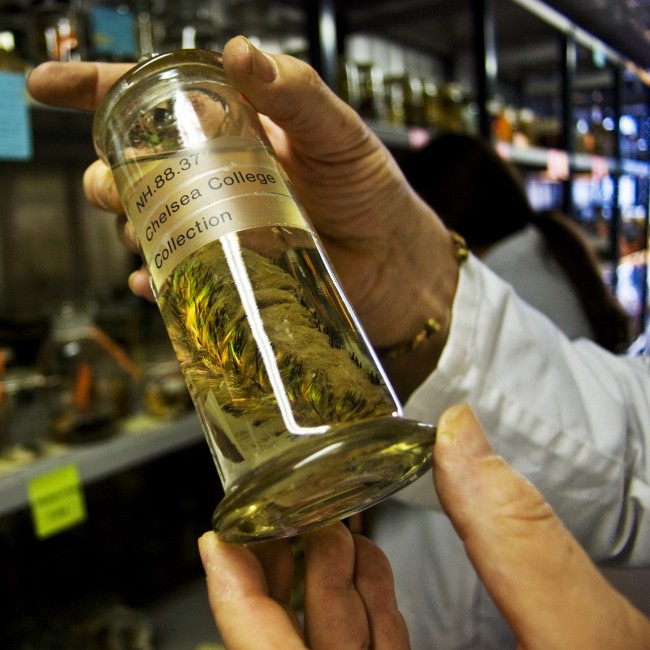
The Discovery Collections are an internationally important historical collection of deep-sea marine invertebrate and fish specimens. The first samples were collected in the Southern Ocean by RRS Discovery, the ship used by Captain Robert Falcon Scott for his first Antarctic expedition in 1901. The collections are closed to the public, yet specimens are displayed and used at a variety of public engagement events (e.g. festivals, open days, school visits) by a wide spectrum of people.

This application is to support the engagement of a temporary staff member to assist in the curation and cataloguing of three large collections of deep-sea samples held in the Discovery Collections. These are the result of three major research programs: the Crozet Island collection (a 42-day cruise in 2006 on the RRS Discovery), the ECOMAR collection (a 4-year project studying the fauna of the Mid-Atlantic Ridge) and the Arabian Sea Collections (5 month-long research cruises 2002-2003). The samples are in urgent need of care and attention to ensure their future use by the scientific community.

The Bill Pettit Memorial Award

A big congratulations to the winners. If you would like to know more about the Bill Pettit Memorial Award, you can find out on our Awards and Bursaries page or read more about previous year’s winners here.

State of the Union! Natural History Museums 2014

Author Mark Carnall, Curator, Grant Museum of Zoology, UCL
#NatureData Coordinating Committee
All views are the opinion of the author. August 2014.

‘After visiting the recent natural history museum community conference in July: SPNCH 2014, Cardiff, Mark Carnall reflects on what the sector internationally is thinking and doing – in particular what’s happening digitally and what people’s thoughts are on a UK natural science database’.

Primate skeletons in the Grant Museum of Zoology, UCL ©UCL, Grant Museum of Zoology and Matt Clayton

Primate skeletons in the Grant Museum of Zoology, UCL ©UCL, Grant Museum of Zoology and Matt Clayton

At the end of June was a rather special event; the coming together of three subject specialist networks (SSN), the Society for the Preservation of Natural History Collections (SPNHC), the Natural Sciences Collections Association (NatSCA) and the Geological Curators’ Group (GCG) hosted by Amgueddfa Cymru National Museum Wales. Between them, these three networks represent a sizeable chunk of curators, conservators, directors and educators who work in and with natural history museums and collections. Each SSN has yearly meetings but a syzygy rarely happens.

The full conference was a six day affair packed with field trips, stores tours, talks, workshops, demos, poster sessions and discussions attended by over 250 delegates from almost as many natural history institutions. This provided a great opportunity to catch up and meet friends, facilitated the catharsis in sharing frustrations unique to natural history museums and offered a rare chance to establish a sense of ‘the state of the union’ in natural history museums across Europe, North America and elsewhere.


The broad theme of the conference was historic collections and future resources and many of the presentations were about off-label uses of collections, advocacy and digitisation. Inspiringly, the conference was kicked off with a series of keynotes which carried the resounding message of “get over it” when it comes to the communities’ existential crisis in demonstrating value and worth with a rousing series of presentations from Professor Paul Smith and Dr Chris Norris setting the tone for the rest of the conference.

Off-label use of collections, a term borrowed from accidental discoveries of secondary beneficial side effects in the pharmaceutical industry, came up time and time again. Cynically, as the curator of a small museum it’s nice to finally be joined by colleagues from some bigger museums who, without having to face the “use it or lose it” challenge to keep a museum in existence, have cottoned on to the notion that perhaps collections have uses beyond the 10% of material that has a function in alpha taxonomy and (often low impact) taxonomic research. Colleagues presented example after example of natural history collections being used for research into environmental change. One question that wasn’t satisfactorily answered was about how this use of collections can be procedurally built into research. Many of the examples were incidental discoveries (hence off-label) rather than arising from researchers deliberately thinking of uses of collections in the first instance. However, advocates for the importance of natural history collections now have a new suite of examples to convince decision and policy makers about unique insights into the natural world which can only be gleaned from scrutinising collections.

When it came to advocacy, unfortunately the community fell into the trap of talking about scientific research use of collections almost to the exclusion of all other audiences. I’ve written before about how natural history museums need to celebrate and contribute more to being a part of the cultural sector, especially for museums which don’t hold scientifically important collections and specimens. Myopia aside, the community seems to have come on to some degree, telling each other how important natural history collections are, which came out in a panel discussion on advocacy. There are still a lot of stereotypes about what museums are and what they do that need to be pulled down, but there’s a danger in evangelising which can be quite divisive. Another general theme that came out across the series of talk days is that we need to get more sophisticated and generally get better at demonstrating what we do well. The finding of the NatSCA and Arts Council England study into the popularity of different kinds of museum galleries was presented, demonstrating that natural history collections are the most popular, but put some audiences off if they don’t appear to be well maintained or invested in. Natural History Near You was also presented, finally making headway into ascertaining exactly where all the natural history collections are, a fundamental piece of information that has eluded several generations of natural history collections workers. Interestingly, one of the contrasts between the UK delegates and those from the rest of Europe and North America was that with a handful of exceptions, the majority of the social media generated around the conference came from UK colleagues. It seems that social media is yet to take off as a promotional, professional networking and advocacy tool for museum professionals elsewhere.

Lastly, there was a cornucopia of presentations on digitising collections. It’s uncontroversial to say that museums in general are far from being digital – let alone post digital – and that natural history museums and collections as a group are lagging behind the rest of the museum sector. It seems that colleagues in North America and from the rest of Europe are making huge advances in all aspects of digitisation from technical advances, standards in digitisation, data capturing pipelines and networks, and databases linking specimen information. Embarrassingly, UK museums are somewhat left in the dust, contributing little to the 20 or so European and International data repositories and the data that does exist is incomplete, hard to export, manipulate or in many cases even locate – let alone scrutinise. This is in part what the #naturedata project hopes to solve, with “one portal to rule them all” in the UK at least. The need for this is even more pressing thanks to worryingly vague requirements for databases required for compliance with the Nagoya Protocol on Access and Benefit-sharing. Three conference sessions on the Nagoya Protocol valiantly tried to deconstruct the bureaucratic layers represented by this legislation but it looks like the practicalities of compliance will be causing headaches for generations of museum professionals yet.

Overall, the conference was an excellent set of days. Networking and socialising with enthusiastic, passionate and brilliant colleagues really is the best way to recharge the batteries and reinvigorate the soul. Throughout the presentations the niggling thought I kept returning to was that all the innovative, experimental and inspiring ways we use to get the most of our collections are still hamstrung by our fundamental issue of getting a handle on what we have in our collections. The curse and gift of natural history collections is their vast size, but it’s no longer good enough to use the size of our collections as an excuse for not getting to grips with every single specimen we have and making them available to the people for whom we keep them in trust.


NatSCA Digital Digest

Welcome to the weekly digest of posts from around the web with relevance to natural science collections. We hope you find this useful and if you have any articles that you feel would be of interest, please contact us at blog@natsca.org

1. Blog: Natural History Blog

Russell Dornan

Synopsis

A great blog worth checking out:

‘My name is Russell Dornan and I was the biology curatorial trainee at Hereford and Ludlow Museums. I blogged throughout my 12 month journey through their natural history collections and went on to be the Natural History Project Co-ordinator at the Horniman Museum in London.

I am now the Web Editor at Wellcome Collection.

All views expressed in this blog are mine alone and do not represent the opinions of my employer.’

Russell Dornan's #MuseumSelfie

Russell Dornan’s #MuseumSelfie (Image by Russell Dornan)

Wunderkammer

2. Volunteer Position: Mudchute Volunteer Coordinator

Mudchute, East London Countryside

Synopsis

We have a fantastic opportunity for an experienced Volunteer Coordinator to join our team at Mudchute Park and Farm to manage the recruitment, supervision and support of our volunteering programme.

We are looking for an organised, dynamic and enthusiastic individual who has the experience of working in a multi-cultural environment Inner City Environment with groups and individuals from a diverse background. Experience of working with and the ability to enthuse and motivate disadvantaged individuals is essential.

If you think this could be you, we’d love to hear from you! For more details about this part time position, including how and when to apply, please download the application pack by following the website below.

Please note that applications must be received by noon on Friday, August 29th.

Mudchute Volunteer Position

3. Training: Accreditation Plus Training- Making your objects accessible

University of the Arts, London

Synopsis

Wednesday 10 September 2014, 1.30-4pm

Central St Martins

http://www.arts.ac.uk/csm/about-csm/find-us/

‘Research has proven that touching and handling objects is an important part of the learning experience. However for many museums, allowing visitors to handle objects is an area in which they lack confidence or ‘trained’ staff. This training will address the issue of how we balance the care and conservation of objects against issues of access. Experienced practitioners from Central St Martins will provide guidance on best practice in object handling and discuss how robust systems can make it possible to manage access to collections through handling whilst still protecting them for future generations.

In the session you will:

  • Look at a range of things to consider in order to handling by your visitors.
  • Explore why we use object handling in our museums
  • Learn best practise for handling objects

It is aimed at staff and volunteers who will be developing and delivering handling sessions within their museums.’

To book, fill in an online application form on the Regional Programmes website:

Training Programmes

Training course booking form

Compiled by Emma-Louise Nicholls, NatSCA Blog Editor

Science and Museums with Erica McAlister

It’s been a little quiet around here so today you’re getting two posts to make up for it. This afternoon we’re going to have a guest post by Plymouth Museum’s very own Jan Freedman but first let’s talk about bugs:

Erica McAlister visits the Grant Museum

Erica McAlister visits the Grant Museum

London’s Natural History Museum houses an impressive natural history collection. It has millions of specimens ranging from amoebae to blue whales. For Dr. Erica McAlister, an entomology specialist at the museum, the most important part of the collection are flies. Many of us relate to flies as a nuisance that needs to be swatted away from our sandwiches but, to Erica, they represent an amazing resource of information. Last month Erica agreed to come and talk to the good people of PubSci about her research.

There are two primary frontiers of insect research: new areas of investigation; and cleaning up the mess Walker left behind. We’re going to talk more about the new areas but I’m sure Erica would be happy to tell you about Walker’s legacy if you’re not already familiar with it.

New areas include a recent trip to the Ethiopian church forests. This is an interesting phenomenon – deforestation for farming has decimated the Ethiopian forests but, due to their reverence for the church buildings, the forests have been left unscathed in a radius around them. This may be the last hope for many of Ethiopa’s native species. Flies are a major contributor to pollination – three of the six top UK pollinators are flies. What Erica wanted to know was whether the speciation at the edges differed from the core. She went out there and, despite some regional obstacles such as children stealing pan traps, managed to recover a huge amount of data – which has since been published.

Another major area of investigation has been identifying fly larvae: we may have over 100 000 described species of fly but we only know 4% of their larvae. The importance of this cannot be stressed strongly enough: if you cannot tell apart a disease carrier from a pollinator you may be shooting yourself in the foot however you tackle them. Furthermore their presence at the developmental stages of a crime scene could drastically alter your prediction of how long ago the crime took place if you do not get the species right.

Flies are used as an arctic bio-indicator of climate change because certain species of chironomids (non-biting midges) are ctenothermic and can only exist in very specific temperature ranges. There now exists a ‘chironomid thermometer’ due to this phenomenon.

Suitcase ecology is another area of crime scene investigation. It was once believed that the age of a body couldn’t be as accurately determined if the body was stowed away in a suitcase because flies cannot get into and out of it. Further study has revealed a pattern of egg-laying on the zip, through which the larvae may pass when they hatch. This now gives us a better picture of the circumstances of the murder than ever before.

There are lots of fly behaviours that touch upon our daily lives in ways we don’t even appreciate and understanding these is essential to our continued way of life. For example the very fact that we have chocolate is wholly due to fly pollination. Without them, we wouldn’t have it. Furthermore we can use flies as a source of chemical research – fly venoms used for biological control, for example. We need them to tell us whether the climate is changing and to help us catch murderers but, more importantly, we need people like Erica who can make sense of their behaviour and present it in a way that makes us forget our instinctive “ugh, flies” reaction. There aren’t many people who would be prepared to trawl through cow pats and fetid carcasses in the name of science but somebody has to. When someone steps forward and shows enthusiasm for this we should wholeheartedly encourage it.


PubSci is a pet project of NatSCA Chair Paolo Viscardi. If you’re in London tomorrow evening I highly recommend you come along. We will be talking about the history of natural history collecting and trade with Elle Larsson, University of London postgrad. I am sure it will be terrific.

Curating Biocultural Collections: A Review.

Book Review:
Curating Biocultural Collections : A Handbook
Edited by Jan Salick, Katie Konchar and Mark Nesbit.
2014. Kew Publishing. Royal Botanic Gardens, Kew. In association with Missouri Botanical Garden, St Louis.
£30
Available from Kew online
E-book available from Chicago University Press

By Jan Freedman, Curator of Natural History, Plymouth City Museum and Art Gallery.

It may appear rather unusual for a natural history curator to review a book on ethnographic collections. However, with a plethora of crossovers from similar storage conditions to comparable conservation methods, this book may potentially be more beneficial than you may first think. I was interested to review this book because I am not an expert on biocultural collections. I am keen to see if this book would be useful to assist with the diverse natural history collections we care for.

Biocultural (ethnographic) collections include any object made with the parts (or whole) of animals or plants. This can include herbarium collections, clothing, animal artefacts, DNA collections, skeletal collections, and many more. These collections provide wonderful evidence of cultures past and present and how they all relied on their natural world to survive; as we still do today. Due to their very nature, these collections require analogous collections management with natural history specimens, and many specimens in our collections cross over (eg. Herbarium, wood samples, etc).

Front Cover

Front Cover

The book itself is well laid out. Each chapter is focused on a different area to fit into one of the five sections: the introduction; practical curation (materials); practical curation (reference material and metadata); contexts and perspectives; and broader impacts. I like that the chapters are written all with the same clear structure, sub headings, images and a detailed accompanying bibliography. They provide detailed, expert advice, case studies, and examples of best practice.

For me, the writing tone is very professional, almost textbook style in a factual way that provides a lot of information in each section. And as such it is not a light read; possibly a book that you wouldn’t read from start to finish. But you would be able to easily search the index for an area you were looking for, and find the most up to date information written by experts in the field. Although I find more casually written pieces easier to digest and understand, I can actually see myself using this book as a reference for many different areas in the future.

The sections covered are detailed, precise, and written by experts across the world. The first section introduces the types of collections that are dealt with, the ethical standards, and the impact of the collections; lots of cross over with natural history collections, as you will find throughout the book. This first short section finishes with a visually impressive summary of the main collaborators of putting the book together; Missouri Botanical Garden, National Botanic Gardens of Ireland, National Museum of Natural History, Paris, Royal Botanic Gardens, Kew, and the Smithsonian Collections.

Section 2 focuses on practical curation, starting with including the basics (environmental conditions, pests, hazards, storage, handling, and labelling) to the more detailed, including storing voucher specimens, reference collections (botanical and zooarchaeological), seeds, DNA and even living plant collections. I found this section interesting because of the huge variety it covered and amount of detail in each chapter; if you find yourself wondering ‘how do I curate genetic resources’ then you can easily flick to Chapter 8 to find out. I had not really thought of curating DNA specimens, when we actually have them en masse in natural history collections. There are a couple of chapters in this Section I will take my time to read with interest in the coming weeks.

Examples of Images

Examples of Images

Section 3 looks at the curation using reference materials and metadata. Covering best practice in database standards, cataloguing of collections, and associated photograph collections, these chapters provide detailed guidelines on standardising the information for the future. In short, it spells out the importance of recording everything you know associated with that specimen; from letters/emails to photographs of the sites/collectors, and any associated documents. There is also a chapter on the legalities of biocultural collections, which does cover the important issues of CITES and copyright. The chapter that jumped out for me covered how to store oral history recordings and videos. This may not appear relevant to a natural history curator, but I think it may be getting more and more important: after organising and leading several pop up museums around the city, the amount of stories from local people sparked by seeing a photograph, painting, or mineral, was amazing. I wished I could record them all, because these stories will soon be gone forever. I have several collections where the collectors, or people who knew the collectors, are still alive, and I am keen to capture their thoughts and anecdotes relating to the collections before they are lost.

It is a shame Section 4 is the shortest section, as this examines different perspectives on cultural collections. Although not directly related to the hands-on dirty curation work, this section makes you take a little step back and think about the collections we care for. Alongside legal issues, it highlights the importance of respect and building relationships between museums and communities (from the indigenous communities in this book to the communities of amateur specialists for the natural history curator). Many specimens in our stores once belonged to someone and each individual specimen has a story to tell, linking back to the collector. These are the stories that bring the collections to life; forgetting where they have come from cuts any personal link with the visitors.

The final section of the Handbook looks at the broader impacts of biocultural collections. We all work with our collections and have a variety of users from the visitors in the museum, artists, researchers, and school groups. However, looking at the different ways different collections are used can invite ideas in using your own collections in a new and exciting way. This section goes into quite a lot of detail about the different impacts these collections have, where there are many cross overs with natural history. The potential for several different research outcomes for biocultural collections are outlined, many of which can be tied in with natural history collections too (showing a closer working between two departments). A separate chapter examines the use of collections for education, which many of us do on a regular basis with our own collections. This Section includes a useful chapter on the uses of herbarium specimens, including vouchers specimens, and DNA analysis. A useful section in the book showing that sharing ideas and ways of working can encourage new uses of collections.

I would recommend this book to a museum that holds ethnographic collections, and a bonus if it also holds natural history collections. The book can be used by both areas to help safeguard the collections for the future. It is a Handbook which can be used if you are undertaking a specific collections project or if you updating your database. Clearly laid out with nice images the chapters make available the most up to date information on that area.

The book provides a really useful guide to caring for a diverse range of collections many of which a natural history curator cares for too. As there is a lot of cross over, the book can also develop a stronger understanding between departments about the objects and specimens they care for; a better understanding of other curators collections will lead to greater working relationships.