Vote for the NatSCA Editor

At the end of this week we have our annual conference and AGM, which will be held at the Silk Mill in Derby. The conference is always a great opportunity to mix with other natural history and museum professionals, catch up with what’s going on and elect the committee members who will keep NatSCA on an even keel.

This year, for the first time, we have two people standing for the Editor position so we will be holding a vote. In order to provide you with a bit of background to help make your voting decision, so below is a brief overview from each candidate (in alphabetical order).


Jan Freedman

Jan

I am the curator of natural history at Plymouth City Museum and Art Gallery. One of the most wonderful things about our job is the variety of work we get involved in: from conservation of specimens to using collections to engage with the public. For us, who look after natural science collections, we are constantly improving our knowledge of how best to care for and promote our collections. One way of doing this is by contributing to, and reading, the Journal of Natural Science Collections, which includes the latest up-to-date case studies and information to help.

I have been very proud to have been the Editor for NatSCA for some years now. I was the editor for NatSCA News, which included more informal articles, but I wanted the NatSCA membership to get more from their Journal. Along with the support of the NatSCA committee I have developed a high-quality journal with fully peer reviewed and up to date articles from colleagues in the sector; your Journal of Natural Science Collections.

I really enjoy networking with international colleagues to bring the membership the most useful and interesting articles. For the majority of the time, curators and other museum staff do work alone, and I believe that the excellent work that we are doing should be shared amongst colleagues. As well as articles being sent for the Journal, I have approached people to write articles which will be interesting for others to read. The Journal is for the membership, and I have strived to make your journal as tool you can you in your work.

I enjoy being on the NatSCA committee, with such wonderful committee members. As a committee member, I not only format and edit the journal, but contribute to other areas of NatSCA business. I have been privileged to be involved with some exciting projects over the years, and would be truly honoured to be a part of where NatSCA is going in the future.

I would be delighted if you were to vote for me as the role of Editor on the NatSCA committee.


Rachel Jennings

RachelProfilePic

I have volunteered for NatSCA for the last few years, and would like to join the committee as Editor so that I can contribute more to the organisation, and help give our members a stronger voice to advocate for the importance of our work and collections to the wider museum sector.

As a volunteer, I have acted as Facebook Editor since 2013, advertising NatSCA events and finding natural science-related content to share that is interesting and engaging. During my tenure as Facebook Editor, the number of likes on the page has trebled, increasing our public reach. I set up a Storify account for NatSCA last year, and have created stories for the 2015 Conference and other events, so that those who couldn’t be there can still enjoy them!

I also joined the editorial team on the NatSCA blog last year, responsible for sourcing content, liaising with authors, editing and scheduling posts. I have really enjoyed this role, and I’d love to be able to take the next step and be your new NatSCA Editor!


We hope to see you at the AGM on Thursday, ready to cast your vote!

Bournemouth’s ‘New’ Museum!

The Bournemouth Natural Science Society receives Museum Accreditation

Brighton Natural Science Society's impreesive Victorian building

Bournemouth Natural Science Society’s impressive Victorian building

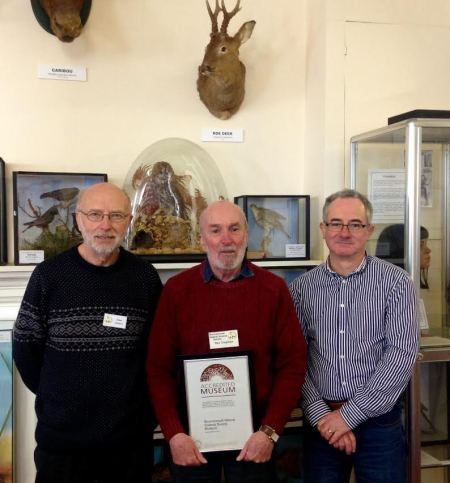
The Bournemouth Natural Science Society (BNSS) is thrilled to announce its successful application to the Museum Accreditation Scheme. Our Museum Committee has been working hard for a long time to get our documents in order and up to scratch, and it is a credit to them that we are now an Accredited Museum.

The origins of the BNSS actually go back 150 years, with the 19th century passion for collecting natural objects. These early collections are now housed in the Society’s Victorian villa at 39 Christchurch Road, which is open to the public on Tuesday mornings, between 10am and 12.30pm. From archaeology to zoology, the BNSS has something to inspire and amaze!

Accreditation is granted by the Arts Council England (ACE) to museums that meet the stringent requirements imposed by their Accreditation Standard. The BNSS joins the 1,800 other museums participating in the scheme, working to manage their collections effectively for the enjoyment and benefit of users. Our Accreditation status will be renewed every three years to ensure that we are keeping up to standard.

Steve Limburn, Ray Chapman, and Maklcolm Hadley with the BNSS Accreditation certificate

Steve Limburn, Ray Chapman, and Maklcolm Hadley with the BNSS Accreditation certificate

And the work doesn’t stop here! We are continuing to catalogue and photograph our collections and make them more accessible to the community. As well as our regular Tuesday morning sessions, we also run two open days during the year. The next one is coming up on Saturday 16th April, in collaboration with the Dorset Wildlife Trust. Our Young Explorers group meets once a month, and we welcome educational visits from organisations and groups of all ages.

Of course, none of this would be possible without our wonderful and dedicated volunteers and members, who give their time and enthusiasm to make the BNSS what it is. A huge thank you goes out to them for making this success happen.

If you would like to learn any more about the BNSS, visiting times, membership, or volunteer opportunities, please contact Katherine West, Communications Officer at publicity@bnss.org.uk.

Meet the NatSCA Committee: Paolo Viscardi

Name: Paolo Viscardi

Job Title & Institution: Curator of the Grant Museum of Zoology, UCL

Twitter username: @PaoloViscardi

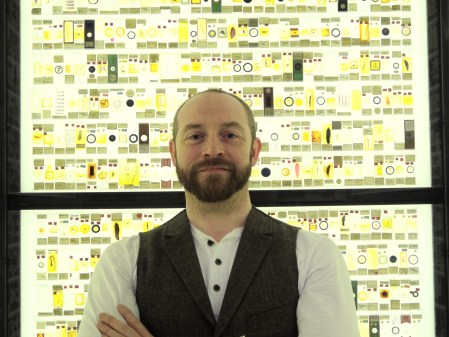
Paolo Viscardi, in the Grant Museum's amazing Micrarium

Paolo Viscardi, in the Grant Museum’s amazing Micrarium

What is your role on the NatSCA committee?

I’m the Chair of NatSCA and my role is to oversee the strategic activities of NatSCA, making sure that we are able to respond to the changes in the wider sector. This involves discussion with other organisations, developing funding bids and working with the rest of the NatSCA committee to provide a sounding-board for ideas, suggestions for ways of approaching problems and decision-making when needed.

Natural science collections are very popular with museum visitors. Why do you think this is?

Natural history collections are accessible for a broad range of audiences. Most people have some connection with other living organisms, either through their pets, the wild animals and plants in their gardens or through what they get to see in the countryside or on wildlife documentaries; I think that the popularity of natural history collections is partly an extension of this.

What do you think are the biggest challenges facing natural science collections right now?

At the moment there are a variety of challenges facing natural science collections. The obvious one is funding cuts, particularly to local authority museums. However, there are also issues arising from reductionist approaches to biology that have dominated for the last few decades, shifting scientific focus (and funding) away from whole organisms and ecology towards genetics and bioinformatics.

While these fields are important and exciting, their rise has led to a decline in specimen based research and recording, with natural history becoming marginalised. This is a real concern, since future research will presumably shift focus in order to link genetic and population modelling work with whole organisms in order to provide a context for the observations made. The damage done by the neglect in training of naturalists, the running down of collections and the reduction in active collecting over the past few decades will become a severe limitation to this endeavour.

What do you love most about natural science collections?

I love skulls. They’re beautiful examples of the compromise between inheritance and function, which I find fascinating.

Gibbon

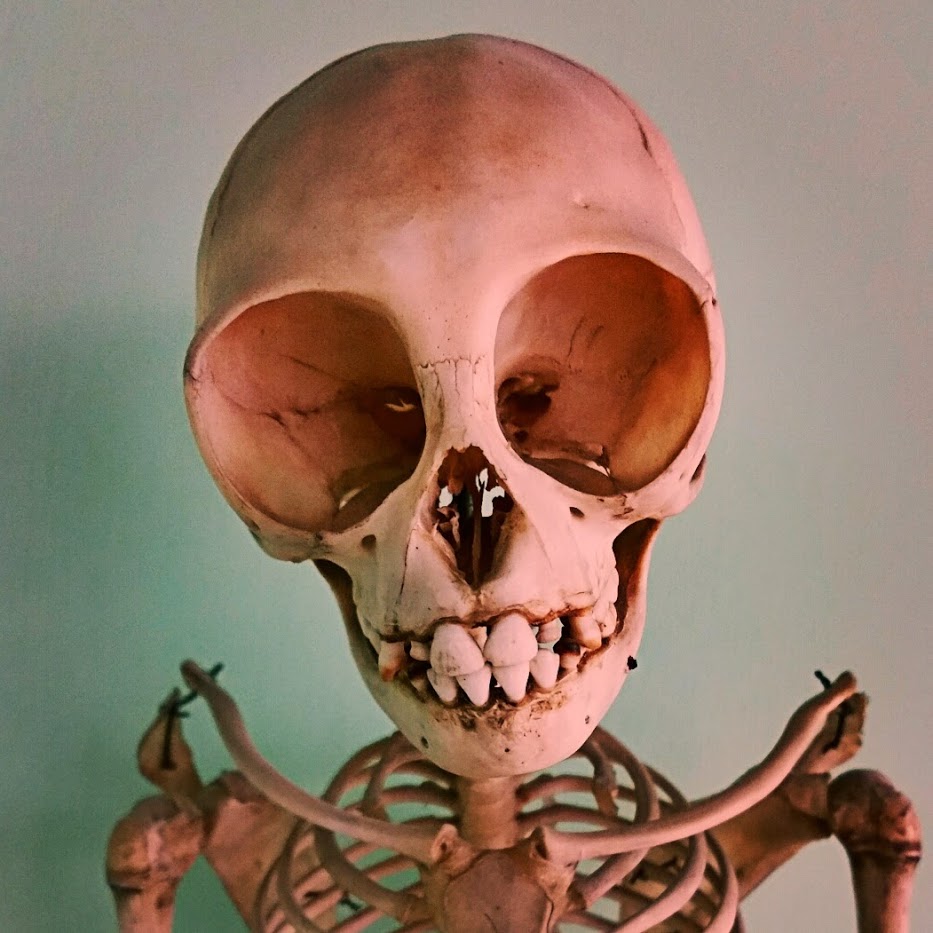
Gibbon skull from the Horniman Museum & Gardens

What would your career be in an alternate universe without museums?

There are plenty of things I could do, but I’m not sure I’d want to do any of them enough to really consider them a career!

What is your favourite museum, and why? (It can be anywhere in the world, and doesn’t have to be natural science-related!)

The Galerie d’anatomie comparée et de Paléontologie in Paris. The ground floor display is basically my idea of the perfect place!

The Galerie d’anatomie comparée et de Paléontologie, Paris

The Galerie d’anatomie comparée et de Paléontologie, Paris

Project Airless

‘Project Airless’ is a three year venture that began in August 2015 at the Natural History Museum (NHM) in London, with the objective of treating and preventing pyrite decay in the Museum’s historic earth sciences collections.

Pyrite Decay

Pyrite, or ‘fool’s gold’ (iron sulphide), is a common mineral of varying crystal structure (though cubic is common) that can often be found in or around fossils. It can occur in a compact, crystallized and stable form – or as a porous, microcrystalline and unstable form.

Pyrite oxidation, or ‘decay’, can occur when the mineral reacts with atmospheric oxygen in relative humidities (RH) above 60%. The resulting by-products of this oxidation depend on the mineral composition of the fossil and matrix, but often comprise sulphuric acid and hydrated ferrous sulphates, which can be very harmful to specimens, labels, and storage media. Once pyrite has begun to oxidise, mineral hydrates will form at as low as 30% RH. Signs that pyrite oxidation is occurring include expansion cracks, white or yellowish acicular crystal formations, and a sulphurous odour.

Distressing scenes for fossil enthusiasts: a drawer of fossils with pyrite decay

Distressing scenes for fossil enthusiasts

Method

Three conservation technicians have been surveying the collections and recording where pyrite decay is occurring amongst the NHM’s 7 million fossils and 500,000 mineralogical specimens.

Hunting high and low for signs of pyrite oxidation; conservators check drawers for suffering specimens

Hunting high and low for signs of pyrite oxidation

Affected specimens are temporarily removed from the collection, photographed, and a condition report created for the specimen on the Museum’s collections database. Following this, any remedial treatments are undertaken as necessary (ammonia gas treatment, for example). The fossil is then placed in an acid-free tray within a Plastazote inlay for protection. To prevent further oxidation, the specimens are heat-sealed in a NeoEscal barrier film bag with oxygen scavenging sachets, forming an anoxic microenvironment. Once sealed, the technicians complete a process report and return the fossil to the collections. This work is being undertaken in advance of the development of a new Earth and Planetary Science building, which will have a more efficiently controlled environment.

Specimens re-housed in an anoxic microenvironment, sealed in a bag

Specimens re-housed in an anoxic microenvironment

Treatments

Once a specimen has been assessed for pyrite decay, there are some remedial treatments the conservation technicians can undertake, depending on the severity. The first of these is the removal of any white/yellowish crystals by dry brushing, followed by consolidating any cracks in both the fossil and the matrix with Paraloid B72 in Acetone.

If a figured or type specimen is exhibiting signs of severe pyrite oxidation, a cast can be made in order to preserve morphological detail before it deteriorates further. However, moulding and casting carry risks for fragile specimens.

Ammonia gas treatment is a method that successfully neutralizes sulphuric acid produced by pyrite oxidation, and involves exposing specimens to the vapour emitted by a mixture of ammonium hydroxide and PEG 400 (polyethylene glycol) within an enclosed polyethylene or glass container. The vapours from the ammonium hydroxide react with the decay products, turning the affected areas a brick-red colour.

Team Airless to the rescue!

Team Airless to the rescue!

The Future

According to current estimates, 14,000 specimens at the Museum are in urgent need of this protective measure. As the project progresses, the team hopes that they will be able to share knowledge and expertise with other museums and institutions that may be facing the same problems as the NHM. Images generated for each specimen during the project should vastly improve the Museum’s collection database – and may even limit the need to open the bags. While ensuring that these valuable specimens remain intact, and of use for years to come, the project is also increasing digital access and reducing unnecessary handling by using a web based application to associate images with each specimen’s unique barcode.

Kieran Miles, Matthew Porter, and Amy Trafford

NHM, London

NatSCA Digital Digest


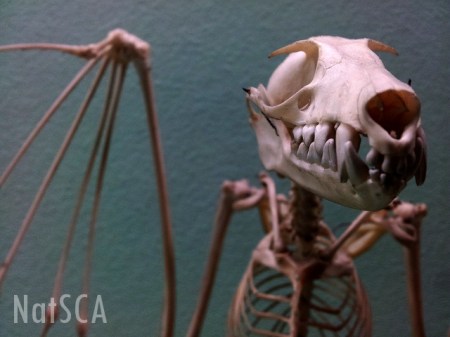
A mounted skeleton of a fruitbat leers at the camera

Welcome to the March edition of the Digital Digest! Without further ado…

News

Booking is open for the 2016 NatSCA Conference and AGM, ‘The Nature of Collections – How museums inspire our connection to the natural world‘, which will be held at the Derby Museum & Art Gallery and The Silk Mill on 21 – 22 April.

We have invited papers and posters looking at how museums have inspired and shaped the relationship of visitors and users of the collections to the natural world:

  • Projects between wildlife/environmental organisations/parks and museums.
  • The training & developing of naturalist skills using collections.
  • Artists projects connecting collections/gallery to outside spaces.
  • Looking at the relationship between natural history societies, their collections & museums.
  • Exhibition examples linking preserved specimens and our environment.

The Early Bird deadline is TODAY (Thursday 10 March), so get booking and save money!

If you’re not yet a NatSCA member, now is a great time to join – you can purchase membership and get the member’s conference rate for the same cost as a non-member ticket! See our membership page to join.

If you are a member, email the NatSCA Membership Secretary (membership@natsca.org) for your booking discount code.

Jobs

Geologist, Scarborough Museums Trust. A great opportunity for any rock and fossil enthusiasts! Application deadline: Friday 8 April.

Research and Data Coordinator in Science Policy (CITES), Kew. One of a selection of interesting posts currently on offer at Kew, the application deadline for this post is Wednesday 16 March.

Around the Web

A taxidermy warehouse in London was broken into on Tuesday this week, and 18 specimens were stolen. The Met police are appealing for information: http://news.met.police.uk/news/help-needed-to-trace-stolen-stuffed-animals-154850

DNA from museum specimens confirms a new species of forest thrush.

Why was the pink-headed duck’s head pink? Museum specimens reveal the secrets of this extinct species.