NatSCA 2016: Inspiring Connections to the Natural World

Why NatSCA?

Joining NatSCA, for me, means being part of a group that makes me feel at home. By that I mean, being with others who view nature (living or dead) from a different perspective, and will look at something with a keen interest regardless of its condition – decomposing, or completely expired (like the barn resident below).
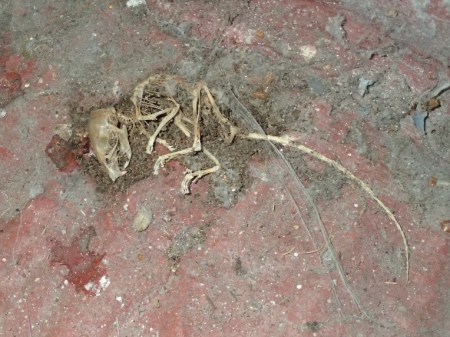
Skeleton from a barn (2016). Image: Sarah Scarlet-Farr

Skeleton from a barn (2016). Image: Sarah Scarlet-Farr

Membership of NatSCA also means being part of a support network, closing gaps we feel are limiting in terms of knowledge and skills. No one person can be an expert in everything, and sharing our experience with fellow colleagues helps us to look after and protect the collections we manage for future generations.

Why the NatSCA 2016 Conference?

This year’s conference was my first. The subject ‘How museums inspire our connection to the natural world’ was one everyone could relate to at any age or stage in life. It presented the opportunity to connect with like-minded colleagues sharing their experiences in live presentations, poster contributions, and from trade stands.
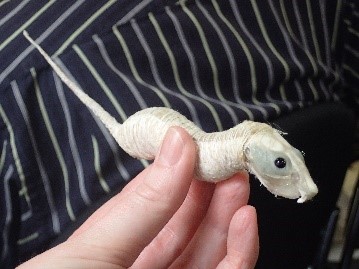
Taxidermy insides: rat form by Jazmine Miles-Long. Image: Sarah Scarlet-Farr
Taxidermy insides: rat form by Jazmine Miles-Long. Image: Sarah Scarlet-Farr

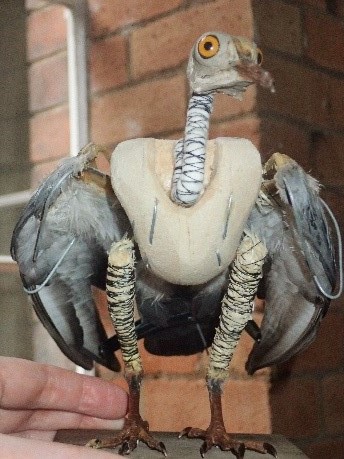
Taxidermy in progress: half-finished pigeon by Jazmine Miles-Long. Image: Sarah Scarlet-Farr

Taxidermy in progress: half-finished pigeon by Jazmine Miles-Long. Image: Sarah Scarlet-Farr

Selected Conference Highlights (for me):

Jennifer Gallichan and Annette Townsend’s ‘Museum in a House: Collections out of context’ contributed an inspirational presentation demonstrating the benefits of enabling practitioners to offer fun, creative and uniquely energising engagements with the public by utilising community support and unique venues.

Tom Hartman’s presentation on ‘Engaging with objects and images: using zoology specimens for outreach and education’ emphasised that having the freedom and opportunity to use collections without restriction, or organisational expectation, can support the development of ideas that better inspire and engage its users.

Sarah Wade’s presentation, ‘The Art of Craftivism in Museums’ demonstrated that problems such as pollution, poaching and extinction can be presented in an approachable and inspired way in tandem with showcasing beautiful ethical artwork (who would believe a Sainsbury’s plastic bag could be so stunning?).

Jazmine Miles-Long’s presentation, ‘How taxidermy can inspire us to view collections in a different light’ reminds us all that, whatever material we have in our collection, we should be fearless in our use of it and derive inspiration by connecting with it in many different ways. I was certainly engaged by the materials demonstrated for taxidermy mounts.

Chris Orgil, Adam S. Smith and Sheila Wrights’s poster, ‘Engaging the Public with Taxidermy Restoration at Wollaton Hall’ provided an illustrative snapshot of how sharing the processes involved in the restoration and colour correction of specimens can provide new forms of public engagements, and so inspire exhibitions and inventive collections’ learning spaces.

Creativity

A creative approach can help present controversial or sensitive topics with impact, yet greater subtlety. It can be used to deconstruct perceptions and create interpretive dialogues about nature between communities, and strengthen peoples’ connections with nature – in ways that suit them and meet their needs. Making room for a connection sometimes means moving out of a comfort zone, but If we retain curiosity we open our minds and so can inspire others.

Free-styling

What I appreciated most was that to inspire connections to nature means we must not control the experience of our visitors. Connecting to nature is not simply about transferring facts and figures.

We should aim to be less prescriptive about the limits of our offers to audiences to enable more artistic, inventive and playful engagements to take place.

As custodians of collections, we need to respond to our public. This means being open to alternative ideas, new ways of thinking, and exploring engagements utilising all our senses.


I am very grateful to NatSCA for supporting my attendance at this year’s conference.

Sarah Scarlet-Farr

University of St. Andrews

NatSCA Digital Digest

ndd-b-rex

May the force of nature be with you! Welcome to another Digital Digest, everybody. It seems people really took home the message of last year’s conference and so the social media enthusiasm for this year’s NatSCA conference was immense – thank you to everybody who tweeted, shared, pinned, and otherwise spread the message of Noticing Nature.

#NatSCA2016

The conference also fell on a designated digest day, so rather than halve our resources to deliver a digest to an already overwhelmed readership, we thought we’d bring you a bumper installment this month instead. Vicky Purewal has recently touched upon the topic of our conference. Write-ups from our bursary recipients will be posted here, and talk write-ups will be published in Notes & Comments and in the next issue of the Journal of Natural Science Collections, due out at the end of this year.

Next year’s NatSCA conference will be held in Cambridge, so start planning your accommodation now, folks! You don’t want to miss this one.

News

Next, I’d like to congratulate both of my fellow NatSCA bloggers on their recent news:

Rachel Jennings, congratulations on joining the committee as our newest Editor. Rachel will be taking on the task of crafting our yearly journal into a thing of beauty. You’ve all seen what she’s done with our Facebook page and this blog, so I’m sure you’ll all agree that she’ll do a terrific job of this too.

Emma-Louise Nicholls, congratulations on becoming the Deputy Keeper at the Horniman Museum. Those of you who have been around a while will know that the former occupant of this position was our very own Paolo Viscardi.

Gina Allnatt has just started at Doncaster Museum this week as their new Natural History Curatorial Assistant, and we’re all really looking forward to learning more about this charming museum.

Events

NatSCA will be holding a seminar on Natural Science Collections and the Law on 15th June 2016 at the University of Bristol. Booking is open now! See here for details: http://natsca.org/event/2256.

Next month on the 1st of June, PubSci will be hearing from guest speaker Katrina Van Grouw on the marriage between art and the life sciences. Katrina is author of the Unfeathered Bird and has an exciting new book in the pipeline. She may even show us some sneak previews if we’re lucky. Do come along if you can, it’s going to be great.

And Finally

Finally, a belated happy 90th birthday to David Attenborough, who first graced our screens in 1952 and is still going to this day! I’m sure I speak for us all when I say that his natural history documentaries have been an inspiration and a delight.

The John Ellerman Foundation Skills Sharing Initiative

swanslogo

I am currently coordinator of a rather ambitious project developed by Bristol Museum and Art Gallery and the South West Museum Development Programme. The project has been renamed ‘South West Area of Natural Science Collections Project‘ (SWANS), and it aims to identify where knowledge and skill gaps lie across the South West sector via a survey, and then develop training events to help address any losses.

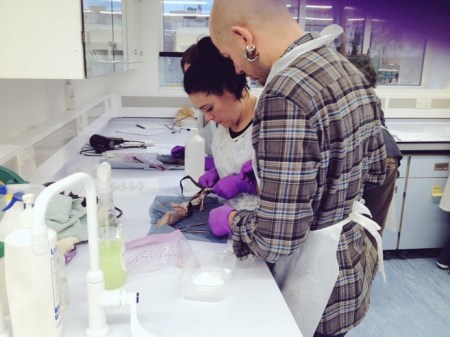
Three intense training courses are being developed for the partner organisations, and these include carcass preparation, fossil preparation, documentation and digitisation of natural science collections. The carcass prep has already been undertaken, and was hugely educational to the attendees.

Rhian Rowson and Matt Williams sharing skills at Carcass Prep training

Rhian Rowson and Matt Williams sharing skills at Carcass Prep training

We have just delivered the first of two introductory seminars on working with natural science collections, and a further four specialised workshops will be developed to target the sector’s needs. Preventative conservation has been highlighted as of particular relevance to the mixed group of collection managers. Four NatSCA committee members are partners of this project, so we can keep you up to date with developments. Follow us on Twitter @SWANS_JEF, and we also have a dedicated webpage for the project: http://www.southwestmuseums.org.uk/projects-grants/john-ellerman-foundation-project/

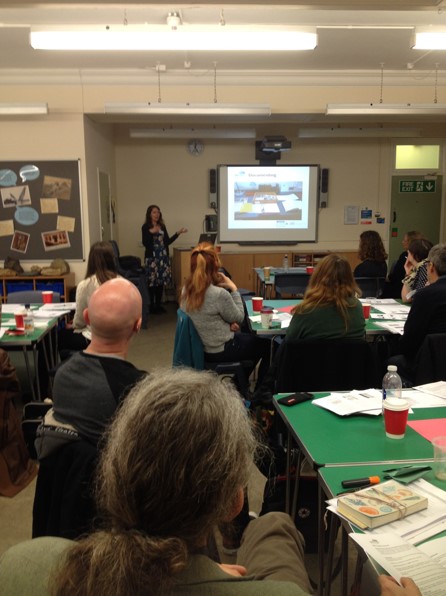
Deb Hutchinson delivering a lecture on documentation at Bristol Museum (© Bristol Culture BMAG)

Deb Hutchinson delivering a lecture on documentation at Bristol Museum (© Bristol Culture BMAG)

I have just touched on a couple of the developments we are working on. There is much more to come!

Victoria Purewal
Senior Curator of Natural Science, Bristol Museum and Art Gallery
NatSCA Conservation Representative


bristolbanner

Natural Science and the Law Seminar

colour-logosmall2.jpgswanslogo


A joint meeting between the South West Area of Natural Science Collections (SWANS) and NatSCA on ‘Natural Science and the Law‘ has been organised for June 15th at Bristol University. Save the date, as it looks to be a very interesting and relevant seminar on law and legislation.

There will be speakers covering asbestos in geology collections, radioactive specimens, and the Nagoya protocol, which is something that we need to be aware of, as well as CITES and the laws regarding collecting and movement of dead animals.

This event is now available to book on Eventbrite. See here for details: https://www.eventbrite.co.uk/e/natural-science-collections-and-the-law-seminar-tickets-24822253027

The Nature of Collections

The Nature of Collections: How Museums Inspire Our Connection to the Natural World

This was the theme for the NatSCA conference, held this week at the Silk Mill and Derby Museum and Art Gallery (21 – 22 April 2016), and the timing could not have been better, as I have been organising a ‘Spring Flower Power’ event at Bristol Museum and Art Gallery (BMAG). With support from the staff and Bristol Naturalists Society we had a really great day, teaching the public about what is in flower at this time of year. I was also able to network with a group and a region I am wholly unfamiliar with, having worked and lived in Cardiff for many years.

The Flower Identification table at Bristol Museum (© Bristol Culture BMAG)

The Flower Identification table at Bristol Museum (© Bristol Culture BMAG)

Flowers have not been in the main hall for many years now, and they really had an impact on the staff and public. Bringing the outdoors in can be inspiring, and it is something museums have been doing for decades. I was sent the picture below by the Bristol Naturalists Society (BNS). It shows Ivor Evans, a keen and well established botanist, admiring the table he helped set up with Ida Roper back in pre-war Bristol, still going strong in the 1960s.

Ivor Evans at Bristol Musuem during the 1960s with the Flower table he helped develop (© Bristol Naturalist Society)

Ivor Evans at Bristol Musuem during the 1960s with the Flower table he helped develop (© Bristol Naturalist Society)

Victoria Purewal
Senior Curator of Natural Sciences, Bristol Museum and Art Gallery
NatSCA Conservation Representative