National Gorilla Day! (or Racist Skeletons in our Closets)

Happy National Gorilla Day!

We don’t usually cover “national *insert_animal* day” specially on this blog, but this year we’re particularly excited about gorillas because a book was recently published that contains a comprehensive list of all the gorillas held in natural science collections worldwide.

Screenshot 2017-05-26 at 12.31.47 - Edited

This impressive resource has been compiled by John Cooper and Gordon Hull over the course of many years and not only are specimens listed, their collection and/or acquisition data are also reported. Cooper and Hull have also offered suggestions for use of specimens in collections as well as guidance on the different types of preservation available and how they can be achieved. This only forms part of the book, with the first section more concerned with the health and conservation of these impressive animals. Continue reading

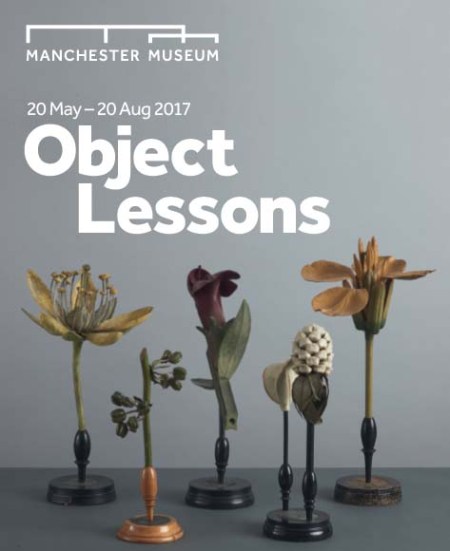
Object Lessons; Manchester Museum

Most curators have those niggling objects at the back of their stores. Models and illustrations previously used for teaching or display in the dim and distant past, but kept for a rainy day. Not quite real objects and not the kind of thing you would necessarily want to accession.

Well, we’ve embraced these wonderful objects in our new exhibition: Object Lessons.

Brendel Models, George Loudon Collection

Brendel Models, George Loudon Collection

Object Lessons celebrates the scientific model and illustration collection of George Loudon. Each of these finely crafted objects was created for the purpose of understanding the natural world through education, demonstration and display.

The object-rich exhibition will look at this incredible collection through themes such as Craftsmanship, the Teaching Museum and the Microscopic. Continue reading

To Dress a Wolf

I like a nice little link to a place I am visiting. And there is a wonderful (if not a little tenuous) link between where I work in Plymouth and Cambridge. Charles Darwin studied theology at University of Cambridge in the old oak clad lecture theatres. And it was through the connections he made at Cambridge that set him on board the HMS Beagle, on a journey that would change the world of scientific thinking forever. The HMS Beagle, with Darwin and all the crew, set sail from in Plymouth after a three month delay. It’s a neat little link.

With such a strong historic links to science, there was perhaps no better place suited to hold the NatSCA  conference 2017. Even the theme title linked in, with a little nod to Darwin (those clever committee members): Evolving ideas: provocative new ways of working with collections.

Continue reading

NatSCA Digital Digest – May

nddLogo2017-05-04

What a month we’ve had! The Conference at Cambridge on the 20th to 21st April was a roaring success. Over 100 museum delegates gathered together beneath the mantle of a Finback whale skeleton, to swap notes and revive old connections. Many heated exchanges were had over issues ranging from fungi to frocked wolves. No museum-based conference is complete without a tour of the stores – big thanks once again to the Zoology Museum for having us. We got a sneak-preview of the new gallery space too and, while I can’t post pictures of that, I can tell you that you have to go and see it when they open. Highlights for me included an elephant from Sri Lanka with links to Stanley Kubrik, and a Diorama of a beach with added surprises for future conservators. Continue reading

Not Just Old Birds in Cases

This article is reposted from the Stories from the Museum Floor blog by the Visitor Team at Manchester Museum

Not Just old Birds in Cases – The Value of Natural History Collections

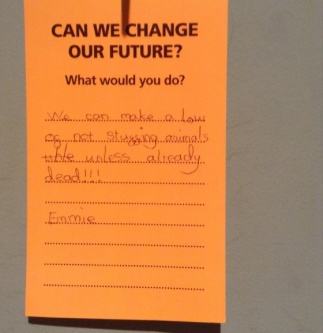
The most recent exhibition ‘Extinction or Survival?’ at Manchester Museum has brought many interesting ideas and suggestions from a wide group of visitors about how we can change our future. Several comments have mentioned animals kept in museums and collections, for example, “Stop killing animals to put in a museum” or “help all the animals by collecting DNA … and … not get stuffed like … in museums”. These comments have inspired me to write about the importance of natural history collections, especially the value of bird collections.

deana 2Comment card left at the ‘Extinction or Survival?’ exhibition at Manchester Museum, 2017.

Whether collecting birds for science is still necessary remains a hotly debated topic. However, the value of scientific collections cannot be questioned. Research or reference collections are still making crucial contributions in documenting biodiversity in time and space, and understanding species’ ecology and evolution, vital for conservation strategies. Furthermore, collections and museum have an important role in preserving and caring for past and present natural heritage and providing educational opportunities. Continue reading