New loose taxidermy storage at Canterbury Museums

The following is a review by Philip Hadland, of a storage project undertaken by the Canterbury Museums:

Introduction

Much of Canterbury Museums taxidermy collection is loose taxidermy and is stored in shelved cupboards without any additional physical protection from handling, movement, or insect pest damage. A pilot project was carried out in 2013/14 to develop a new storage system for this section of the taxidermy collection to improve its care and management.


Aims of the Project

  1. Improve storage conditions and long term care
  2. Improve the management of the collection
  3. Free up storage space


Evaluation of Potential Storage Methods

To get a feel for what might work in practice I sent an email to the NATSCA Mailing List asking for ideas on what works well and what works not so well. Based on the plentiful feedback I received, I evaluated the advantages and disadvantages of the methods suggested.

From this initial research it is clear that there is no single method that can satisfy the needs of the great variety of sizes and shapes of taxidermy that exist in museum collections. Some methods are of course better than others in satisfying similar aims but cost is also an issue.

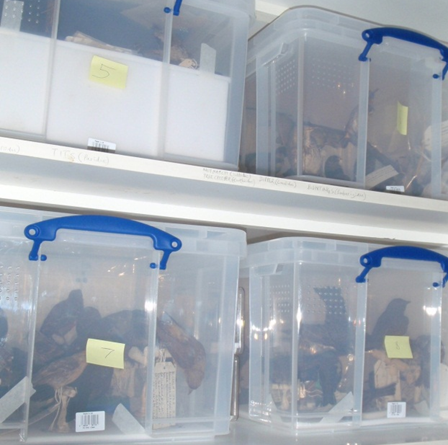
It was decided that a method based on Really Useful boxes was the best solution. The main reasons were the amount of time needed to prepare each box was minimal, there were very good offers available to acquire the boxes cheaply at the time and the sizes available matched up very well to the storage cupboards.


Method
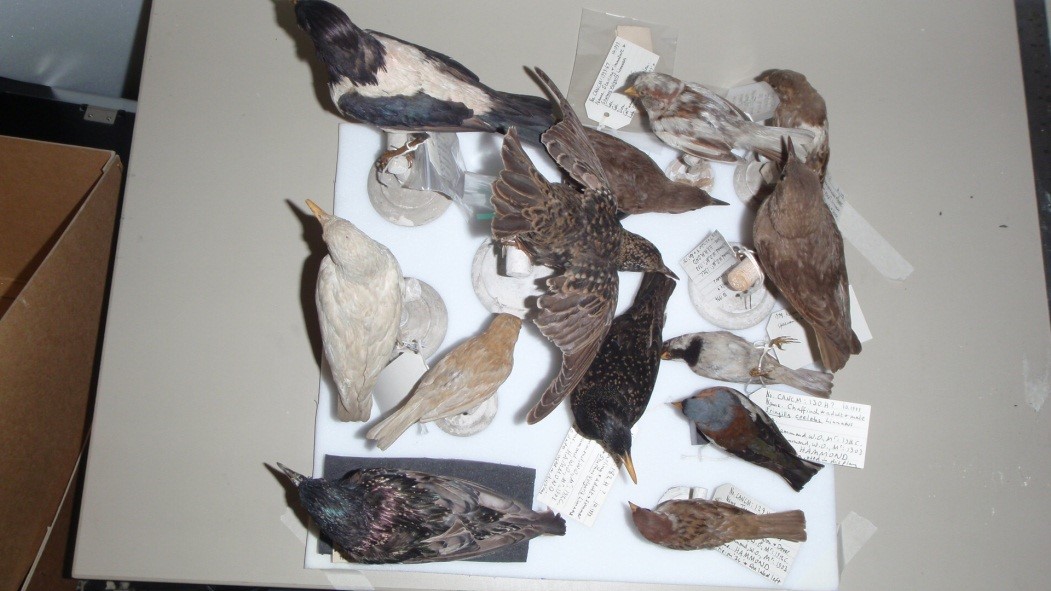
2014-06-03_birds

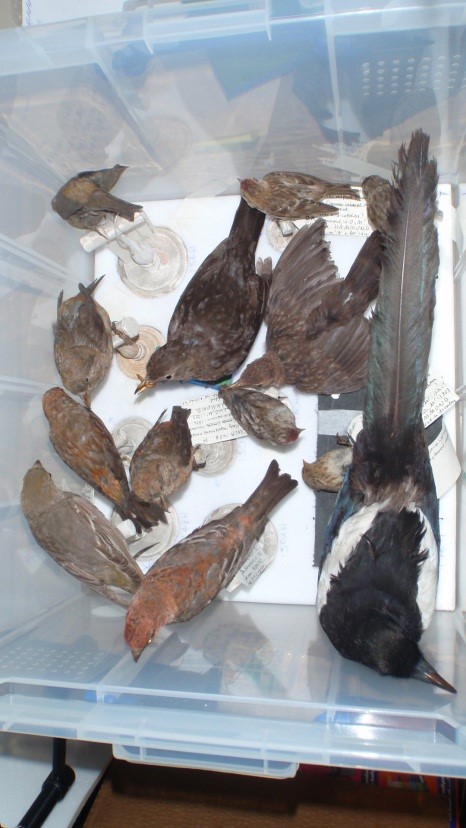
Plastazote was first cut to fit the boxes. Then the bases of specimens were drawn around in pen with the specimen number written alongside and orientation to enable easy identification of what goes where. A list was also kept of the contents of each box.
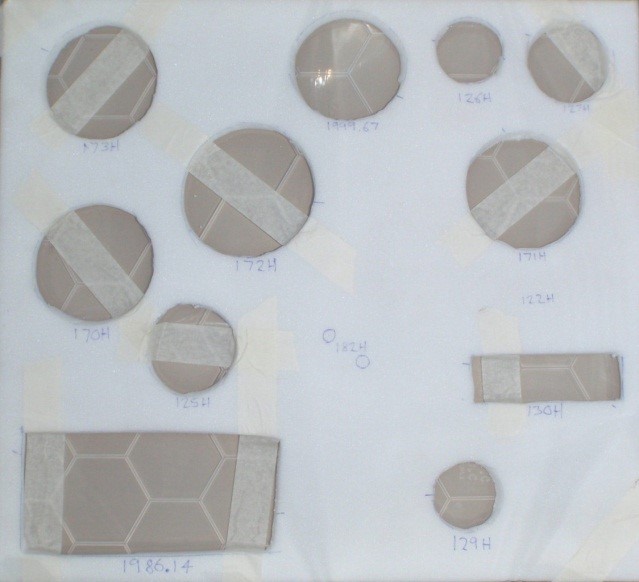
2014-06-03_cut-foam

The foam was cut using a Stanley knife and affixed to the bottom of the box using masking tape.
The birds were then carefully slotted into place and the boxes were labelled and the location documentation was updated.

Before
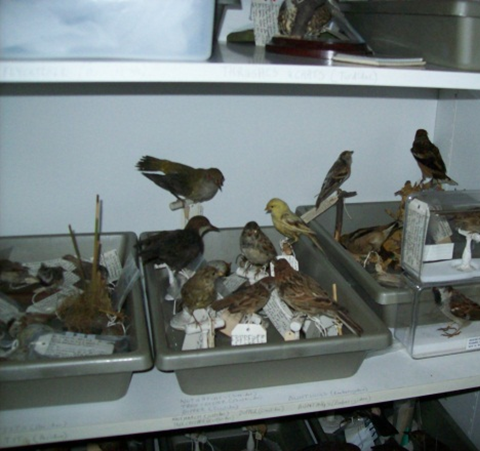
2014-06-03_before

After

2014-06-03_after1

2014-06-03_after2

Resource breakdown and cost

Really useful boxes x 10 £110
Approximate cost of Plastazote used £20
Fixings and adhesives £1
Mothballs £4
Total material cost £135
Curatorial time (including planning) £300
Volunteer time (for photography and documentation 10 hours
Total cost £435


Summary

127 items of taxidermy have been rehoused and are well supported in robust, waterproof and conservation standard materials that are easily moved without the birds toppling and they are transportable. This will limit damage to the collections through preventing unnecessary handling, toppling, and pest attack – increasing their long term care. Each specimen now has a specific box location linked to the database so that it can be found easily when required.


I’d like to thank my colleagues and the NatSCA community for their help with this project.

Collecting biological specimens essential to science and conservation

A letter signed by more than 100 biologists and biodiversity researchers,  published online in Science today (Science 23 May 2014: Vol. 344 no. 6186 pp. 814-815 DOI:10.1126/science.344.6186.814), states why collecting plant and animal specimens is essential for scientific studies and conservation and does not, as some critics of the practice have suggested, play a significant role in species extinctions.

Beetle collection. Image by Paolo Viscardi

The letter is a response to an April 18 Perspectives article in Science arguing that alternative methods of documentation—such as high-resolution photography, audio recordings and nonlethal tissue sampling for DNA analysis—make the field collection of animal and plant specimens unnecessary. As most natural sciences collections professionals are fully aware, this is simply not the case.

“None of the suggested alternatives to collecting specimens can be used to reliably identify or describe animals and plants,” said Cody Thompson, mammal collections manager and assistant research scientist at the U-M Museum of Zoology.

“Moreover, identification often is not the most important reason to collect specimens. Studies that look at the evolution of animal and plant forms through time are impossible without whole specimens. Preserved specimens also provide verifiable data points for monitoring long-term changes in species health and distribution.”

In addition, specimens from museum collections and their associated data are essential for making informed decisions about species management and conservation now and in the future, the authors state.

“Photographs and audio recordings can’t tell you anything about such things as a species’ diet, how and where it breeds, how quickly it grows, or its lifespan—information that’s critical to assessing extinction risk,” said Luiz Rocha of the California Academy of Sciences, who organized the response to the Science article.

And contrary to statements made in the April 18 Science article titled “Avoiding (Re)extinction,” collecting biological specimens does not play a significant role in species extinctions, according to the rebuttal authors.

In the April article, Arizona State University’s Ben Minteer and three co-authors cite several examples of species extinctions and suggest that the events were linked to overzealous museum collectors.

Not so, according to authors of the rebuttal letter, who reviewed the evidence and found that none of the cited extinctions—including the disappearance of flightless great auks in Iceland and Mexican elf owls on Socorro Island, Mexico—can be attributed to scientific collecting.

Millions of great auks were harvested for food, oil and feathers over the millennia, and only about 102 exist in scientific collections. Mexican elf owls were common when specimens were collected between 1896 and 1932, and the most likely reasons for extinction around 1970 were habitat degradation and predation by invasive species.

At the same time, Minteer and his colleagues failed to point out any of the valuable services that museum biological collections have provided over the decades, according to the rebuttal authors.

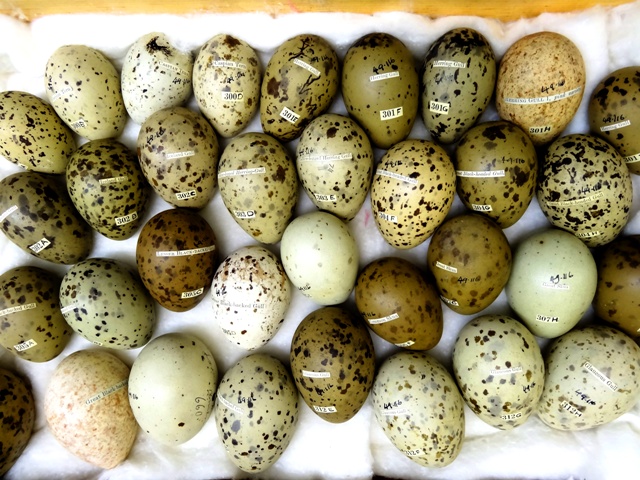
Both historical and new collections played a key role in understanding the spread of the chytrid fungus infection, one of the greatest current global threats to amphibians. The decision to ban DDT and other environmental pollutants was based on the discovery of thinning bird eggshells collected over an extended period. And the declining body size of animals, one of the negative effects of climate change, was discovered using body-size data from museum specimens.

Egg collections like this helped identify the harm done by DDT. Image by Paolo Viscardi

In other cases, genetic data from decades-old scientific specimens has even been used to “de-extinct” species. One of these, the Vegas Valley leopard frog, was thought to have gone extinct in the wake of Las Vegas development. However, a study published in 2011 compared the genetics of specimens from the extinct population to individuals from surviving populations of similar-looking frogs elsewhere in the Southwest and found them to be the same species.

These types of discoveries are “the hallmark of biological collections: They are often used in ways that the original collector never imagined.” And with the continuing emergence of new technologies, this potential only grows.

That potential, combined with the increasing number of threats species face and the need to understand them, suggests that the need to collect specimens—and to share the information they hold—has never been greater.

In their April article, Minteer and his colleagues erroneously portray scientific collecting in a negative light that distracts from the primary causes of modern extinctions: habitat degradation and loss, unsustainable harvesting and invasive species.

“Halting collection of animal and plant specimens by scientists would be detrimental not only to our understanding of Earth’s diverse biota and its biological processes, but also for conservation and management efforts,” said Diarmaid O’Foighil, director of the U-M Museum of Zoology and a co-author of the rebuttal letter.

“That detriment in understanding would only increase with time because having museum specimens available for future generations of scientists will allow their study using research methodologies that have yet to be invented.”

A pre-publication pdf version of the letter can be read here.


Is it ever acceptable for museums to lie?

Reblogged from the UCL Museums and Collections Blog

Is it ever acceptable for museums to lie?

By Jack Ashby, Grant Museum of Zoology

I ask this question to our Museum Studies Masters students every year, and last month put it to our new Bachelor of Arts and Sciences students. Despite the difference in the age, background and interests of these two groups, the reaction is the same – anger and horror. I am playing devil’s advocate in these debates, but my own opinion is yes, there are circumstances when everyone benefits from museums lying.

The lectures I discuss this in focus on object interpretation, and I use a tiger skull as a prop for discussing how to decide what information to include in labels. The choice of a tiger isn’t important – I just need something to use as an example I can attached real facts about natural history and conservation to, but I spend the two hours talking about tigers.

Lion (left) and tiger (right) skulls. Or is it the other way round? LDUCZ-Z1644 and LDUCZ-Z396

Lion (left) and tiger (right) skulls. Or is it the other way round? LDUCZ-Z1644 and LDUCZ-Z396

At the end of the lecture I reveal that the skull is in fact from a lion. Everything else I told them about tigers is true. Did it matter that I lied?

Continue reading

NatSCA Digital Digest

Welcome to the weekly digest of posts from around the web with relevance to natural science collections. We hope you find this useful and if you have any articles that you feel would be of interest, please contact us at blog@natsca.org

1. Blog: NatureBase: Observe, Conserve, Protect

Sam Misan

Synopsis

One of the wonderful things about working in museums is the opportunity to inspire young minds. Cliche? Yes, maybe. But that doesn’t make it not true! The Grant Museum recently had a young visitor who told them about his like for blogging about museums that he visits, as well as his own collection of natural history objects. It is great to see how we are viewed by the upcoming generations of natural sciencers, and thought you’d enjoy a perusal of his blog.

NatureBase

2. References: Subject Specialist Networks

Various

Synopsis

Subject specialist networks are an integral tool for sharing information between museum professionals (and others) and tapping into the wealth of knowledge that may otherwise not be written down. The following website gives a list of SSNs, including many that are relevant to natural sciences.

Subject Specialist Networks

Compiled by Emma-Louise Nicholls, NatSCA Blog Editor

NatSCA Digital Digest

Welcome to the weekly digest of posts from around the web with relevance to natural science collections. We hope you find this useful and if you have any articles that you feel would be of interest, please contact us at blog@natsca.org

1. Blog: Eton College, Natural History Museum

George Fussey, Curator, and colleagues

Synopsis

Rather than drawing your attention to a specific article on this blog, I am rather pointing out that this blog exists in case you hadn’t yet come across it. Having been to the Natural History Museum at Eton College myself, I can tell you that it is well worth the visit. I had the great pleasure of being shown around the Museum by Curator George Fussey, and there are certainly treasures to be seen there. I encourage you to have a look at this blog, it may be one of great interest to many people in our sector.

Eton College, Natural History Museum Blog

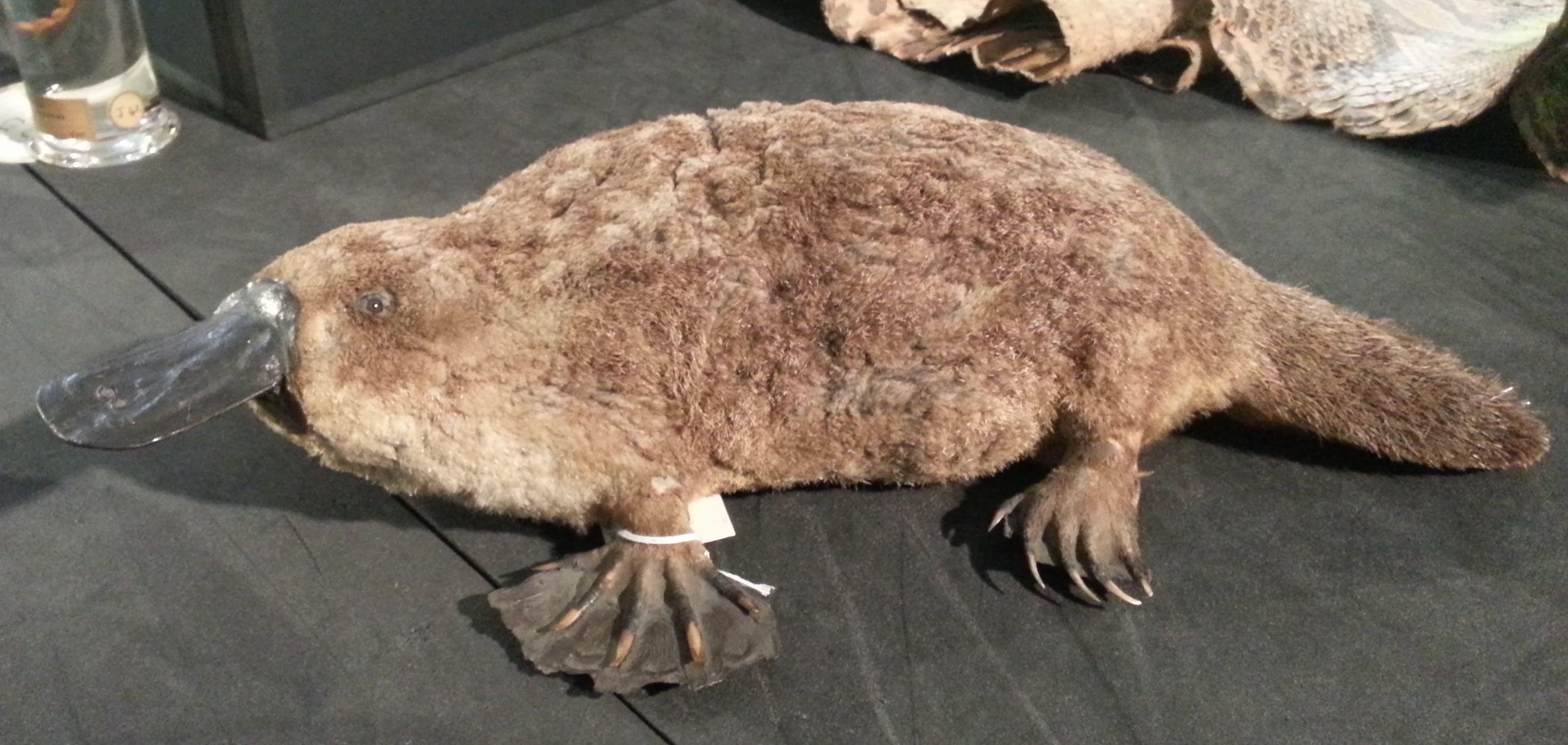
If you think our platy is a fatty, you should see the one at Eton! Specimen LDUCZ-Z20 (C) UCL / Grant Museum

If you think the Grant Museum’s platy is a fatty (above), you should see the one at Eton! Specimen LDUCZ-Z20 (C) UCL / Grant Museum

2. Conference: Radiation and Extinction: Investigating Clade Dynamics in Deep Time

The Linnean Society of London, 10-11th November 2014

Synopsis

To address the issues in the modern day caused by global warming, this conference aims to look at the past. It will focus on:

“Determining the causes and drivers of evolutionary dynamics is central to our understanding of life on Earth. What factors shaped the modern biota? Why did some groups go extinct, whilst others survived and radiated? Why are some groups so much more diverse than others? What will happen to organisms as the Earth continues to warm up?”

Radiation and Extinction: Investigating Clade Dynamics in Deep Time

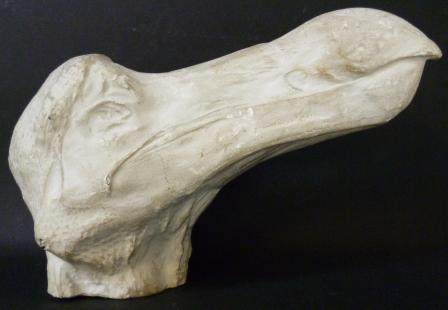
A representative of extinction- the dodo head cast. Specimen LDUCZ-Y86 (C) UCL / Grant Museum

A representative of extinction- the dodo head cast at the Grant Museum of Zoology. Specimen LDUCZ-Y86 (C) UCL / Grant Museum

3. Training: Documentation Training Course

Museum of London, Docklands, 25th April 2014

Synopsis

Museum volunteers are invited to attend this course run as part of the Regional Museums Development programme. The course is designed to look at how to deal with issues of documentation, as well as the theory behind collections management.

Contact kwebbgreen@museumoflondon.org.uk to book.

Compiled by Emma-Louise Nicholls, NatSCA Blog Editor