Caring for your Bones – No Calcium or Exercise Required!

In our modern, health-conscious society, just about everyone knows that properly caring for one’s own bones involves adequate ingestion of certain nutrients (calcium, vitamin D, vitamin K) and maintaining bone mineral density through exercise – or so the common wisdom goes, anyway. What about caring for someone else’s bones, however? When that “someone else” turns out to be vertebrate animals whose bones have wound up in a museum collection, the answer involves neither mineral supplements nor resistance training exercises, although saliva might come into the picture (more about this below)!

I learned all about the basics of curating an osteological collection at the NatSCA event entitled ‘Bone Collections: Using, Conserving and Understanding Osteology in Museums’, held at the University Museum of Zoology in Cambridge on September 8, 2015. The day involved a workshop focused on cleaning bone specimens, talks touching on osteology from both biological and museological perspectives, and a series of posters presenting various case studies concerning the treatment of skeletal material (ranging in nature from modern to sub-fossil and fossil) that required cleaning and repair.
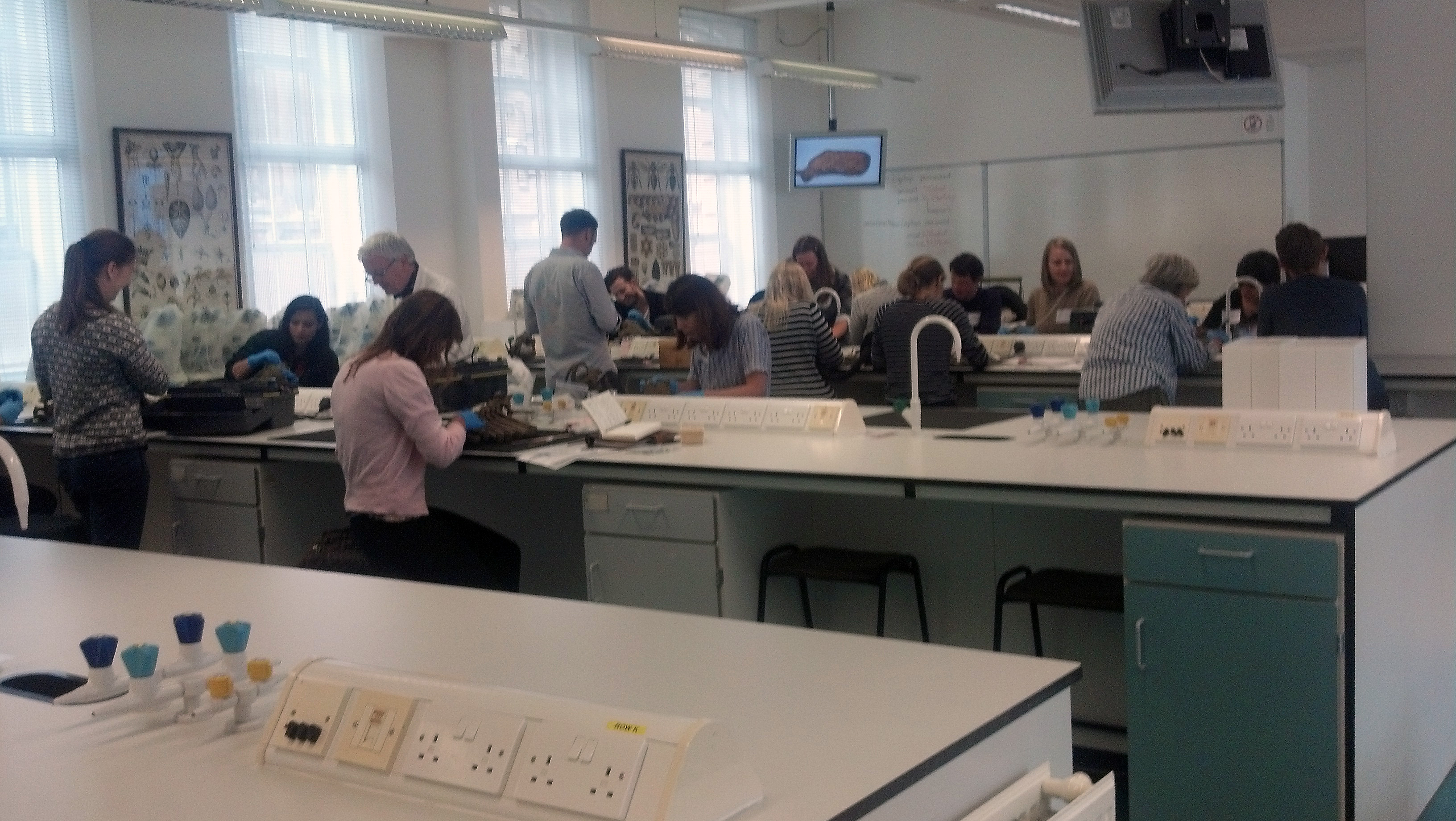
Workshop participants busily trying out various techniques for cleaning osteological specimens that had just been demonstrated on the monitors seen overhead.

Workshop participants busily trying out various techniques for cleaning osteological specimens

At the Canadian Museum of Nature (CMN), where I am employed as a research assistant and collections manager, we have an extensive osteological collection that was established through the collaboration of the museum’s vertebrate zoology staff and the researchers who operated the now defunct Zooarchaeology Identification Centre (ZIC). Use of our osteological comparative material has declined greatly since ZIC ceased to operate in 1996, and relatively few zooarchaeologists working in Canada are aware of our holdings, which is a shame as the osteology collection represents a great national resource that would benefit archaeological research in the country. I am setting out to change this situation.

Having a research background in zooarchaeology – something I have in common with Kathlyn Stewart, head of the CMN Palaeobiology Section – I would love to see the rebirth of an active zooarchaeology programme at the museum. Kathy and I are joining forces to foster growth of the osteology collection in several directions, including expanding the number of specimens to include taxa that are currently underrepresented, increasing knowledge of the collection as a comparative research tool in the archaeological community, and developing CMN-based zooarchaeological research projects.

The Bone Day in Cambridge was therefore the perfect opportunity for me to gain hands-on experience in the care and maintenance of osteological collections.  I spent many years working with osteological collections as a research aid, but I have had little experience in curating such collections. Supported in part through a generous NatSCA bursary, I was able to attend the workshop and conference, affording me the occasion to investigate several topics in greater depth with osteology experts and fellow museum workers. Most important for my goals was learning about techniques for the care of bone and the preparation of skeletal specimens from carcasses.
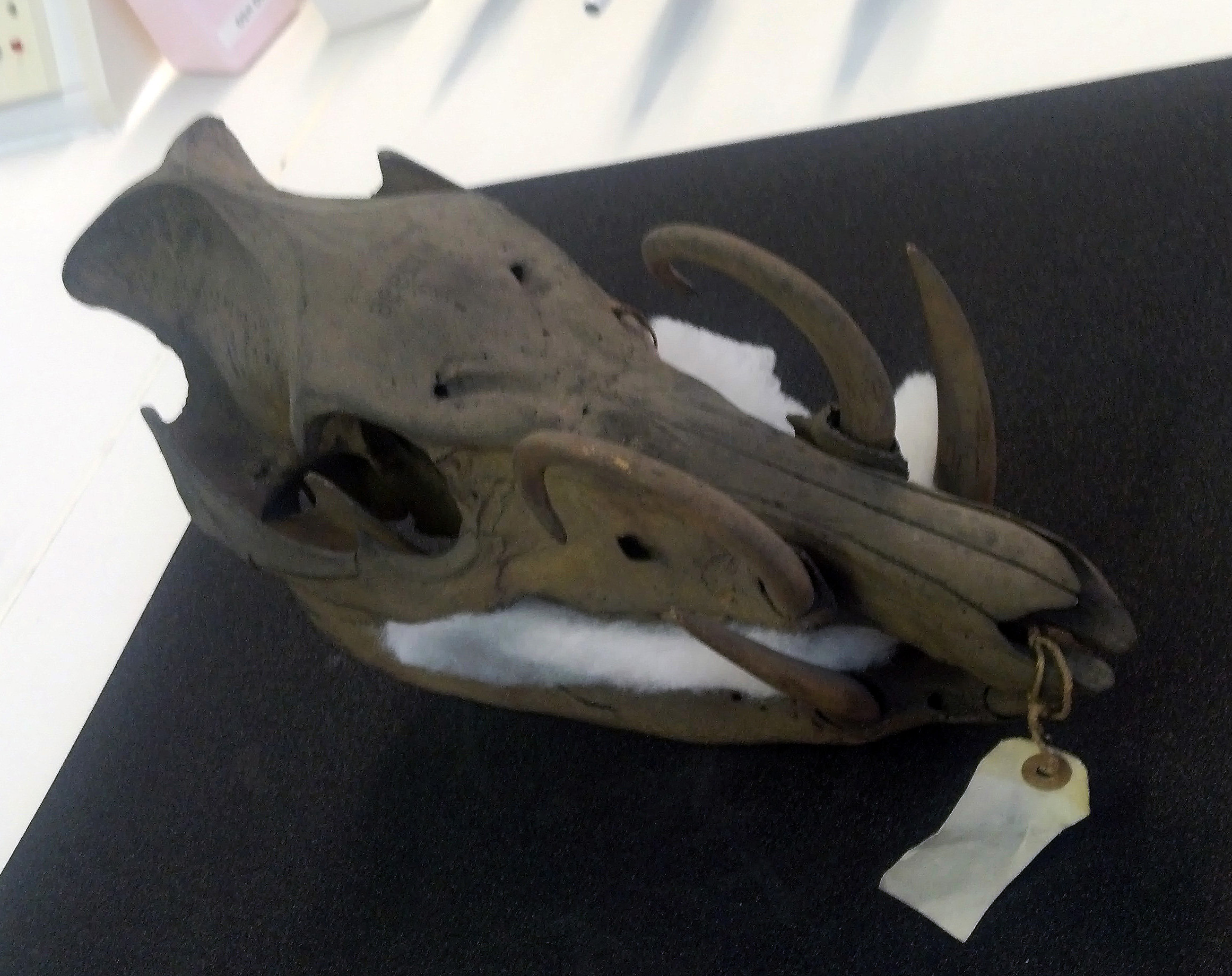
The skull of a babirusa, and Indonesian wild pig, used in the workshop to test cleaning methods.
The skull of a babirusa, and Indonesian wild pig, used in the workshop to test cleaning methods.

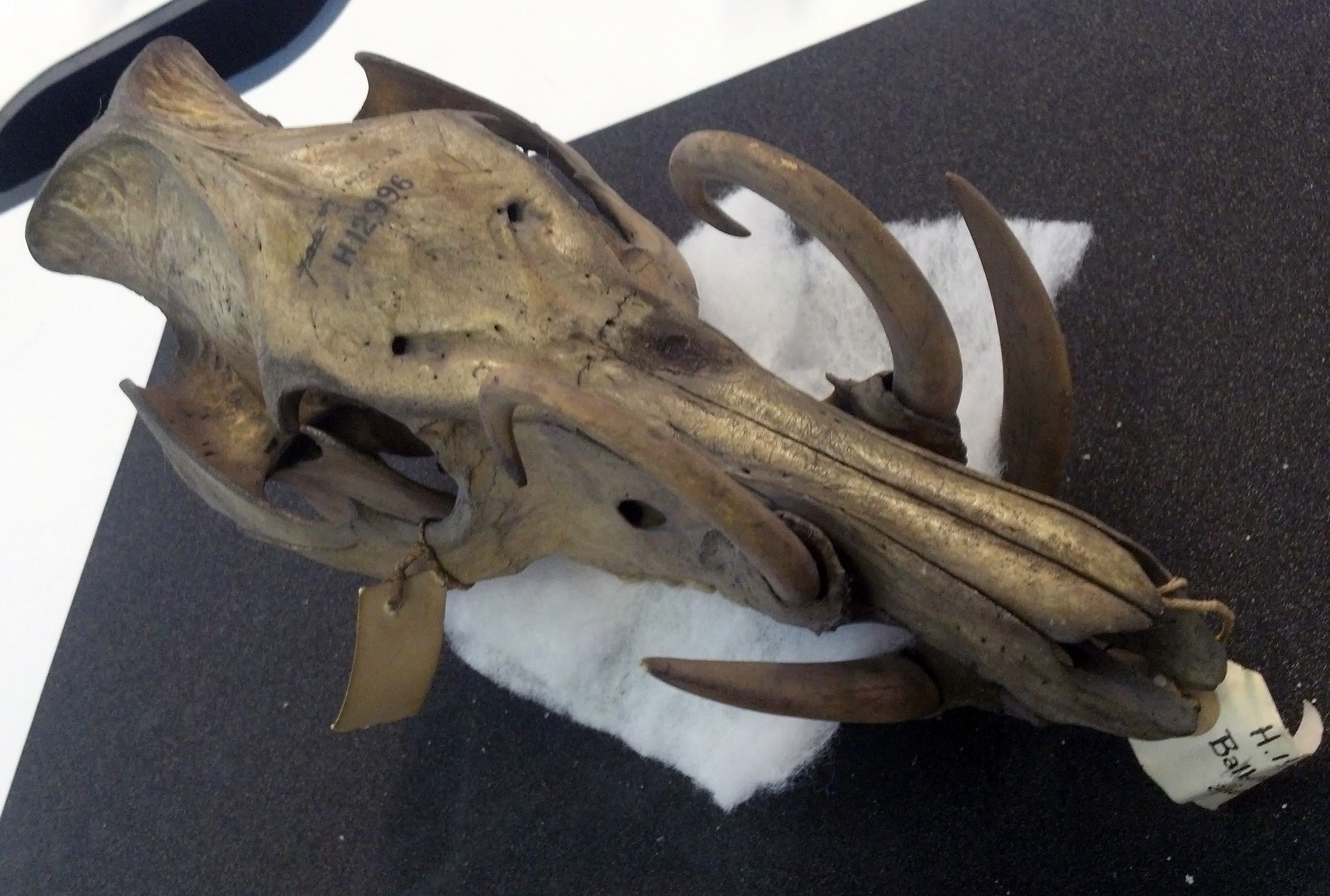
The babirusa skull after a cursory cleaning using brushes, smoke sponge, swabs dipped in Synperonic A7, and yes, even some spit.

The babirusa skull after a cursory cleaning using brushes, smoke sponge, swabs dipped in Synperonic A7, and yes, even some spit.

The day began for me with the morning bone cleaning workshop, where we were introduced to some of the safest and most effective ways of removing deposits that accumulate on the surface of bone specimens, ranging from dust and dirt to bone grease and adipocere (a waxy substance that develops from fats such as bone grease under certain conditions). Gentle brushing and vacuuming, combined with the use of products such as smoke sponge and Groom/Stick natural rubber, remove a significant amount of particulate matter from the surface of bone. For stubborn accumulations, especially those involving bone grease, ethanol solutions and surfactants such as Synperonic A7 (an alcohol ethoxylate) work wonders. Surprisingly, saliva is also an effective cleaning agent, the enzymes in human spit serving quite well to loosen up agglomerations of dust and oil!

The afternoon talks, which included an overview of the importance of osteological collections for archaeological work as well as a discussion concerning an enzyme-based method for skeletonising carcasses, were particularly relevant for me with regard to resurrecting zooarcheological research at the CMN. I believe that several of the presenters from the conference’s slate of lecturers, as well as the leaders of the workshops, are considering submitting blog posts about their contributions to the osteology event, so I will refrain from providing any additional details here. Rather, I will encourage you to stay tuned for future entries concerning the care of bone.

I learned a great deal during the NatSCA Bone Day and made several fruitful contacts with NatSCA members, making it well worth the time and effort of “crossing the pond” from Canada to the UK. I certainly look forward to continuing my association with NatSCA into the future.  Many thanks to the organisation for sponsoring the osteology event and kindly providing support for my attendance, and I hope that I will be able to work with NatSCA to hold a similar ‘bone day’ here in North America sometime soon—I know it would be well received!

Scott Rufalo, Canadian Museum of Nature

NatSCA Digital Digest

Chameleon

Events

  • The iDigBio 4-part webinar series, The Value of Digitizing Vertebrate Collections, starts on Tuesday 8th September. The first session is on mammal collections (delivered by Cody Thompson, University of Michigan), and will be held at 3 – 4pm EDT (that’s 8 – 9pm in the UK!). You can access it here: https://idigbio.adobeconnect.com/vertdigitization. The following three sessions will be at the same time each Tuesday (at the same link):

September 15: The Value of Digitizing Fish Collections, Andy Bentley, University of Kansas Biodiversity Institute and President of SPNCH
September 22: The Value of Digitizing Herpetology Collections, Chris Phillips, Illinois Natural History Survey, University of Illinois
September 29: The Value of Digitizing Bird Collections, Carla Cicero, UC Berkeley and Lead PI for Vertnet.

Around the Web

What to do when someone gives you a giant squid.

A technological revolution in museums? 3D printing and virtual reality.

A visit to Microbia, the world’s first microbe museum!

CT scan reveals fossils within fossils.

19th century Ecuadorian snail specimen is a new species.

NatSCA Digital Digest

A mounted skeleton of a fruitbat leers at the cameraYour weekly round-up of news and events happening in the world of natural sciences

Jobs

Research Assistant, Vertebrate Palaeontology – University of Birmingham. 12 month post researching 375 million years of the diversification of life on land!

Curator of Microlepidoptera – NHM, London. A great opportunity for any fans of minimoths!

Curator of Natural Sciences and Collections Access ManagerTullie House Museum. Still a couple of days to apply for these two. The deadline is 10th August.

As always, see out jobs page for more opportunities.

Events

‘Digitisation’ seems to be the keyword for September…

NBN Crowdsourcing Data Capture Summit. The National Biodiversity Network is holding a one-day meeting on digitising specimen data through crowdsourcing, at Manchester Museum on 25th September.

iDigBio Vertebrate Digitization Interest Group will be holding a 4-part webinar series entitled The Value of Digitizing Vertebrate Collections. They will be held on Tuesdays in September at 3 – 4 p.m. EDT (7 – 8 pm GMT).

All webinars are 3-4 p.m. EDT and accessible at https://idigbio.adobeconnect.com/vertdigitization. Here is the schedule:
September 8: The Value of Digitizing Mammal Collections, Cody Thompson, University of Michigan
September 15: The Value of Digitizing Fish Collections, Andy Bentley, University of Kansas Biodiversity Institute and President of SPNCH
September 22: The Value of Digitizing Herpetology Collections, Chris Phillips, Illinois Natural History Survey, University of Illinois
September 29: The Value of Digitizing Bird Collections, Carla Cicero, UC Berkeley and Lead PI for Vertnet

Around the Web

Time to re-curate those canid specimens? Genetic evidence indicates that the African golden jackal is a distinct species from the European golden jackal, and is actually much more closely related to wolves! And new genomic research has clarified the status of Eastern wolves and other North American canids.

'But I'm still a fox, right?'

‘But I’m still a fox, right?’

Working with the Public: How an Unusual Museum Enquiry Turned into Travels Through Time and Space. A great example of how engaging with enquiries can lead to fascinating insights into the past.

…And Finally

A request: We would love you to get involved in the NatSCA blog! It’s been rather quiet of late. I know you’re all probably off enjoying yourselves on holiday, but if you happen to visit a museum or an interesting exhibition while you’re away, why not review it for us? We’d love to hear tales of your adventures! And don’t forget, if you’re working on any projects or specimens that you think other people would be interested in, then the blog is the perfect place to share! Email submissions to: blog@natsca.org

Request for Poster Submissions for Bone Collections Conference

Bone Collections: Using, conserving and understanding osteology in museums.

Tuesday, 8th September 2015
University Museum of Zoology, Cambridge

NatSCA invites you to submit abstracts for short, informal poster presentations to be held at the NatSCA Bone Collections day on the 8th September at the University Museum of Zoology, Cambridge.

The day will include both a workshop on in-depth case studies of bone cleaning, re-articulation, conservation and restoration as well as presentations on bone identification and preparation, covering a wide variety of museum osteology topics.

Spaces are still available for both workshop and talks. The full programme and booking are available here.

Working with, understanding, using, maintaining and conserving bone collections is a large and complex topic. If you have experience and would like to submit a poster, please follow the guidelines below.

We hope that this poster session will facilitate skills-sharing and friendly discussion among participants, as well as providing an opportunity to exchange tips and tricks. Poster presentations are an ideal format for student projects, case studies, innovative ideas, and tried and tested techniques, as well as research related to this topic.

Abstracts must be submitted by 14th August, 2015. All submissions will be acknowledged within a few days. The posters will be on view throughout the day, with an organised time period for authors to discuss posters with conference attendees. Please ensure posters are no larger than A2 (420 x 594mm).

All abstracts will be printed and made available to attendees, and all posters will be made available on the NatSCA blog in pdf format.

Abstract submission:

  • List all authors: surname first, followed by first and middle names or initials. Separate authors’ names with semicolons
  • List authors’ institutions and addresses
  • Include the title in boldface
  • Abstract

Please send your abstracts and any queries to:

Natalie Jones

nj273@cam.ac.uk
T 07786 023709

or

Vicky Purewal

E vjpurewal@gmail.com
T 07917533411

NatSCA Digital Digest

ChameleonYour weekly round-up of news and events happening in the world of natural sciences

Events

8th – 15th June: The Dodo Roadshow. To mark the Oxford University Museum of Natural History’s nomination in this year’s Art Fund Prize for Museum of the Year, the Oxford Dodo is touring the country, from Land’s End to John O’Groats, in just one week, visiting museums and galleries along the way!

17th – 18th June: Refloating the Ark: Connecting the public and scientists with natural history museums at Manchester Museum. Conference looking at how natural history collections can be used to engage effectively with the public and the scientific research community.

25 June: Collection Standards Infrastructure Project – Environmental Standards at NHM, London. Talk on standards for collections, display and storage and their implications.


News

A new species of theropod dinosaur from Wales has been discovered by experts from The University of Manchester, University of Portsmouth, and the National Museum Wales.

A rare meteorite stolen from an Australian museum may have been stolen to order. Scary stuff!

A study using museum collections has found that the world’s biodiversity might not be as diverse as we thought…

The World Museum in Liverpool has added a new Octopus called Polvo to its aquarium!


Around the Web

A dinosaur reading list for every dino enthusiast in your life!

David Gelsthorpe of Manchester Museum on how the Page Museum at La Brea Tar Pits tells the story of Ice Age animals.

NHM curator Erica McAlister has been re-curating flies. Big flies.


Got a submission for the blog or Digital Digest? Email us at blog@natsca.org