
Written by Caitlin Jenkins, MSc Conservation Practice student, Cardiff University and volunteer at National Museum Cardiff.
While volunteering with natural history conservator Julian Carter at National Museum Cardiff, I was given the opportunity to work on a wallaby skeleton. This was the first skeleton of any kind I had conserved. Although it initially appeared to be in relatively good condition, there were lots of small areas needing attention that made it a surprisingly complicated job.
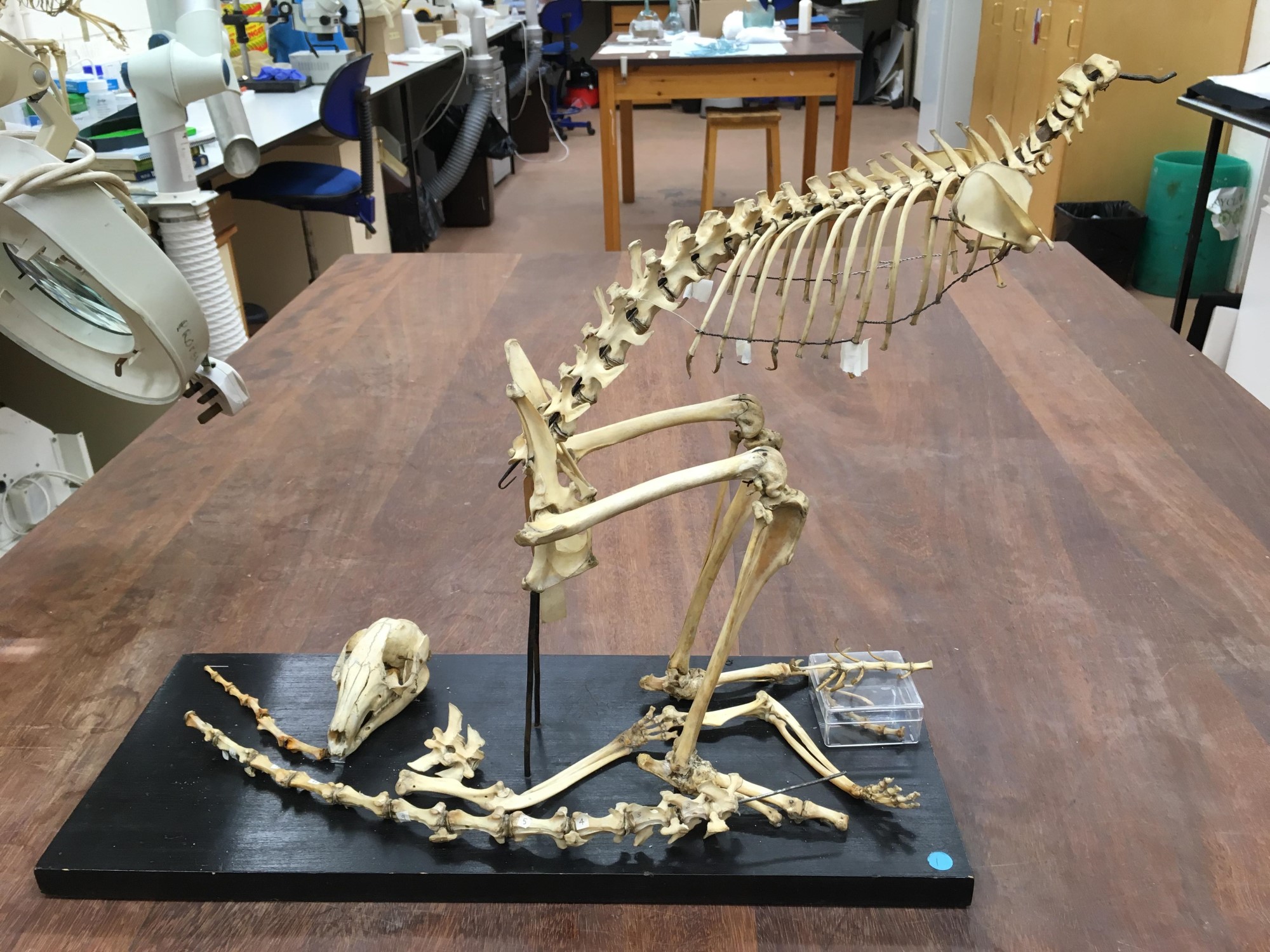
A bony jigsaw…
The first step was to remove dirt that had built up on the bones over the years. This was cleaned away using cotton swabs and small interdental brushes dipped in a sodium bicarbonate solution; care was taken to not over-wet the bones as this can damage them.
One of the main conservation tasks was to re-wire a portion of ribcage that was hanging loose and distorting the alignment of the left side. In keeping with the pre-existing work, this required me to stabilise the free end of each rib using a single piece of wire twisted at intervals. This provided support and appropriate spacing of the bones. I had previously made jewellery using a similar technique, so my experience came in handy during the fiddliest parts!
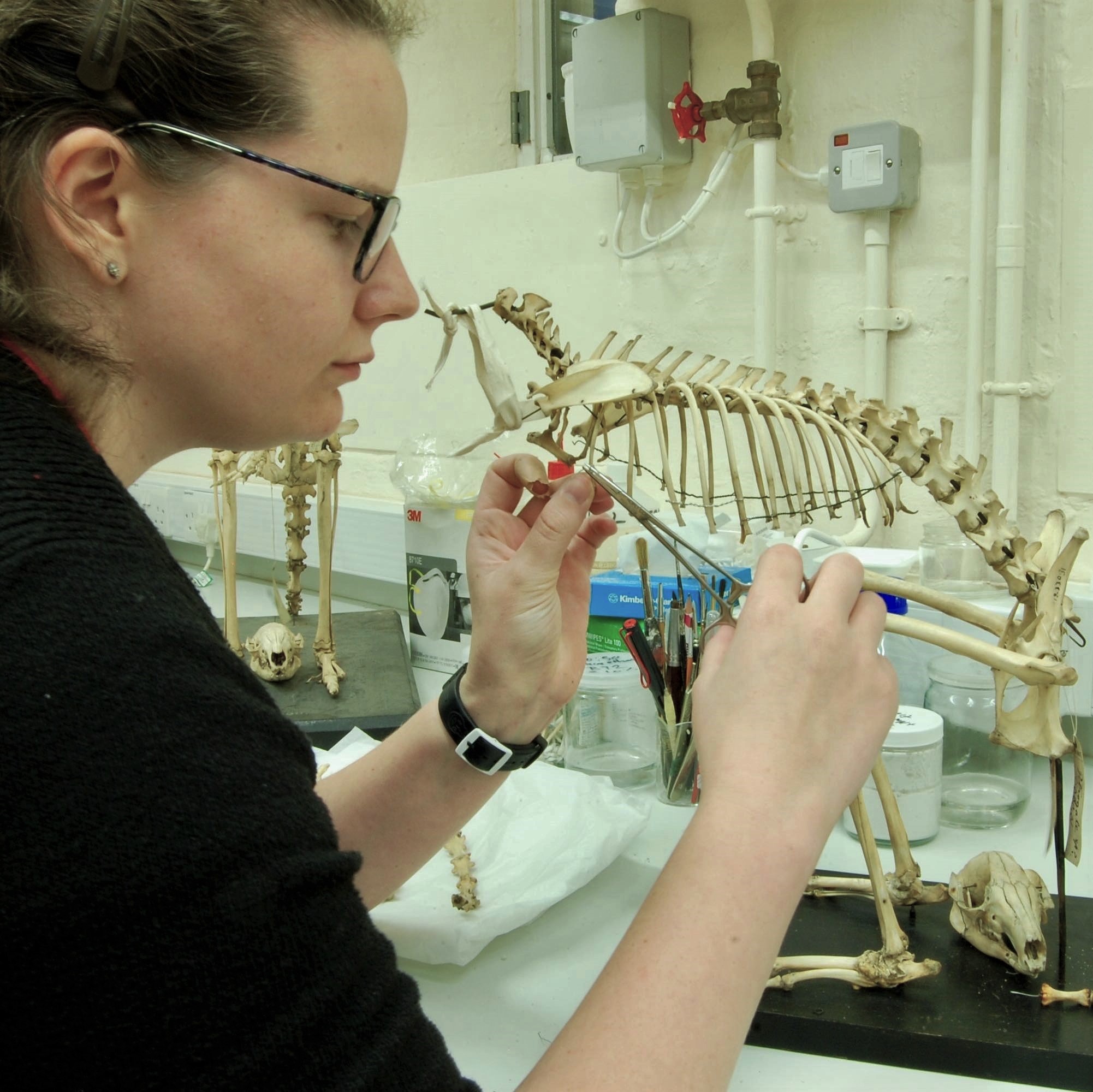
Beginning the ribcage wiring






 NatSCA