NatSCA Digital Digest – November 2021

Compiled by Glenn Roadley, NatSCA Committee Member, Curator of Natural Science at The Potteries Museum & Art Gallery.
Welcome to the November edition of NatSCA Digital Digest.

A monthly blog series featuring the latest on where to go, what to see and do in the natural history sector including jobs, exhibitions, conferences and training opportunities. We are really keen to hear more about museum re-openings, exhibition launches, virtual conferences and webinars, and new and interesting online content. If you have any top tips and recommendations for our next Digest please drop an email to blog@natsca.org.

Sector News

SPNHC / BHL / NatSCA Conference 2022

Next summer will see the return of the physical NatSCA Conference – a triple whammy partnership with the Society for the Preservation of Natural History Collections and the Biodiversity Heritage Library. Abstract submission opens November 12th, so keep an eye on the conference site if you’ve got a great idea or project to share with the community.

GCG Virtual Winter Seminar

The Geological Curators Group are delighted to announce that the call for speakers for the Virtual Winter Seminar event is now open. In this unprecedented 18 months, GCG has seen a wonderful increase in engagement from international members, and with this seminar, they would like to celebrate this. GCG are looking for submissions for talks of around 10-15 minutes sharing innovations in, relationships with, and stories from, geological collections around the world. These can be surrounding the topic of Covid and how your organisation coped, or anything else you would like to share!

Please e-mail abstracts to events@geocurator.org. The closing date for submissions is November 5th at 5p.m. BST. The maximum word count should be 250 words plus one image. 

Registration will open shortly with tickets at £5 with the AGM following the seminar and a fun event to end the day. 

More details will land soon at https://www.geocurator.org/agm2021.

Continue reading

Setting Natural Science Collections Data Free

Written by Jan Freedman (Freelance Museum Consultant).

Fossils. Rocks. Minerals. Invertebrates. Vertebrates. Plants. In the UK alone, there are an estimated 150 million natural science specimens spread across the country. These are a rich, unmatched record of biodiversity on our planet. Like a vast library, only the books are preserved specimens, and the information they contain is irreplaceable and unique to each one.

Every specimen is a record of that species, at that time, in that geographical place. And museums hold unfathomable amounts of data which can be used by researchers across the globe. We hold vast amounts of information with our specimens that can be used for research into climate change, habitat loss, biodiversity loss, pollution, food security and much more. But there is a conundrum, this data is currently locked up inside museums’ collections, how do we set them free?

Continue reading

Stepping Into The Genomics Age: A DNA Bank at World Museum, National Museums Liverpool.

By John-James Wilson, Curator of Vertebrate Zoology, World Museum, National Museums Liverpool.

From World Museum’s founding collection of study skins and taxidermy mounts bequeathed by the 13th Earl of Derby to the spirit-preserved amphibians collected by curator Malcolm Largen in the 1980s, World Museum’s Vertebrate Zoology collection has continued to expand and reflect the state-of-the-art in specimen preparation and storage.

As ethics around the sacrifice of animals for science have modernised, ‘traditional’ specimen types are no longer being prepared at the same rates, and growth of the collection has slowed abruptly. At the same time usage of the collection has diversified, including increases in requests for destructive sampling. In particular, the removal of small tissue samples, usually bird toe pad scrapes, is regularly requested for use in DNA extraction which produces a ‘pure’ DNA extract that can be used in a number of genomic investigations.

Continue reading

Persevering Through The Pandemic

Written by Paolo Viscardi, Curator of Zoology, National Museum of Ireland – Natural History.

Since Covid-19 hit the scene, time has not seemed to behave normally, with a Groundhog Dayesque sense of repetition that has eroded our patience and put our mental health to the test. For many people working with collections it has been a very difficult time, with projects being put on hold, contracts not being renewed, furlough and redeployment making normal work impossible and even the improvements seen in facilitation of working from home offering the thinnest and most tarnished of silver linings.

Dealing with leaks from the Dead Zoo roof

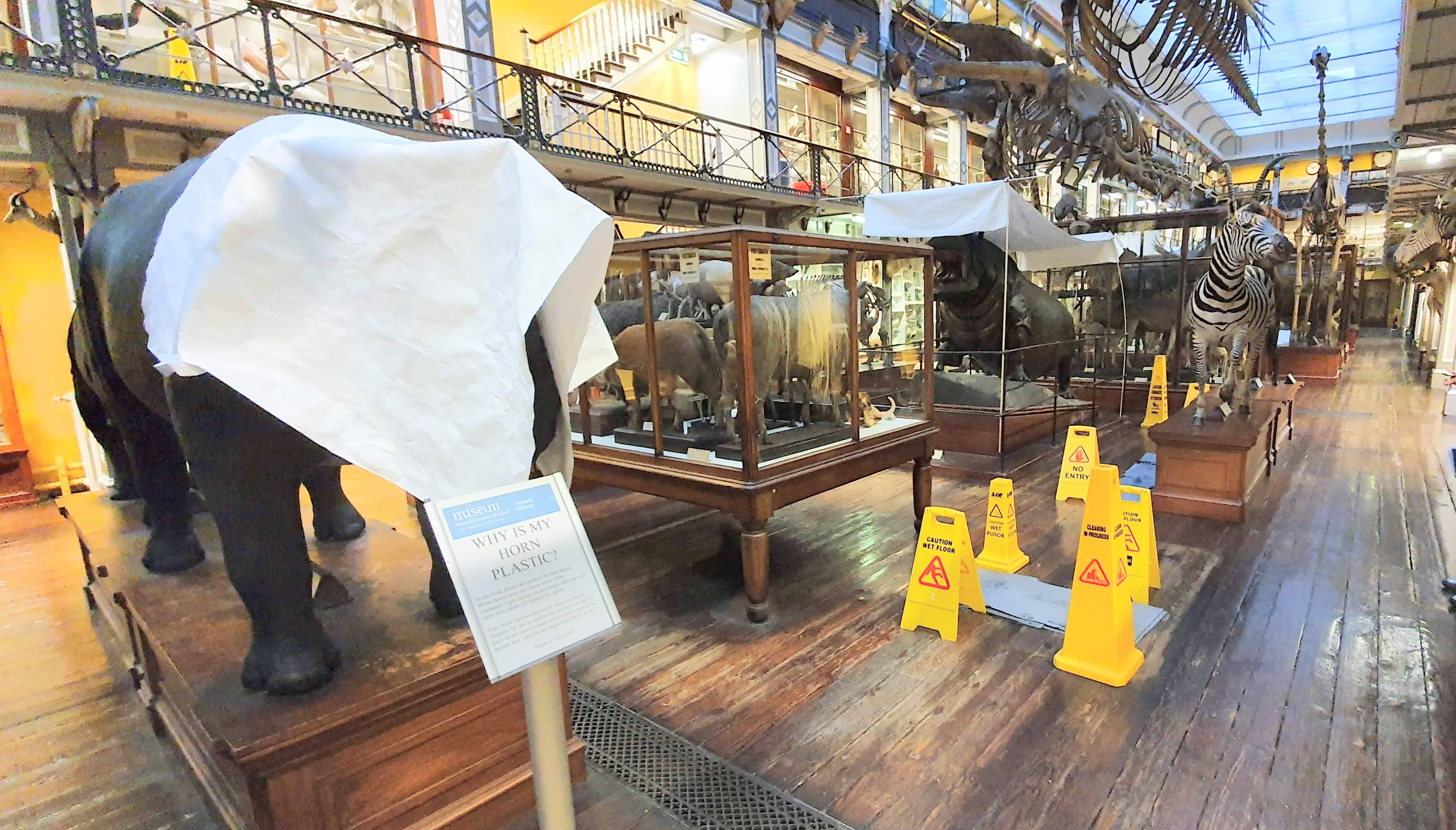
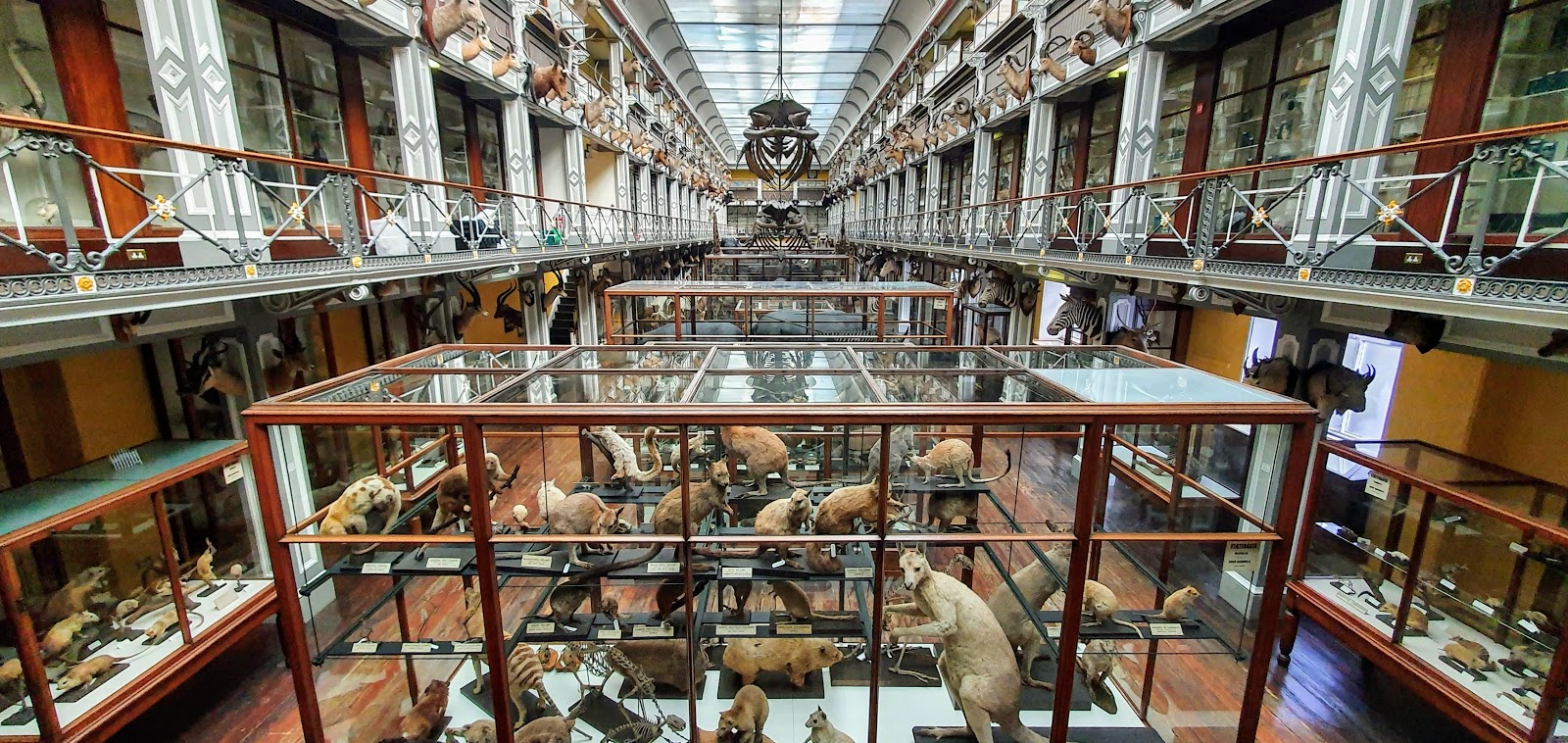
At the Dead Zoo in Dublin the pandemic has thrown up different challenges. With a leaking roof threatening the national collections, a project to safeguard them by undertaking a roof refurbishment was considered a priority and categorised as essential work. The first stage of this project was to remove two whales suspended from supports within the roofspace, which in turn required a substantial amount of preparation, given the crowded Victorian gallery space.

The 1st floor of the Dead Zoo, in all its crowded glory
Continue reading

Extinct – A New Exhibition At The Manx Museum

Written by Laura McCoy, Curator of Natural History for Manx National Heritage.

Wednesday the 8th September saw the opening of the new temporary exhibition ‘Extinct’ at the Manx Museum on the Isle of Man, in partnership with Manx Wildlife Trust, which also coincided with the launch of the Red Data bird list published by Manx BirdLife. There are many species that have become locally extinct on the Isle of Man, particularly birds and plants, and this trend is not slowing down, with the Yellowhammer, once one of our most ubiquitous farmland birds, disappearing from our Island only in 2019. Some may ask how these absences impact our day-to-day lives, why this matters, but as we are becoming increasingly aware, the complexity and variety of our environment is what sustains us; if you knock out enough of the bricks the wall will come tumbling down. These disappearances are symptomatic of a grave state of affairs and islands are particularly sensitive to changes in management and climate. The more protected and supported our environment is, the better it is able to withstand and buffer us from the global shifts that are to come.

When Manx Wildlife Trust came to Manx National Heritage with the idea of this exhibition we were fully on board; learning about these stories of the Isle of Man’s countryside has been a journey, sometimes an upsetting one, but it has also been a call to arms. I had no idea that currently 29% of our current resident bird species, never mind the ones that are already gone, are red listed, and 41% are amber. An estimated forty five species of plant are extinct, seventy seven are red listed. We are still trying to compile what invertebrates and fungi we have, never mind assess what has been lost. 

Continue reading