NatSCA Digital Digest – June

Three-toed sloth (C) Horniman Museum and Gardens

What Should I Read?

Four new dinosaurs all under one article, plus a good reason to check what’s in your museum stores more carefully. Dr Dave Hone introduces a cavalcade of new giant dinosaurs.

We all want to live in a perfect world where all museum records are available online, so why don’t we just digitise everything huh? Peel Art Gallery, Museum and Archives tackles The Question so many of us seem to get asked: Why don’t archivists digitize everything?

Not so much a blog or article to read, but definitely something to have a quick look at for it’s wow factor alone. If you’re looking for inspiration for your next event, be it for children or adults, it doesn’t come much better than these balloon animals and insects. These incredible balloon sculptures are by artist Masayoshi Matsumoto, and are just amazing. Continue reading

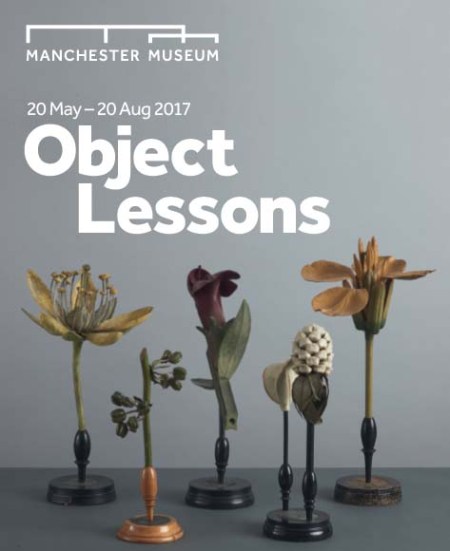
Object Lessons; Manchester Museum

Most curators have those niggling objects at the back of their stores. Models and illustrations previously used for teaching or display in the dim and distant past, but kept for a rainy day. Not quite real objects and not the kind of thing you would necessarily want to accession.

Well, we’ve embraced these wonderful objects in our new exhibition: Object Lessons.

Brendel Models, George Loudon Collection

Brendel Models, George Loudon Collection

Object Lessons celebrates the scientific model and illustration collection of George Loudon. Each of these finely crafted objects was created for the purpose of understanding the natural world through education, demonstration and display.

The object-rich exhibition will look at this incredible collection through themes such as Craftsmanship, the Teaching Museum and the Microscopic. Continue reading

To Dress a Wolf

I like a nice little link to a place I am visiting. And there is a wonderful (if not a little tenuous) link between where I work in Plymouth and Cambridge. Charles Darwin studied theology at University of Cambridge in the old oak clad lecture theatres. And it was through the connections he made at Cambridge that set him on board the HMS Beagle, on a journey that would change the world of scientific thinking forever. The HMS Beagle, with Darwin and all the crew, set sail from in Plymouth after a three month delay. It’s a neat little link.

With such a strong historic links to science, there was perhaps no better place suited to hold the NatSCA  conference 2017. Even the theme title linked in, with a little nod to Darwin (those clever committee members): Evolving ideas: provocative new ways of working with collections.

Continue reading

MusEaster

There are so many eggciting natural history themed events going on this Easter that it seemed like a good idea to put all of the egg-events into one basket-blog. Feel free to add anything we’ve missed into the comments, or email us at blog@natsca.org.


Powysland Museum

Easter Activities

‘Crafts, puzzles and activities for all ages relating to animals, Gerald Durrell and the Museum’s current exhibition Bones to Bronze.’

20th April

More information here.

Bones to Bronze; Extinct Species of the Mascarene Islands

‘An incredible exhibition of beautiful and inspiring bronze sculptures created by the sculptor Nick Bibby depicting extinct species of the Mascarene Islands.’

3rd March – 23rd May

More information here. Continue reading

NatSCA Digital Digest – April

Colobus monkey © E-L Nicholls

What Should I Read?

I came across a very entertaining blog by Lily Nadine Wilks which looks at the frustrations of museum documentation in Mysteries of the Past. She has been working on the Charles Lyell digitisation project at the Oxford University Museum of Natural History.

Having noticed lately that there are more harlequin ladybirds in my house than there are Lego sets*, I was interested to come across A decade of invasion – a story of Harlequin Ladybird in the UK. I can’t believe THAT many ladybirds exist in the UK having only arrived in 2004. They are clearly a prolific species, if only I could teach them to write research papers. Continue reading