Creating a New Diorama for The Booth Museum of Natural History – Taxidermy, Silk flowers and Wax Slugs.

Editors note: This is the first of two concurrent blogs about the new diorama at the Booth Museum, you can read the second one here.

Written by Jazmine Miles Long, Taxidermist. https://www.jazminemileslong.com, Twitter: @TaxidermyLondon; Instagram: @Jazmine_miles_long

The Booth Museum of Natural History was founded in 1874 by naturalist and collector, Edward Thomas Booth. Mr Booth collected a huge variety of British birds and was a pioneer of the taxidermy ‘diorama’, displaying birds in their natural habitat. His collection of over 300 detailed cases were donated to the city of Brighton in 1891 with the proviso the dioramas would not be changed. In 1971 the Booth became a Museum of Natural History. Today alongside the dioramas the museum has a huge collection of 525,000 insects, 50,000 minerals and rocks, 30,000 plants and 5,000 microscopic slides.
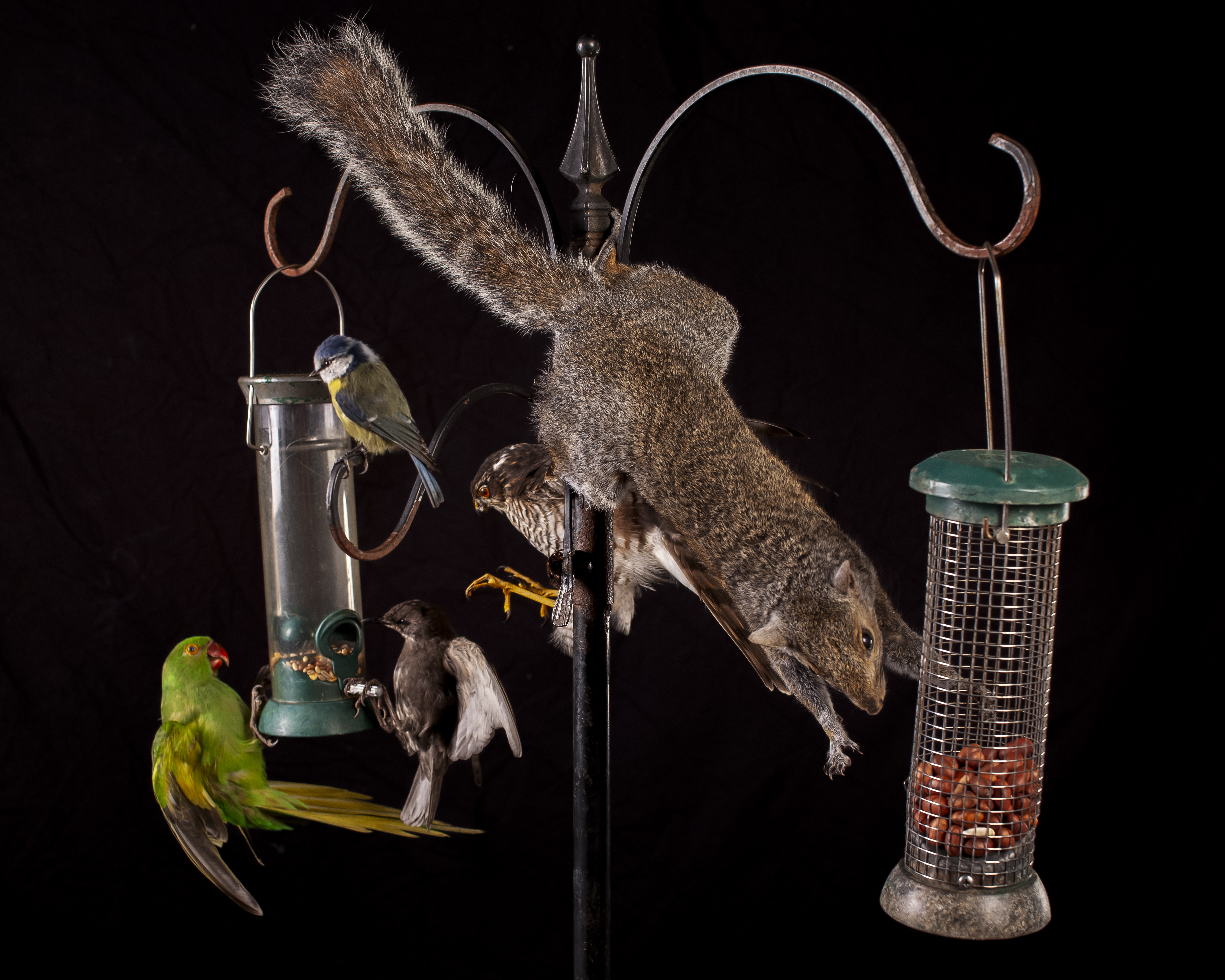
Life in the Garden. Image credit: Laurence Dean.
Continue reading

NatSCA Digital Digest – August

Compiled by Ellie Clark, Collections Move Team Leader at the Natural History Museum

Welcome to the August edition of NatSCA Digital Digest.

A monthly blog series featuring the latest on where to go, what to see and do in the natural history sector including jobs, exhibitions, conferences, and training opportunities. We are keen to hear from you if you have any top tips and recommendations for our next Digest, please drop an email to blog@natsca.org.

Sector News

Registration is now open for the 13th European Bird Curators Meeting, October 2024, in Liverpool.

The European Bird Curators Meetings aim to promote cooperation, dissemination of best practices and new techniques in the curation, management, and use of bird collections. Presenters in the scientific programme often include curators, collection managers, museum historians and ornithological researchers. These are friendly meetings and anyone with an interest is welcome to join us.

The meeting will include plenary and submitted presentations, discussion sessions, collections tour, conference dinner (optional – Tuesday 29th October) and field excursion (optional – Thursday 31st October). 

Please follow the ‘Tickets available here’ link from the event webpage to register. They have single day registration options and have kept costs as low as possible to encourage attendance by local natural history curators. 

If you have any questions, please email vertebratezoology@liverpoolmuseums.org.uk.

Continue reading

Going ‘Extinct’ for Jewellery

Written by Sonal Mistry (Masters Students in Scientific Illustration, Zuyd University of Applied Sciences, the Netherlands) and Olivia Beavers (Assistant Curator of Vertebrate Zoology at World Museum, National Museums Liverpool).

Last year, Sonal approached the vertebrate zoology team at World Museum Liverpool to see the Nicobar Pigeon taxidermy mounts, study skins, as well as the Liverpool Pigeon study skin and dodo skeleton to use as reference for her work. From the first meeting, it was fascinating to see the detailed nature of her initial sketches and how quickly she worked.

World Museum has received requests from wood carvers and illustrators to access the osteology collection, taxidermy mounts and/or study skins as a reference for their work. The in-person visits help them to create more accurate drawings and carvings compared to using 2D images for reference. 

Collaborating with researchers of a particular species or family broadens our understanding of the collections. For example, Sonal’s explanation of her university assignment shed light on the endangered status of Nicobar Pigeons and the unconventional use of their gizzard stones in jewellery which I was unaware of.

Sonal is currently pursuing a master’s degree in Scientific Illustration, at Zuyd University of Applied Sciences in Maastricht, the Netherlands. Her passion for the sciences and the arts enriches her illustrations with a unique quality that is evident in her diverse projects, showcasing a blend of creativity and scientific accuracy.

Continue reading

NatSCA Digital Digest – June 2024

Compiled by Olivia Beavers, Assistant Curator of Vertebrate Zoology at World Museum, National Museums Liverpool.

Welcome to the June edition of NatSCA Digital Digest.

A monthly blog series featuring the latest on where to go, what to see and do in the natural history sector including jobs, exhibitions, conferences, and training opportunities. We are keen to hear from you if you have any top tips and recommendations for our next Digest, please drop an email to blog@natsca.org.

Sector News

From Collections to Connections, May – November 2024

This Changing Chalk commission/ Natural Trust funded project is a collaborative archival art and environment initiative. Artist Pauline Rutter invites Black and minoritised young people, their families and communities to explore the rich history of flora and fauna across several locations of the Changing Chalk area within the South Downs National Park.

‘From Collections to Connections’ offers opportunities for learning and sharing about collections held at the Booth Museum which relate to the Sussex locations of Mill Hill, Truleigh Hill and Devils Dyke. Through walks, talks and creative interventions, opportunities are provided for exploring the museum collections and their related histories. Individuals will be invited to find their own connections between these elements and their experiences within the natural and museum environments. To find out more, follow this link to the summary outline: https://drive.google.com/file/d/1cJQh4UYMTeRB_HqsM7EydOmNBLGKYQpb/view

Continue reading

Making a Green Gallery – A Leeds Story

By Sara Merritt, Audience Development Officer at Leeds Museums & Galleries.

Us: We want to retro-fit a permanent gallery! As sustainably as possible! With £40k! In two months! And we want to keep the space open to visitors!

Them: Umm, are you sure that’s a good…

Us: Great! We’ll get cracking.

2022 saw us undertake the retro-fit of our permanent Life on Earth gallery at Leeds City Museum, with the aim of making it as sustainable as possible. The gallery required an overhaul to meet current visitor expectations, with innovative design ideas and production methods to reflect our greater understanding of climate change, the biodiversity crisis, and Britain’s colonial history.

Our objectives were threefold and carefully considered:

  • To manage and deliver a sustainable retro-fit with the addition of creating a carbon calculator to measure our C02 output
  • To ensure the interpretation was relevant, and that we had a strong idea of our target audience to attract visitors who were already engaged in making climate-positive changes.
  • To identify robust materials and production methods which would stand up to visitors pulling, prodding, and everything in between.

We were used to working with greener materials for temporary exhibitions and knew the implications around material availability, longevity of eco materials, and higher associated costs. We therefore needed to keep the project resource light and put our efforts into the interpretation, rather than dramatic object moves. We took the bones of what we had, large cases and great objects, and retold the story with the emphasis on using our objects to inspire our visitors to live more sustainably.

Continue reading