Is it ever acceptable for museums to lie?

Reblogged from the UCL Museums and Collections Blog

Is it ever acceptable for museums to lie?

By Jack Ashby, Grant Museum of Zoology

I ask this question to our Museum Studies Masters students every year, and last month put it to our new Bachelor of Arts and Sciences students. Despite the difference in the age, background and interests of these two groups, the reaction is the same – anger and horror. I am playing devil’s advocate in these debates, but my own opinion is yes, there are circumstances when everyone benefits from museums lying.

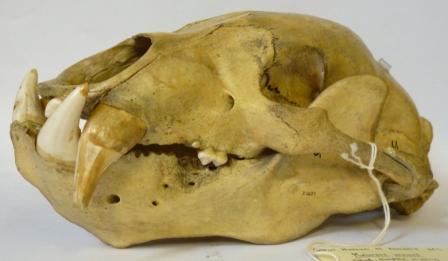
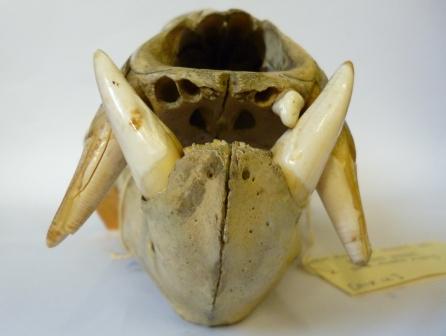
The lectures I discuss this in focus on object interpretation, and I use a tiger skull as a prop for discussing how to decide what information to include in labels. The choice of a tiger isn’t important – I just need something to use as an example I can attached real facts about natural history and conservation to, but I spend the two hours talking about tigers.

Lion (left) and tiger (right) skulls. Or is it the other way round? LDUCZ-Z1644 and LDUCZ-Z396

Lion (left) and tiger (right) skulls. Or is it the other way round? LDUCZ-Z1644 and LDUCZ-Z396

At the end of the lecture I reveal that the skull is in fact from a lion. Everything else I told them about tigers is true. Did it matter that I lied?

Continue reading

NatSCA Digital Digest

Welcome to the weekly digest of posts from around the web with relevance to natural science collections. We hope you find this useful and if you have any articles that you feel would be of interest, please contact us at blog@natsca.org

1. Blog: Eton College, Natural History Museum

George Fussey, Curator, and colleagues

Synopsis

Rather than drawing your attention to a specific article on this blog, I am rather pointing out that this blog exists in case you hadn’t yet come across it. Having been to the Natural History Museum at Eton College myself, I can tell you that it is well worth the visit. I had the great pleasure of being shown around the Museum by Curator George Fussey, and there are certainly treasures to be seen there. I encourage you to have a look at this blog, it may be one of great interest to many people in our sector.

Eton College, Natural History Museum Blog

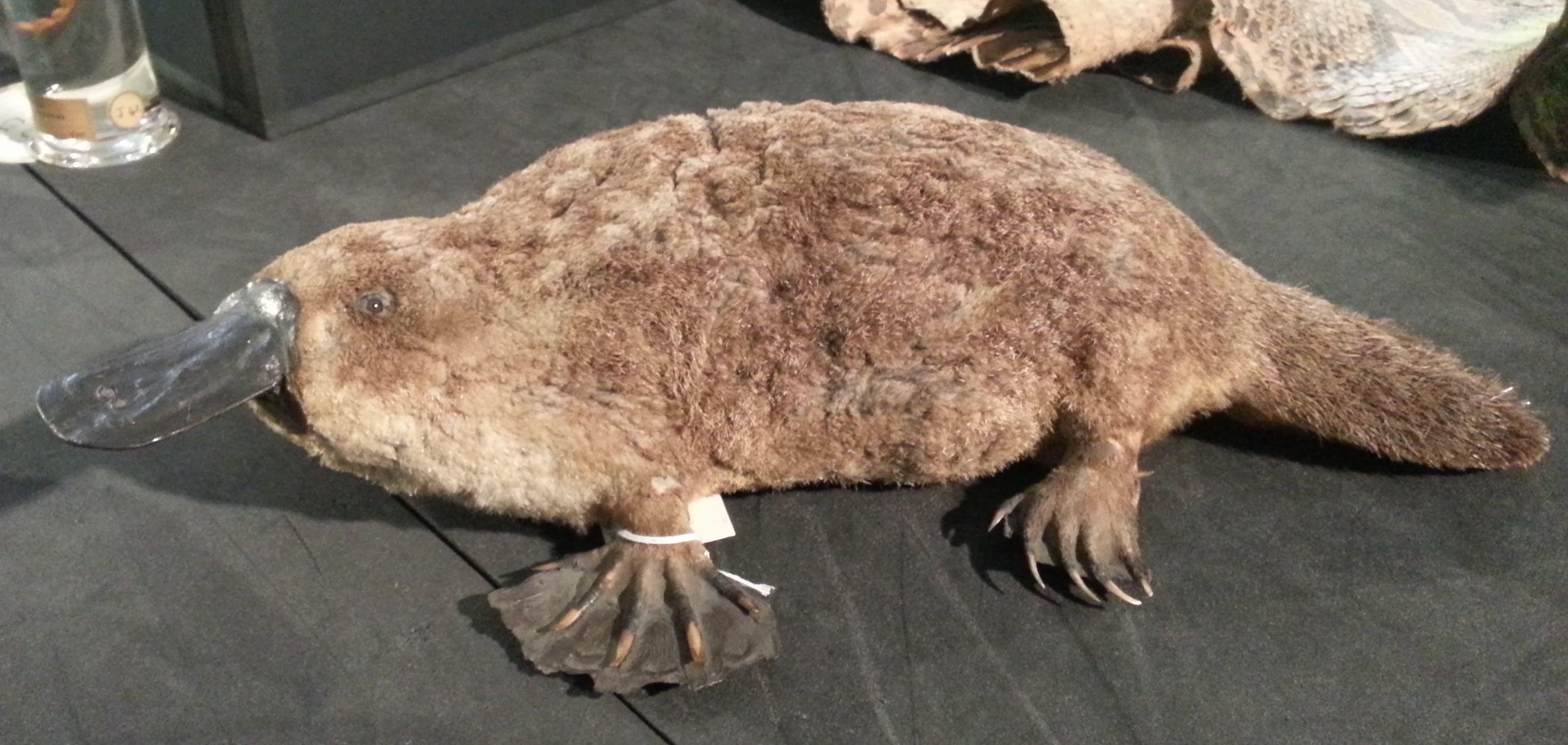
If you think our platy is a fatty, you should see the one at Eton! Specimen LDUCZ-Z20 (C) UCL / Grant Museum

If you think the Grant Museum’s platy is a fatty (above), you should see the one at Eton! Specimen LDUCZ-Z20 (C) UCL / Grant Museum

2. Conference: Radiation and Extinction: Investigating Clade Dynamics in Deep Time

The Linnean Society of London, 10-11th November 2014

Synopsis

To address the issues in the modern day caused by global warming, this conference aims to look at the past. It will focus on:

“Determining the causes and drivers of evolutionary dynamics is central to our understanding of life on Earth. What factors shaped the modern biota? Why did some groups go extinct, whilst others survived and radiated? Why are some groups so much more diverse than others? What will happen to organisms as the Earth continues to warm up?”

Radiation and Extinction: Investigating Clade Dynamics in Deep Time

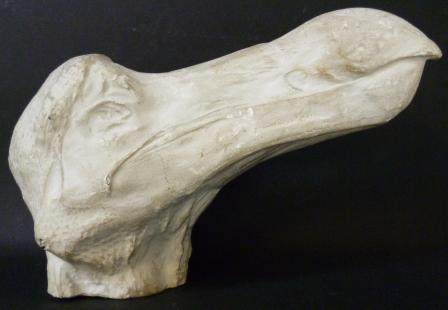
A representative of extinction- the dodo head cast. Specimen LDUCZ-Y86 (C) UCL / Grant Museum

A representative of extinction- the dodo head cast at the Grant Museum of Zoology. Specimen LDUCZ-Y86 (C) UCL / Grant Museum

3. Training: Documentation Training Course

Museum of London, Docklands, 25th April 2014

Synopsis

Museum volunteers are invited to attend this course run as part of the Regional Museums Development programme. The course is designed to look at how to deal with issues of documentation, as well as the theory behind collections management.

Contact kwebbgreen@museumoflondon.org.uk to book.

Compiled by Emma-Louise Nicholls, NatSCA Blog Editor

NatSCA Digital Digest

Welcome to the weekly digest of posts from around the web with relevance to natural science collections. We hope you find this useful and if you have any articles that you feel would be of interest, please contact us at blog@natsca.org

1. Blog: Natural Support from Colleagues

Jan Freedman, Plymouth City Museum and Art Gallery

Synopsis

The way to best manage and safeguard our natural history collections is to ask for help and guidance from each other, says Freedman. He talks about the different types of natural sciences collections and hazards that we should look out for.

http://www.museumsandheritage.com/advisor/news/item/3242

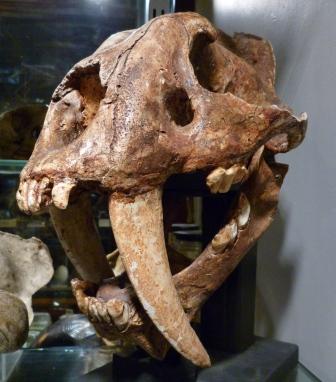
To care for and manage our collections, Freedman explains why it's best to ask each other for help. The smilodon cast LDUCZ-Z2724 at the Grant Museum of Zoology. (C) UCL / Grant Museum of Zoology

To care for and manage our collections, Freedman explains why it’s best to ask each other for help. The Smilodon cast LDUCZ-Z2724 at the Grant Museum of Zoology. (C) UCL / Grant Museum of Zoology

2. Blog: On the Origin of Our Specimens

Emma-Louise Nicholls, Grant Museum of Zoology

Synopsis

In a 12 part series, Nicholls looks at each of the curators that have cared for the collections at the Grant Museum over the last 186 years. Illustrating the series with specimens that can be directly attributed to specific curators, she tells the story of the Museum by demonstrating how each curator added to and steered the development of the collections.

http://blogs.ucl.ac.uk/museums/tag/on-the-origin-of-our-specimens/

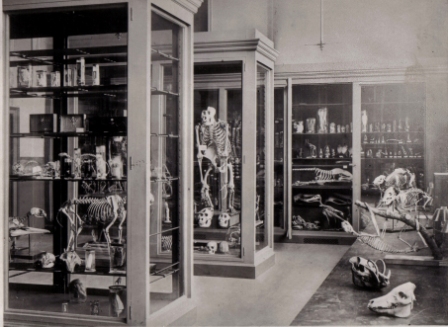
The Grant Museum as it was in the 1880s. (C) UCL / Grant Museum of Zoology

The Grant Museum as it was in the 1880s. (C) UCL / Grant Museum of Zoology

3. Paper: Natural History’s Place in Science and Society

Joshua j. Tewksbury, John G. T. Anderson, Jonathan D. Bakker, Timothy J. Billo, Peter W. Dunwiddie, Martha J. Groom, Stephanie E. Hampton, Steven G. Herman, Douglas J. Levey, Noelle J. Machnicki, Carlos Martínez del Rio, Mary E. Power, Kirsten Rowell, Anne K. Salomon, Liam Stacey, Stephen C. Trombulak and Terry A. Wheeler.

Synopsis

An interesting look at how natural history is of vital importance to a wide range of disciplines. Despite this, it seems that there has been a decline in support for natural history in developed economies. The paper argues that the support should be reinforced as natural history provides a significant benefit to society.

http://bioscience.oxfordjournals.org/content/early/2014/03/23/biosci.biu032.full

Compiled by Emma-Louise Nicholls, NatSCA Blog Editor

NatSCA Digital Digest

Welcome to the weekly digest of posts from around the web with relevance to natural science collections. We hope you find this useful and if you have any articles that you feel would be of interest, please contact us at blog@natsca.org

1. Blog: Knowledge Network

Paolo Viscardi, Deputy Keeper of Natural History at Horniman Museum

Synopsis

Looking at Subject Specialist Networks and how this type of inter-museum communication can improve the sector as a whole. An ‘open line of communication’ encourages a quality control that is standard throughout museums, and allows for the incorporation of discussion with non museum based academics. The success of SSNs centres on workshops and conferences though time and money make these logistically difficult. Suggestions are made regarding solving these issues to perpetuate the benefit museums receive via SSNs.

http://www.museumsandheritage.com/advisor/news/item/3215

For your pleasure… A sloth bear skull, Melursus ursinus. Specimen LDUCZ-Z1637. (C) UCL Grant Museum

2. Blog: Museum Training for the World

Edmund Connolly, British Council-UCL Museum Training School Coordinator

Synopsis

The British Council and University College London have joined forces to launch the Museum Training School. Based in a variety of museums and galleries across London, this school will give early career museum professionals the opportunity to meet with staff from across the sector, and aims to arm attendees with the necessary skills to ensure ‘sustainability and growth’ of collections, galleries and museums for the future.

http://blogs.ucl.ac.uk/museums/2014/03/07/museum-training-for-the-world/

3. Event: How Museums Can Contribute to Wellbeing

One day event in Newcastle Upon Tyne

Synopsis

This event is aimed at a range of museum staff such as curators, managers, and those involved in education and outreach. it will look at how museums can focus on wellbeing and use it as a tool in relationships and collaborations with external organisations. It will also investigate ways of securing funding, building on the foundations of wellbeing as a concept.

http://www.museumsassociation.org/find-an-event/ev1062022?utm_source=ma&utm_medium=email&utm_campaign=06032014#.Ux8JZNhKTwA

For further pleasure, the sloth bear skull from an exciting angle. Specimen LDUCZ-Z1637. (C) UCL Grant Museum

4. Event: Museum Week on Twitter

Contacts are @TwitterUK or museumweekuk@twitter.com

Synopsis

The 24th to 30th March is Museum Week on Twitter. The main hashtag #MuseumWeek will be the umbrella tag that will run all week long. Aside from this, there will be a specific theme, and relevant hashtag, each day, centred on topics related to museum and collections. It will be an opportunity to showcase parts of museums and collections that would otherwise not be accessible to the public. It also aims to give museum staff the chance to interact with each other through Twitter, and for both professionals and the general public to engage.

For more information, please contact Twitter on the above email or Twitter handle.

Compiled by Emma-Louise Nicholls, NatSCA Blog Editor

NatSCA Digital Digest

Welcome to the new weekly digest of posts from around the web with relevance to natural science collections. We hope you find this useful and if you have any articles that you feel would be of interest, please contact us at blog@natsca.org

1. Blog: Dr Woodward’s Fossils

Dr Ken McNamara, Sedgwick Museum of Geology

Synopsis

How the Sedgwick Museum began as a collection of 10,000 fossils ‘of all kinds’ belonging to John Woodward, and his bequest of £100 a year to ‘keep a lecturer’. The fossils were kept for 300 years in five beautiful walnut cabinets, pictured herein. Originally called the Woodwardian Museum, this blog looks at how Woodward helped to shape the museum, and the legacy he left behind.

http://blog.geolsoc.org.uk/2014/02/21/dr-woodwards-fossils/
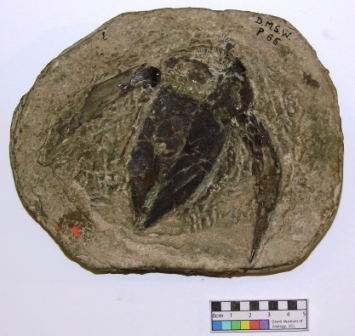
Bothriolepis, a fossil fish. (C) UCL Grant Museum

2. Blog: What can Twitter do for our collection?

Giles Miller, Natural History Museum

Synopsis

Case study showed ‘major players’ retweeting you leads to a greater number of retweets and new followers. Timing of tweets is essential, e.g. weekend tweets hardly ever get retweeted. Twitter may not affect KPIs in a measurable manner, but it opens up the museum to an audience that would never otherwise visit for logistical reasons. It also facilitates access to parts of the collections that are not on display.

http://www.nhm.ac.uk/natureplus/blogs/micropalaeo/2014/02/18/how-did-twitter-help-our-collection

3. Event: The Future of Museums

A conference and workshop for early career museum professionals

Synopsis

Designed to collate the ideas of aspiring museum professionals, a series of talks and discussions will be followed by the opportunity for delegates to collaborate on a manifesto for museums and collections.

http://museumsshowoff.wordpress.com/the-future-of-museums/

4. Event: Human Evolution – The Story of Us

A four hour only pop-up event Friday 7th March at UCL

Synopsis

This mini exhibition will showcase rarely seen objects from UCL’s Biological Anthropology Collection of early hominin fossil casts, including Lucy, the famous Australopithecus afarensis from East Africa. The objects exhibited will also include tools and visitors will have the chance to ‘meet the scientists’. The event will take place in the Rock Room at UCL, which has permanent displays of geological collections.

http://blogs.ucl.ac.uk/museums/2014/02/27/human-evolution-the-story-of-us/
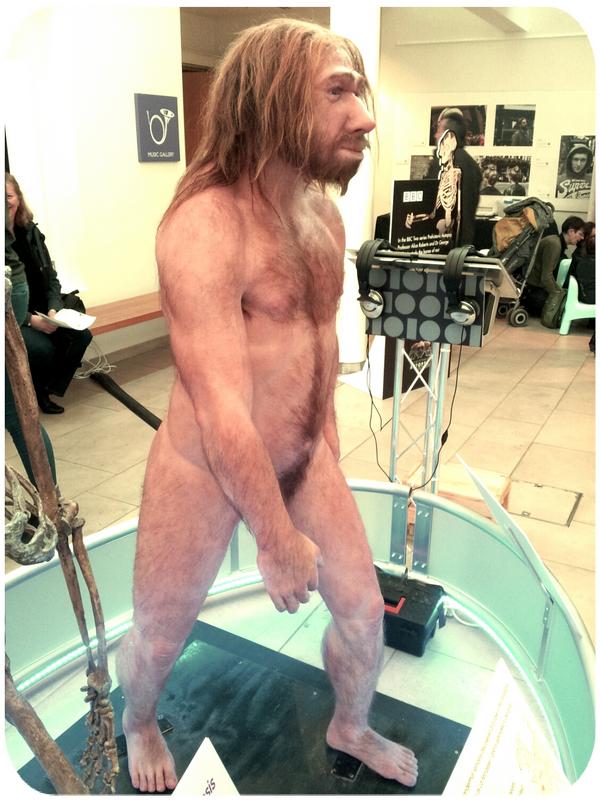
Neanderthal from BBC’s Prehistoric Autopsy exhibition at the Horniman Museum. (C) Paolo Viscardi

5. Event: Written in Stone: Life and Death in the Fossil record

Evening workshop at the Lapworth Museum of Geology, Birmingham

Synopsis

The workshop will be an interactive exploration of Cambrian organisms that formed part of the Cambrian Explosion and the subsequent Biodiversification Event of the Ordovician. These two points in Earth’s history are considered to be the foundations of the Earth’s biodiversity in the modern day.

http://www.birmingham.ac.uk/facilities/lapworth-museum/news/2014/28Feb-Written-in-Stone-Life-and-Death-in-the-Fossil-record.aspx

Compiled by Emma-Louise Nicholls, NatSCA Blog Editor