Data-less Natural Science Specimens are Useless to Science. Aren’t they?

Here we have Clare Brown, of the Leeds Museum, telling us about some devilishly exciting research:

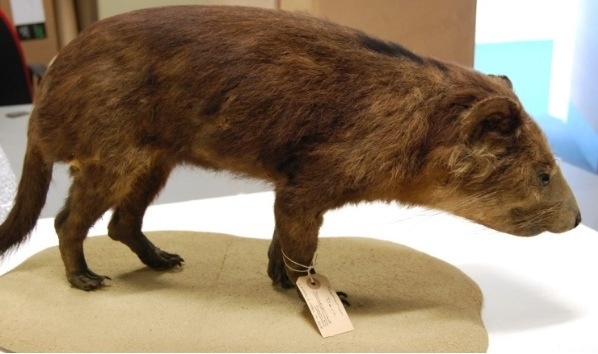
Tasmanian Devil specimens in UK museums, with no data whatsoever, have been used in cutting edge research on devil facial tumour disease as part of the effort to save these incredible animals.
Data – when and where a specimen was collected – is vital to the usefulness of natural science collections. It is crucial for so many aspects of research that these collections are commonly used for: climate change work; biodiversity research; distribution mapping etc.
Specimens without data are usually much more problematic. At Leeds we have thousands of objects that don’t have any record of where they came from or when they were collected. The information has either been lost or never noted down in the first place. Even our scrappiest, most moth-eaten bits of taxidermy are elevated above the rest of the collection if they have associated data.
I was therefore delighted when Jeremy Austin at the University of Adelaide asked whether we had any Tasmanian Devil Sarcophilus harrisii material collected in the last 200 years. Crucially, he didn’t need an exact date or location – just a two century timespan. We’d been collecting since 1821.
Leeds, a large, rich, Victorian industrial city, spent most of the 19th century collecting scientific material from around the world. We had a ‘purveyor of Australian wildlife’ and acquired, amongst other things, two Devil mounts and a skeleton. The specimens were duly sampled and sent to Australia.

20140707-083844.jpg

The study, also using specimens from Oxford, looked at genetic diversity in a group of molecules in cell membrane proteins called the ‘major histocompatibility complex’. Low diversity in this complex has been linked to the emergence and spread of devil facial tumour disease. The team needed samples of historical and ancient Devil DNA to see how diverse the populations were before European settlement and after. The article, published in Biology Letters, can be read here.

This is a great example of how natural science specimens, whatever their ‘data status’, can contribute to scientific research at the forefront of species conservation.

Advocacy for Collections – SPNHC2014 Day Three

20140705-110102.jpg

Today we have a write-up by Rachel Jennings of the Horniman Museum, London:

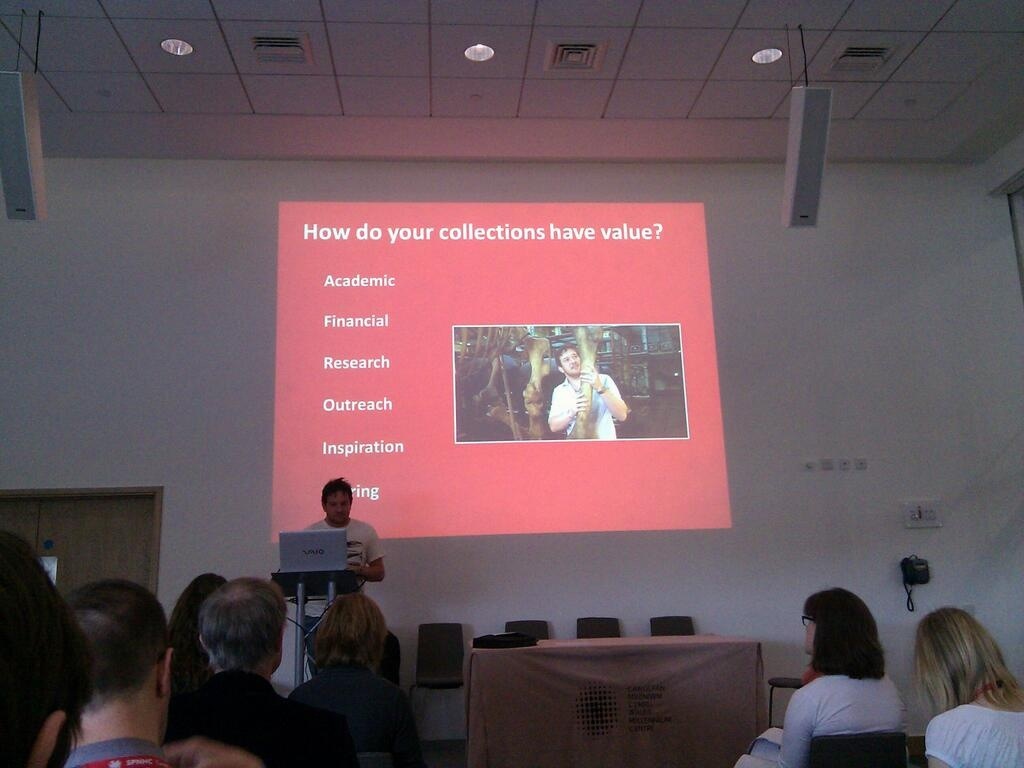
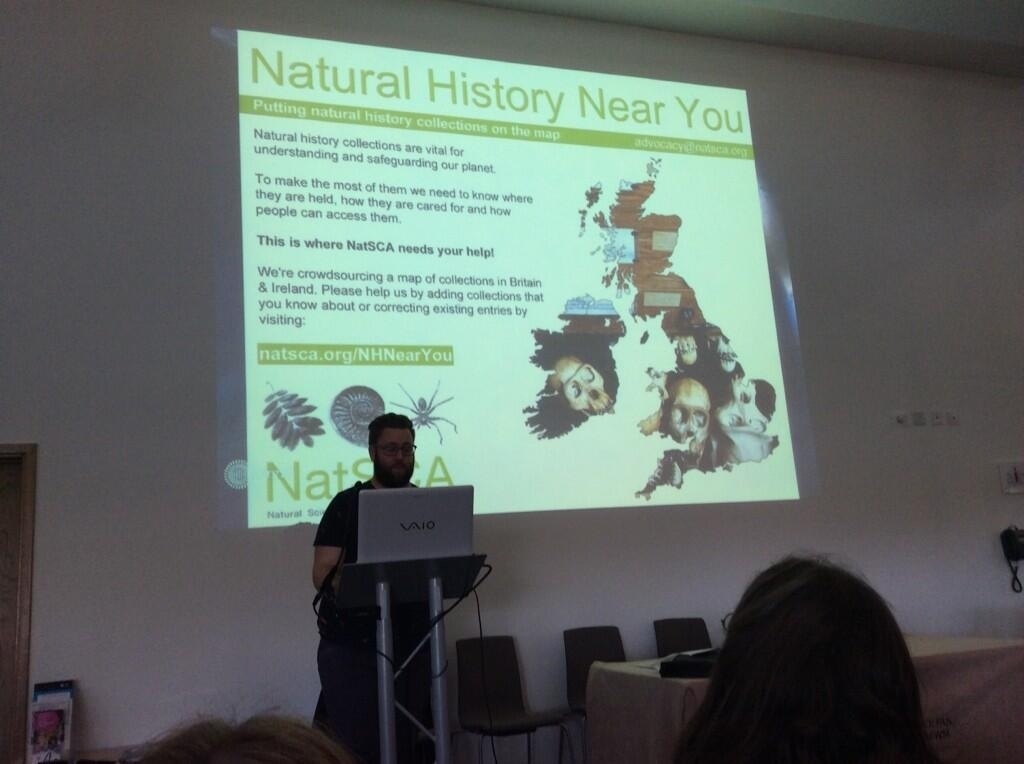
The need to advocate for natural history collections, so that those making decisions about the future of museums can understand their importance, has been a recurring theme over the last few years – and SPNHC 2014 was no exception. The Thursday morning session, chaired by NatSCA, focused on this very topic. Ben Garrod, in his keynote speech, stated that we need to inspire our visitors so that they become our advocates. Luanne Meehitiya of Birmingham Museums argued that advocacy must start with basic concepts, such as ‘What is natural history?’, because, while it is obvious to us, our visitors and colleagues may have a very different idea.

While the afternoon sessions on collections were not overtly advocacy-themed, I still found the thread running through, with many examples of the importance of natural history collections. Bethany Abrahamson of the University of New Mexico (UNM) showed, by looking at publication records, that natural history collections are supporting a much wider range of research now than ever before. J. Tomasz Giermakowski, also of UNM, demonstrated that historic collections data can be used to target hotspots for current conservation efforts. Tiffany Adrain of the University of Iowa showed that historical research can reveal the importance and improve the future research potential of forgotten specimens.

While advocacy is not a new topic, this year I left the conference feeling that there was a new optimism, as colleagues from all over the world came together to share their vision for the future of natural history collections.

20140705-110129.jpg
Photo by Judith C. Price

NatSCA Digital Digest

Welcome to the weekly digest of posts from around the web with relevance to natural science collections. We hope you find this useful and if you have any articles that you feel would be of interest, please contact us at blog@natsca.org

1. Blog: The Importance of Natural Sciences

Jack Ashby, Manager of the Grant Museum

Synopsis

Comparing attitudes across the Atlantic

The importance of natural sciences

2. Training: Interpretation Planning

Friday 18th July, Museum of London

Synopsis

‘Nick Poole from Collections Trust will be delivering an add on session from 1-1.30pm on digitisation and the potential of using your collections on line through various platforms’.

Interpretation Planning

3. Museum and Heritage Awards

Advisor- the team behind the M and H show and awards

Synopsis

A review of this year’s award winning projects

Museum and Heritage Awards

Compiled by Emma-Louise Nicholls, NatSCA Blog Editor

NatSCA Digital Digest

Welcome to the weekly digest of posts from around the web with relevance to natural science collections. We hope you find this useful and if you have any articles that you feel would be of interest, please contact us at blog@natsca.org

1. Blog: Six Questions for a Geological Curator

Geological Curators’ Group

Synopsis

‘This is the first post in our series where we ask geological curators around the country a series of questions that allow them to advocate the collections in their charge. This post is kindly provided by Dean Lomax who is Contract Assistant Curator of Palaeontology at the Doncaster Museum & Art Gallery, working on the CIRCA Project which is funded by the Esmée Fairbairn Foundation. He is the author of two books, Fossils of the Whitby Coast and Dinosaurs of the British Isles.’

Six Questions for a Geological Curator

2. Article: EU Makes it Easier to Return Looted Cultural Objects

Patrick Steel, Museums Association

Synopsis

‘The European Parliament has approved changes to a directive aimed at helping EU countries organise the return of cultural objects unlawfully removed from one member state to another. The Department for Culture, Media and Sport (DCMS) believes will see a rise in requests for returns across the EU as a result’

EU Makes it Easier to Return Looted Cultural Objects

3. Job Vacancy: Curatorial Assistant

The Grant Museum of Zoology, Department of Public and Cultural Engagement

Synopsis

‘Full time until July 2015, thereafter it will be part time, 18.25 hours per week, 50% FTE, unless further funding is identified.

The curatorial assistant post will be based primarily in the Grant Museum of Zoology, one of the foremost zoology museums in the UK, with a growing reputation for innovative and experimental work.

The job will involve working closely with the collections to make them accessible to UCL and external audiences and improve their storage, documentation and use; as well as contributing to the museum’s public programmes and online activities. Details can be found on the UCL jobs page.

Deadline: 15th June. For information about the post please contact the Museum Manager, Jack Ashby – j.ashby@ucl.ac.uk  and for information about the application procedure contact UCL Museums’ Administrator Lauren Sadler – l.sadler@ucl.ac.uk.’

Curatorial Assistant Job Vacancy

Compiled by Emma-Louise Nicholls, NatSCA Blog Editor

Collecting biological specimens essential to science and conservation

A letter signed by more than 100 biologists and biodiversity researchers,  published online in Science today (Science 23 May 2014: Vol. 344 no. 6186 pp. 814-815 DOI:10.1126/science.344.6186.814), states why collecting plant and animal specimens is essential for scientific studies and conservation and does not, as some critics of the practice have suggested, play a significant role in species extinctions.

Beetle collection. Image by Paolo Viscardi

The letter is a response to an April 18 Perspectives article in Science arguing that alternative methods of documentation—such as high-resolution photography, audio recordings and nonlethal tissue sampling for DNA analysis—make the field collection of animal and plant specimens unnecessary. As most natural sciences collections professionals are fully aware, this is simply not the case.

“None of the suggested alternatives to collecting specimens can be used to reliably identify or describe animals and plants,” said Cody Thompson, mammal collections manager and assistant research scientist at the U-M Museum of Zoology.

“Moreover, identification often is not the most important reason to collect specimens. Studies that look at the evolution of animal and plant forms through time are impossible without whole specimens. Preserved specimens also provide verifiable data points for monitoring long-term changes in species health and distribution.”

In addition, specimens from museum collections and their associated data are essential for making informed decisions about species management and conservation now and in the future, the authors state.

“Photographs and audio recordings can’t tell you anything about such things as a species’ diet, how and where it breeds, how quickly it grows, or its lifespan—information that’s critical to assessing extinction risk,” said Luiz Rocha of the California Academy of Sciences, who organized the response to the Science article.

And contrary to statements made in the April 18 Science article titled “Avoiding (Re)extinction,” collecting biological specimens does not play a significant role in species extinctions, according to the rebuttal authors.

In the April article, Arizona State University’s Ben Minteer and three co-authors cite several examples of species extinctions and suggest that the events were linked to overzealous museum collectors.

Not so, according to authors of the rebuttal letter, who reviewed the evidence and found that none of the cited extinctions—including the disappearance of flightless great auks in Iceland and Mexican elf owls on Socorro Island, Mexico—can be attributed to scientific collecting.

Millions of great auks were harvested for food, oil and feathers over the millennia, and only about 102 exist in scientific collections. Mexican elf owls were common when specimens were collected between 1896 and 1932, and the most likely reasons for extinction around 1970 were habitat degradation and predation by invasive species.

At the same time, Minteer and his colleagues failed to point out any of the valuable services that museum biological collections have provided over the decades, according to the rebuttal authors.

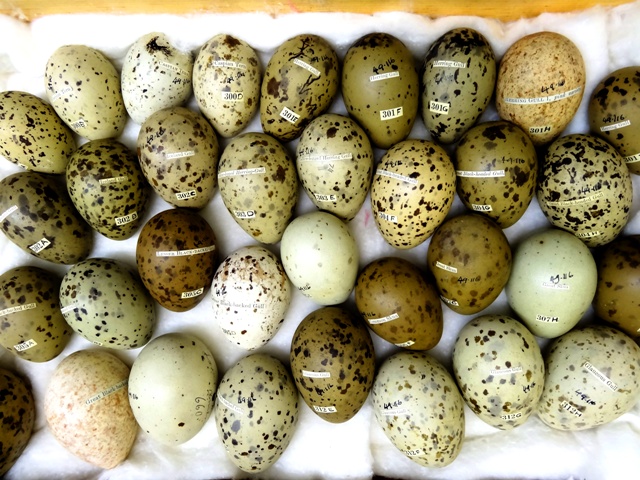
Both historical and new collections played a key role in understanding the spread of the chytrid fungus infection, one of the greatest current global threats to amphibians. The decision to ban DDT and other environmental pollutants was based on the discovery of thinning bird eggshells collected over an extended period. And the declining body size of animals, one of the negative effects of climate change, was discovered using body-size data from museum specimens.
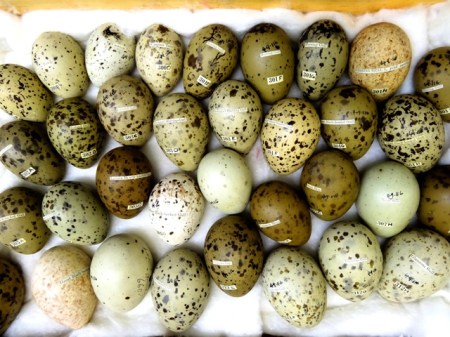
Egg collections like this helped identify the harm done by DDT. Image by Paolo Viscardi

In other cases, genetic data from decades-old scientific specimens has even been used to “de-extinct” species. One of these, the Vegas Valley leopard frog, was thought to have gone extinct in the wake of Las Vegas development. However, a study published in 2011 compared the genetics of specimens from the extinct population to individuals from surviving populations of similar-looking frogs elsewhere in the Southwest and found them to be the same species.

These types of discoveries are “the hallmark of biological collections: They are often used in ways that the original collector never imagined.” And with the continuing emergence of new technologies, this potential only grows.

That potential, combined with the increasing number of threats species face and the need to understand them, suggests that the need to collect specimens—and to share the information they hold—has never been greater.

In their April article, Minteer and his colleagues erroneously portray scientific collecting in a negative light that distracts from the primary causes of modern extinctions: habitat degradation and loss, unsustainable harvesting and invasive species.

“Halting collection of animal and plant specimens by scientists would be detrimental not only to our understanding of Earth’s diverse biota and its biological processes, but also for conservation and management efforts,” said Diarmaid O’Foighil, director of the U-M Museum of Zoology and a co-author of the rebuttal letter.

“That detriment in understanding would only increase with time because having museum specimens available for future generations of scientists will allow their study using research methodologies that have yet to be invented.”

A pre-publication pdf version of the letter can be read here.