
Submitted by Clare Drinkell, Senior Curator Botanist at the Royal Botanic Gardens, Kew.
Editors: Nina Davies, Clare Drinkell, Timothy Utteridge. 290 pp, 234 x 156 mm. Over 700 colour photographs. Paperback, ISBN 9781842467695. Kew Publishing, TW9 3AE, UK 2023. £25.00. https://shop.kew.org/kew-herbarium-handbook
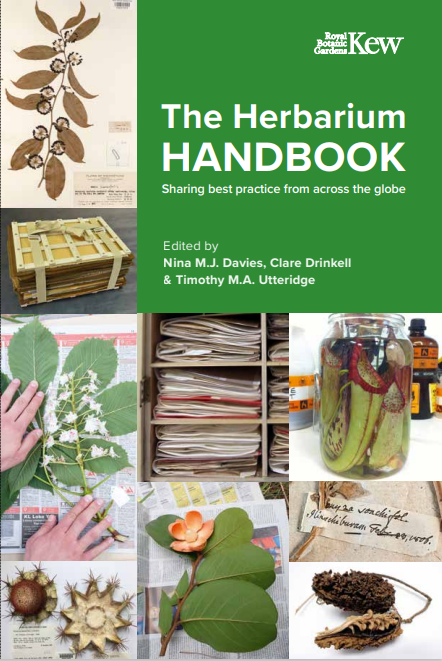
The new Herbarium Handbook is a key new addition to Kew Publishing’s series of handbooks, including The Plant Glossary and The Temperate Plant Families Identification Handbook. Unlike the other books in the series the Herbarium Handbook is a new version of a book first compiled and edited by Kew botanists some thirty-four years ago. The initial Herbarium Handbook came about following an extremely popular International Diploma Course in Herbarium Techniques at Kew. The demand to attend the course was so high that the number of applicants far exceeded places on the course. In view of the interest, the main information imparted during the course was published as a manual, widely recognised as an important reference for fundamental aspects of herbarium care and management.
Over the years the handbook has served us well, yet the modern herbarium has evolved significantly since the halcyon days of poisoning rooms and floppy disks. The old handbook had drifted away from contemporary and technological advances and needed updating – for example, databasing, imaging and ‘big data’ are driving future directions of herbaria today.
A long overdue opportunity to revive the handbook was to be an opportunity to outline new and future workflows of the herbarium curator, and the new version has undergone a major transformation not only in design but also in concept.
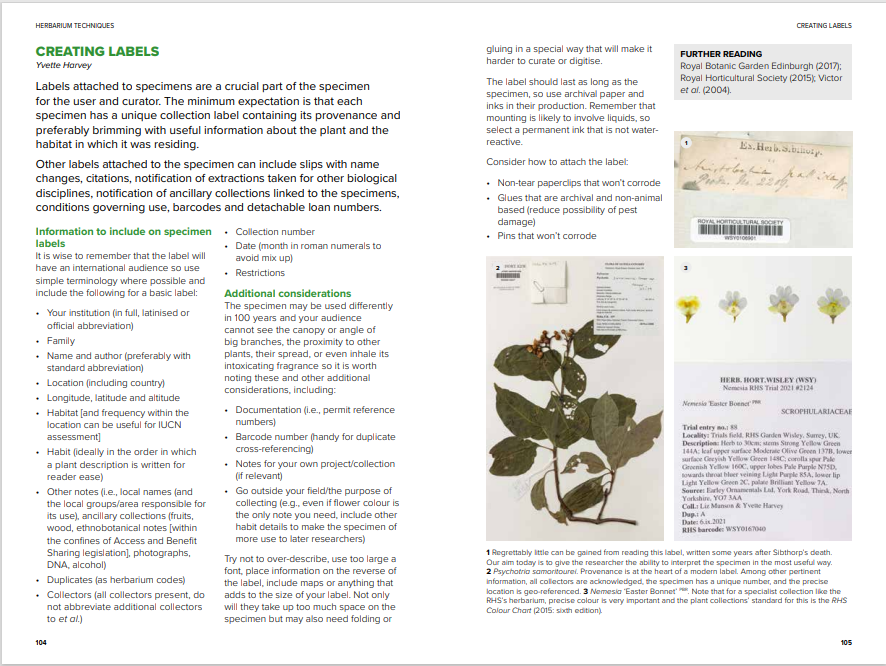
The new book is presented in four main chapters: 1. Collecting for the herbarium; 2. Herbarium techniques; 3. Building and environment; 4. The herbarium in a wider context. Features within each chapter are arranged in sequential order, so for example the herbarium techniques chapter begins with new acquisitions and goes through wide ranging processes including new practices such as sampling for DNA and the extended specimen concept. Key new sections in the book include features on databasing and digitisation, biosecurity and public engagement of the herbarium.
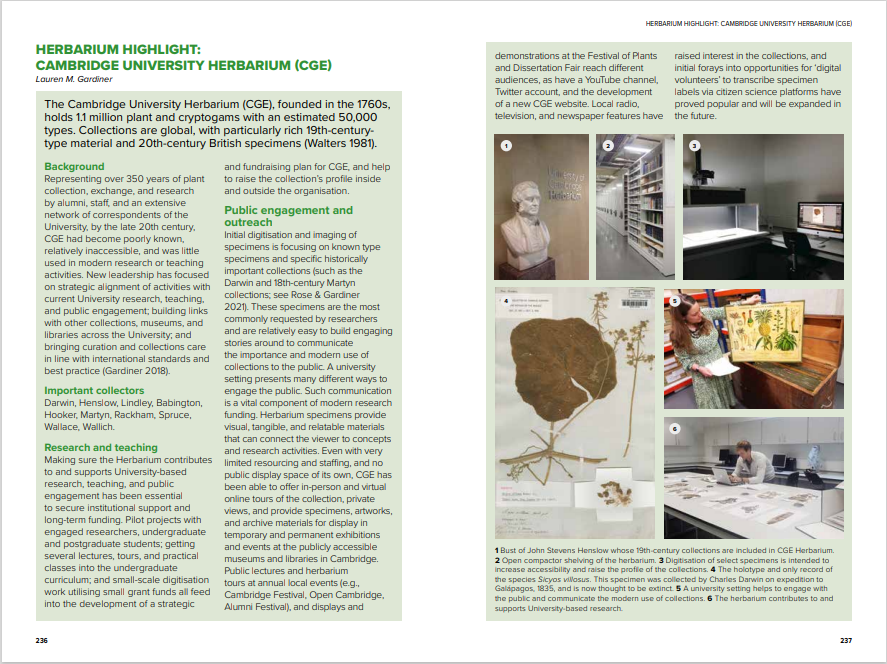
Crucially, we aimed for the handbook to carry many different voices, and these are interspersed throughout the chapters as new and exciting features, personal profiles and herbarium highlights. The outcome has been a gathering and consolidating of ideas from partners and collaborators across the world. In all there are more than seventy contributing authors from nineteen herbaria large and small, historic and new, all playing a key role in contributing a collective knowledge and pulled together in a newly designed handbook that will guide the future of herbarium collections.
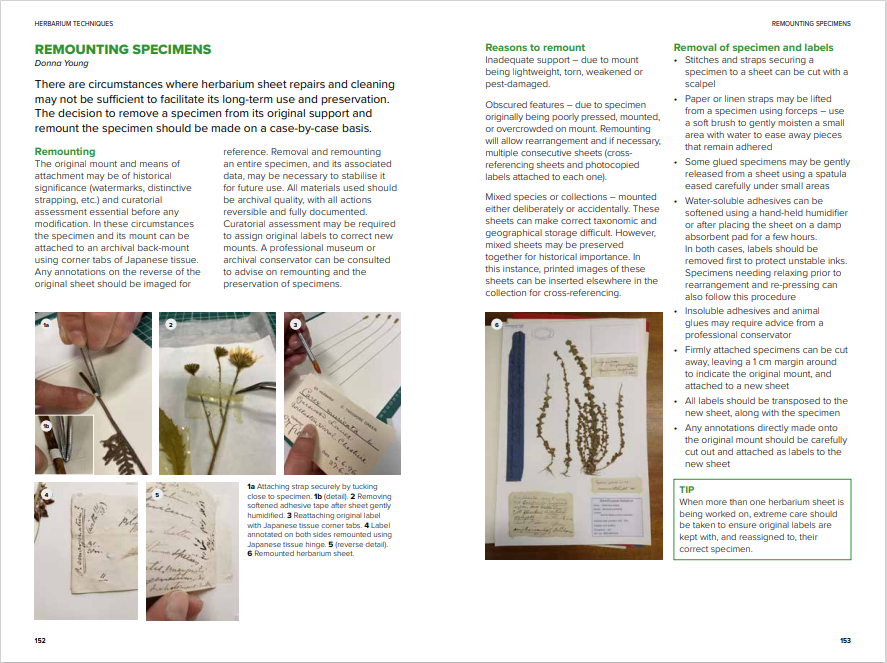
To summarise, we hope the updated handbook is an inclusive and accessible guide reflective of contemporary herbarium practises. The book is a richly illustrated reference tool intended to help with training the next generation of staff, interns and volunteers, share ideas on best practice, techniques and workflows. Much like its original purpose, it is an updated manual for running a modern herbarium, and with the wealth of knowledge will help teaching and staff planning for the future.

 NatSCA