A Refresher Course on Fluid Specimen Conservation at the Natural History Museum of Denmark

Written by Anastasia van Gaver (Conservator) & Bethany Palumbo (Head of Conservation) Natural History Museum Denmark).

Workshop participants and Julian Carter

As conservators, it’s essential we keep up to date with developments in the techniques used in specimen treatments. With hundreds of fluid-preserved specimens to make and conserve for the new exhibitions at the Natural History Museum of Denmark, we sought the best in the field to give us a refresher course. Esteemed expert Julian Carter arrived fresh off the plane from Cardiff and over 3 days we explored different techniques for preserving and mounting specimens and well as discussing the unique challenges we face when conserving these invaluable scientific resources.
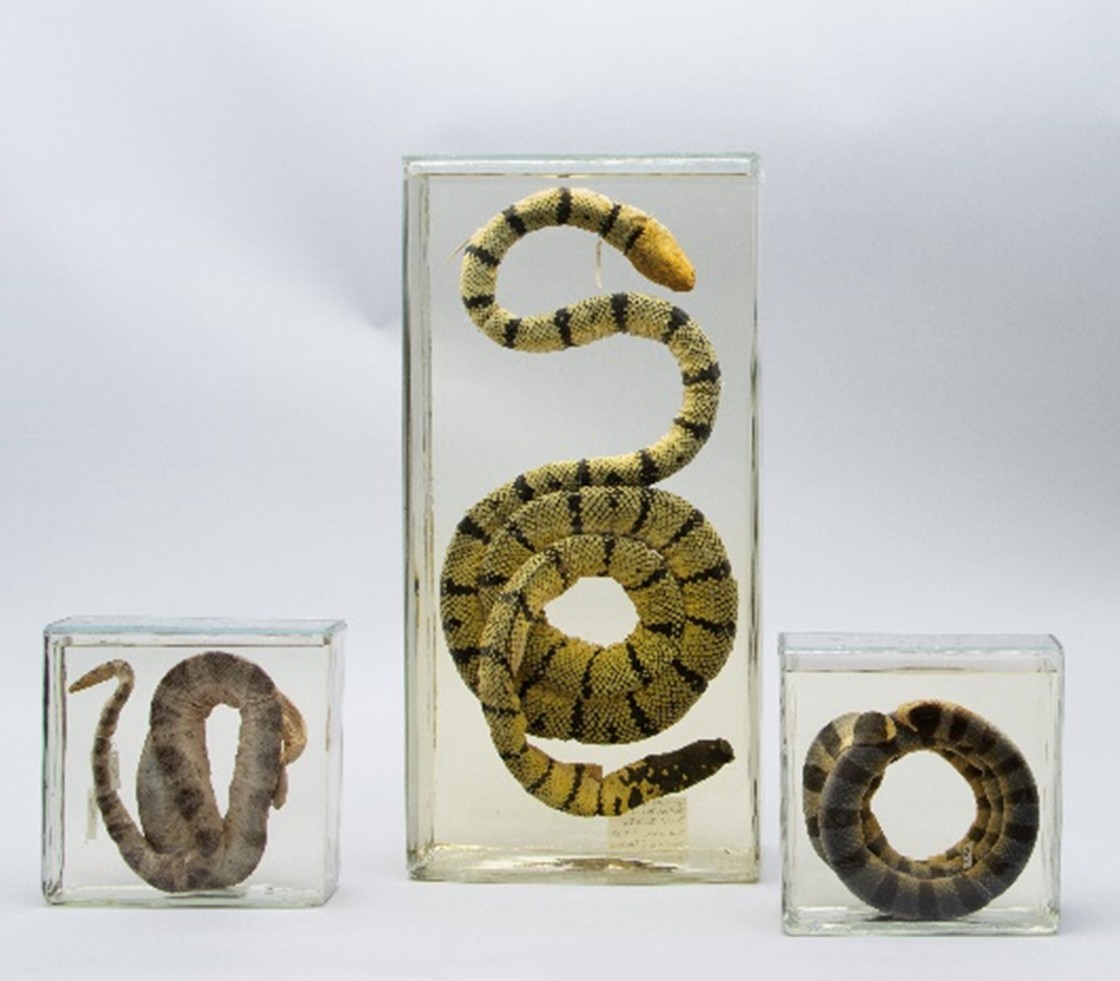
Example of three fluid specimens prepared by the conservation team for the new Natural History Museum of Denmark

Continue reading

A Stable Future – Research into the Stability of Materials used in Taxidermy Manufacture.

Written by Jazmine Miles Long – Taxidermist & Bethany Palumbo – Head of Conservation, Natural History Museum Denmark.

Taxidermy collections are crucial for our understanding of biodiversity, evolution, population genetics and climate change. They form a large part of natural science collections and their long-term preservation is essential. Historically, taxidermy was created using natural, durable materials such as wood, plant fibres, wax, clay and glass with examples dating back to the 16th century. However, over the past 50 years, taxidermists have increasingly adopted synthetic and plastic-based materials due to their ease of application, lower cost, and effectiveness in creating realistic specimens. One such example is polyurethane, a very widely used material to build the form that goes under the taxidermy skin. Although polyurethane has been extensively tested (albeit not specifically for taxidermy), it has already been shown to be unstable and unsuitable for long-term use. Awareness of stable, durable materials is not widespread within the taxidermy community. As a result, many modern museum taxidermy pieces are made with untested and potentially unstable materials.

Continue reading

Packing the Blaschka Glass Models 

Written by Julian Carter, Principal Conservator Natural Sciences, Amgueddfa Cymru – Museum Wales, Cardiff

During the late 19th century, Leopold Blaschka (1822-1895) and his son Rudolf (1857-1929) produced thousands of beautifully detailed glass models of a wide range of sea creatures, and other animals, for natural history museums and aquaria all over the world. The work has since been hailed as “an artistic marvel in the field of science and a scientific marvel in the field of art”. The work of the Blaschka’s remains remarkably contemporary today, working as they did on the cusp of design, craft, and industry. Crossing the boundaries of science and art, the surviving models today have a value that makes them irreplaceable. 

The idea for making lifelike renditions of sea creatures out of glass arose from the difficulty of preserving and displaying soft-bodied animals such as jellyfish, marine worms, and sea anemones. Preserving such animals in a lifelike way is difficult as techniques such as fluid preservation cause colours to quickly fade and shapes to become distorted. Leopold Blaschka devised a solution to this problem by using his glass working skills to accurately model these animals out of glass and other materials available to him and went on to establish a successful business supplying glass models to museums worldwide during the latter half of the 19th century. 

The model of the sea anemone Actinia mesembryanthum (right) based on a plate (left) from Phillip Henry Gosse’s Actinologia britannica. A history of the British sea-anemones and corals which Leopold Blaschka used for the early sea anemone models that he built.
Continue reading

Snagged Setae 2, The Sequel: Packing Materials After 14 Years in Fluid Storage

By Lu Allington-Jones (Senior Conservator), Wren Montgomery (FTIR Specialist) and Emma Sherlock (Senior Curator), The Natural History Museum, London UK

Many years ago, we undertook some research into a suitable replacement for cotton wool as bungs for vials holding small fluid-stored specimens. In 2008 we placed samples of Parafilm MTM, white Plastazote® LD45 and colourless HDPE (high-density polypropylene) lids in 10% formalin, 100% ethanol, and 80% IMS (Industrial Methylated Spirit, aka Industrial Denatured Alcohol) and allowed them to steep for 3 years. We undertook visual inspections, pH tests and FTIR analysis and concluded that Parafilm MTM was an unsuitable replacement, but that the other materials had undergone no change and had caused no contamination of the host fluids.  

We decided to revisit the samples after an additional 11 years on a south-west facing sunny lab windowsill, for a total of over 14 years of storage in the various fluids. 

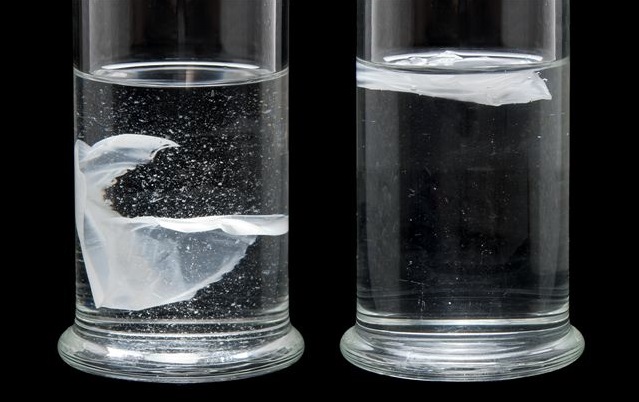
The state of ParafilmTM after only 3 years: particles are visible to the naked eye in the 100% ethanol on the left. The ParafilmTM in the formalin on the right showed a thinning and perforation at its edges. ©The Trustees of the Natural History Museum
Continue reading

Paddy the Pangolin: Conservation of a Taxidermy Museum Specimen

This article is re-posted from a piece that appeared on the Amgueddfa Cymru blog page, 3 August 2023 with permission from the author.

Written by Madalyne Epperson, MA Conservation Practice student, Durham University – when on placement at Amgueddfa Genedlaethol Caerdydd – National Museum Cardiff.

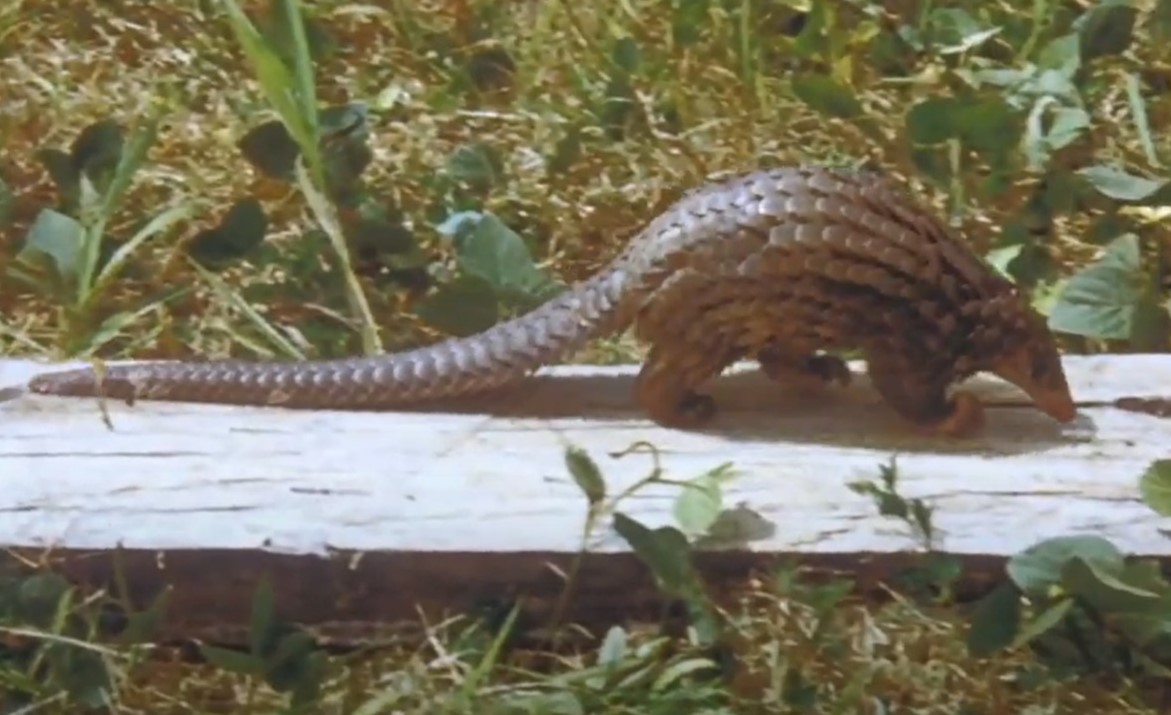
Paddy in the Wild During the Cambridge French West Africa Expedition 1957 (Pan Golin 2018)

Natural history collections are often central to our understanding of evolution, population genetics, biodiversity, and the environmental impacts of pesticide use and climate change, among other things. For this reason, caring for these collections is of great importance. A taxidermy tree pangolin – named Paddy by the conservation team – was brought to Amgueddfa Cymru – Museum Wales in 2017 in need of attention. Paddy was collected on August 4th, 1957, by researchers during Cambridge University’s French West Africa Expedition. According to the expedition diary, Amgueddfa Cymru had asked the researchers to retrieve a pangolin to make a museum specimen, as was common practice at that time. The mounted pangolin was feared lost after the expedition’s drying tent went up in flames on August 25th, 1957. Paddy was terribly singed by the fire, which greatly disheartened the expedition team. It is perhaps for this reason that Paddy never made it to the museum when the expedition concluded. It was not until 2016/2017 that Paddy was found in Staffordshire in the home of one of the expeditions members and sent over to the museum.

Continue reading