Unidentified, Not Unloved: On New Species and Stewardship

There are hundreds of millions of specimens held in natural history collections in museums worldwide, collected over centuries by thousands of experts and enthusiasts. It should come as no surprise, then, to learn that new species are ‘discovered’ in museums on a regular basis. These discoveries generally fall into two categories:

  1. Specimens that have never previously been identified
  2. Specimens that have been re-identified

All museums have unidentified and misidentified material in their collections. It is inevitable, given the enormous number of specimens and species that are involved. These are all potential new species, just waiting to be described.

Since I took on the voluntary role of Facebook Editor for NatSCA last year, I’ve read a lot of news stories while searching for content to share on the page, many of them about new species being found in museum collections. And I’ve been more than a little disappointed at the language chosen by the journalists to describe the specimens. The words ‘forgotten’ and ‘overlooked’ crop up frequently in headlines, and stories often describe specimens as having been ‘ignored’, ‘languishing’ in collections, or left ‘sitting in boxes’. This choice of words adds drama to a story for the papers, but it reflects poorly on the museums involved, and the inherent implications of neglect are both unfair and untrue. Having unidentified or wrongly identified specimens in a collection does not imply a failing on the part of the curatorial staff; nobody can be an expert in everything, and to identify one specimen among thousands as belonging to a previously unknown species requires an enormous amount of specialist knowledge and lots of research (often taking years). The important thing is that the specimens are preserved and cared for, so that experts are able to come in and examine them.
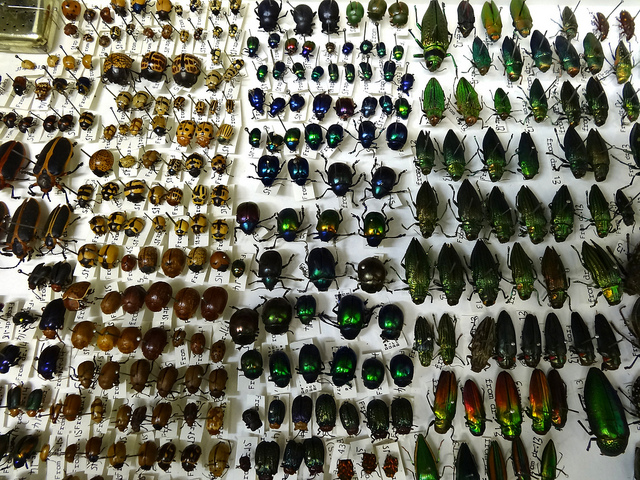
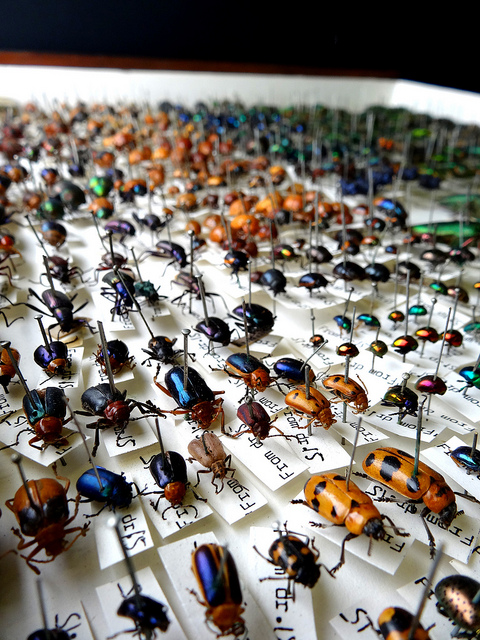
Drawer of various brightly coloured beetles, organised in neat rows with labels

Things Organised Neatly: Stewardship is fundamental to curatorship

Stewardship is the fundamental responsibility of the curators in charge of their collections. An unidentified specimen has not been forgotten. The average ‘shelf life’ of a specimen belonging to a new species, from discovery to publication, is over 20 years, and can be more than 200 years! This is due to the sheer volume of material that is collected in the field and donated to museums every year, and the expertise needed for identification. As the study of biodiversity (and the loss thereof) becomes more important to conservation efforts, more academics are turning to museums for data on population trends over time. The negative language used in these news articles could harm this relationship, and possibly deter specialists from engaging with museums. And with budget cuts increasingly affecting museum resources, curators want to engage with academics, artists, and other users, now more than ever.

The good news is that this problem is not entirely universal: recent news coverage of the discovery of a new species of ichthyosaur in Doncaster Museum was generally very positive about the value of natural history collections, mainly due to the enthusiasm of the researchers, which came across strongly in their quotes.

Rachel Jennings
NatSCA Facebook/Blog Editor

World Book Day

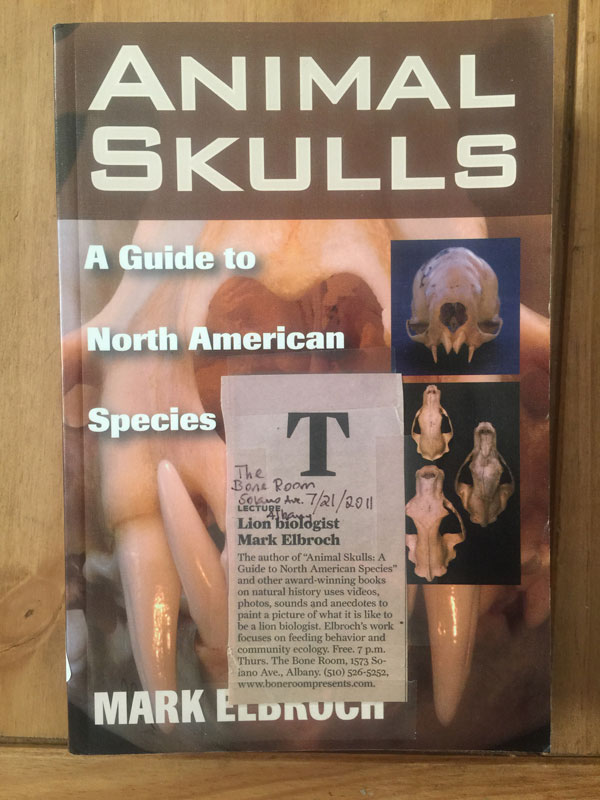
World book day is a time for sharing the books that have made an impact on you. Chances are, if you liked it, so will someone else. It has a tradition of being all about fictitious books but there’s no reason why that has to be the case. I’m going to share with you now a very interesting book that was loaned to me by Oxford Museum‘s own Gina Allnatt : the book is Animal Skulls, by Mark Elbroch. It’s a really handy resource for relative measurements of features and this particular copy came with a history: the previous owner before Gina was clearly researching big cats and had added this note to the front about a presentation by the author. There’s another note on the inside too.

Animal Skulls

A Guide to North American Species

We have some great book reviews coming in the near future so keep an eye out for those. Today I’d really like to hear what books have recently touched you – fact or fiction but specifically ones relating to natural history collections. Good books should spread faster than plagues.

NatSCA Digital Digest

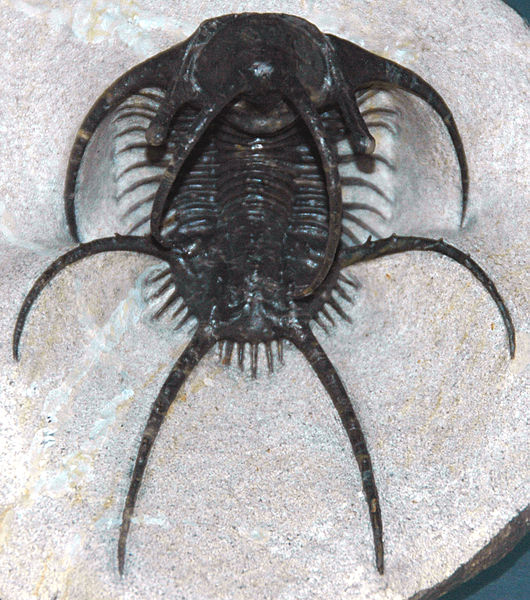
Ceratarges spinosus trilobite from Morocco (Obtained from www.wikimedia.org)

Welcome to the weekly digest of posts from around the web with relevance to natural science collections. We hope you find this useful and if you have any articles that you feel would be of interest, please contact us at blog@natsca.org


  1. One Day Conference: Curator of the Future

13th April 2015; British Museum

Synopsis

The conference will focus on three key themes:

  1. The Curatorial Survival Kit- what should be in the ‘curatorial survival kit’ to survive and thrive in the changing professional landscape?
  2. A Brave New World- what are the impacts and opportunities for curatorial practice?
  3. The Next Generation- how can we help support the current and future curatorial work force?

For further information please contact Katy Swift at kswift@britishmuseum.org


  1. Call for proposals: ‘Innovation’: The Emperor’s New Clothes?

Conference to be held on 14th May 2015 at the McDonald Institute for Archaeological Research, Cambridge.

Synopsis

Why are some projects described as ‘innovative’ while others aren’t? Have you ever been aware of pressure – from funders, from senior management, or from elsewhere – to come up with an innovative project?

Association with the innovation ‘label’ can be great in the short term for getting funding, but there is no point in ‘innovation for the sake of it’.

When you look back at all the projects described as innovative, the reality is that only some of them have brought lasting value. What does innovation mean for museums? Does it go beyond new technologies to include new ways of organising our work or interacting with audiences? How do we assess which innovations are useful and which are distractions? Do you have any examples where the term innovation has proved positive in the short term and/or in the long term? Does innovation have to be revolutionary, or can it be evolutionary? Are you aware of any innovative ways of evaluating digital projects, or evaluating projects in general, using digital technologies or methodologies?

We are seeking proposals from people willing to share their successes and failures in projects that have or could be described as innovative. However we also welcome sessions focused on debunking the ‘cult’ of innovation or addressing the questions above.

Fill in this form to submit a proposal here or contact Jessica Suess for further information jessica.suess@museums.ox.ac.uk


  1. Conference: Refloating the Ark- Connecting the Public and Scientists with Natural History Specimens

17th and 18th June 2015, 9-5pm; Manchester Museum

Synopsis

A two­‐day meeting exploring how natural history museums can contribute towards environmental sustainability, by engaging effectively with the public and the scientific research community.

For further information contact David Gelsthorpe david.gelsthorpe@manchester.ac.uk or visit the Manchester Museum website.


Compiled by Emma-Louise Nicholls, NatSCA Blog Editor

Specimens gone forever

Following on the heels of Paolo’s post last week on Collections at Risk, the International Business Times reports on a collection in Iraq that is actively being destroyed. Among the irreplaceable artefacts lost was the 7th Century Assyrian winged bull – whose twin and now only survivor resides at the British Museum, London. I don’t think we can take any comfort from the fact that it’s not a Natural History collection, or assume that Natural History collections are necessarily safe from these people: they have already condemned and murdered pigeon fanciers and banned the teaching of evolution (no surprises there). For the time being we must conclude that no collection, or indeed curator, is safe – but that has probably been true for other reasons for time immemorial.

Collections at Risk

The biggest problems facing collections today are almost certainly posed by reductions in funding. The financial support for museums of all sizes has been decreasing every year, with jobs being lost and stored collections often bearing the brunt of cuts, since they are usually out of sight and therefore out of mind for many decision makers.

Hidden treasurers? Specimens in storage can be overlooked by decision makers in favour of public-facing elements of museum business.

Hidden treasurers? Specimens in storage can be overlooked by decision makers in favour of public-facing elements of museum business.

NatSCA has been to trying to keep track of threats to collections and offer our support in an effort to make the vital role of collections, and the people with the skills to care for them, more clearly recognised by management. Much of this work in the UK has been alongside our colleagues in the Geological Curators Group.

The first issue of our new online publication NatSCA Notes & Comments provides a case study of decline from the Midlands, written by Geoffrey Hall. Although the picture painted is bleak, there have been some small wins, as Ludlow have since acknowledged the importance of maintaining a geologist to manage their globally important geology collection.

We have also been looking at the wider societal role of collections and have been working to raise their profile at a variety of levels, including internationally, alongside the Society for the Preservation of Natural History Collections. Our message about the importance of collections is being heard by a wider and more influential audience, something that is reflected in this week’s Nature, which features an article about the importance and decline of collections.

If you know of any collections that are at risk from staff loss or disposal, please let us know by editing our Natural History Near You map or emailing us at advocacy@natsca.org