NatSCA Digital Digest

Chameleon

Jobs and Traineeships

Norfolk Museums Service is offering six 12-month paid traineeships, including one post in natural history. The closing date for applications is 3 January 2016. See here for details.

Curatorial Assistant, Anthropology Audit: Natural History Museum (NHM), London. Six-month collections-based role. Applications close 7 December 2015.

Documentation Officer (job share): Horniman Museum & Gardens, London. 19 hours/week. Applications close 14 December 2015.

Events and Exhibitions

Introduction to Diptera Families. Oxford University Museum of Natural History. A two-day workshop on the ecology and identification of flies.

Gifts for the Gods: Animal Mummies Revealed. Manchester Museum. An exhibition showing how modern science can help explain the ancient practice of animal mummification. Open now until 17 April 2016.

Wildlife Photographer of the Year 2015. Natural History Museum, London. As always, this is a stunningly beautiful exhibition, and well worth seeing. If you can’t make it to London, you can also see it on tour at other museums around the UK.

Collected and Possessed. Horniman Museum & Gardens, London. An exhibition by artist Mark Fairnington, inspired by the collections of the Horniman, NHM, and Wellcome Collection. Open now, until 24 January 2016.

Around the Web

A WNPR podcast looking behind the glass of the taxidermy dioramas the the Peabody Museum.

Who’s digitising what? The New York Times guide to online natural science collections.

In pursuit of plants: The Marianne North Gallery at Kew.

NatSCA Digital Digest

NatSCA

(Image by Ton Rulkens, in public domain)

Good morning all, I’m recently back from volunteering on the Orchid Observers project, working on determining the effect of climate change on the UK’s orchid species. I’m going to talk about that in a bit more detail later but let’s see what’s been happening this week:

In the News

The Natural History Museum, London, will be reprising its Human origins permanent exhibition next month. Anyone who remembers the old exhibition in the upper gallery and then attended the temporary One Million Years exhibition will know that much of the research of the last decade was missing from the old one. This relaunch comes as welcome news to many.


Speaking of Welcome news, the Wellcome Collection will soon be launching its exhibition on Tibet’s Lukhang Palace. One may not ordinarily think of cultural structures as coming under the remit of Natural History but it’s amazing how much geology there is in stone work, not to mention all the nature-inspired tapestries and decorations, andthe animal-skin boats used to reach the palace.

11-year-old nature enthusiast Zach has just finished a year of daily nature blogging. Check out the fruits of his impressive work here.


News from NatSCA

Don’t forget that the final entries for a Bill Pettit Memorial Award grant are due in on the 12th December 2015 – get submitting here.


From the Blogosphere

Oxford’s Mark Carnall has written a must-read piece in the wake of the Museums Association conference on the role of the Subject Specialist. You can find it here.

If your local museum is up to something interesting, do get in touch.

Funny Bones

I wanted to be an Archaeologist when I was 11, and this was certainly down to a fascination with the bones of animals. My inspiration from a very young age came from the wonderful series of ‘Funny Bones’ books by Allan and Janet Ahlberg. The skeletons certainly made me think about how the bones of humans and animals (admittedly not 100% accurate) moved together. I trace my later interest to the many books on dinosaurs and prehistoric life that I assiduously read in my school library. Fast forward 20 years and as an intern at Auckland War Memorial Museum in 2012, I was allowed to ‘have a go’ at preparing some native birds for skeletonisation by de-fleshing them. At Exeter’s Royal Albert Memorial Museum, I worked on a small project to re-house some Moa bones whose storage and provenance needed to be updated. However, I wasn’t aware of the methods to clean and maintain bone and re-mount skeletal collections in museums.

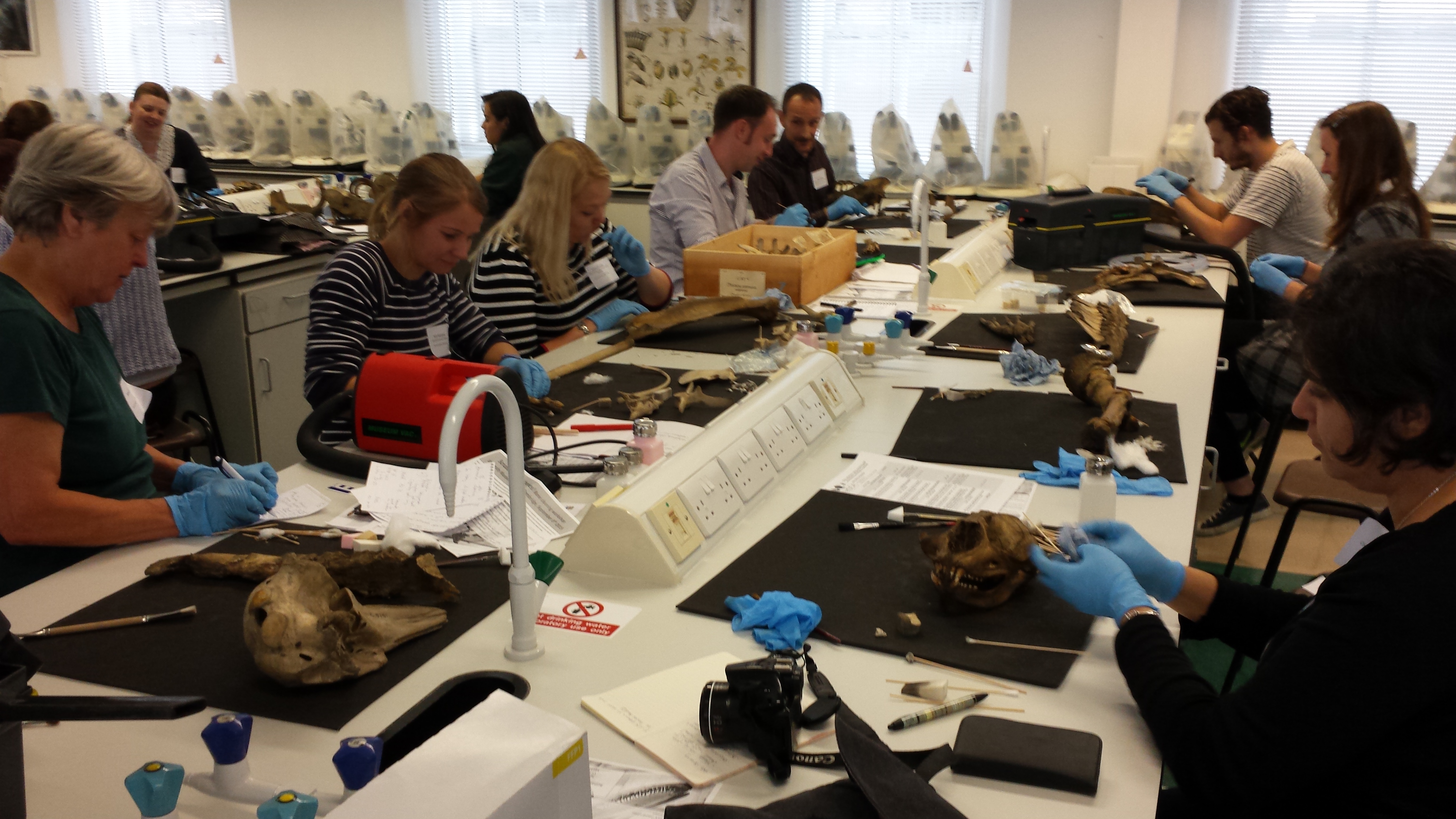
I was therefore pleased when NatSCA and conservators from the Cambridge Museum of Zoology put together an amazing conference and workshop called ‘Bone Collections: using, conserving and understanding osteology in museums’. Depending on your area of interest, you could attend for some or all of the talks, or take part in a bone cleaning workshop hosted by Bethany Palumbo, Conservator at Oxford University Museum of Natural History, and Vicky Singleton and Natalie Jones of Cambridge University Museums. By taking part, I was able to gain some practical hands on experience of handling and observing bones in collections, and using a variety of dry and wet cleaning methods that are recommended as safe to use, easy to apply, and non-invasive.
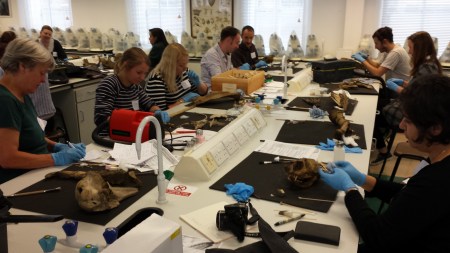
Bone cleaning in progress (Image: Anthony Roach)

Bone cleaning in progress (Image: Anthony Roach)

Bethany began by outlining the structure and composition of bone and the impact that light, humidity, and temperature can have on bone if not properly cared for. Bone can become bleached through exposure to light. The surface of bones can crack if they become too hot or suffer mould damage if left in cold, damp conditions. Bethany explained that the bone itself can also cause problems, such as with the secretion of natural fats and oils, which are acidic and can ooze out of specimens long after they have been cleaned and erected for display. This can lead to acid burn. Mechanical damage of bones can also occur, where wire is excessively tight in articulated specimens, or fatty acids react with copper wire and pins to cause Verdigris.
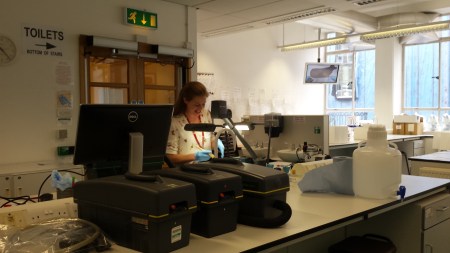
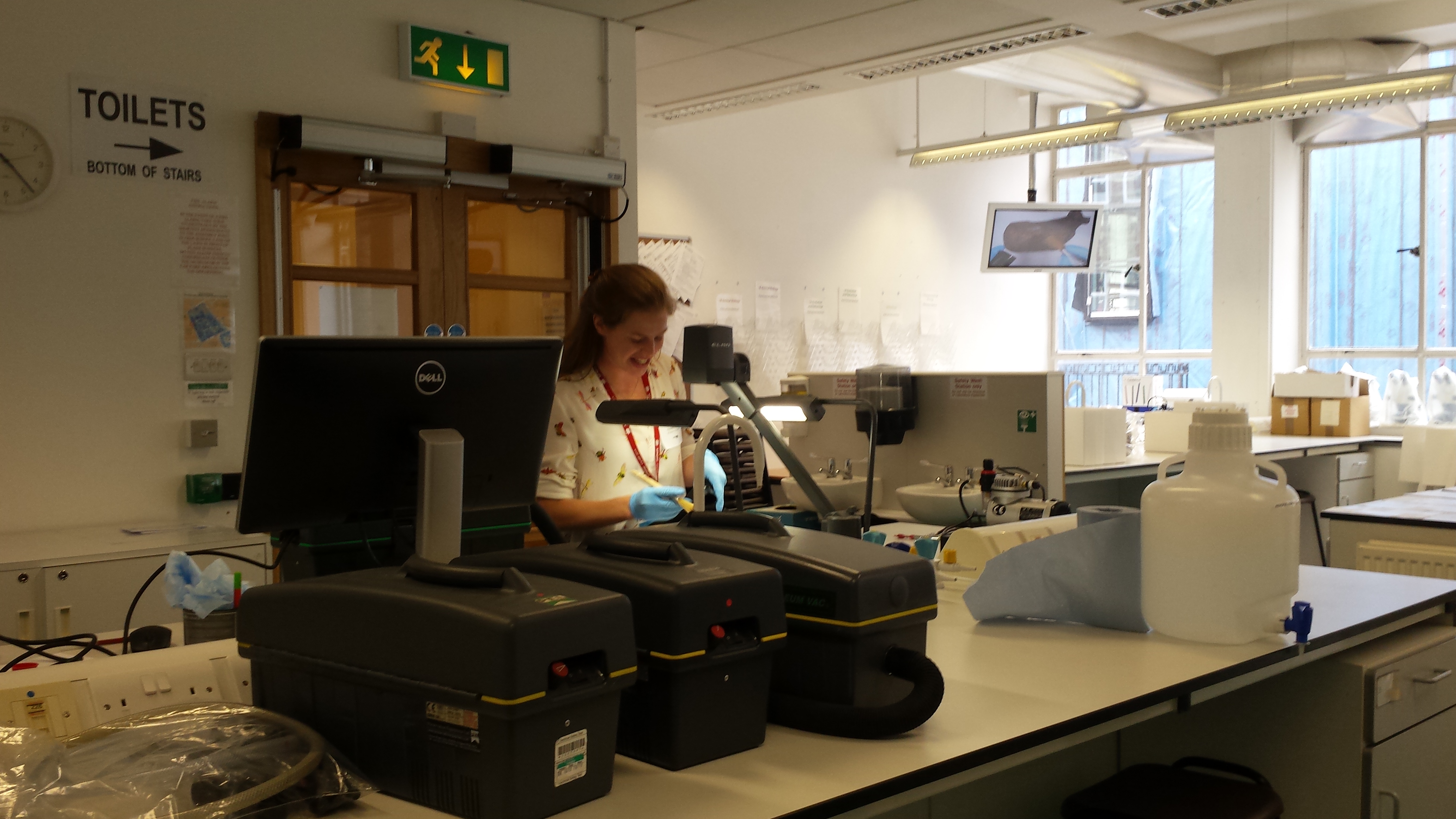
Vicky Singleton,  Conservator at Cambridge University Museums  pictured demonstrating dry cleaning methods (Image: Anthony Roach)

Vicky Singleton, Conservator at Cambridge University Museums pictured demonstrating dry cleaning methods (Image: Anthony Roach)

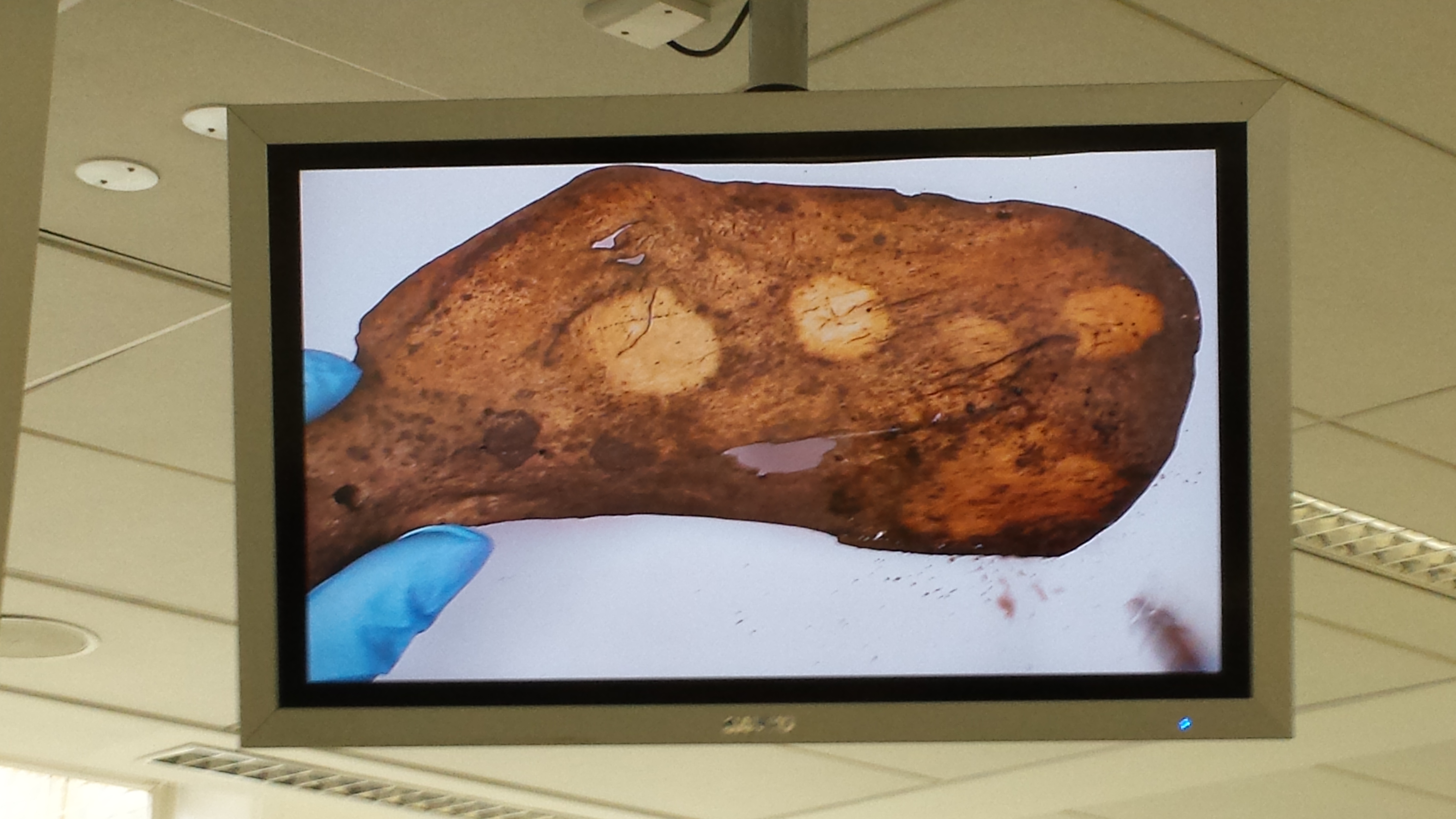
Vicky Singleton and Natalie Jones then systematically went through the various methods for dry and wet cleaning of bones. The methods for dry cleaning include using a vacuum and brush, smoke sponge, a ‘groom stick’ made of natural rubber, and air. These methods are less time consuming, less invasive, and more cost effective than wet methods. I was able to choose specimens from a box of assorted bones, and see the impact of the methods for myself. I could see the difference literally first hand on the digits of a primate hand, using the various dry methods. I then used the wet methods on a collection of horse vertebrae. The wet methods made a dramatic difference to the surface of the bone. These include using solvents such as de-ionised water, ethanol, and white spirit, enzymes, and detergents (e.g. Synperonic A7). I was amazed by the impact of white spirit on greasy bones, where water made little or no impact. The clear favourite to remove dirt in general was actually something I hadn’t ever considered: human saliva, which is full of enzymes. Human saliva! Who knew?
Bones shown partially cleaned by various solvents including water, ethanol and white spirit, as part of the wet cleaning methods (Image: Anthony Roach)

Bones shown partially cleaned by various solvents including water, ethanol and white spirit, as part of the wet cleaning methods (Image: Anthony Roach)

The talks were equally excellent, such as the session by Paolo Viscardi on the uses of skeletal reference collections at Sheffield University, which consists of over 1800 specimens, organised in a useful way for teaching and research. Jack Ashby’s #BoneIdols talk about the successful crowdsourcing project to protect some of the Grant Museum’s most scientifically important and rare specimens was also inspiring. The quagga, for instance, has became something of a celebrity in its own right through a very successful marketing campaign where visitors could see the conservation, re-mounting, and re-storage of the specimen. Interest was also maintained through press releases and blogs about the Quagga and the use of technology used in museums. Jan Freedman’s ‘Game of Bones’ talk on the methods for preparing animals for skeletonisation and using bone collections was also memorable.

Anthony Roach, Natural History Museum (NHM)

NatSCA Digital Digest

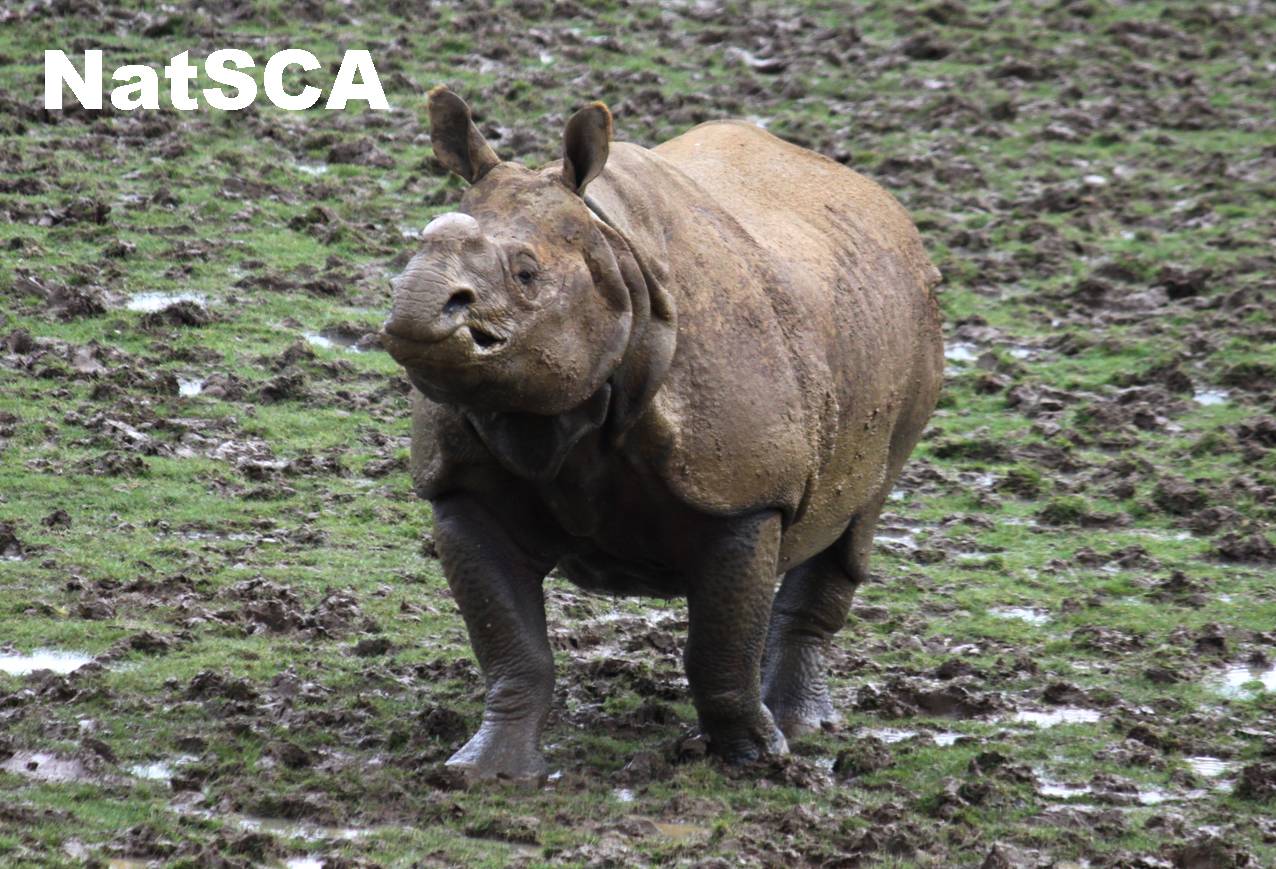
Greater one horned rhino (© E-L Nicholls)

Greater one horned rhino (© E-L Nicholls)

News

Our very own Paolo Viscardi has moved to the inner belly of London to join the team at the Grant Museum of Zoology as their fourteenth Curator. This shift will at some point inevitably create a faunal interchange of curators amongst the natural sciences collections of the world, so keep your ears to the ground future Deputy Keepers of Natural History

Advert

Last weekend was the Festival of Geology, always a great weekend full of fossils, rocks and geeky conversations. If anyone who went would like to write a short piece for the NatSCA blog, do get in touch via our normal email address blog@natsca.org. We do love a good write up!

Events

If you live near or are visiting Gloucester anytime this month, the previously mentioned 2015 British Wildlife Photography Awards exhibition has been extended until the 29th November. Located at the Nature in Art collection.

Around the Web

As you probably all know, it was the Museums Association Conference and Exhibition last week. I know a few people who attended this year and have heard great things, so if you missed it too and would like to view some highlights, check out the MA’s archive of the event here.

Despite Mark Carnall having left the Grant Museum of Zoology at UCL for the heavier-on-dinosaurs but lighter-on-quaggas Oxford University Museum of Natural History, his ever entertaining blog series Underwhelming Fossil Fish of the Month continues. Well, thank goodness for that. If you’ve not had the delight before, this blog is a shining example of how to use the unused-for-good-reason areas of your collections.

NatSCA Digital Digest

Chameleon

News

Save the date! The 2016 NatSCA Conference & AGM will be held 21 – 22 April 2016 in Derby, at the Silk Mill and Derby Museum & Art Gallery. A call for papers and more details will follow. We look forward to seeing you there!

Jobs

Museum Manager, Great North Museum: Hancock. A great opportunity to manage the Hancock and its wonderful Natural Science collections. Applications close 12 November 2015.

Assistant Curator, National Museums Scotland. Two six-month posts in Natural Sciences, one working with the bird collections, the other with mammals and wet specimens. Applications close 16 November 2015.

Vertebrate Palaeontologist, Qatar Museum, Doha. A full-time, permanent position in sunny Qatar! Applications close 30 November 2015.

Events

26 November 2015: A talk about the #naturedata pilot system at the Natural History Museum (NHM), London. Flett Lecture Theatre, 2.30pm.

1 – 2 December 2015: Geological Curator’s Group (GCG) AGM. The full programme is now available online, and there is still time to book.

Around the Web

The National Guard had to be called in to airlift a baby Pentaceratops excavated by the New Mexico Museum of Natural History and Science.

The Londonist went behind the scenes at the Grant Museum of Zoology, UCL.

Historic series of museum specimens have helped to solve the puzzle of the evolution of the sparrow’s bill.

A new species of bat has been discovered in the collections of the NHM, where it has resided in a jar since 1983. A relatively short shelf-life by museum standards!