Meet the NatSCA Committee: Paolo Viscardi

Name: Paolo Viscardi

Job Title & Institution: Curator of the Grant Museum of Zoology, UCL

Twitter username: @PaoloViscardi
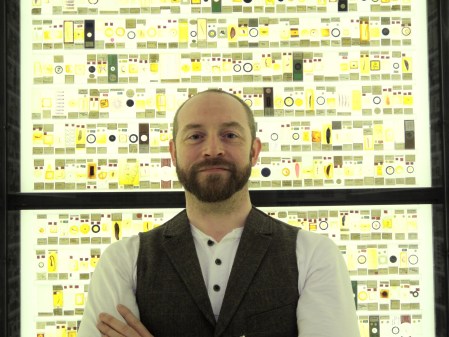
Paolo Viscardi, in the Grant Museum's amazing Micrarium

Paolo Viscardi, in the Grant Museum’s amazing Micrarium

What is your role on the NatSCA committee?

I’m the Chair of NatSCA and my role is to oversee the strategic activities of NatSCA, making sure that we are able to respond to the changes in the wider sector. This involves discussion with other organisations, developing funding bids and working with the rest of the NatSCA committee to provide a sounding-board for ideas, suggestions for ways of approaching problems and decision-making when needed.

Natural science collections are very popular with museum visitors. Why do you think this is?

Natural history collections are accessible for a broad range of audiences. Most people have some connection with other living organisms, either through their pets, the wild animals and plants in their gardens or through what they get to see in the countryside or on wildlife documentaries; I think that the popularity of natural history collections is partly an extension of this.

What do you think are the biggest challenges facing natural science collections right now?

At the moment there are a variety of challenges facing natural science collections. The obvious one is funding cuts, particularly to local authority museums. However, there are also issues arising from reductionist approaches to biology that have dominated for the last few decades, shifting scientific focus (and funding) away from whole organisms and ecology towards genetics and bioinformatics.

While these fields are important and exciting, their rise has led to a decline in specimen based research and recording, with natural history becoming marginalised. This is a real concern, since future research will presumably shift focus in order to link genetic and population modelling work with whole organisms in order to provide a context for the observations made. The damage done by the neglect in training of naturalists, the running down of collections and the reduction in active collecting over the past few decades will become a severe limitation to this endeavour.

What do you love most about natural science collections?

I love skulls. They’re beautiful examples of the compromise between inheritance and function, which I find fascinating.
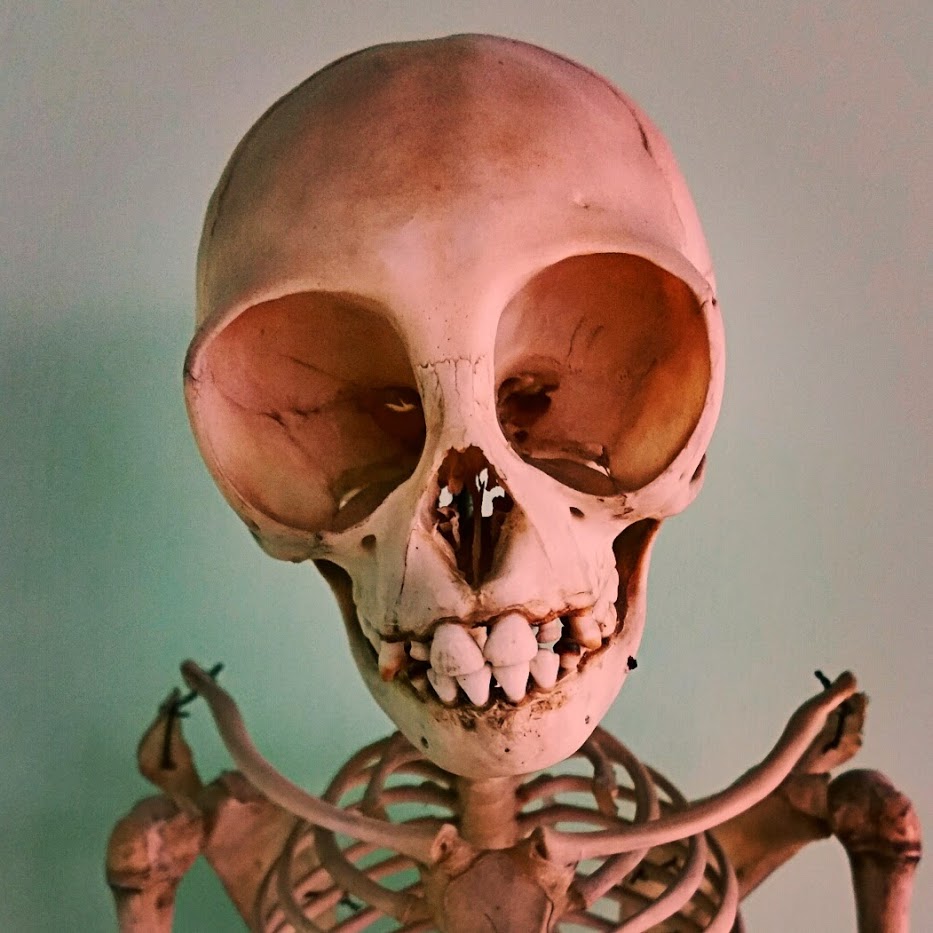
Gibbon

Gibbon skull from the Horniman Museum & Gardens

What would your career be in an alternate universe without museums?

There are plenty of things I could do, but I’m not sure I’d want to do any of them enough to really consider them a career!

What is your favourite museum, and why? (It can be anywhere in the world, and doesn’t have to be natural science-related!)

The Galerie d’anatomie comparée et de Paléontologie in Paris. The ground floor display is basically my idea of the perfect place!

The Galerie d’anatomie comparée et de Paléontologie, Paris

The Galerie d’anatomie comparée et de Paléontologie, Paris

Project Airless

Project Airless’ is a three year venture that began in August 2015 at the Natural History Museum (NHM) in London, with the objective of treating and preventing pyrite decay in the Museum’s historic earth sciences collections.

Pyrite Decay

Pyrite, or ‘fool’s gold’ (iron sulphide), is a common mineral of varying crystal structure (though cubic is common) that can often be found in or around fossils. It can occur in a compact, crystallized and stable form – or as a porous, microcrystalline and unstable form.

Pyrite oxidation, or ‘decay’, can occur when the mineral reacts with atmospheric oxygen in relative humidities (RH) above 60%. The resulting by-products of this oxidation depend on the mineral composition of the fossil and matrix, but often comprise sulphuric acid and hydrated ferrous sulphates, which can be very harmful to specimens, labels, and storage media. Once pyrite has begun to oxidise, mineral hydrates will form at as low as 30% RH. Signs that pyrite oxidation is occurring include expansion cracks, white or yellowish acicular crystal formations, and a sulphurous odour.

Distressing scenes for fossil enthusiasts: a drawer of fossils with pyrite decay

Distressing scenes for fossil enthusiasts

Method

Three conservation technicians have been surveying the collections and recording where pyrite decay is occurring amongst the NHM’s 7 million fossils and 500,000 mineralogical specimens.

Hunting high and low for signs of pyrite oxidation; conservators check drawers for suffering specimens

Hunting high and low for signs of pyrite oxidation

Affected specimens are temporarily removed from the collection, photographed, and a condition report created for the specimen on the Museum’s collections database. Following this, any remedial treatments are undertaken as necessary (ammonia gas treatment, for example). The fossil is then placed in an acid-free tray within a Plastazote inlay for protection. To prevent further oxidation, the specimens are heat-sealed in a NeoEscal barrier film bag with oxygen scavenging sachets, forming an anoxic microenvironment. Once sealed, the technicians complete a process report and return the fossil to the collections. This work is being undertaken in advance of the development of a new Earth and Planetary Science building, which will have a more efficiently controlled environment.

Specimens re-housed in an anoxic microenvironment, sealed in a bag

Specimens re-housed in an anoxic microenvironment

Treatments

Once a specimen has been assessed for pyrite decay, there are some remedial treatments the conservation technicians can undertake, depending on the severity. The first of these is the removal of any white/yellowish crystals by dry brushing, followed by consolidating any cracks in both the fossil and the matrix with Paraloid B72 in Acetone.

If a figured or type specimen is exhibiting signs of severe pyrite oxidation, a cast can be made in order to preserve morphological detail before it deteriorates further. However, moulding and casting carry risks for fragile specimens.

Ammonia gas treatment is a method that successfully neutralizes sulphuric acid produced by pyrite oxidation, and involves exposing specimens to the vapour emitted by a mixture of ammonium hydroxide and PEG 400 (polyethylene glycol) within an enclosed polyethylene or glass container. The vapours from the ammonium hydroxide react with the decay products, turning the affected areas a brick-red colour.

Team Airless to the rescue!

Team Airless to the rescue!

The Future

According to current estimates, 14,000 specimens at the Museum are in urgent need of this protective measure. As the project progresses, the team hopes that they will be able to share knowledge and expertise with other museums and institutions that may be facing the same problems as the NHM. Images generated for each specimen during the project should vastly improve the Museum’s collection database – and may even limit the need to open the bags. While ensuring that these valuable specimens remain intact, and of use for years to come, the project is also increasing digital access and reducing unnecessary handling by using a web based application to associate images with each specimen’s unique barcode.

Kieran Miles, Matthew Porter, and Amy Trafford

NHM, London

NatSCA Digital Digest


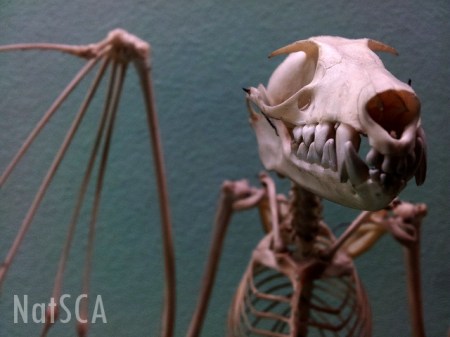
A mounted skeleton of a fruitbat leers at the camera

Welcome to the March edition of the Digital Digest! Without further ado…

News

Booking is open for the 2016 NatSCA Conference and AGM, ‘The Nature of Collections – How museums inspire our connection to the natural world‘, which will be held at the Derby Museum & Art Gallery and The Silk Mill on 21 – 22 April.

We have invited papers and posters looking at how museums have inspired and shaped the relationship of visitors and users of the collections to the natural world:

  • Projects between wildlife/environmental organisations/parks and museums.
  • The training & developing of naturalist skills using collections.
  • Artists projects connecting collections/gallery to outside spaces.
  • Looking at the relationship between natural history societies, their collections & museums.
  • Exhibition examples linking preserved specimens and our environment.

The Early Bird deadline is TODAY (Thursday 10 March), so get booking and save money!

If you’re not yet a NatSCA member, now is a great time to join – you can purchase membership and get the member’s conference rate for the same cost as a non-member ticket! See our membership page to join.

If you are a member, email the NatSCA Membership Secretary (membership@natsca.org) for your booking discount code.

Jobs

Geologist, Scarborough Museums Trust. A great opportunity for any rock and fossil enthusiasts! Application deadline: Friday 8 April.

Research and Data Coordinator in Science Policy (CITES), Kew. One of a selection of interesting posts currently on offer at Kew, the application deadline for this post is Wednesday 16 March.

Around the Web

A taxidermy warehouse in London was broken into on Tuesday this week, and 18 specimens were stolen. The Met police are appealing for information: http://news.met.police.uk/news/help-needed-to-trace-stolen-stuffed-animals-154850

DNA from museum specimens confirms a new species of forest thrush.

Why was the pink-headed duck’s head pink? Museum specimens reveal the secrets of this extinct species.

NatSCA Digital Digest

ndd-b-rex
Welcome to the February installment of our new monthly format of the NatSCA Digital Digest. This will give your lovely blog editors much more time to write about cool stuff between digests, which can only be a good thing – right?
Jobs
You’d better get applying for Paolo‘s old job at the Horniman. Deadline is the 17th February!
Conferences and Workshops
It is the 14th Coleopterist Day at the Oxford University Museum of Natural History this Saturday. Do come along if you can, it’s free and no sign up is required.
Early word from the world of Darren and John suggests a likely November date for Tetzoocon 2016. If you haven’t been to a Tetzoocon yet, do go – they’re great fun with lots of informative speakers including several NatSCA members.
News from the Museums
The Grant Museum is hosting a Valentine’s event this year – do check it out – it looks like it’s going to be lots of fun.
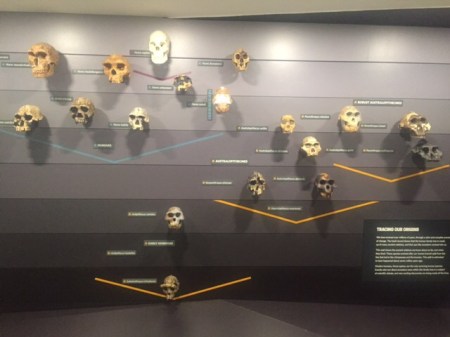
I went to visit the new Anthropology exhibition at the Natural History Museum, London at the end of last week. Those of you who visited the old one will notice some differences: Gone are the spinning skull casts worn smooth like the statue of a church Saint. Gone is the disproportionate emphasis on genus Homo and the appearance of agriculture. Instead what you have is a walk-through gallery outlining the entire hominid line, featuring footprints, skeletons, and tools – including a rather impressively preserved 420,000 year-old wooden spear. Beside each of the better-preserved skulls sits a fetching artist’s reconstruction of the individual. The cases are right up-to-date with specimens found as recently as last year. Sure the handling specimens will wear smooth and the taxonomy will need revising in another 30 years but, for now, it’s a beautiful place to visit and I can’t wait to see what they’re doing to the dinosaur gallery.
A tree full of hominids
If you missed Mark Carnall’s BBC Radio 4 talk about underwhelming fossil fish, fear not: you can catch it all on Inside Science. We are reminded in segments like these that the fossil record is no trophy room and nature will keep many specimens that we might otherwise throw back.
We often hear from London and Oxford Museums but today I have a small treat for you: did you know that the Doncaster Museum has a hybrid quagga foal? Neither did I until last month. You can read about it here. I suspect we’re going to be hearing a lot more from the Doncaster Museum in the near future – more on that story later.

Curiosity re-discovered at the Vienna Museum of Natural History

There are few museums for me that inspire greater reverence for beauty and the endless variety of nature on display than the London Natural History Museum, the Oxford Museum of Natural History, and Sedgwick Museum of Earth Sciences. These museums all present collections in spectacular, imaginative, and informative ways. However, I was unprepared for the scale, majesty, and awe-inspiring nature of the Naturhistorisches Museum in Vienna, Austria, during my visit this summer. For me, it was evocative of an early ‘Wunderkammer’ filled with curiosities. I walked through what seemed like a T.A.R.D.I.S. of never-ending rooms and corridors filled with objects.

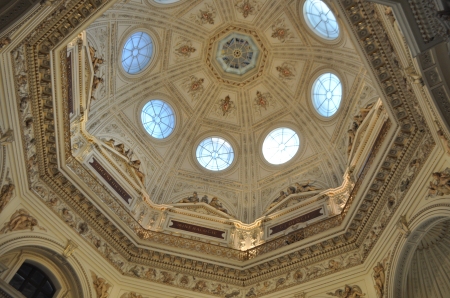
The museum was commissioned by Emperor Franz Josef I and opened in 1889. It faces its equally beautiful sister museum, the Kunsthistorisches Museum, where you can admire the works of Rembrandt, Durer, Rubens, and a frieze painted by Gustav Klimt. The marble, statues, and painted ceilings offer the feeling of a palace. As you enter through the elaborate front doors you are greeted by an immense dome that takes your breath away. Disciplines such as Zoology, Geology, Palaeontology, Botany, and Anthropology are inscribed on the dome’s edge. They allude to its amazing collections and the 19th century desire to understand and bring order to the natural world.

The dome hall in the Vienna Naturhistoriches Museum (Image: Anthony Roach)

The dome hall in the Vienna Naturhistoriches Museum (Image: Anthony Roach)

As I ascended the first floor to the Zoology gallery, the rooms or ‘halls’ are connected by long corridors which give you a dizzying view of the connected rooms stretching out in front of you. There are around 39 individual halls. I smiled when I walked into the first gallery called ‘Microcosm’ dedicated to Ernst Haeckel, the German Biologist whose beautiful drawings of radiolarians feature in ‘Kunstformen der Natur’, and inspired my interest in natural history.  The gallery contains models of microscopic radiolarians and water fleas, along with microscopes and a film featuring microscopic life.

The Zoology collections move from protozoans, corals, and molluscs systematically towards vertebrate life and is sympathetically and beautifully displayed, with some of the largest collections of insects and vertebrates I’ve ever seen. There are whole rooms filled with reptiles alone. The bird galleries contain remarkable specimens, and the museum has its very own taxidermy department. The mineral collections are five halls strong, with a Meteorite hall at the end that contains part of the ‘Tissint’ meteorite and an interactive that demonstrates the destruction force of meteorite impacts.

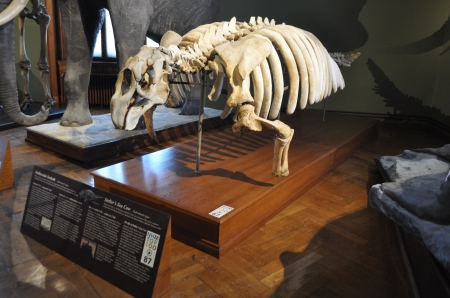
The museum houses over 30 million specimens, with 60 scientific staff working on the collections. Unforgettable specimens on display for me included a complete skeleton of Stellar’s Sea Cow (Hydrodamalis gigas), whose discovery in Alaska by Georges Stellar and rapid extinction is a frequently cited example of the consequences of systematic hunting by humans that was little known to science. I also marvelled at the 25,000 year old Venus of Willendorf figurine, whose palaeolithic origin is said to emphasise female fertility and childbearing. The museum’s palaeontology gallery is equally impressive, with an array of dinosaurs, flying reptiles, and a gigantic fossil turtle.

Skeleton of Stellar's Sea Cow (Hydrodamalis gigas) (Image: Anthony Roach)

Stellar’s Sea Cow (Hydrodamalis gigas) (Image: Anthony Roach)

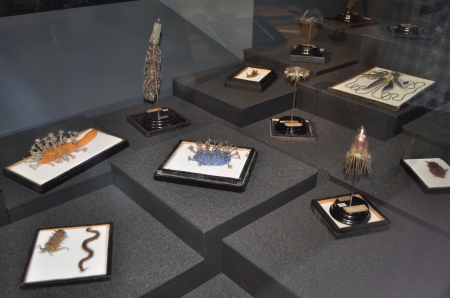
When I finally reached the top floor, I saw something remarkable. In one long case were about 25 beautifully coloured glass models of marine organisms. They were Blaschkas, and they have fascinated me ever since I saw some of my first at the Grant Museum of Zoology. The models were displayed as part of an exhibition called the ‘Knowledge of Things’ that celebrated the 650 year history of scientific discovery at the University of Vienna. The then director, Carl Claus, commissioned 146 Blaschka models to be made in 1880, and they still remain part of the university’s Zoology collection.

A myriad of wonderful Blashka glass models of marine invertebrates (Image: Anthony Roach)

A myriad of wonderful Blashka glass models (Image: Anthony Roach)

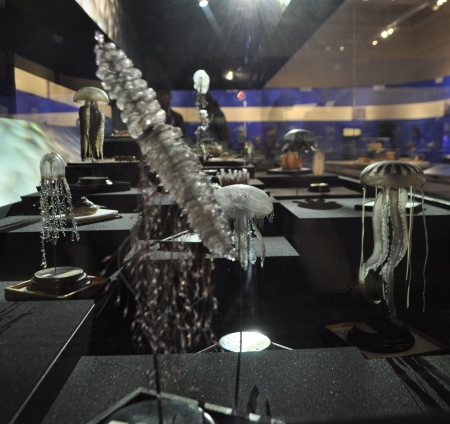
An example of a Siphonophore shown amongst many other Blashka models (Image: Anthony Roach)

An example of a Siphonophore shown amongst many other Blashka models (Image: Anthony Roach)

They were created by Leopold Blaschka, a glassworker whose skill at producing scientifically accurate models of plants and animals caught the attention of museums and scientific institutes. After the tragic death of his wife, Leopold left for America. Whilst travelling by sea he was fascinated by the marine life he observed. When Leopold eventually returned to Europe, his talents were recognised by Dresden Museum. who commissioned him to produce marine invertebrate models for scientific study. Along with his son Rudolph, he established a saltwater aquarium in Dresden to study their form and assist him in creating accurate representations of these enigmatic sea creatures.

The London Natural History Museum contains around 182 Blaschka models of anemones, nudibranchs, cnidarians, cephalopods, and other stunning marine organisms. The ‘Treasures’ gallery displays some of the best. As Miranda Lowe, Collections Manager responsible for the Blaschka models points out*, ‘‘The range, variety and colour of these invertebrate sea creatures show much more than spirit-preserved specimens, which do not retain vivid colour or form’’. You could argue that these beautiful glass objects are the museum equivalent of the Christmas tree bauble. After all, they are aesthetically, culturally, and symbolically valuable to us in much the same way.

Anthony Roach

Natural History Museum, London


*P. 34 – 37