NatSCA Digital Digest

Welcome to the weekly digest of posts from around the web with relevance to natural science collections. We hope you find this useful and if you have any articles that you feel would be of interest, please contact us at blog@natsca.org

1. Blog: Knowledge Network

Paolo Viscardi, Deputy Keeper of Natural History at Horniman Museum

Synopsis

Looking at Subject Specialist Networks and how this type of inter-museum communication can improve the sector as a whole. An ‘open line of communication’ encourages a quality control that is standard throughout museums, and allows for the incorporation of discussion with non museum based academics. The success of SSNs centres on workshops and conferences though time and money make these logistically difficult. Suggestions are made regarding solving these issues to perpetuate the benefit museums receive via SSNs.

http://www.museumsandheritage.com/advisor/news/item/3215
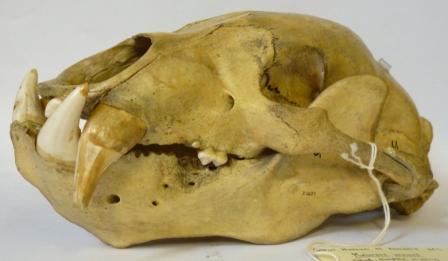
For your pleasure… A sloth bear skull, Melursus ursinus. Specimen LDUCZ-Z1637. (C) UCL Grant Museum

2. Blog: Museum Training for the World

Edmund Connolly, British Council-UCL Museum Training School Coordinator

Synopsis

The British Council and University College London have joined forces to launch the Museum Training School. Based in a variety of museums and galleries across London, this school will give early career museum professionals the opportunity to meet with staff from across the sector, and aims to arm attendees with the necessary skills to ensure ‘sustainability and growth’ of collections, galleries and museums for the future.

http://blogs.ucl.ac.uk/museums/2014/03/07/museum-training-for-the-world/

3. Event: How Museums Can Contribute to Wellbeing

One day event in Newcastle Upon Tyne

Synopsis

This event is aimed at a range of museum staff such as curators, managers, and those involved in education and outreach. it will look at how museums can focus on wellbeing and use it as a tool in relationships and collaborations with external organisations. It will also investigate ways of securing funding, building on the foundations of wellbeing as a concept.
http://www.museumsassociation.org/find-an-event/ev1062022?utm_source=ma&utm_medium=email&utm_campaign=06032014#.Ux8JZNhKTwA

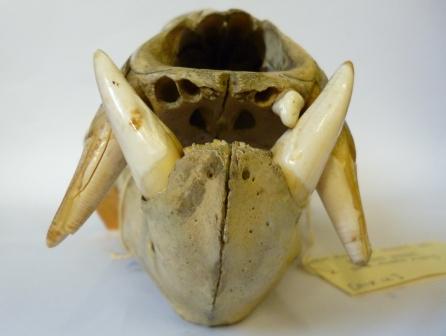
For further pleasure, the sloth bear skull from an exciting angle. Specimen LDUCZ-Z1637. (C) UCL Grant Museum

4. Event: Museum Week on Twitter

Contacts are @TwitterUK or museumweekuk@twitter.com

Synopsis

The 24th to 30th March is Museum Week on Twitter. The main hashtag #MuseumWeek will be the umbrella tag that will run all week long. Aside from this, there will be a specific theme, and relevant hashtag, each day, centred on topics related to museum and collections. It will be an opportunity to showcase parts of museums and collections that would otherwise not be accessible to the public. It also aims to give museum staff the chance to interact with each other through Twitter, and for both professionals and the general public to engage.

For more information, please contact Twitter on the above email or Twitter handle.

Compiled by Emma-Louise Nicholls, NatSCA Blog Editor

NatSCA Digital Digest

Welcome to the new weekly digest of posts from around the web with relevance to natural science collections. We hope you find this useful and if you have any articles that you feel would be of interest, please contact us at blog@natsca.org

1. Blog: Dr Woodward’s Fossils

Dr Ken McNamara, Sedgwick Museum of Geology

Synopsis

How the Sedgwick Museum began as a collection of 10,000 fossils ‘of all kinds’ belonging to John Woodward, and his bequest of £100 a year to ‘keep a lecturer’. The fossils were kept for 300 years in five beautiful walnut cabinets, pictured herein. Originally called the Woodwardian Museum, this blog looks at how Woodward helped to shape the museum, and the legacy he left behind.

http://blog.geolsoc.org.uk/2014/02/21/dr-woodwards-fossils/

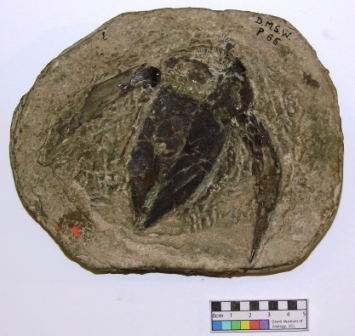
Bothriolepis, a fossil fish. (C) UCL Grant Museum

2. Blog: What can Twitter do for our collection?

Giles Miller, Natural History Museum

Synopsis

Case study showed ‘major players’ retweeting you leads to a greater number of retweets and new followers. Timing of tweets is essential, e.g. weekend tweets hardly ever get retweeted. Twitter may not affect KPIs in a measurable manner, but it opens up the museum to an audience that would never otherwise visit for logistical reasons. It also facilitates access to parts of the collections that are not on display.

http://www.nhm.ac.uk/natureplus/blogs/micropalaeo/2014/02/18/how-did-twitter-help-our-collection

3. Event: The Future of Museums

A conference and workshop for early career museum professionals

Synopsis

Designed to collate the ideas of aspiring museum professionals, a series of talks and discussions will be followed by the opportunity for delegates to collaborate on a manifesto for museums and collections.

http://museumsshowoff.wordpress.com/the-future-of-museums/

4. Event: Human Evolution – The Story of Us

A four hour only pop-up event Friday 7th March at UCL

Synopsis

This mini exhibition will showcase rarely seen objects from UCL’s Biological Anthropology Collection of early hominin fossil casts, including Lucy, the famous Australopithecus afarensis from East Africa. The objects exhibited will also include tools and visitors will have the chance to ‘meet the scientists’. The event will take place in the Rock Room at UCL, which has permanent displays of geological collections.

http://blogs.ucl.ac.uk/museums/2014/02/27/human-evolution-the-story-of-us/

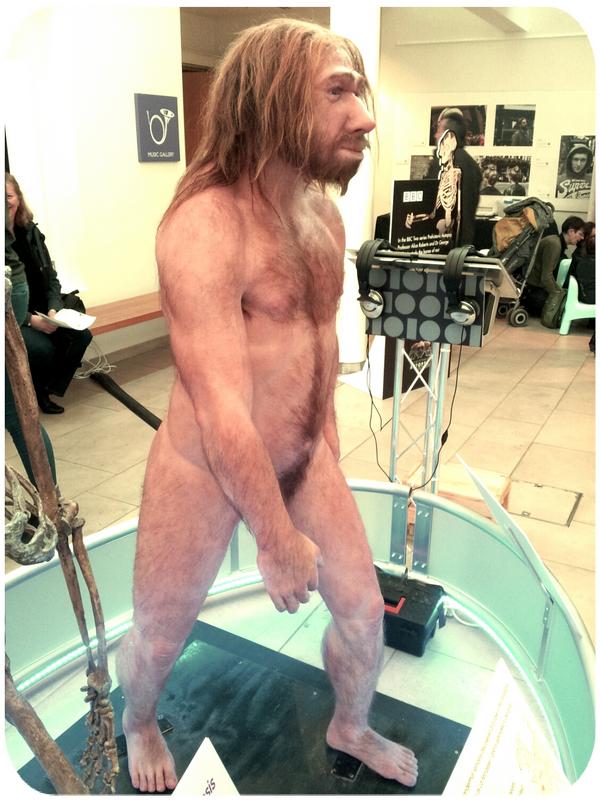
Neanderthal from BBC’s Prehistoric Autopsy exhibition at the Horniman Museum. (C) Paolo Viscardi

5. Event: Written in Stone: Life and Death in the Fossil record

Evening workshop at the Lapworth Museum of Geology, Birmingham

Synopsis

The workshop will be an interactive exploration of Cambrian organisms that formed part of the Cambrian Explosion and the subsequent Biodiversification Event of the Ordovician. These two points in Earth’s history are considered to be the foundations of the Earth’s biodiversity in the modern day.

http://www.birmingham.ac.uk/facilities/lapworth-museum/news/2014/28Feb-Written-in-Stone-Life-and-Death-in-the-Fossil-record.aspx

Compiled by Emma-Louise Nicholls, NatSCA Blog Editor
Bill Pettit Memorial Project – Conservation of historic Taxidermy

Ann Ainsworth (Colchester and Ipswich Museums)

Hannah Clarke (Freelance Conservator)

Ipswich Museum has an important historic collection which dates back to its opening in 1847. A recognised strength of the natural history collection is the historically important Victorian and Edwardian taxidermy of animals from across the globe.

The taxidermy collection is stored in an old building which used to be an old coach depot and later a garage. The space had become very dusty and dirty and a significant mould problem had developed.

one

We followed a very simple methodology of light dusting with soft brushes using a vacuum containing a HEPA filter. This was followed by swabbing with an alcohol/water solution to remove the mould and kill the spores. Where possible specimens were covered or wrapped in polythene to act as a protective cover to protect from dust, provide an external surface for mould to grow on, and to prevent pest damage which is also a potential problem within the stores.

two

The variety of conservation problems, meant that many different treatment processes needed to be used by Hannah. Some of the processes included dry cleaning, wet cleaning, re-adhering, colour matching, re-inserting feathers, removing old varnish with solvents, mitring, sealing with brown gum tape, and applying and buffing wax. New panels of glass and sections of beading had to be sourced and cut to size.

The top panel of the pike case had warped and bowed, as the glass side panels had been broken previously. There were no structural supports on the front inside edges of the case either, meaning that the top of the case was unsupported from the front. The existing beadings on the rear inside edges were not secure, and the metal tacks used to hold the mitred sections of wood in place were very loose. New beading was sourced to match as close to the original as possible and was then colour matched and held in place using new tacks.

Cygnet before conservation

Cygnet before conservation

Cygnet after conservation

Cygnet after conservation

The Bill Pettit Memorial funding went towards payment for the freelance Conservator in terms of time and travel expenses and the purchase of replacement glass and beading for the cases where broken or damaged.

It was agreed that conserved cases would not be returned to store until the planned repair work had been successfully completed. As many of the conserved cases as possible were put on public display in the museum galleries. This has enabled part of the collection not normally seen by visitors to be on display. It has also helped to present a strong message of the Museum Services’ wish to improve the condition of specimens and its storage facilities and helped to raise the profile of the project.

Spicer platypus case after conservation

Spicer platypus case after conservation


Can the natural science collection community really do anything about climate change?

MAconf2013I attended November’s Museums Association conference in Liverpool to talk, for NatSCA, on how having a natural science curator in your midst will help your museum to be greener. The session I was involved in, ‘Dead Zoos’, looked at addressing environmental issues from the natural science collection viewpoint.

Both Darren Mann and Henry McGhie spoke eloquently and sensibly about our unique position as natural scientists. We can engage all walks of life with nature and, as a consequence, we can also instil a sense of protectiveness. This, of course, includes caring about our changing climate.

I’ve heard him speak about this before but Henry’s admiration of the RSPB’s ‘giving nature a home’ campaign is always thought-provoking. The RSPB have set out to give people a framework for helping nature directly, and the public have responded.

Several of the questions from the floor asked for practical help in using their natural science collections (with or without a specialist curator) to open up discussions on green issues in their museums. Engaging people – on a wide scale – with nature is easy, a hedgehog really does speak for itself. Natural science specimens need little curatorial input to be engaging and so interpretation can easily be turned to thinking about protecting the environment. Case studies abound from Darren’s entomology collection as well as examples like the Yorkshire Museum’s Tansy Beetle reintroduction in the museum’s garden.

Last but not least it was great to attend a natural science session devoid of whinging. We talked about the positive future, not the negative past. Attendance wasn’t phenomenal, 45ish, but it wasn’t terrible. I would like to see future MA conference sessions that don’t necessarily concentrate on natural science but instead include it as an integral part of a wider topic. That would be progress.

Clare Brown

Celebrating the mundane

This article is reposted from the UCL Museums blog.

By Mark Carnall, Curator of the Grant Museum of Zoology, UCL

Earlier this month I was lucky(?) enough to have a spot on the excellent Museum Mile Museums Showoff special as part of the Bloomsbury Festival. For those of you who don’t know, Museums Showoff is a series of informal open-mic events where museum professionals have nine minutes to show off amazing discoveries, their research or just to vent steam to an audience of museum workers and museum goers. My nine minutes were about the 99% of objects that form museum collections but you won’t see on display. They fill drawers, cupboards, rooms and whole warehouses. But why do we have all this stuff? Who is it for? In my skit on Tuesday I only had nine minutes but I thought I’d take the time to expand on the 99% and the problem of too much stuff (particularly in natural history museums) and what we can do with it.

Tip of the Iceberg

Museums often display only the tip of the iceberg when it comes to collections. Here at the Grant Museum we have about 7% of the collection on display and it tends to be the Hollywood Animals that make the cut. At larger museums it can be less than 0.1% of the collection that makes up the public facing galleries. In my relatively short career as a museum professional I’ve been very fortunate to see behind the scenes in more museums than most and boy, there is a lot of stuff. Even though I love natural history and am very passionate about museums and the future of the museum sector sometimes I do wonder why do we have all this stuff?

In natural history, the obvious and often made, argument is that our collections can tell us about global challenges that affect us all including climate change, organisms that cause or spread human diseases, extinction, agriculture and aquaculture and from geology the exploitation of fossil fuels. Natural history collections are the only record of life on Earth and if we are to make any models or predictions we need to dip into the data enshrined in objects.

However, there are large portions of natural history collections which could never contribute to those agendas. All the ‘Raggy Doll‘ specimens without data for example. All those specimens that require four text books of explanation. Most fossil specimens can be used to reconstruct the past with only limited impact on what’s happening in the present. There are rooms and rooms full of bad taxidermy and taxidermy dioramas that for reasons of taste, health and safety and changing scientific ideas never see the light of day. Even something as simple as an animal not having a common name (to put on a label) can keep a specimen off display There are large chunks of the animal world which simply aren’t being actively studied (for now). Lastly there are all the models, casts and those dreaded boxes.

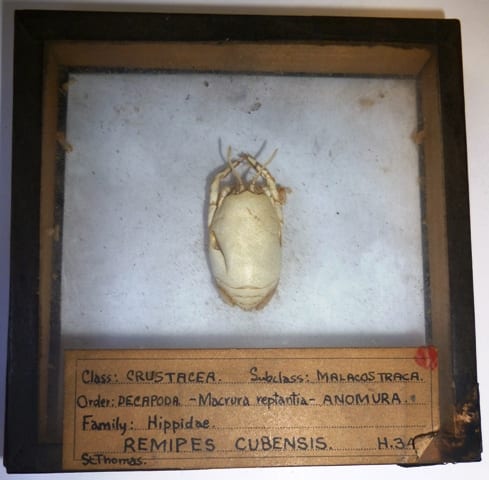
Image of a specimen of the crab Hippa testudinaria

Spare a thought for specimens like this. Dusty, pest attacked, wrongly named crabs. SAD SMILEY FACE.

So how do we make the most of the 99% now especially if they aren’t saving the world? Well, in short, it shouldn’t matter how important our specimens are to science. Every specimen has a story to tell.

Museums of Inspiration? Continue reading