NatSCA Digital Digest

ChameleonYour weekly round-up of news and events happening in the world of natural sciences
 

Conferences

Conference season is well and truly upon us! Here are some dates for your diaries:

The National Forum for Biological Recording and the British Ecological Society are holding a joint conference at Sheffield University on 23rd – 25th April.

The conference of the Society for the Preservation of Natural History Collections will be held at the Florida Museum of Natural History this year, on the 17th – 23rd May. The theme is ‘Making Natural History Collections Accessible through New and Innovative Approaches and Partnerships’.

Refloating the Ark: Connecting the public and scientists with natural history collections. A two­‐day meeting at Manchester University on 17th – 18th June, exploring how natural history museums can contribute towards environmental sustainability by engaging effectively with the public and the scientific research community.


Workshops

The Linnaean Society is holding a workshop on Digitising Natural History and Medical Manuscripts on 27th – 28th April.

The 2nd International Conservation Symposium-Workshop of Natural History Collections will be held in Barcelona on 6th – 9th May. The Symposium-Workshop will emphasize concepts relating to the protection and conservation of natural history collections.

Risk Management in Collections Care is a one-day seminar at Kelvingrove Museum in Glasgow on 21st May, discussing how heritage organisations can use risk management to set priorities and efficiently allocate limited resources to reduce risks to collections.

As always, keep an eye on the events page of our website for more upcoming conferences and courses!


In the Media

Illustration of a Brontosaurus skeleton by Charles Othniel Marsh

This week’s big news: Brontosaurus is back! A new specimen-level cladistic analysis of diplodocids found strong support for Brontosaurus as a valid genus distinct from Apatosaurus. The internet rejoiced.

Entomologists from the Natural History Museum of Los Angeles County found 30 new species of fly in urban gardens.

Skeletal collections can tell us about the history of welfare standards in captive animals (warning: the paper is behind a paywall, but the abstract is free).

Brian Switek revisits his old fossil friend Teleoceras.

Three new species of wood lizard have been discovered in Ecuador and Peru by museum researchers.


Got a submission for the blog or Digital Digest? Email us at blog@natsca.org

Bringing the Dead Back to Life, with Paolo Viscardi

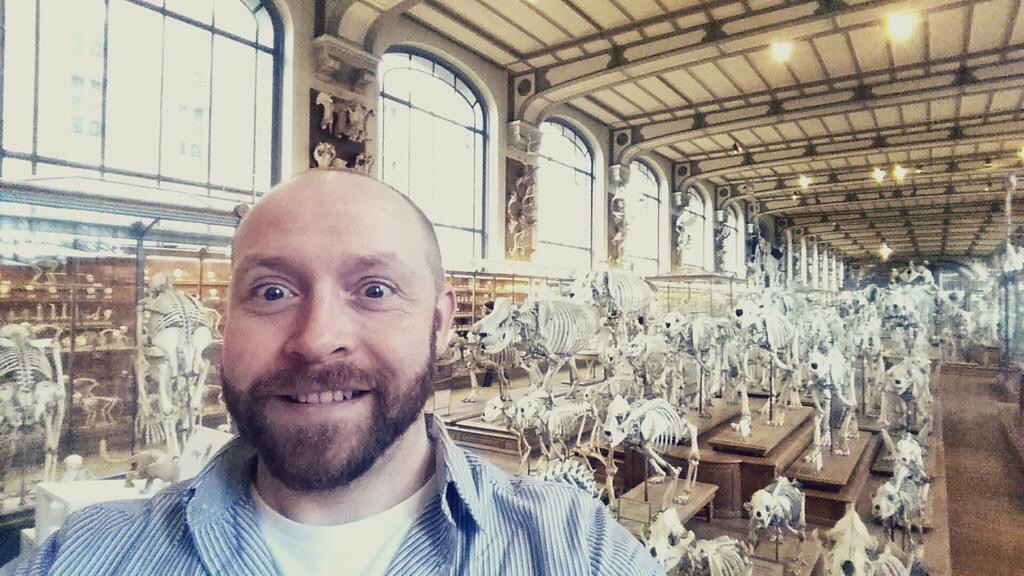
Paolo at the Museum of Comparative Anatomy, Paris

Last week saw the first PubSci talk by NatSCA Chair Paolo Viscardi since we moved venues to the King’s Arms near London Bridge. The subject, Bringing the Dead to Life, is less a Frankenstein manual and more of a description of his role as Deputy Keeper of Natural History at the Horniman Museum and Gardens. He works with dead things every day and he does so for the public’s benefit, because these collections are yours: both yours as a national collective, and yours as an individual if you want to do something with them.1

A large part of the reason we have these amazing collections is due to massive amount of world exploration by wealthy industrialists, tradesmen, and philanthropists. Frederick John Horniman was a tea trader, and collected all sorts of things in his travels. The stuff he brought back captured the public imagination because it introduced them to international cultures they would otherwise have no idea about. We take global information for granted today because we all have access to internet resources in our pockets, so it is hard for us to grasp how unusual it must have been for people in 1948 to see frescoes from Ceylon temples for the first time.

One of the fun side effects of this close encounter with the unusual is that oftentimes people preparing the specimens from overseas were only going by descriptions, and were not at all familiar with the species they were working on. A great example of this is the iconic Horniman Walrus, who was overfilled until he was wrinkle-free – in the style of a seal. There is an exhibit at the Grant Museum of Zoology at the moment discussing this phenomenon and featuring a lovely Stubbs painting of a kangaroo that resembles a giant mouse. Knowing how meticulous Stubbs was about his animal anatomy, one has to believe that this is exactly how he understood them to look and is not in any way an accident of the proportions.

The topic of proportions and measurement brings me on to a study done by Paolo et al. in 2010, looking at the variation in measurements taken of a section of owl bone, so naturally the paper was titled How long is a piece of Strix. Comparative measurement is a fundamental part of species identification, so naturally one would assume a consensus of readings taken by professionals. The results were somewhat different: when working alone, the measurements were accurate. When working as part of a team, the measurements strayed, and the more people collaborating, the greater the disparity between measurements.

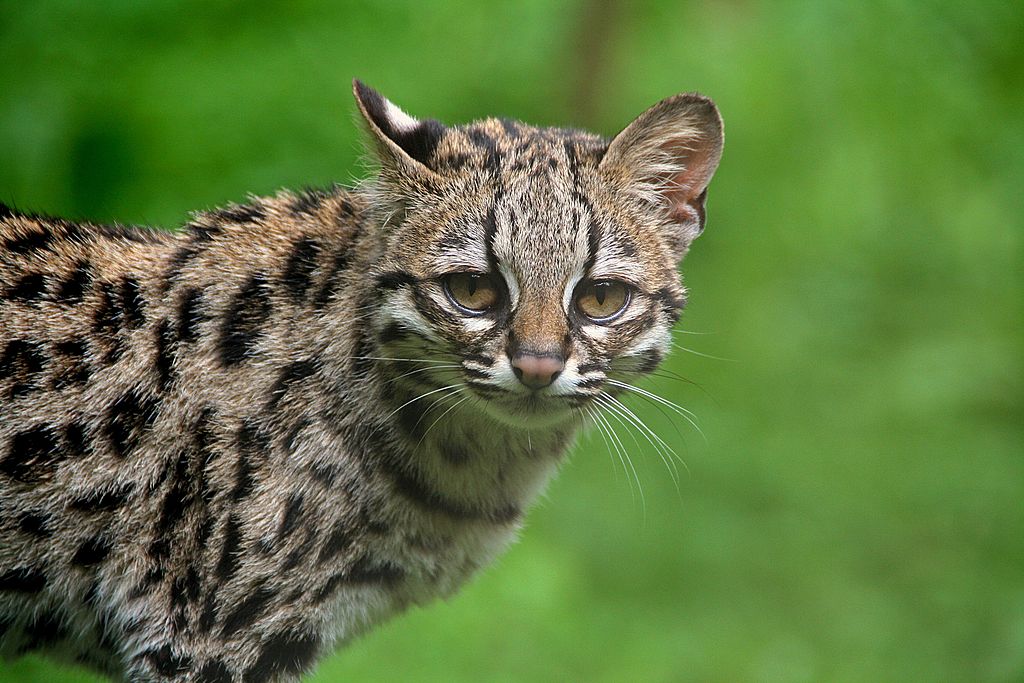
As a science communicator both at the museum and through his blog, Paolo has had the opportunity to work on some interesting projects: he has advised BBC television series such as our patron Ben Garrod‘s Secrets of Bones and he has been interviewed for The One Show to explain why cats get stuck up trees (they can’t rotate their ankles). This allowed Paolo to introduce the viewing audience to the Margay (Leopardus wiedii): a cat that can rotate its ankles. He has shared his love of osteology with 13-year-old fellow-blogger Jake McGowan-Lowe, which led to Jake publishing a book on the subject! To promote a recent Horniman exhibition on extreme animal adaptations, Paolo was subjected to the harshest elements in nature, which earned him the title ‘Extreme Curator’, and his very own Lego action figure.

Margay

Margay. By Clément Bardot (Own work) [CC BY-SA 3.0 (http://creativecommons.org/licenses/by-sa/3.0)%5D, via Wikimedia Commons

Where next for Paolo’s science communication? You’ll have to ask him at the next PubSci with Professor Ian Barnes. If you’re a fan of pleistocene megafauna (and, let’s face it, who isn’t), I wouldn’t miss it.

Sam Barnett, NatSCA Blog Editor

1. Depending on what it is you want to do with them and how run-ragged the museum staff are.

#MuseumWeek on Twitter – what’s the point?

The last few days have seen Twitter alive with activity centred on museums, with the 2015 #MuseumWeek hashtag providing an opportunity to celebrate culture using images, videos and a maximum of 140 characters.

MuseumWeek

This Twitterstorm in a teacup may seem a bit pointless to some, but it’s difficult to fully appreciate the value of social media until you really use it and experience the benefits first hand.

That’s why this year’s NatSCA conference ‘Museums Unleashed’ is partly about getting everyone up to speed with what’s out there, how it works, and what people are using it for – to make sure that our members aren’t left behind as the museum sector increasingly embraces the digital age.

natscabristol2015

Social media provides an incredibly powerful medium for communicating with other subject specialists, and it also provides a mechanism for developing genuine dialogue with audiences. Hashtags like #MuseumMonday and #FossilFriday allow objects from behind the scenes to be shared around the world quickly and easily, bringing otherwise hidden collections into the public consciousness.

The playful and informal nature of these online interactions may be a significant departure from the authoritative and reserved image projected by some museums, perhaps causing a little discomfort for some, but that informal interaction is the very thing that makes social media such a fantastic mechanism for developing dialogue and bouncing ideas between peers.

Finally, it never pays to underestimate the power of the public as advocates for your collections. A museum with a facilitative approach to social media in its gallery spaces can benefit from the buzz created by people wanting to create and curate their own digital content, inspiring others to visit and generating a deeper interest in the museum’s activities – with minimal input required from staff.

I strongly suggest that you take a look at the various interesting subthemes within #MuseumWeek to see if you can contribute. Today is #familyMW, Saturday is #favMW (for your favourites) and Sunday is #poseMW (maybe put that selfie stick to good use?), so you still have time to get your phone out and get involved!

NatSCA Digital Digest

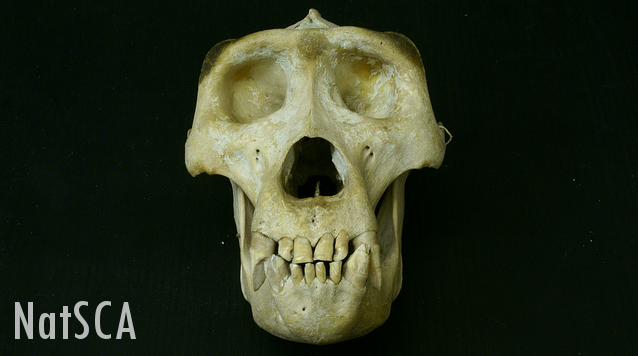
Gorilla skull on a black background

Your weekly round-up of news and events happening in the wonderful world of natural sciences!


Jobs

Unusually, there are a few natural science jobs out there in the UK at the moment:

Curatorial Assistant (Human Remains and Repatriation) – Natural History Museum. Applications close 29th March.

Curator/Lecturer in Vertebrate Palaeontology – Cambridge University. Applications close 3rd April.

Several interesting posts at Royal Botanic Gardens, Kew, including an Assistant Curator (applications close 7th April).

And, just in case you haven’t already seen it:

Collections Manager (Life Collections) – Oxford University Museum of Natural History. Applications close 10th April.

Events

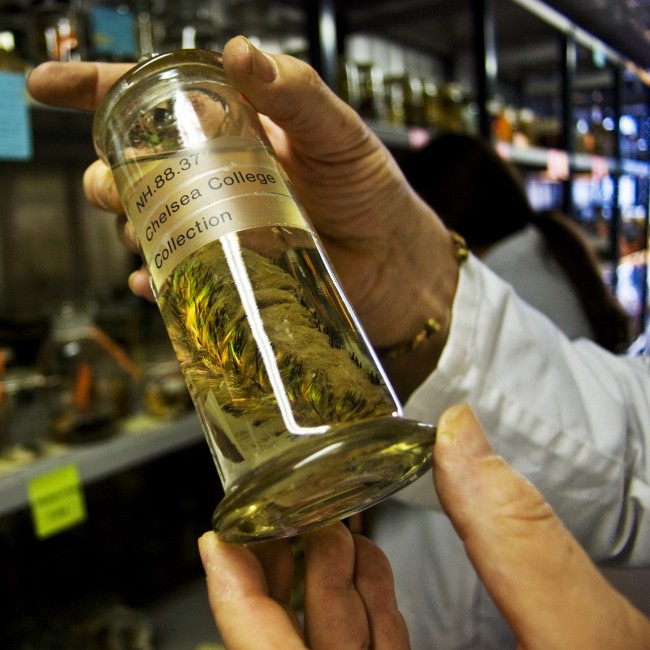
Simon Moore’s renowned fluid preservation course will next run on 1st – 4th June at the Horniman Museum & Gardens. The four-day course costs £300 (NatSCA members can apply for a bursary). See here for details and booking.

A fluid-preserved specimen in a jar is held up to the camera. Image: Russell Dornan

Learn the skills to care for fluid-preserved specimens (Image: Russell Dornan)

The Society for the History of Natural History (SHNH) has put out a call for speakers for their annual conference, to be held at Wakefield Museum on 31st July – 1st August.

The Museum Ethnographers Group (MEG) 2015 conference is entitled Nature and Culture in Museums, and will explore the relationship between natural science and ethnography. It takes place at the Powell-Cotton Museum on 20th – 21st April, and booking is open now!

In the Media

Today is Taxonomist Appreciation Day, a holiday devised by Dr Terry McGlynn, of California State University Dominguez Hills, to highlight the decline in taxonomic skills and the importance of museum collections.

These taxonomists definitely deserve some appreciation: A census of all known marine life by WoRMS (the World Register of Marine Species) has added many new species and removed 190,400 duplicates!

Darwin’s ‘strangest animals ever discovered’ finally find their place in the tree of life.


Got a submission for the blog or Digital Digest? Email us at blog@natsca.org!

NatSCA Digital Digest

Welcome to the weekly digest of posts from around the web with relevance to natural science collections. We hope you find this useful and if you have any articles that you feel would be of interest, please contact us at blog@natsca.org

1. Blog: Personal Space in Patagonian Cormorants

Chicago Professor Jerry Coyne’s blog Why Evolution is True this week contains a great example of modern technology, in this case drones, being used to observe the natural world. I wonder if drone footage will be mentioned as an example of ‘modern media’ at the NatSCA conference. I digress: The nesting sites are quite magnificent and reminiscent of frogspawn from a distance.

Synopsis

In Jerry Coyne’s own words:

From Grind TV we have lovely video and photographs of 5300 pairs of Imperial Cormorants (Phalacrocorax atriceps, also known as “Imperial Shags”) nesting en masse in Patagonia.  The nests cover an area of 2000 m², which is less than half the area of an American football field.

Follow the Link to see.

2. Event: Strange Creatures: the Art of Unknown Animals

Where: The Grant Museum of Zoology

Date: 16th March – 27th June

Open to: all

Admission: Free

Synopsis

From the Grant Museum website:

When new regions are explored and the animals in them discovered, how does the wider world get to experience these species? From the earliest days of exploration, art has been essential in representing creatures that are alien to people at home.

The Strange Creatures exhibition will explore the world of animal representations, featuring the painting of a kangaroo by George Stubbs which was recently saved for the nation. It was painted following Captain Cook’s first “Voyage of Discovery” and is Europe’s first image of an Australian animal.

Click here to find out more.

3. Job: Collections Manager (Life Collections)

Organisation: Oxford University Museum of Natural History

Salary: Grade 7: £30,434 – £37,394 with a discretionary range to £40,847

Duration: Full-time, permanent

Location: Oxford, UK

Closing date: 10th April 2015

Synopsis

Oxford University Museum of Natural History houses the University’s internationally important geological and zoological collections, which are used for research, teaching, and public engagement in science. It is seeking to appoint a new Collections Manager for the Life Collections.

The Life Collections comprise six million specimens, of which around 30,000 are zoological type specimens, and there are currently 10 staff with collection management responsibilities in this area. The collections have particular strengths in insects, crustaceans and vertebrates. The Collections Manager will work across all areas of Life Collections, but the role will have particular emphasis on the vertebrate and/or malacology collections. The successful applicant will be responsible for documentation, imaging, databases and conservation, and will facilitate research visits and loans. They will also be part of the teams developing new exhibitions and displays, and will participate fully in the museum’s outreach and public engagement programme. It is expected that the successful applicant will engage in field collecting and some collections-based research.

Click here for more details and to apply


On a different note, our very own Emma-Louise Nicholls is going to be doing the Richmond half-marathon next week. She is raising money for Save the Rhino – a cause dear to all our hearts. If you would like to donate, here’s how.


Compiled by Samuel Barnett, NatSCA Blog Editor