NatSCA Digital Digest

natscaYour weekly round-up of news and events happening in the world of natural sciences

Jobs

Curator, Grant Museum of Zoology, UCL I can tell you from three years of first-hand experience (pseudo-first-hand; as curatorial assistant) that this is the job all curators should be applying for. The Grant Museum of Zoology is an amazing place to work and in this role I know you will have the opportunity to spread your curatorial wings and make a real difference in the natural history sector. The kind of job where you don’t mind getting up in the morning. Closing date for applications is 3rd August. Good luck!

If only for the superb job title, anyone with experience of learning programmes for families and children with ASC (Autistic Spectrum Condition) should definitely take a look at the current vacancy for the Dawnosaurs Programme Co-ordinator at the Natural History Museum. This looks like an amazing opportunity for the right person. The closing date for applications is the 22nd July.

See the job page of the NatSCA website for more exciting opportunities.

News

The next Museums Association exhibition and conference is due to take place on 5th and 6th November, in Birmingham. There is still time to register as an early bird who gets the cheaper worm rates. Early bird registration ends on the 7th August, click here for more.

Around the Web

Sun bear, fox, hippo or pangolin. What tickles your natural history bones the most? Choose your favourite to be the new museum mascot for Derby Museum and Art Gallery! If you are on Twitter, you can whip up some support for the sun bear, errr, I mean, your favourite using: @DMNature and @derbymuseums. The winning specimen will be announced on the 7th August. I’ve already chosen mine, can you guess what it is…?

The Friends of Crystal Palace Dinosaurs have been working up a storm of support lately, with ongoing events at the park complemented by a very dynamic talk at the Grant Museum by the master of science comedy- Prof Joe Cain, from UCL. These incredible statues are a vivid reminder of the evolution our concept of dinosaur appearances has gone through. They are also an important part of our British cultural heritage, that helped shape the palaeontological world in the mid 1800s. Find out more about these iconic statues that are in desperate need of conservation on the Friends of Crystal Palace Dinosaurs website.


NatSCA Digital Digest

NatSCA Digital Digest

Welcome to another edition of the NatSCA Digital Digest! This episode has been brought to you today by the phrase “birdy num num”. Extra credit if you know where that phrase comes from.

Let’s start off with the news everyone’s been waiting for: Fenscore is back! It was showcased at Refloating the Ark last week and it has a new home right here at NatSCA. We are going to have a full story on this later with many more details from a mystery guest blogger, so we’re looking forward to that. For those of you still struggling to complete your NatSCA Bingo cards, reading this counts.

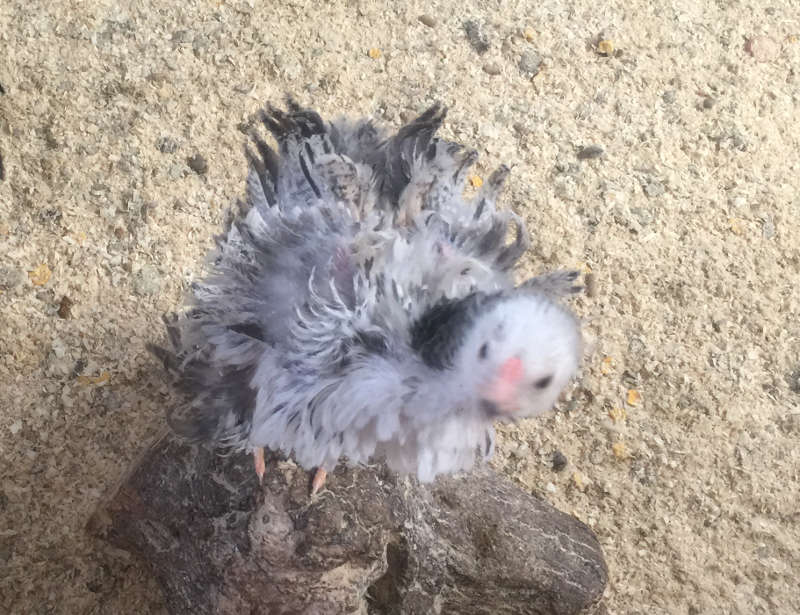
Another reminder for anyone wishing to submit a poster for the Bone Collections day in Cambridge, Vicky Purewal and Natalie Jones want to hear from you. Get your submissions in or scrawny chick judges you.

Scrawny chick judges you

For those of you that weren’t in the UCL grounds on Monday night, you missed a great night out (including free and student price drinks)  with some of the NatSCA irregulars. The night started with a talk about the Victorian attitudes to fossil discovery by Professor Joe Cain and proceeded to an evening viewing of the Grant Museum‘s temporary exhibition. Joe highlighted the Crystal Palace dinosaurs as a great place to go and see that enthusiasm for lost worlds. He also highlighted the repair work needed and the important work being done by the Friends of Crystal Palace Dinosaurs.

Which brings us to our news from interesting recent papers: weird Romanian theropod Balaur bondoc, with its distinctive pair of sickle claws per foot has been shifted from the dromaeosaur to the basal bird clade, thanks to the work of Cau, et al. It isn’t all that big a jump but it does mean Balaur won’t be getting picked on by its clademates for being different quite so much. For more on this, check out co-author Darren Naish’s write-up at Scientific American.

That’s all for now. Tune in next week when we (hopefully) will be able to advertise a really tempting job vacancy!

NatSCA Digital Digest

natscaYour weekly round-up of news and events happening in the world of natural sciences

Events

12th-14th October: Discovering Collections, Discovering Communities: Exploring new digital destinations for heritage and academia at The Imperial War Museum North, Manchester. Free conference exploring the use of digital, in museums environments.

22nd July: Digital vs. Analogue at Oxford University Museum of Natural History. One day conference looking at four themes: Tactile Engagement, Story Telling, Families and Schools, and Digital Displays.

8th September: Osteology Day at University Museum of Zoology, Cambridge. A one day hands-on workshop covering aspects of osteology such as bone cleaning, rearticulation, restoration, identification and preparation.


News

The Palaeontological Association is advertising for a new Executive Officer, after the sad news of Tim Palmer’s retirement. Closing date for applications is 21st August 2015.

Did you know that Dubai Aquarium in the UAE has the world’s largest single piece of acrylic. It is pretty hefty at an impressive 70 cm thick, but it is not always with the most reliable seals, as they found out in 2010


Around the Web

What do you do with a dead fish? Check out this blog for a unique idea: Printing and Reanimating the Dead.

**JURASSIC WORLD IS OUT** And smashing Box Office records. Of course. This review is great, but if you haven’t seen the film yet (firstly- why not? and secondly…) it contains spoilers!


Got a submission for the blog or Digital Digest? Email us at blog@natsca.org

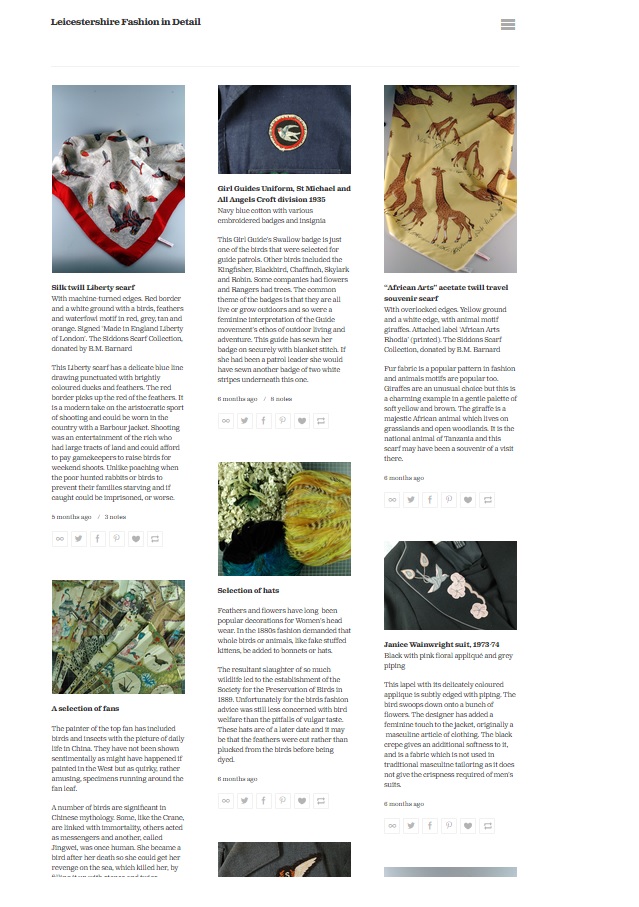
Leicestershire Fashion in Detail: Using social media to engage new audiences with museum collections

This post is another in our series of presentation write-ups from the 2015 NatSCA Conference, Museums Unleashed!
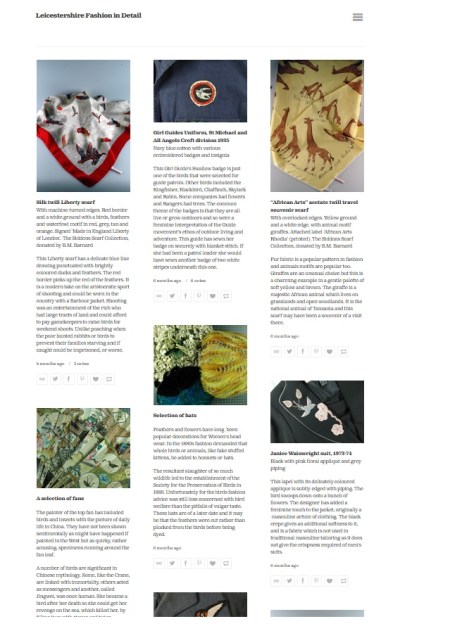


The Animal Kingdom

The Animal Kingdom

Why?

Leicestershire Fashion in Detail was part of a larger project called Click; Connect; Curate; Create. Funded by Arts Council England as part of their Renaissance Strategic Support Fund, we wanted to find out how we could use ‘digital’ (whether that be technology or content creation) to increase engagement with our sites and collections. Fashion in detail was one a number of pilot projects including 3D scanning, augmented reality and wearable tech and digital storytelling.

What did we do?

For the purposes of this project we decided to utilise a number of existing images that we had of items from the costume collection. These images are close-up photographs of objects, ranging from menswear to accessories, womenswear to shoes, dating from the late 18th century to the present day. We commissioned dress historian Clare Bowyer to curate these images into a series of themes, and to write narrative for each image and each theme.

Why publish on social media and not an online collection resource?
We were going to use our collections online website but unfortunately this had to be taken down. We did have a picture library that had just been launched but, as its primary purpose was income generation, we didn’t want to distort its purpose by uploading images that we weren’t looking to sell.

As the aim of the project was to encourage engagement with collections we thought, ‘Instead of expecting audiences to come to us, why not go to them?’, and put our content on the platforms they use.

We settled on Tumblr, after considering a number of other image based platforms (including Pinterest and Flickr), as it works well with images and has a large fashion-based following.
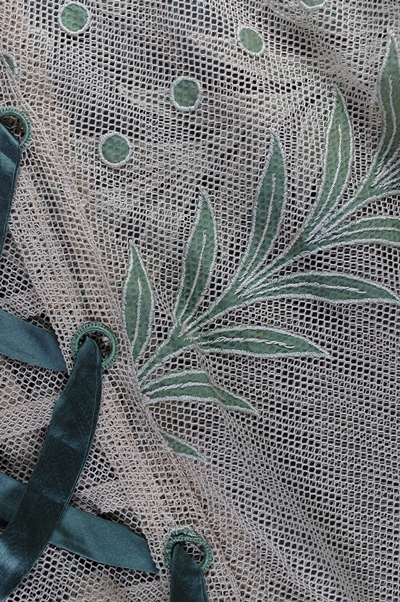
Net overdress, c1910. Image of lace detail

Net overdress, c1910. Image of lace detail

What happened?

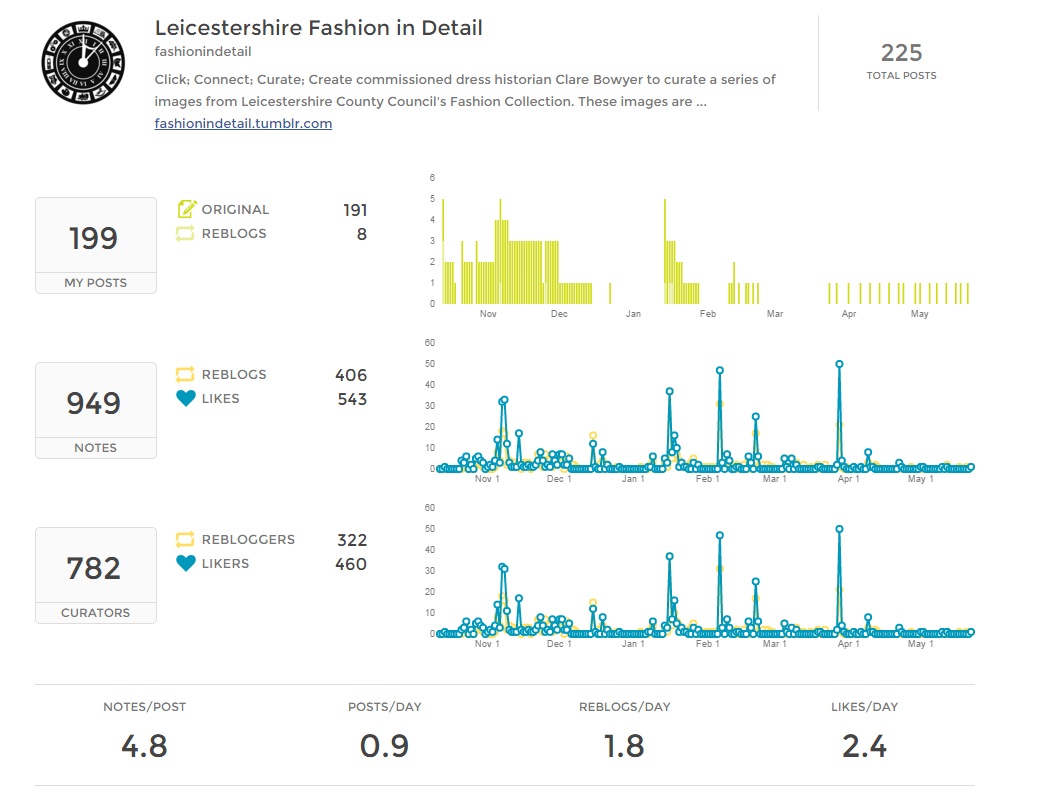
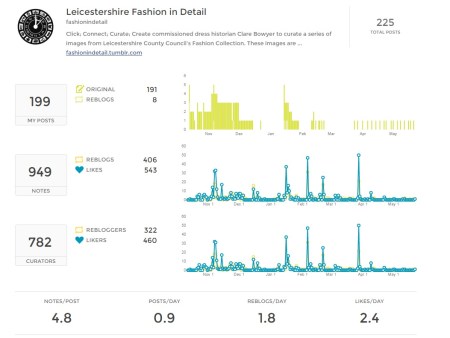
Since we began posting in October 2014, we have:

  • posted 191 images
  • received 949 ‘notes’ (these are interactions with the content in the form of likes and reblogs)
  • had 782 users interact with our content
  • gained 134 followers (and counting)

This is an average post engagement rate of 495.3%. In comparison to our picture library, our download rate is 0.98% and our average engagement rate on Pinterest is 1.47%.
Union metrics

Union metrics

Where relevant we would also link back to the collection if it was on our picture library, and as a result our social media referrals increased, not just from our own blogs but from other peoples’ too; 20% of social media referrals to our picture library are from Tumblr.

What did we learn?

1. Tag, tag, tag
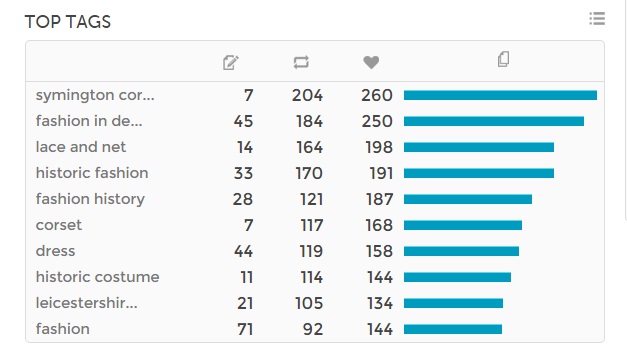
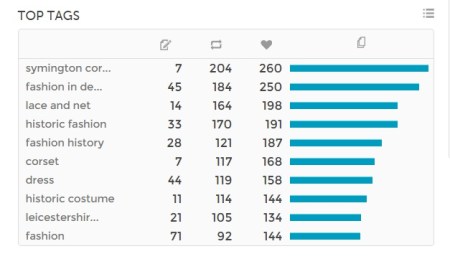
Fundamentally with all social media, it’s about being discoverable, and for Tumblr it’s about using the right tags so that users can find your content and then hopefully reblog or like your posts. Knowing the right tags to use is down to a process of trial and error, but descriptive tags work best. Do your own research on what you think are popular tags, then look at what other tags have been used for that post and use them for your own.
Top Tags

Top Tags

2. Social media is about engagement, not broadcasting
The purpose of social media is to engage with audiences, not to just broadcast about what’s going on. It was something that was picked up in our development of a social media strategy. The strongest recommendation from that was to move away from broadcasting to engaging with our audiences; telling people about our collections was a perfect way to do this.

3. Experimentation is key
As with tagging, a lot of what makes good content is trial and error. Try something, see if it works, and if it doesn’t, look at why and try it again. If it does work, look at why it did and see if you can replicate it. We saw that images of our corsets were gaining the most engagement, so we have decided to create a Tumblr about our Symington corset collection.

4. Digital vs Physical
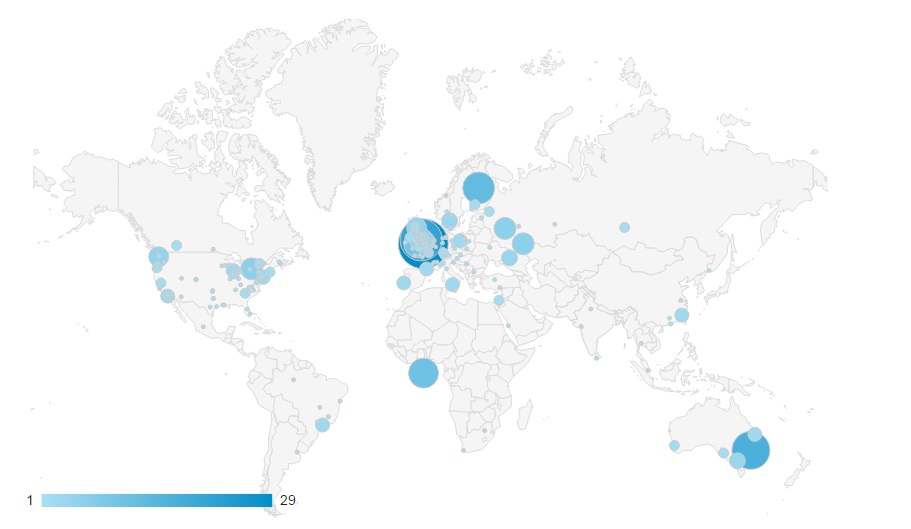
Our biggest learning outcome is that a digital visitor isn’t better or worse than a physical visitor; they are just different types of visitor. We have people from all over the world engaging with our collections who might not have found out about them if it wasn’t for Tumblr. They may never visit us in person, but at least they know we exist, and we have made our collections accessible to them and in a way that allows them to truly engage.
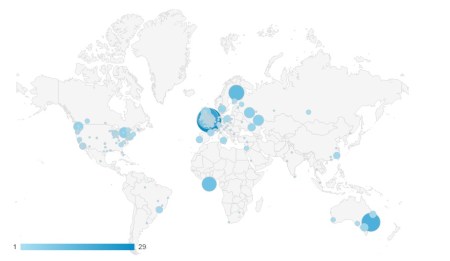
Session Geography - Google analytics

Session Geography – Google analytics

5. Naming your files
I didn’t mention this in my presentation, but the importance of a digital asset management strategy is key. Only some of the images used were labelled according to the garment they were from so I had to spend a month in the ‘Frock Box’ trying to identify the item from the image and updating the metadata accordingly. Whilst I relished my time exploring the collection, renaming all of the images was a pain.

What next?

Leicestershire Fashion in Detail has been such a success to us that we want to explore how we can develop it further. In regards to the overarching project CCCC, we are undertaking an evaluation and visioning exercise to see how we might be able to embed the learning from the project into the strategic delivery of the service.


Lucia Masundire
Project Manager – Click; Connect; Curate; Create
Leicestershire County Council

NatSCA Digital Digest

ChameleonYour weekly round-up of news and events happening in the world of natural sciences
Events

8th – 15th June: The Dodo Roadshow. To mark the Oxford University Museum of Natural History’s nomination in this year’s Art Fund Prize for Museum of the Year, the Oxford Dodo is touring the country, from Land’s End to John O’Groats, in just one week, visiting museums and galleries along the way!

17th – 18th June: Refloating the Ark: Connecting the public and scientists with natural history museums at Manchester Museum. Conference looking at how natural history collections can be used to engage effectively with the public and the scientific research community.

25 June: Collection Standards Infrastructure Project – Environmental Standards at NHM, London. Talk on standards for collections, display and storage and their implications.


News

A new species of theropod dinosaur from Wales has been discovered by experts from The University of Manchester, University of Portsmouth, and the National Museum Wales.

A rare meteorite stolen from an Australian museum may have been stolen to order. Scary stuff!

A study using museum collections has found that the world’s biodiversity might not be as diverse as we thought…

The World Museum in Liverpool has added a new Octopus called Polvo to its aquarium!


Around the Web

A dinosaur reading list for every dino enthusiast in your life!

David Gelsthorpe of Manchester Museum on how the Page Museum at La Brea Tar Pits tells the story of Ice Age animals.

NHM curator Erica McAlister has been re-curating flies. Big flies.


Got a submission for the blog or Digital Digest? Email us at blog@natsca.org