NatSCA Digital Digest

ChameleonYour weekly round-up of news and events happening in the world of natural sciences


Conferences

Conference season is well and truly upon us! Here are some dates for your diaries:

The National Forum for Biological Recording and the British Ecological Society are holding a joint conference at Sheffield University on 23rd – 25th April.

The conference of the Society for the Preservation of Natural History Collections will be held at the Florida Museum of Natural History this year, on the 17th – 23rd May. The theme is ‘Making Natural History Collections Accessible through New and Innovative Approaches and Partnerships’.

Refloating the Ark: Connecting the public and scientists with natural history collections. A two­‐day meeting at Manchester University on 17th – 18th June, exploring how natural history museums can contribute towards environmental sustainability by engaging effectively with the public and the scientific research community.


Workshops

The Linnaean Society is holding a workshop on Digitising Natural History and Medical Manuscripts on 27th – 28th April.

The 2nd International Conservation Symposium-Workshop of Natural History Collections will be held in Barcelona on 6th – 9th May. The Symposium-Workshop will emphasize concepts relating to the protection and conservation of natural history collections.

Risk Management in Collections Care is a one-day seminar at Kelvingrove Museum in Glasgow on 21st May, discussing how heritage organisations can use risk management to set priorities and efficiently allocate limited resources to reduce risks to collections.

As always, keep an eye on the events page of our website for more upcoming conferences and courses!


In the Media

Illustration of a Brontosaurus skeleton by Charles Othniel Marsh

This week’s big news: Brontosaurus is back! A new specimen-level cladistic analysis of diplodocids found strong support for Brontosaurus as a valid genus distinct from Apatosaurus. The internet rejoiced.

Entomologists from the Natural History Museum of Los Angeles County found 30 new species of fly in urban gardens.

Skeletal collections can tell us about the history of welfare standards in captive animals (warning: the paper is behind a paywall, but the abstract is free).

Brian Switek revisits his old fossil friend Teleoceras.

Three new species of wood lizard have been discovered in Ecuador and Peru by museum researchers.


Got a submission for the blog or Digital Digest? Email us at blog@natsca.org

Review of ‘John Scouler (c. 1804 – 1871) Scottish Naturalist: A life, with two voyages’

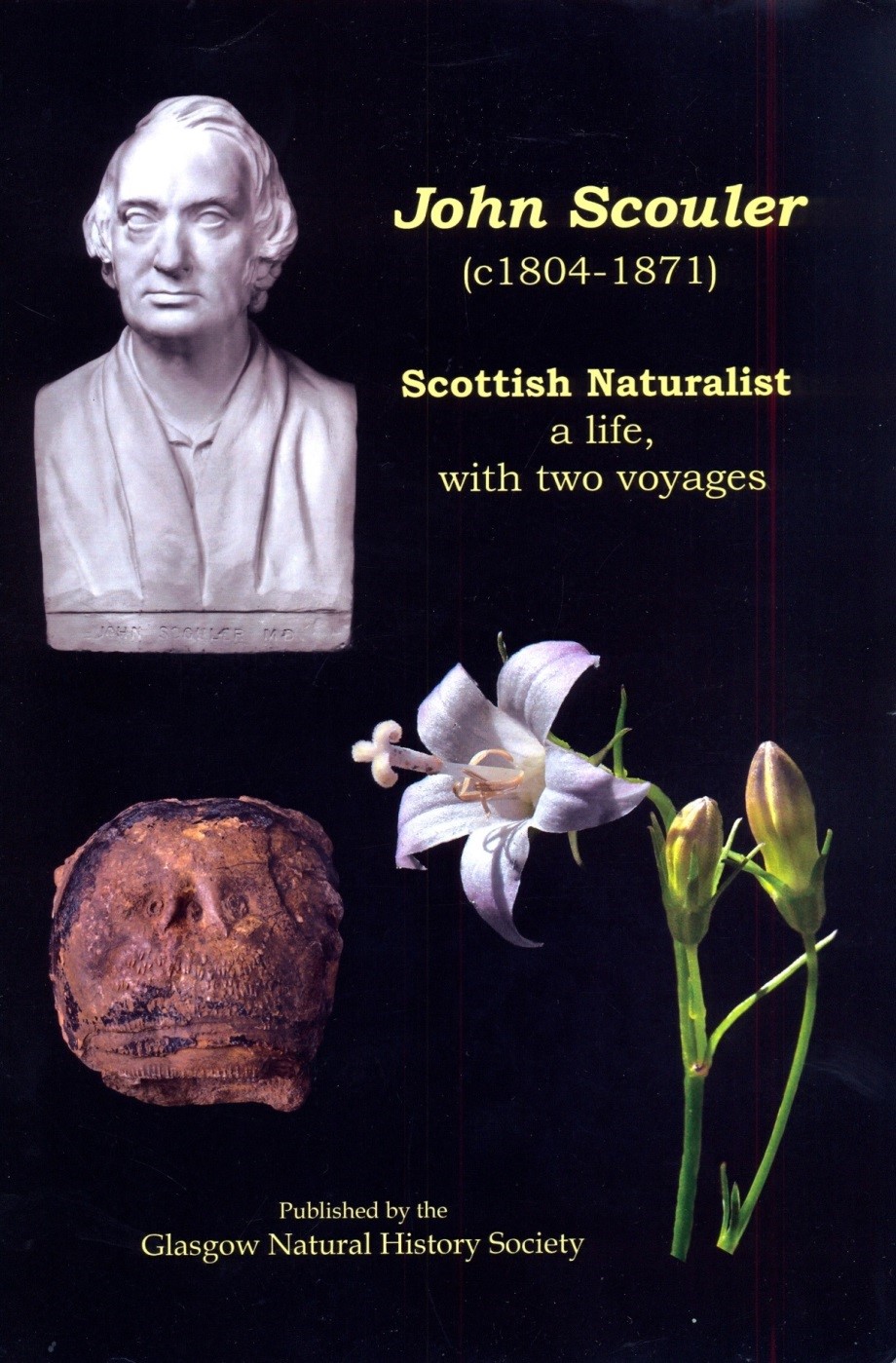
 Published by the Glasgow Natural History Society

Cover of the journal 'John Scouler (c. 1804 - 1871) Scottish Naturalist:

John Scouler was a naturalist whose contribution to his field was highly respected, despite few publications. He was a collector, a lecturer, and in his working life was Professor of Mineralogy at the Andersonian University (and curator of the Museum) in Glasgow (1829 – 1834), and later at the Royal Dublin Society (1834 – 1854). John Scouler was held in high regard by his peers, yet his story, like many other naturalists during the 19th century, is relatively unknown outside of the world-renowned voyages made by Charles Darwin, Joseph Banks, and Alfred Russell Wallace.

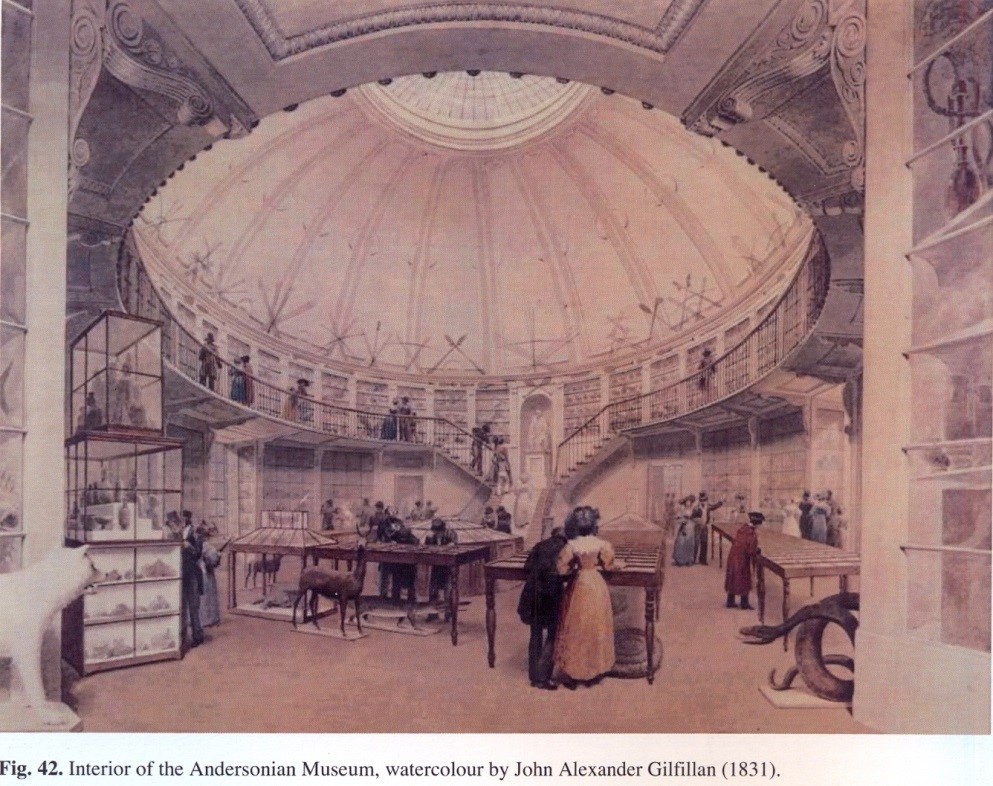
Painting of the interior of The Andersonian Museum, which was curated by Scouler (by John Alexander Gilfillan, 1831)

The Andersonian Museum, which was curated by Scouler (by John Alexander Gilfillan, 1831)

The publication begins with the discovery of some ‘dusty plant specimens, dried and mounted on dustier sheets of paper’ found in the biological department of the Royal Technical College, Glasgow. Professor Blodwen Lloyd Binns is charged with the challenge of resolving the mystery of this forgotten herbarium. The Prologue and Introduction are in fact written in her own words, from a draft of a book entitled ‘Round the World in a herbarium’ that she had started in the 1960s. Binns then assesses Scouler based on his contribution to ‘his science’, the scientific thought of the day, and his collections -significantly his herbarium. The author of the journal, Charles Nelson, uses these three areas to portray an accurate and systematic account of Scouler’s legacy with prose that is engaging, erudite, and succeeds in fleshing out the uncertainty around Scouler’s second voyage to India.

Scouler held a strong passion for collecting and an interest in botany. He studied anatomy at Edinburgh University and wished to pursue a career as a surgeon, but had been greatly influenced by Professor William Jackson Hooker, who became his lifelong friend and teacher. It was Hooker (who would later become Director of Kew) who recommended Scouler as ship’s surgeon on his first ‘voyage of discovery’ on the William and Ann to the Galapagos and North West Pacific coast (1824 – 1826), along with another of Hooker’s capable botanists, David Douglas.

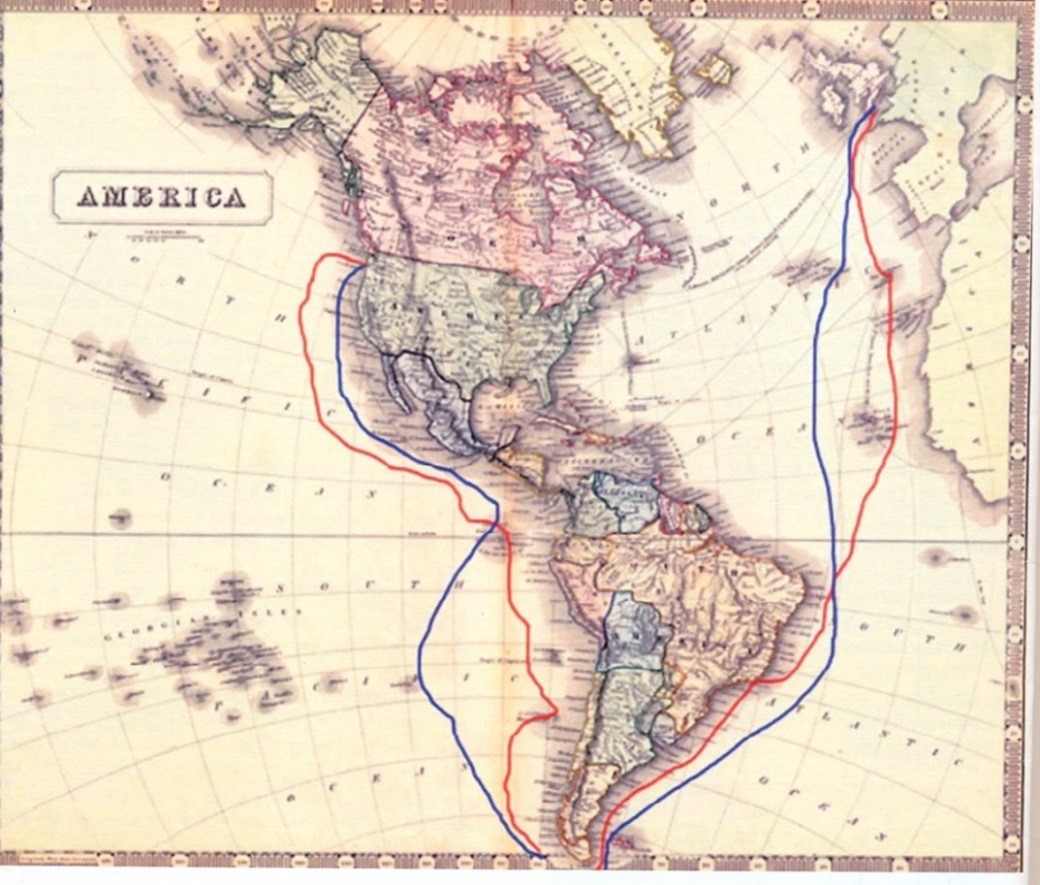
Map of the voyage of the Hudson Bay’s Company William & Ann, 1824-1826, based on the readings recorded in the ship’s log (red outward voyage 1824-1825; blue return voyage, 1825-1826)

Voyage of the Hudson Bay’s Company William & Ann, 1824-1826, based on the readings recorded in the ship’s log (red outward voyage 1824-1825; blue return voyage, 1825-1826)

Scouler was the first botanist to explore Oregon and bring back specimens hitherto unknown to science. Scouler reached Canada in June 1825, making new discoveries and descriptions of plants. In Hooker’s ‘Flora’ he honours a new plant collected by Scouler – Phyllospadix scouleri or Scouler’s surf-grass – which belongs to a new genus entirely. This marine flowering plant, unique to the coast, was found at Observatory Inlet, where over 30 species of plants including Scouleri aquatica were found and ascribed to Scouler by Hooker. Scouler’s specimens contributed greatly to Hooker’s great botanical work ‘Flora boreali-americana’ and in some cases still survive in Kew’s collections today.

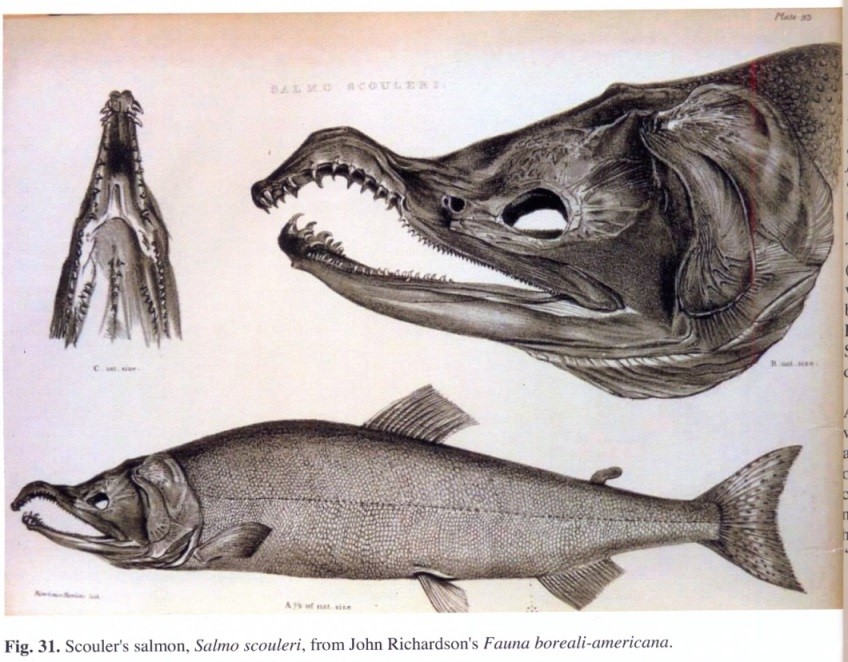
Scouler’s salmon, Salmo scouleri, from John Richardson’s Fauna boreali-americana

Scouler’s salmon, Salmo scouleri, from John Richardson’s Fauna boreali-Americana

In conclusion, the journal beautifully articulates the life of Scouler using diaries, journals, illustrations from monographs, images, shipping logs, and his own surviving specimens, along with secondary sources such as museum catalogues. It is clear, accessible and enjoyable to read, and is comprehensively referenced. I also like the addition of coloured plates of the species discovered by and named in Scouler’s honour. Charles Nelson succeeds in accurately assessing Scouler’s legacy against the criteria set out by Professor Binns, and extends our knowledge of Scouler’s later life. It tells me that John Scouler was indeed a man dedicated to ‘his science’, without a desire for self-promotion or critical acclaim.

Anthony Roach
Science Educator, Natural History Museum


All images reproduced from John Scouler (c. 1804 – 1871) Scottish Naturalist: A life, with two voyages, published by the Glasgow Natural History Society.

World Book Day

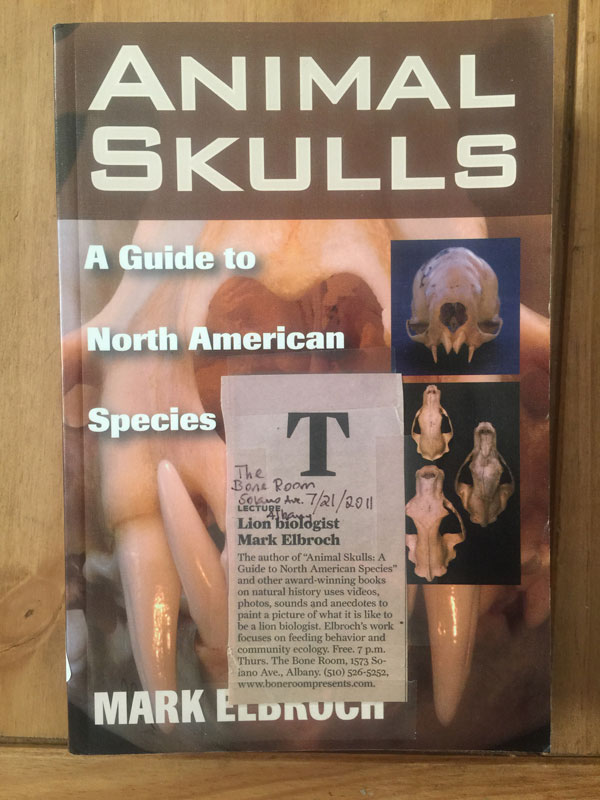
World book day is a time for sharing the books that have made an impact on you. Chances are, if you liked it, so will someone else. It has a tradition of being all about fictitious books but there’s no reason why that has to be the case. I’m going to share with you now a very interesting book that was loaned to me by Oxford Museum‘s own Gina Allnatt : the book is Animal Skulls, by Mark Elbroch. It’s a really handy resource for relative measurements of features and this particular copy came with a history: the previous owner before Gina was clearly researching big cats and had added this note to the front about a presentation by the author. There’s another note on the inside too.

Animal Skulls

A Guide to North American Species

We have some great book reviews coming in the near future so keep an eye out for those. Today I’d really like to hear what books have recently touched you – fact or fiction but specifically ones relating to natural history collections. Good books should spread faster than plagues.

Curating Biocultural Collections: A Review.

Book Review:
Curating Biocultural Collections : A Handbook
Edited by Jan Salick, Katie Konchar and Mark Nesbit.
2014. Kew Publishing. Royal Botanic Gardens, Kew. In association with Missouri Botanical Garden, St Louis.
£30
Available from Kew online
E-book available from Chicago University Press

By Jan Freedman, Curator of Natural History, Plymouth City Museum and Art Gallery.

It may appear rather unusual for a natural history curator to review a book on ethnographic collections. However, with a plethora of crossovers from similar storage conditions to comparable conservation methods, this book may potentially be more beneficial than you may first think. I was interested to review this book because I am not an expert on biocultural collections. I am keen to see if this book would be useful to assist with the diverse natural history collections we care for.

Biocultural (ethnographic) collections include any object made with the parts (or whole) of animals or plants. This can include herbarium collections, clothing, animal artefacts, DNA collections, skeletal collections, and many more. These collections provide wonderful evidence of cultures past and present and how they all relied on their natural world to survive; as we still do today. Due to their very nature, these collections require analogous collections management with natural history specimens, and many specimens in our collections cross over (eg. Herbarium, wood samples, etc).
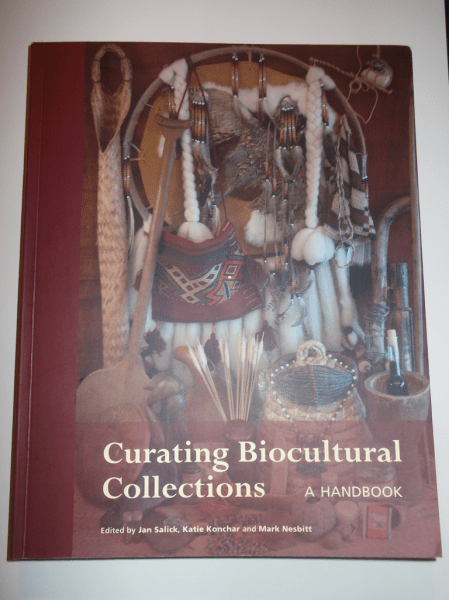
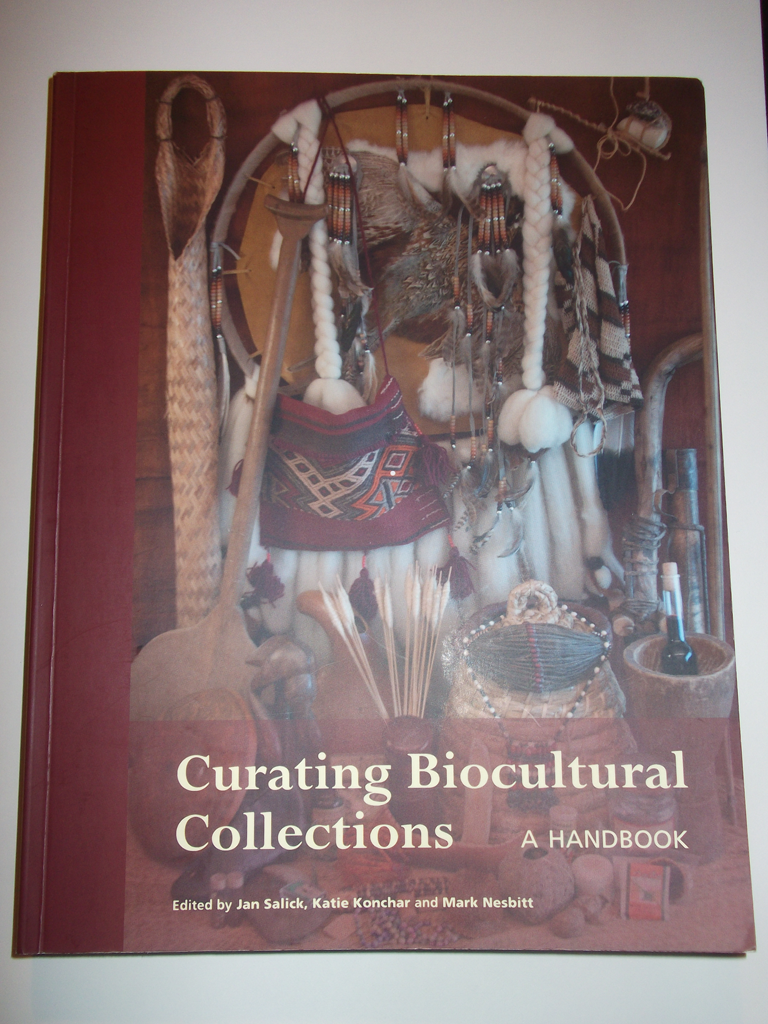
Front Cover

Front Cover

The book itself is well laid out. Each chapter is focused on a different area to fit into one of the five sections: the introduction; practical curation (materials); practical curation (reference material and metadata); contexts and perspectives; and broader impacts. I like that the chapters are written all with the same clear structure, sub headings, images and a detailed accompanying bibliography. They provide detailed, expert advice, case studies, and examples of best practice.

For me, the writing tone is very professional, almost textbook style in a factual way that provides a lot of information in each section. And as such it is not a light read; possibly a book that you wouldn’t read from start to finish. But you would be able to easily search the index for an area you were looking for, and find the most up to date information written by experts in the field. Although I find more casually written pieces easier to digest and understand, I can actually see myself using this book as a reference for many different areas in the future.

The sections covered are detailed, precise, and written by experts across the world. The first section introduces the types of collections that are dealt with, the ethical standards, and the impact of the collections; lots of cross over with natural history collections, as you will find throughout the book. This first short section finishes with a visually impressive summary of the main collaborators of putting the book together; Missouri Botanical Garden, National Botanic Gardens of Ireland, National Museum of Natural History, Paris, Royal Botanic Gardens, Kew, and the Smithsonian Collections.

Section 2 focuses on practical curation, starting with including the basics (environmental conditions, pests, hazards, storage, handling, and labelling) to the more detailed, including storing voucher specimens, reference collections (botanical and zooarchaeological), seeds, DNA and even living plant collections. I found this section interesting because of the huge variety it covered and amount of detail in each chapter; if you find yourself wondering ‘how do I curate genetic resources’ then you can easily flick to Chapter 8 to find out. I had not really thought of curating DNA specimens, when we actually have them en masse in natural history collections. There are a couple of chapters in this Section I will take my time to read with interest in the coming weeks.
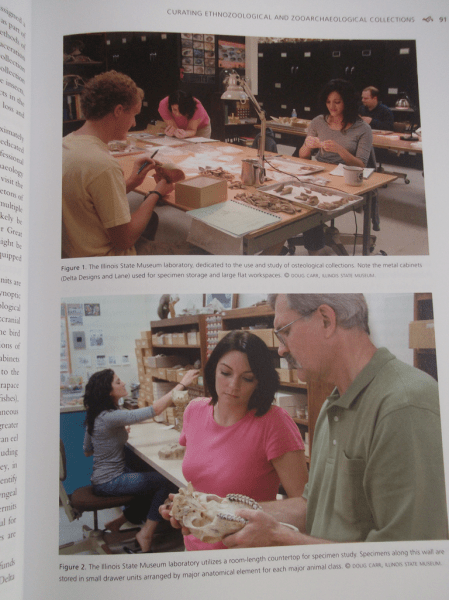
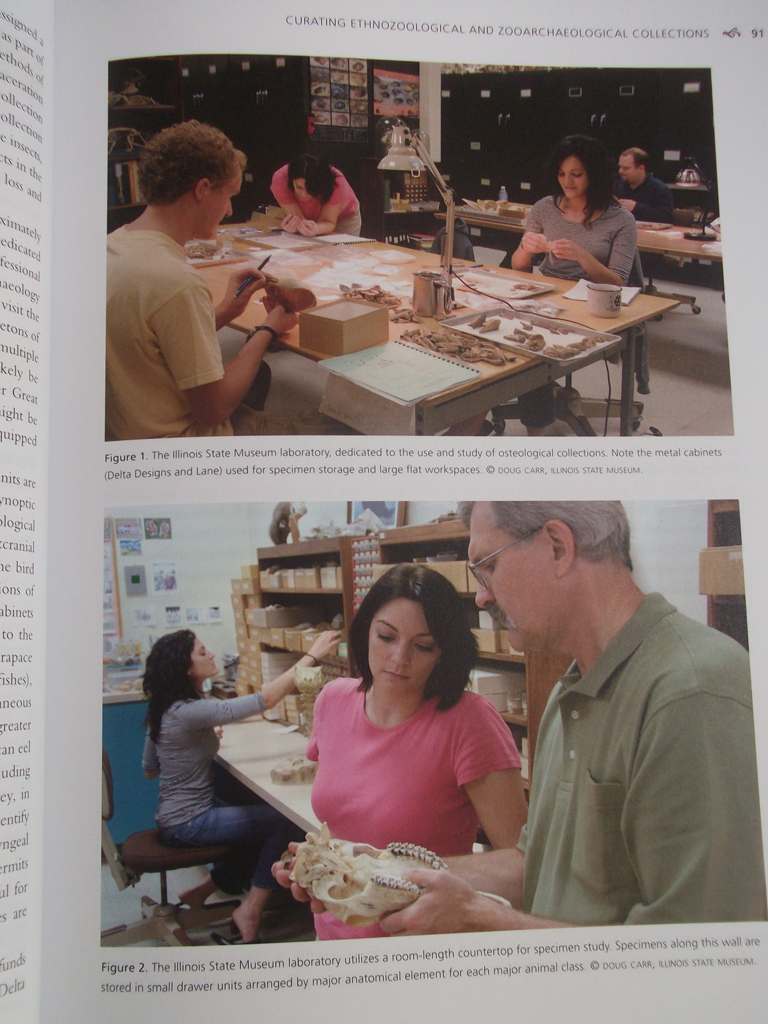
Examples of Images

Examples of Images

Section 3 looks at the curation using reference materials and metadata. Covering best practice in database standards, cataloguing of collections, and associated photograph collections, these chapters provide detailed guidelines on standardising the information for the future. In short, it spells out the importance of recording everything you know associated with that specimen; from letters/emails to photographs of the sites/collectors, and any associated documents. There is also a chapter on the legalities of biocultural collections, which does cover the important issues of CITES and copyright. The chapter that jumped out for me covered how to store oral history recordings and videos. This may not appear relevant to a natural history curator, but I think it may be getting more and more important: after organising and leading several pop up museums around the city, the amount of stories from local people sparked by seeing a photograph, painting, or mineral, was amazing. I wished I could record them all, because these stories will soon be gone forever. I have several collections where the collectors, or people who knew the collectors, are still alive, and I am keen to capture their thoughts and anecdotes relating to the collections before they are lost.

It is a shame Section 4 is the shortest section, as this examines different perspectives on cultural collections. Although not directly related to the hands-on dirty curation work, this section makes you take a little step back and think about the collections we care for. Alongside legal issues, it highlights the importance of respect and building relationships between museums and communities (from the indigenous communities in this book to the communities of amateur specialists for the natural history curator). Many specimens in our stores once belonged to someone and each individual specimen has a story to tell, linking back to the collector. These are the stories that bring the collections to life; forgetting where they have come from cuts any personal link with the visitors.

The final section of the Handbook looks at the broader impacts of biocultural collections. We all work with our collections and have a variety of users from the visitors in the museum, artists, researchers, and school groups. However, looking at the different ways different collections are used can invite ideas in using your own collections in a new and exciting way. This section goes into quite a lot of detail about the different impacts these collections have, where there are many cross overs with natural history. The potential for several different research outcomes for biocultural collections are outlined, many of which can be tied in with natural history collections too (showing a closer working between two departments). A separate chapter examines the use of collections for education, which many of us do on a regular basis with our own collections. This Section includes a useful chapter on the uses of herbarium specimens, including vouchers specimens, and DNA analysis. A useful section in the book showing that sharing ideas and ways of working can encourage new uses of collections.

I would recommend this book to a museum that holds ethnographic collections, and a bonus if it also holds natural history collections. The book can be used by both areas to help safeguard the collections for the future. It is a Handbook which can be used if you are undertaking a specific collections project or if you updating your database. Clearly laid out with nice images the chapters make available the most up to date information on that area.

The book provides a really useful guide to caring for a diverse range of collections many of which a natural history curator cares for too. As there is a lot of cross over, the book can also develop a stronger understanding between departments about the objects and specimens they care for; a better understanding of other curators collections will lead to greater working relationships.

NatSCA Digital Digest

Welcome to the weekly digest of posts from around the web with relevance to natural science collections. We hope you find this useful and if you have any articles that you feel would be of interest, please contact us at blog@natsca.org

1. Blog: ARKive’s Top Ten Eggs

Kathryn Pintus, ARKive

Kathryn Pintus
Kathryn Pintus

Synopsis

For those of us with a public programme to fill each holiday season, ideas and inspiration from other sources can never be too much or too numerous. I for one know first hand what it is like to keep trying to deliver a programme that is constantly fresh and original. As we egg-sit (sorry) another Easter of promoting eggs, egg-laying, anything eggy or egg-like that we have in our collections, I thought you may appreciate a pick me up. Here is a refreshing and quirky blog from ARKive that should do the trick.

ARKive’s Top Ten Eggs

Peacock butterfly eggs. © John Bebbington FRPS

Peacock butterfly eggs. © John Bebbington FRPS

Continue reading