NatSCA Digital Digest – April 2023

Compiled by Milo Phillips, Assistant Curator of Entomology for National Museums Scotland.

Welcome to the April edition of NatSCA Digital Digest.

A monthly blog series featuring the latest on where to go, what to see and do in the natural history sector including jobs, exhibitions, conferences, and training opportunities. We are keen to hear from you if you have any top tips and recommendations for our next Digest, please drop an email to blog@natsca.org.
Sector News

Registration for the NatSCA 2023 conference closes on April 20th so get booking ASAP. The conference will be held on Thursday 27th and Friday 28th April 2023. Stoke-on-Trent Museums will be hosting the conference at The Potteries Museum & Art Gallery. The conference will include gallery and collection tours, presentations, poster sessions and the annual AGM. For all the info and to register, check out our webpage.

Register via Eventbrite through the NatSCA website: https://www.natsca.org/natsca2023. Members can access discounted booking rates by entering a promo code which has been distributed. If you are a NatSCA member and have not received a code via email, please contact membership@natsca.org. We look forward to seeing you later this month!

SPNHC Conference

The 38th Annual Meeting of The Society for the Preservation of Natural History Collections is being held in San Francisco, California 28 May – 2 June 2023. Early bird registration ends this Friday 15th April. See details and registration here.

Science, Gender & Sociability in a Northern City c. 1775-1820 Conference

This interdisciplinary event brings together scholars in women’s history, the history of science, literature, theatrical performance, music and historical archaeology from across the UK and the US, to contextualise and analyse the diary of Jane Ewbank (1778‒1824). More information on speakers, and links for bookings, can be found here. The conference runs Thursday 8th to 10th June 2023.

Continue reading
Meet the NatSCA Committee – Patti Wood Finkle

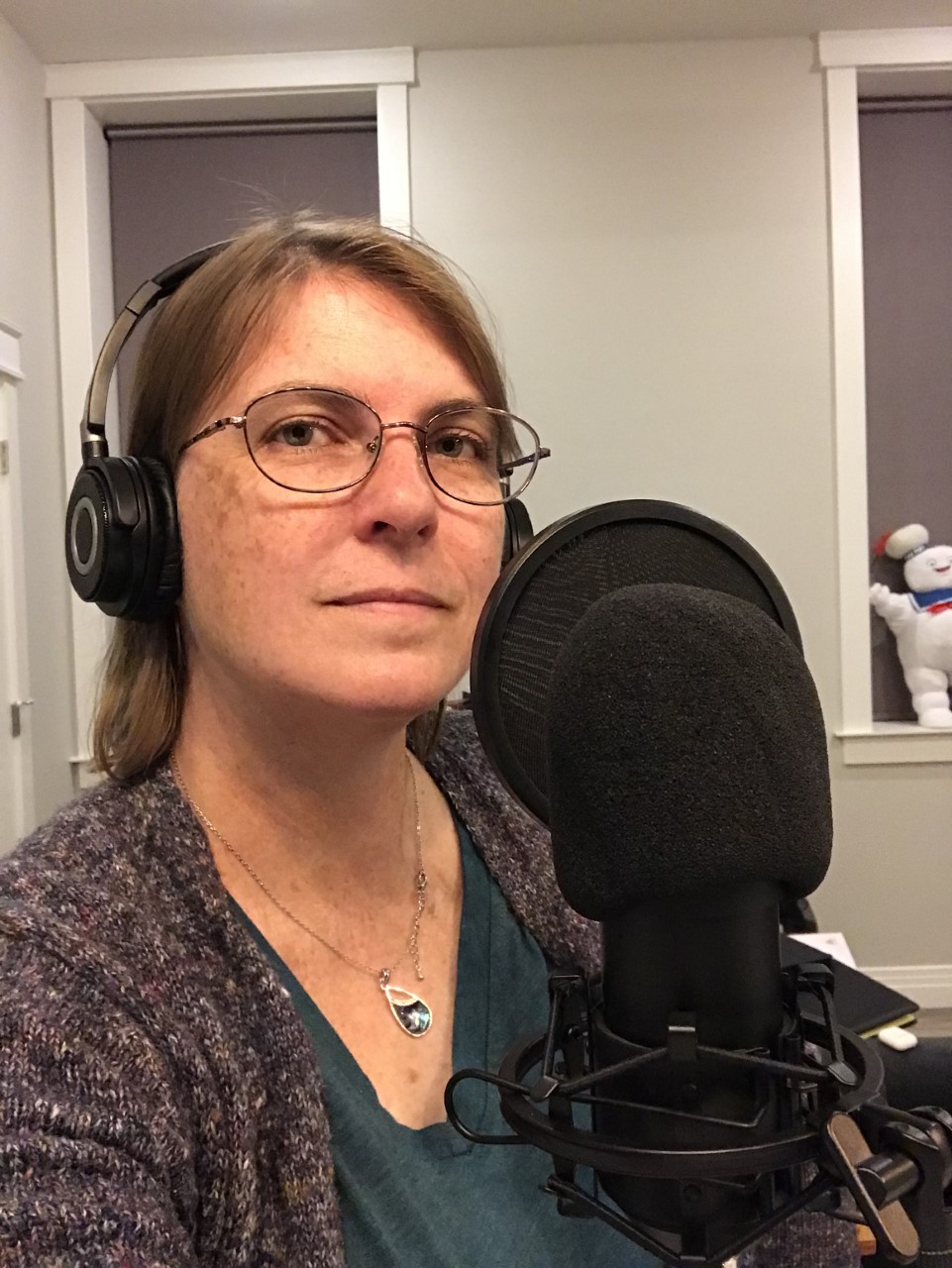
Written by Patti Wood Finkle, Collections Manager at the Earth and Mineral Sciences Museum & Art Gallery at the Pennsylvania State University, in State College, Pennsylvania, USA.

Name

Patti Wood Finkle

What is your role on the NatSCA committee?

I am an ordinary committee member and have volunteered to lead the conference planning committee next year.

Job title and institution

Collections Manager at the Earth and Mineral Sciences Museum & Art Gallery at the Pennsylvania State University, in State College, Pennsylvania, USA.

Twitter username

I don’t have a twitter account, but I am a co-host on The M Files Podcast, a museum-centric podcast that my colleagues and I started during the pandemic to help museum professionals connect and learn more about other museums. Basically we get to meet new people and chat about how much we enjoy working in museums.

Tell us about your day job

In my current roll, I work with rocks, minerals, fossils, meteorites, man-made composites, industrial paintings and prints, as well as historic scientific instruments and equipment. We have a wide-ranging collection and there are always things to do, whether it is updating the current database with images and information, accessioning an incoming collection, or writing exhibit text (and I’ve done all three this week). A large part of my job is collections based, but with a staff of two, it is important to manage our time wisely and both of us take on tasks such as tours, guest lectureships, exhibit planning and development, supervising our student workers, and working with our parent institution. I also work with students and facilitate partnerships with faculty and student organizations whenever possible.

Natural science collections are very popular with museum visitors. Why do you think this is?

Because natural science is amazing! To see, in person, how large a whale is, how brilliantly a gem may sparkle, how beautiful a beetle can be is exhilarating. Screens and computers can only show you so much, but to see the things for yourself is authentic and tangible. It fuels our curiosity and our wonder. The number of times I have heard both children and adults walk into a natural science gallery and exclaim “WOW!”, sometimes under their breath and sometimes out loud, is affirmation of the power of these collections to continue to awe and educate visitors of all ages.

Continue reading

Digital Digest – April 2022

Compiled by Milo Phillips, Assistant Curator of Entomology for Leeds Museums and Galleries.

Welcome to the April edition of NatSCA Digital Digest.

A monthly blog series featuring the latest on where to go, what to see and do in the natural history sector including jobs, exhibitions, conferences and training opportunities. If you have any top tips and recommendations for our next Digest please drop an email to blog@natsca.org.

Sector News

SPNHC / BHL / NatSCA Conference 2022

This summer will see the return of the physical NatSCA Conference – a partnership with the Society for the Preservation of Natural History Collections and the Biodiversity Heritage Library. Early Rate registration has now closed but a Late Rate registration fee is still available, with NatSCA members eligible for the Standard Member rate. The programme of events is now available to view.

NatSCA Lunchtime Chats

The new lunchtime chats are for members only and run on the last Thursday of every month. In our last session we heard from Mike Rutherford, Curator of Zoology and Anatomy at the Hunterian in Glasgow all about their investigation of a sperm whale that washed up in Thailand.

In this month’s talk we’ll be having a discussion about upcoming openings on the board of trustees for NatSCA (i.e. the committee), so please join us if you’d like to learn more about what we all do. There will be specific roles opening up so departing trustees will be explaining in more detail what those involve, but there will also be general positions available. Any NatSCA member is eligible to become a trustee; no previous experience or length of time as a member is a requirement, just an enthusiasm for supporting the work of the association. We welcome and encourage all applicants and we are particularly keen to receive nominations that help us represent the diversity of our membership, at trustee level.

Continue reading

Meet The Committee – Laura Soul

Name

Laura Soul

What is your role on the NatSCA committee?

I am new to the committee, so I am helping out wherever I am useful, which to start off with has been assisting with planning training and our approach to diversity and inclusion.

Job Title and Institution

I’m the Manager of National Learning Programmes and Partnerships at the Natural History Museum, London.

Twitter Username

@soul_sci

Continue reading

Meet The Committee – Laura McCoy

Note from the editor: Following on from the NatSCA AGM 2021, we now have two new members on the committee. So let’s introduce the first of them.

Name

Laura McCoy

What is your role on the NatSCA committee?

As I’ve benefitted from so much training with NatSCA I’d really like to give something back and support this role, but I’m happy to get stuck in and help where needed.

Job title and institution

Curator of Natural History for Manx National Heritage.

Twitter username

@CuratorLaura

Tell us about your day job

I live and work on the Isle of Man, a small island in the middle of the Irish Sea, about 30 miles long and 15 miles wide with a population just shy of 85,000. As the Isle of Man is independent from the UK, we have our own central Government and part of my role includes sitting on committees discussing Government policy development, partnership working with environmental NGOs, land management, ecology and conservation. For the most part though I manage the natural sciences collections at the Manx Museum, including (the other) conservation, preparation, IPM, exhibitions, education and outreach, loans, enquiries, etc. As I work for an organisation that encompasses the role of a national trust and national museum, the job is varied and I work with a great team of people who all support each other. One day I may be working with an intern on reboxing and relocating the Geology collection, the next I’ll be learning how to traditionally thatch a cottage using locally grown materials, and when an unusual cetacean washes up on our shores I get to attend the beach autopsies recorded by the local Wildlife Trust (pro tip: strandings in winter tend to be a LOT less smelly…).

Continue reading