Review of a Training Course on Pesticides and the Latest Legislation

The following is a review made by Roberto Portela Miguez, Mammal Group Curator at the NHM London:

About a week ago I attended a course and talk at the Natural History Museum of London, entitled “Control of Pesticide Regulations 1986 (as amended 1997) EU Biocides Regulations 528/2012”.

I know that, even if your two passions in life are pesticides and obscure legal documents, it is highly unlikely that you would rush to sign up for it.

After attending the event I can assure you that I still do not wish to look into both topics more than I need to. I do however strongly recommend all collections management staff to attend any future opportunity to listen to Bob Child’s talk or training event on this topic.

Robert Child was formerly Head of Conservation at the National Museum of Wales, and is now a Conservation Consultant, Advisor on Insect Pests to the National Trust and Director of Historyonics.

His company, Historyonics, sells insect pest products and carries out treatments on historic buildings and collections – so he has plenty of first-hand anecdotes to illustrate the various points he makes during his talks.

His experience on these matters is vast, but possibly more important: he is a brilliant communicator that can easily turn what is a dry and dull topic into two hours of effective and entertaining training.

The course Bob runs is required training for anybody using pesticides as part of their work ( this includes volunteers ) and is based on the requirements of the Control of Pesticides Regulations 1986 (as amended), the Control of Substances Hazardous to Health Regulations 1988 (as amended) and the new Biocides Regulation 528/2012. It is further based on the HSE’s publication ‘Recommendations for Training Users of Non-agricultural Pesticides’.

The course lasts for about two hours and covers both theoretical aspects on a Powerpoint and practical demonstrations of:

  • principles of pest control and nature of pesticides
  • legislation
  • storage and transport of pesticides
  • use of pesticides (on site assessments)
  • labels and data sheets
  • safety in preparation, clean up and disposal.
  • emergency procedures
  • record keeping

Once you have gone through the training, you will be qualified to apply pesticides in your collections and, without doubt, be extremely grateful that Bob has done all the reading of the relevant EU legislation on your behalf.

I know most of us do our best to prevent infestations but, just in case, better to be prepared and qualified than …you know.

Keep checking our NatSCA website and blog for news on future workshops and training events and if you want to contact Bob to run the course at your institution, you can email him to bobchild@historyonics.com .

Bill Pettit Memorial Project – Conservation of historic Taxidermy

Ann Ainsworth (Colchester and Ipswich Museums)

Hannah Clarke (Freelance Conservator)

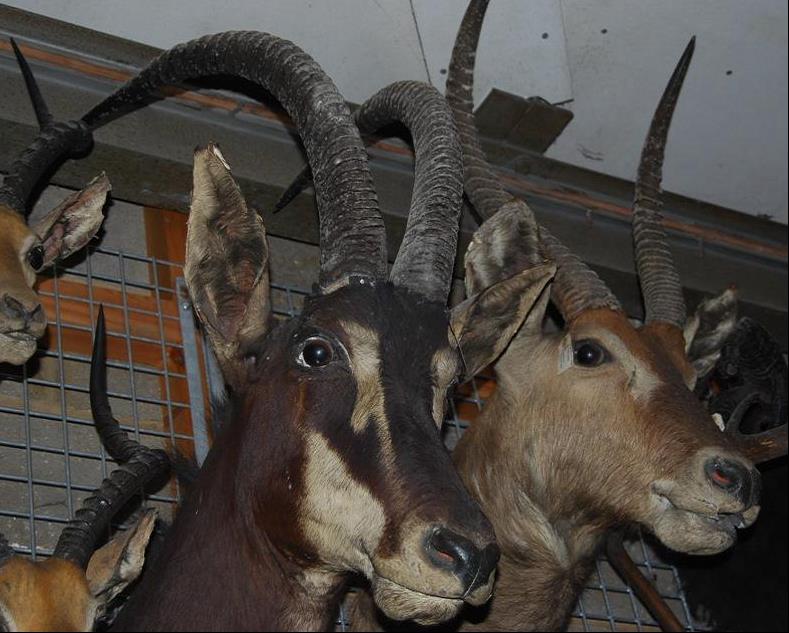
Ipswich Museum has an important historic collection which dates back to its opening in 1847. A recognised strength of the natural history collection is the historically important Victorian and Edwardian taxidermy of animals from across the globe.

The taxidermy collection is stored in an old building which used to be an old coach depot and later a garage. The space had become very dusty and dirty and a significant mould problem had developed.

one

We followed a very simple methodology of light dusting with soft brushes using a vacuum containing a HEPA filter. This was followed by swabbing with an alcohol/water solution to remove the mould and kill the spores. Where possible specimens were covered or wrapped in polythene to act as a protective cover to protect from dust, provide an external surface for mould to grow on, and to prevent pest damage which is also a potential problem within the stores.

two

The variety of conservation problems, meant that many different treatment processes needed to be used by Hannah. Some of the processes included dry cleaning, wet cleaning, re-adhering, colour matching, re-inserting feathers, removing old varnish with solvents, mitring, sealing with brown gum tape, and applying and buffing wax. New panels of glass and sections of beading had to be sourced and cut to size.

The top panel of the pike case had warped and bowed, as the glass side panels had been broken previously. There were no structural supports on the front inside edges of the case either, meaning that the top of the case was unsupported from the front. The existing beadings on the rear inside edges were not secure, and the metal tacks used to hold the mitred sections of wood in place were very loose. New beading was sourced to match as close to the original as possible and was then colour matched and held in place using new tacks.

Cygnet before conservation

Cygnet before conservation

Cygnet after conservation

Cygnet after conservation

The Bill Pettit Memorial funding went towards payment for the freelance Conservator in terms of time and travel expenses and the purchase of replacement glass and beading for the cases where broken or damaged.

It was agreed that conserved cases would not be returned to store until the planned repair work had been successfully completed. As many of the conserved cases as possible were put on public display in the museum galleries. This has enabled part of the collection not normally seen by visitors to be on display. It has also helped to present a strong message of the Museum Services’ wish to improve the condition of specimens and its storage facilities and helped to raise the profile of the project.

Spicer platypus case after conservation

Spicer platypus case after conservation


Caring for Entomology Collections

The following post is from Emma-Louise Nicholls of the Grant Museum of Zoology who attended our recent Caring for Entomology Collections Workshop

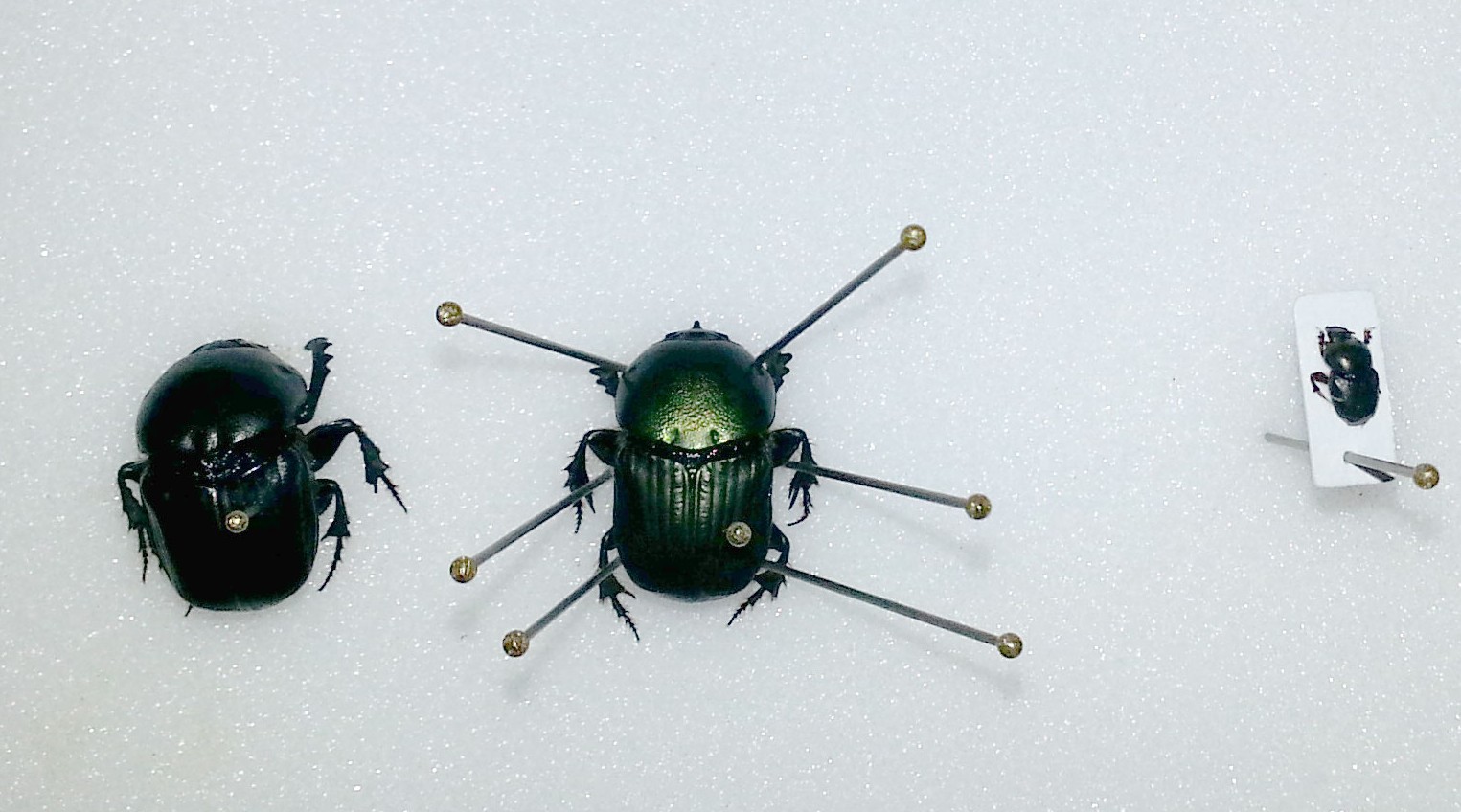
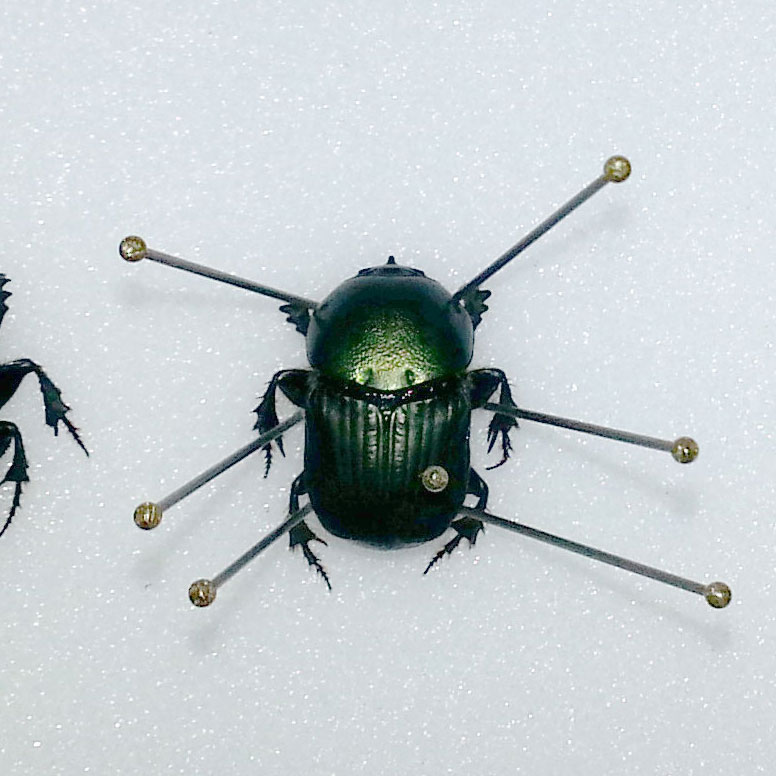
The scarab beetle shows how pins are used to manipulate the legs whilst the specimen is drying, after which it will maintain its shape.

At the NatSCA course Caring for Entomology Collections held at the NHM in London, I not only got to salivate over the swanky slide cabinets that the Natural History Museum now houses, but I also got to pin a scarab beetle from scratch, peer into a liquid nitrogen freezer at minus 196 degrees, see a grasshopper eating a mouse, eat amazing food (not from the nitrogen freezer), and was even rewarded for my endless questions* with a free gift in the form of a rubber gasket. All in all it was a stupendous day and a course definitely worth attending.

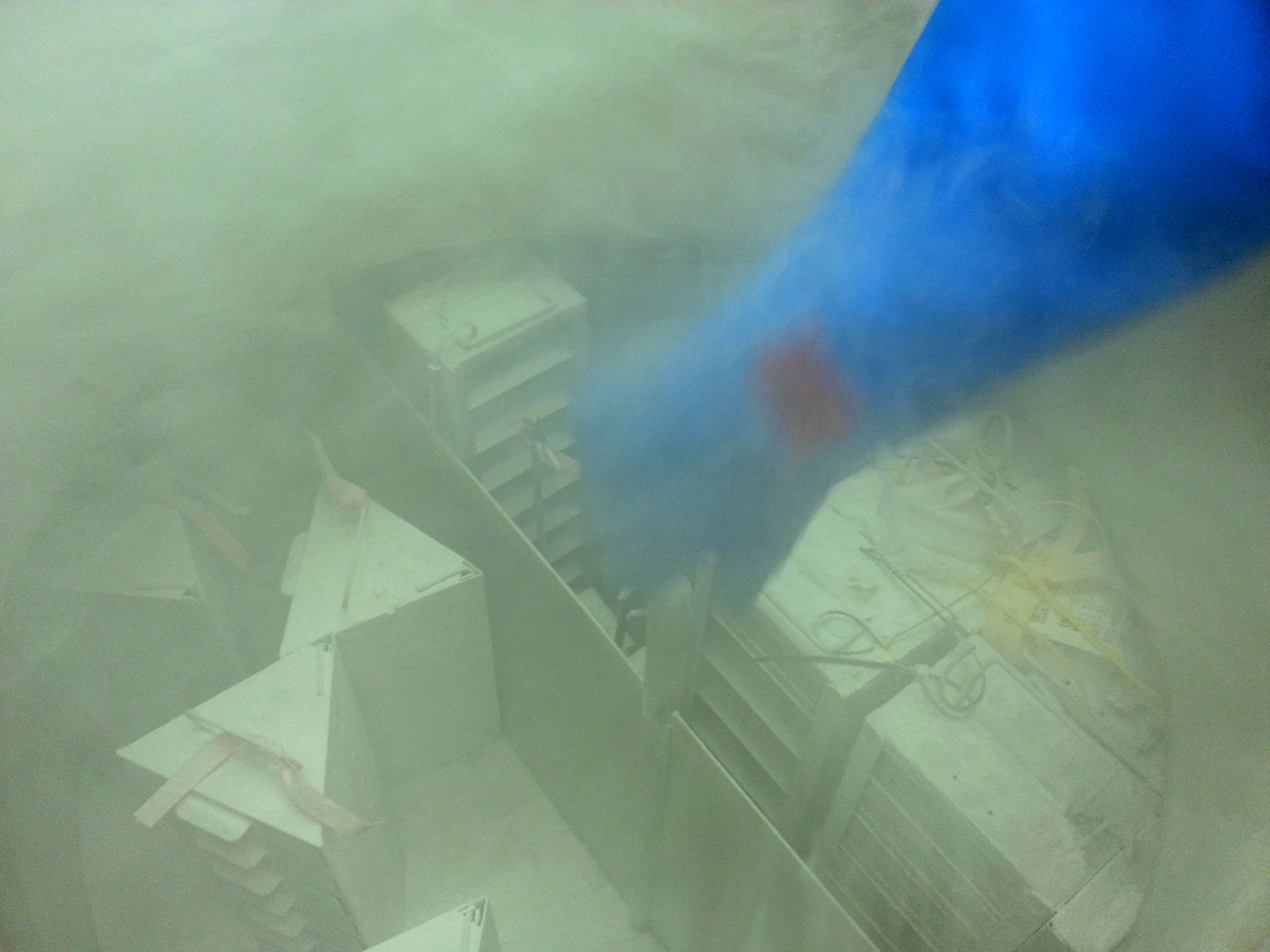
This liquid nitrogen freezer is used to store organic material that would degrade at higher temperatures.

This liquid nitrogen freezer is used to store organic material that would degrade at higher temperatures.

The day was split into eight sections that covered how to prepare your specimens, care for and store your collections, and lots of inspiration for what you can subsequently do with your specimens to make them available to a wider audience. We also talked about how to deal with insects that are not so much the specimen type, but more of the wild roaming, likely to eat your specimens variety. Although there is much to say, here are some highlights.

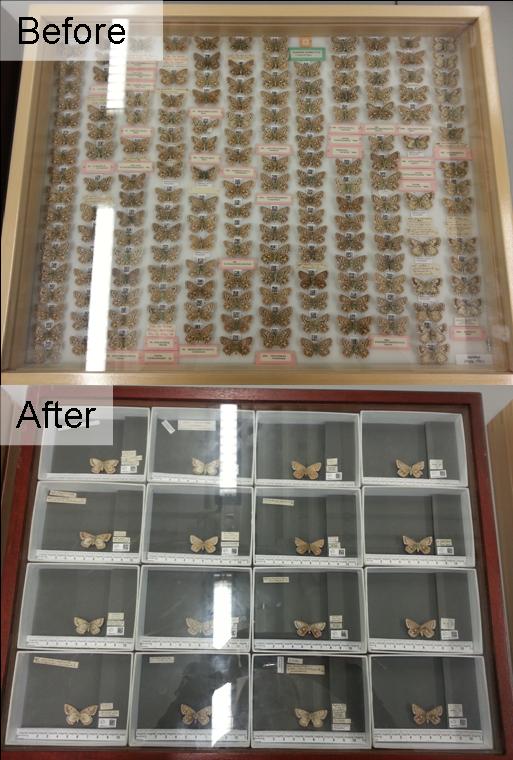
The Digitisation Project is working to re-house entomology collections and give each specimen an individual QR code for fast and efficient data extraction.

The Digitisation Project is working to re-house entomology collections and give each specimen an individual QR code for fast and efficient data extraction.

We were shown an impressive digitisation project that involved taking a drawer of entomological specimens in need of some TLC, applying both remedial and preventative conservation techniques and then photographing each specimen with a unique QR code. The idea is that in the future, the code can be scanned and will link to metadata on the Museum’s database. Knowing how troublesome paperwork for loans can be, this has exciting implications in terms of simplifying the process and decreasing both the time required and the potential for human error in filling out forms and in transcribing the specimens’ labels.

Integrated Pest Management (IPM) is an essential part of any museum staff members’ knowledge base. Even if a full blown IPM plan is not logistically feasible in your building (as it isn’t in the museum where I work), a knowledge of how and why it works is integral to writing a pest monitoring programme that suits your collection. Housekeeping is, of course, the most important part of keeping museum pests at bay, but even in the best kept collection, pests can and do still occur, and knowing how to monitor and effectively eradicate any outbreaks is integral to preventative conservation of your specimens. It was both interesting and very useful to compare and contrast the problems and protocols that are used by the Natural History Museum with those from my own museum and I came away some useful tips.

The scarab beetle in the centre of this image shows how pins are used to manipulate the legs whilst the specimen is drying, after which it will maintain its shape.

The scarab beetle in the centre of this image shows how pins are used to manipulate the legs whilst the specimen is drying, after which it will maintain its shape.

The element of the course I most enjoyed was the opportunity to both pin an insect specimen, and ask endless questions of the suitably enthusiastic entomologists demonstrating the techniques. There are many more methods used in pinning insects and other invertebrates than I had ever imagined, and being able to have a go myself solidified the information as well as making for an exciting day. I can proudly tell you that the scarab I pinned lost no legs and the metal pin was at a (near) perfect 90 degree angle to the base. It’s all in the teaching no doubt.

Despite both the obvious and more subtle differences between the Natural History Museum and other natural history collections and museums, I felt the information given at the course was delivered in a way as to be directly relevant to all collections represented. Having spoken to the other delegates present, it was unanimously agreed to be a thoroughly useful and interesting day.

– Emma-Louise Nicholls is the Curatorial Assistant at the Grant Museum of Zoology

* May have been an attempt to silence me

Your collections in safe hands

When handling historic zoological or botanical specimens, it has been advised to wear suitable PPE (personal protective equipment), especially a chemically resistant glove. Most recommended are nitrile/butadiene rubber (‘nitrile’ or ‘NBR’ or butyl rubber which provides appropriate protection against a range of chemicals.

Without conducting chemical analysis, it is largely guesswork as to what could be present on your collections. It is advisable to be cautious of material pre-dating the 1980s. At Amgueddfa Cymru-National Museum Wales (AC-NMW,) the collections have been extensively analysed and therefore a relatively strong profile of the collections has been pulled together, identifying significant concentrations of naphthalene, arsenic, lead and mercury.

Historically, arsenic, lead and mercury have been applied and re-applied to natural history collections  since the 18th Century. These form particularly stable compounds and arsenic and mercury in particular can be absorbed through the skin.

As with most PPE it is essential that the right materials are used for the right task, it is also necessary that the PPE is maintained, and in the case of gloves, they should not adversely affect dexterity, have tears or punctures, or induce a biological reaction to the user. The gloves should also be disposed of after use, which can be a costly process.

Regardless of the quality of glove, it is frequently the personal choice of the user as to whether they do wear gloves or choose to  wash hands more regularly instead. Key herbarium workers have stated that gloves hinder dexterity and can feel unpleasant after prolonged wear.derma shield(image copright of Benchmarks Technologies Ltd. Derma Shield)

Applying a barrier cream has proved very effective for AC-NMW staff and the one I recommend is Derma Shield®. It is reasonably priced, has a very long shelf life and has been worn by AC-NMW staff for a few months now. It is applied as a mousse, and rubs into the skin easily leaving no greasy residue. The film is an effective barrier to a broad range of chemicals and lasts up to five hours regardless of hand washing. So far staff have been very accepting of this new approach, whereas there was some resistance to the wearing of gloves.